• Home
  • About/CV
  • Blog
  • Vaping Research Alerts
  • Blog archive list
  • My books
  • Memoirs
  • Music, bands, films
  • Contact

Simon Chapman AO

~ Public health, memoirs, music

Simon Chapman AO

Monthly Archives: March 2019

At Philip Morris International, it’s business. As usual.

26 Tuesday Mar 2019

Posted by Simon Chapman AO in Blog

≈ 1 Comment

On  February 21, 2019 I published a blog where I asked Dr Moira Gilchrist, Vice President Scientific & Public Communications at Philip Morris International, 10 sceptical questions about her company’s much trumpeted “smokefree vision” after she tweeted that she would like questions submitted.

A month later, she’s handed in her homework on my questions, publishing them on Philip Morris International’s website.  I’d urge readers to first read my questions and then her answers at the above links.

Here is my response to her efforts.

Gilchrist first corrects me for suggesting that Philip Morris International may be somehow related to Philip Morris USA (which describes cigarettes as its “core” product). She writes “Philip Morris USA is owned by Altria and is neither an affiliate of PMI nor part of the same corporate organization.”

Below are the corporate logos for the two entirely unaffiliated companies. How very odd that one company has not taken legal action against the other for using an almost wholly identical trademark!

PM Logos

The drift of Moira Gilchrist’s responses is that PMI is working as hard as it can to accelerate the transition of its cigarette smokers to its IQOS smokeless product. While 86% of its business today still comes from cigarettes, the IQOS share is rising, with a forecast of 38% net revenue by 2025. But by any assessment, cigarettes are and will remain PMI’s leading revenue earner for the foreseeable future.

While PMI’s IQOS division is pulling out all stops to urge its smoking customers to switch, down the corridor in its cigarette division and in its over-arching corporate and regulatory affairs divisions, it’s business as usual. Cigarettes are being advertised and promoted anywhere in the world where they can still legally do this. And as we will see later, tobacco control policies are being opposed whenever these threaten to accelerate the inexorable fall in smoking.

The bottom line for the company is that wherever they see lips, they fantasise about one of their products being between them. As often as possible. Notably, Gilchrist failed to answer one of my questions: “What are the KPIs (key performance indicators) for the sales, marketing and public affairs staff in your cigarette division today? Are they being asked to try and sell less cigarettes or to keep on trying to sell more? Could we all see copies of some of those please?” Why do we hear so little from PMI on its twitter feed about its army of staff bringing home the bacon for its cigarette business?

Gilchrist states “We agree that regulations should continue to dissuade people from starting to smoke or use nicotine-containing products, and also encourage people to quit.” Let me spell that out in case anyone read it too quickly. PMI says it supports regulations that dissuade people from taking up smoking “or us[ing] nicotine-containing products”.

Now consider for a moment if a parallel statement was being made by a senior official of any other industry. For example, imagine the CEO of Toyota, hand-on-heart, saying Toyota supported government efforts to do all they could to dissuade people from starting to drive and encouraging drivers to give up driving. Would such a person be still in the job that afternoon? Yet apparently, this is what we are to take as a serious, trustworthy public statement from Philip Morris.

PMI wrote in their preamble to Gilchrist’s responses “We understand the continuing distrust of cigarette companies, and we know the tobacco industry faces a trust deficit. But we are not asking for trust.” I can’t imagine why.

The problem of their loyal, addicted cigarette customers abandoning smoking without substituting another form of nicotine delivery would loom as large for PMI. This is in fact (by far) the way that most ex-smokers quit, causing there to be many more ex-smokers than current smokers in nations that have taken tobacco control seriously.

It is perfectly clear that the “smoke-free vision” blather is very much not about the company encouraging smokers to quit using cigarettes and any form of nicotine delivery device. It is about encouraging them to switch to IQOS and to use it as much as possible. That’s understandable. They are in the nicotine addiction business, something Big Tobacco has always understood as the sine qua non of its survival.

Screen Shot 2019-03-26 at 10.24.31 am

Teens should not smoke or vape

As all tobacco companies have always done, PMI unctuously hand-wrings over its concerns about youth smoking. It doesn’t want youth to use any nicotine products:  “Our marketing code is strong and enforced globally. Our post-market research shows that initiation of IQOS use by non-smokers is very low. We remain continually vigilant and welcome constructive feedback.”

In Canada, data will soon be published showing that for the first time in 30 years, youth smoking has risen, in concert with an 80% upswing in vaping. PMI will doubtless megaphone its vigilant efforts to put this genie back in its bottle. But the history of the tobacco industry’s intense interest in young smokers speaks for itself.

Screen Shot 2019-03-26 at 12.02.06 pm

While it would never say this publicly, the company would surely be ecstatic if children and teens who were nicotine naïve were to also experiment with IQOS and e-cigarettes, become nicotine dependent and live their lives spending money to satisfy their addiction. No business in its right mind would ever seriously propose that it would do all it could to dissuade non- and ex- users of its products or services to ever become customers. Yet for decades this has been the bizarre posturing we have seen continuously about smoking from the tobacco industry. PMI has recently given youth-focussed Vice Media £5m to promote its smokeless product. Perhaps the company has developed a magic way of preventing its pro-vaping messages from ever being seen by non-smoking youth, while being very effective with those which smoke.

Gilchrist also says “We do not encourage dual use”. Encourage, no. But jump for joy? Almost certainly. We know from recent research that smokers who also vape  “leads to a reduction in the number of combustible cigarettes, but total nicotine use and dependence increases …the increase in total nicotine use and dependence could affect the ability to quit either or both products.”  I’m sure this entirely unplanned collateral benefit would have never occurred to every company in the tobacco industry that has now climbed quickly aboard the good ship Harm Reduction.

Flogging the dead hardening hypothesis horse

Dr Gilchrist anchors IQOS as being for “people who would otherwise continue smoking” and  “people who cannot quit smoking”. This language borrows from the core assumption of the hardening hypothesis: the idea that today’s smokers are hard-core — mainly those who “can’t” quit smoking. They are people who are intransigent, helpless nicotine addicts, impervious to all that tobacco control policy and programs can throw at them. We all need to accept that these people will never quit and must instead dose themselves with nicotine, perhaps forever, runs the pitch.

Unfortunately for this argument, John Hughes, one of the world’s most respected and prolific researchers on smoking cessation, recently let all the air out of the hardening hypothesis tyres in a paper in Nicotine and Tobacco Research. He reviewed 26 studies on hardening and found:

“None of the 26 studies found that conversion from current to former smoking, number of quit attempts, or success on a given quit attempt decreased over time and several found these increased over time.” He concluded “Some have argued that a greater emphasis on harm reduction or intensive treatment approaches is needed because remaining smokers are those who are less likely to stop with current methods. The current review finds no or little evidence for this rationale.”

Moira Gilchrist pleads for understanding that the transformation of all their smokers to IQOS users will take time. Probably lots of time. She writes that “PMI does not control the speed at which this happens on our own: governments, regulators, scientists and tobacco control activists all play a role. We encourage everyone to engage in a debate on how to bring solutions to men and women who don’t quit smoking in as short a time frame as possible.” This is code for PMI wanting  governments, regulators, scientists and tobacco control activists to inhabit the same self-serving narrow definition of “smoke-free” that PMI is promoting, and become quasi promoters of IQOS.

We are presumably supposed to cosy down at the table with them on IQOS and then watch politely while the next day the same company does all it can to defeat, dilute and delay effective tobacco control like tobacco tax, plain packaging, graphic health warnings, retail display bans and advertising bans.

What it’s up to in low income nations

Gilchrist confirmed that PM had supported the Philippine Tobacco Institute’s challenges to two Balanga City (Philippines) local tobacco control ordinances, saying that they “would deny adult smokers the opportunity to switch to smoke-free products”.

Balanga is a tiny city – by Philippine standards – of just 80,000 people. Its local government was trying to introduce a smokefree ordinance in the vicinity of a local campus. The tobacco industry has known for decades that smoking restrictions reduce smoking (and so its profits – see below) dramatically. So PMI used the courts to stomp on proposed initiative that would have also not allowed vaping in the smokefree area. This was by any assessment using a sledgehammer to crack a walnut, and obviously intended to serve as a warning to other minnow jurisdictions in impoverished nations trying to introduce what is commonplace in wealthier nations where smoking and vaping is often outlawed in public spaces.

Screen Shot 2019-03-26 at 12.17.12 pm

Another recent example comes from Indonesia. PMI, through Gaprindo,  the ‘white cigarette manufacturers association’ as recently as November 2018, fought advertising bans and opposed tax increases. The head of Gaprindo said that said that the cigarette industry had in the past  few years had experienced declining selling volume decline of 1-2%. In 2015  he said “Increasing excise tax on cigarettes twice a year will just harm the [tobacco] industry growth.”

Gilchrist says “In the past” PMI has opposed policies it considers “to be extreme and not backed by evidence of effectiveness.” Across my 40 year experience this has included almost every single platform of comprehensive tobacco control policy, with the exception of manifestly ineffective mush like signs in shops saying “we don’t sell to children”, guidelines for parents on how to have a chat with their kids about the dangers of smoking, and nicotine replacement therapy (which we know now has rock-bottom utility in helping smokers quit for good under real-world use). From this, we can take it that “extreme” means anything with any prospect of reducing smoking.

So, my verdict? No matter how many times a snake changes its skin … it is still a snake.

As “safe as drinking coffee”? Research spoiling the e-cigarette rehabilitation of nicotine party.

21 Thursday Mar 2019

Posted by Simon Chapman AO in Blog

≈ 4 Comments

”E-cigarettes are about as safe as you can get. We know about the health risks of nicotine from studies in Sweden into the use of snus, a smokeless tobacco. Nicotine is not what kills you when you smoke tobacco. E-cigarettes are probably about as safe as drinking coffee. All they contain is water vapour, nicotine and propylene glycol [which is used to help vaporise the liquid nicotine].” Professor Robert West  2013

  “Nicotine itself is not a particularly hazardous drug,” says Professor John Britton, who leads the tobacco advisory group for the Royal College of Physicians. ”It’s something on a par with the effects you get from caffeine.” Professor John Britton Chair Tobacco Advisory Group Royal College of Physicians (2013)

“Nicotine itself is probably safer than caffeine ….The case for regulating e-cigarettes as a pharmaceutical product is on a par with regulating coffee.” Professor Peter Hajek (2013)

In 2006, before the popularization of e-cigarettes,  I spent a seven month sabbatical at the World Health Organization’s International Agency for Research in Cancer at  Lyon in France. A senior colleague there had previously worked for a major pharmaceutical company at the forefront of nicotine replacement therapy (NRT). She and I had many discussions about the safety of NRT and its efficacy in helping people quit (which in real world usage, outside of professionally supported contexts – which very few smokers are interested in attending – is pretty poor).

It is well known that many smokers find NRT unsatisfactory in that it does not supply them with sufficient nicotine to overcome their cravings. I asked her why it was that the companies did not produce higher nicotine delivery products with more “grunt” which would stand a better chance of substituting for cigarettes. A cynical part of me wondered if the never-publicly-discussed business model for NRT within the pharmaceutical industry was that the dosage which  might actually succeed in helping many smokers quit would not be as profitable as the dosage levels that saw high failure rates, but which saw many smokers having repeated NRT attempts with current and newer formulations.

During one of these discussions, she told me that pharmaceutical companies were acutely aware that nicotine was not a benign drug, and that they were highly sensitive to the risks involved in trying to get  higher delivery NRT approved for use, and had collectively decided not to go down that path. The Food and Drug Administration would have almost certainly rejected such applications, she said. She handed me a pile of papers to read about what was already known about the non-benign nature of nicotine.

Below are a selection of such papers published since my time at IARC. Unfortunately, some are pay-walled, so only the abstracts are available to non-subscribers. Many though, have full text links.

After you read these, ask yourself: does this sound like a benign drug that should not be regulated (as was NRT) and made as freely available as coffee? Or should it be strictly regulated so that we don’t repeat the massive mistake that was made with treating cigarettes as a somehow above regulation of their ingredients and highly engineered chemistry.

Vaping advocates are frantically opposed to serious government regulation of e-cigarettes. The information below suggests such an attitude is utterly reckless.

Scott JG, Matuschka L, Niemelä S et al. Evidence of a causal relationship between smoking tobacco and schizophrenia spectrum disorders. Front. Psychiatry, 20 November 2018 |

Abstract: There has been emerging evidence of an association between tobacco smoking and schizophrenia spectrum disorders (SSD). Two meta-analyses have reported that people who smoke tobacco have an ~2-fold increased risk of incident schizophrenia or psychosis, even after adjusting for confounding factors. This study aimed to critically appraise the research which has examined the association between tobacco smoking and SSD against the Bradford Hill criteria for causality, to determine the strength of the evidence for a causal relationship. Eight longitudinal studies (seven cohort studies and one case control study) were identified which examined tobacco smoking as an exposure and psychosis as an outcome. All seven cohort studies were assessed as being of high quality using the Newcastle-Ottawa Scale. Six of the eight studies found a statistically significant positive association between tobacco smoking and onset of SSD. These studies reported a consistent association with a moderate to large effect size and a dose response relationship. The studies adjusted for multiple potential confounders including age, sex, socioeconomic status, shared genetic risk, prodromal symptoms, and comorbid cannabis and other substance use. The studies did not adjust for exposure to childhood trauma or prenatal tobacco. There was substantial though inconclusive evidence supporting a causal relationship between tobacco smoking and increased risk of SSD. If a causal relationship does exist, nicotine is most likely responsible for this association. This raises serious public health concerns about the increasing use of e-cigarettes and other products, particularly by adolescents whose nicotine use may increase their risk of SSD. Research is urgently needed to examine the association between e-cigarette use and incident psychosis, particularly in adolescents and young adults.

Gurillo P, Jauhar S, Murray RM, MacCabe JH. Does tobacco use cause psychosis? Systematic review and meta-analysis. Lancet Psychiatry 2015;2: 718–25.

Abstract: Background: Although the association between psychotic illness and cigarette smoking is well known, the reasons are unclear why people with psychosis are more likely to smoke than are the general population. We aimed to test several hypotheses. First, that daily tobacco use is associated with an increased risk of psychotic illness in both case-control and prospective studies. Second, that smoking is associated with an earlier age at onset of psychotic illness. Finally, that an earlier age at initiation of smoking is associated with an increased risk of psychosis. We also aimed to derive an estimate of the prevalence of smoking in patients presenting with their first episode of psychosis.

Methods:We searched Embase, Medline, and PsycINFO and selected observational studies in which rates of smoking were reported in people with psychotic disorders, compared with controls. We calculated the weighted mean difference for age at onset of psychosis and age at initiation of smoking. For categorical outcomes, we calculated odds ratios from cross-sectional studies and risk ratios from prospective studies.

Findings: Of 3717 citations retrieved, 61 studies comprising 72 samples met inclusion criteria. The overall sample included 14 555 tobacco users and 273 162 non-users. The prevalence of smoking in patients presenting with their first episode of psychosis was 0∙57 (95% CI 0∙52–0∙62; p<0∙0001). In case-control studies, the overall odds ratio for the first episode of psychosis in smokers versus non-smokers was 3.22 (95% CI 1.63–6.33), with some evidence of publication bias (Egger’s test p=0.018, Begg’s test p=0.007). For prospective studies, we calculated an overall relative risk of new psychotic disorders in daily smokers versus non-smokers of 2.18 (95% CI 1.23–3.85). Daily smokers developed psychotic illness at an earlier age than did non-smokers (weighted mean difference –1.04 years, 95% CI –1∙82 to –0.26). Those with psychosis started smoking at a non-significantly earlier age than did healthy controls (–0.44 years, 95% CI –1∙21 to 0∙34).

Interpretation Daily tobacco use is associated with increased risk of psychosis and an earlier age at onset of psychotic illness. The possibility of a causal link between tobacco use and psychosis merits further examination. [Note: the discussion section of this paper includes a detailed consideration of the possible role of nicotine in the development of psychosis].

Niemelä S, Sourander A, Surcel H-M et al Prenatal nicotine exposure and risk of schizophrenia among offspring in a national birth cohort. Am J Psychiatry. 2016 Aug 1;173(8):799-806.

Objective: Cigarette smoking during pregnancy is a major public health problem leading to adverse health outcomes and neurodevelopmental abnormalities among offspring. Its prevalence in the United States and Europe is 12%–25%. This study examined the relationship between prenatal nicotine exposure (cotinine level) in archived maternal sera and schizophrenia in offspring from a national birth cohort.

Method: The authors conducted a population-based nested case-control study of all live births in Finland from 1983 to 1998. Cases of schizophrenia in offspring (N=977) were identified from a national registry and matched 1:1 to controls on date of birth, sex, and residence. Maternal serum cotinine levels were prospectively measured, using quantitative immunoassay, from early- to mid-gestation serum specimens archived in a national biobank.

Results: A higher maternal cotinine level, measured as a continuous variable, was associated with an increased odds of schizophrenia (odds ratio=3.41, 95% confidence interval, 1.86–6.24). Categorically defined heavy maternal nicotine exposure was related to a 38% increased odds of schizophrenia. These findings were not accounted for by maternal age, maternal or parental psychiatric disorders, socioeconomic status, and other covariates. There was no clear evidence that weight for gestational age mediated the associations.

Conclusions: To the authors’ knowledge, this is the first study of the relationship between a maternal smoking biomarker and schizophrenia. It provides the most definitive evidence to date that smoking during pregnancy is associated with schizophrenia. If replicated, these findings suggest that preventing smoking during pregnancy may decrease the incidence of schizophrenia.

Guo, Z-Z1,Cao Q-A, Li Z-Z et al. SP600125 Attenuates Nicotine-Related aortic aneurysm formation by inhibiting matrix metalloproteinase production and CC chemokine-mediated macrophage migration. Mediators of Inflammation 2016 (full text)

Abstract Nicotine, a major chemical component of cigarettes, plays a pivotal role in the development of abdominal aortic aneurysm (AAA). c-Jun N-terminal kinase (JNK) has been demonstrated to participate in elastase-induced AAA. This study aimed to elucidate whether the JNK inhibitor SP600125 can attenuate nicotine plus angiotensin II- (AngII-) induced AAA formation and to assess the underlying molecular mechanisms. SP600125 significantly attenuated nicotine plus AngII-induced AAA formation. The expression of matrix metalloproteinase- (MMP-) 2, MMP-9, monocyte chemoattractant protein- (MCP-) 1, and regulated-onactivation, normal T-cells expressed and secreted (RANTES) was significantly upregulated in aortic aneurysm lesions but inhibited by SP600125. In vitro, nicotine induced the expression of MCP-1 and RANTESin bothRAW264.7 (mouse macrophage) and MOVAS (mouse vascular smooth muscle) cells in a dose-dependent manner; expression was upregulated by 0.5 ng/mL nicotine but strongly downregulated by 500 ng/mL nicotine. SP600125 attenuated the upregulation of MCP-1 and RANTES expression and subsequent macrophage migration. In conclusion, SP600125 attenuates nicotine plus AngII-induced AAA formation likely by inhibiting MMP- 2, MMP-9, MCP-1, and RANTES. The expression of chemokines in MOVAS cells induced by nicotine has an effect on RAW264.7 migration, which is likely to contribute to the development of nicotine-related AAA.

Dang N, Meng X, Song H. Nicotinic acetylcholine receptors and cancer (Review). Biomedical Reports 2016;4:515-518 (full text)

Abstract: Nicotine, the primary addictive constituent of cigarettes, is believed to contribute to cancer promotion and progression through the activation of nicotinic acetylcholine receptors (nAChRs), which are membrane ligand‑gated cation channels. nAChRs activation can be triggered by the neurotransmitter Ach, or certain other biological compounds, such as nicotine. In recent years, genome‑wide association studies have indicated that allelic variation in the α5‑α3‑β4 nAChR cluster on chromosome 15q24‑15q25.1 is associated with lung cancer risk. The role of nAChRs in other types of cancer has also been reported. The present review highlights the role of nAChRs in types of human cancer.

England LJ, Bunnell RE, Pechacek TF, Tong VT, McAfee TA. Nicotine and the developing human: a neglected element in the electronic cigarette debate American Journal of Preventive Medicine 2015 Aug;49(2):286-93. [full text]

Abstract: The elimination of cigarettes and other combusted tobacco products in the U.S. would prevent tens of millions of tobacco-related deaths. It has been suggested that the introduction of less harmful nicotine delivery devices, such as electronic cigarettes or other electronic nicotine delivery systems, will accelerate progress toward ending combustible cigarette use. However, careful consideration of the potential adverse health effects from nicotine itself is often absent from public health debates. Human and animal data support that nicotine exposure during periods of developmental vulnerability (fetal through adolescent stages) has multiple adverse health consequences, including impaired fetal brain and lung development, and altered development of cerebral cortex and hippocampus in adolescents. Measures to protect the health of pregnant women and children are needed and could include (1) strong prohibitions on marketing that increase youth uptake; (2) youth access laws similar to those in effect for other tobacco products; (3) appropriate health warnings for vulnerable populations; (4) packaging to prevent accidental poisonings; (5) protection of non-users from exposure to secondhand electronic cigarette aerosol; (6) pricing that helps minimize youth initiation and use; (7) regulations to reduce product addiction potential and appeal for youth; and (8) the age of legal sale.


Mishra M, Chaturvedi P, Datta S et al. Harmful effects of nicotine. Indian J Med Paediatr Oncol. 2015 Jan-Mar;36(1):24-31. (full text)

With the advent of nicotine replacement therapy, the consumption of the nicotine is on the rise. Nicotine is considered to be a safer alternative of tobacco. The IARC monograph has not included nicotine as a carcinogen. However there are various studies which show otherwise. We undertook this review to specifically evaluate the effects of nicotine on the various organ systems. A computer aided search of the Medline and PubMed database was done using a combination of the keywords. All the animal and human studies investigating only the role of nicotine were included. Nicotine poses several health hazards. There is an increased risk of cardiovascular, respiratory, gastrointestinal disorders. There is decreased immune response and it also poses ill impacts on the reproductive health. It affects the cell proliferation, oxidative stress, apoptosis, DNA mutation by various mechanisms which leads to cancer. It also affects the tumor proliferation and metastasis and causes resistance to chemo and radio therapeutic agents. The use of nicotine needs regulation. The sale of nicotine should be under supervision of trained medical personnel.

Grando SA.  Connections of nicotine to cancer.  Nature Reviews Cancer (2014) 14:419-429 [Full text]

Abstract: This Opinion article discusses emerging evidence of direct contributions of nicotine to cancer onset and growth. The list of cancers reportedly connected to nicotine is expanding and presently includes small-cell and non-small-cell lung carcinomas, as well as head and neck, gastric, pancreatic, gallbladder, liver, colon, breast, cervical, urinary bladder and kidney cancers. The mutagenic and tumour-promoting activities of nicotine may result from its ability to damage the genome, disrupt cellular metabolic processes, and facilitate growth and spreading of transformed cells. The nicotinic acetylcholine receptors (nAChRs), which are activated by nicotine, can activate several signalling pathways that can have tumorigenic effects, and these receptors might be able to be targeted for cancer therapy or prevention. There is also growing evidence that the unique genetic makeup of an individual, such as polymorphisms in genes encoding nAChR subunits, might influence the susceptibility of that individual to the pathobiological effects of nicotine. The emerging knowledge about the carcinogenic mechanisms of nicotine action should be considered during the evaluation of regulations on nicotine product manufacturing, distribution and marketing.

Schaal C, Chellappan SP. Nicotine-mediated cell proliferation and tumor progression in smoking-related cancers. Mol Cancer Res. 2014 Jan;12(1):14-23. (full text)

Abstract: Tobacco smoke contains multiple classes of established carcinogens including benzo(a)pyrenes, polycyclic aromatic hydrocarbons, and tobacco specific nitrosamines. Most of these compounds exert their genotoxic effects by forming DNA adducts and generation of reactive oxygen species, causing mutations in vital genes like K-Ras and p53. In addition, tobacco specific nitrosamines can activate nicotinic acetylcholine receptors (nAChRs) and to a certain extent β-Adrenergic receptors (β-ARs), promoting cell proliferation. Further, it has been demonstrated that nicotine, the major addictive component of tobacco smoke, can induce cell cycle progression, angiogenesis, and metastasis of lung and pancreatic cancers. These effects occur mainly through the α7-nAChRs, with possible contribution from the β-ARs and/or epidermal growth factor receptors (EGFRs). This review article will discuss the molecular mechanisms by which nicotine and its oncogenic derivatives such as NNK (4-methylnitrosamino)-1-(3-pyridyl)-1-butanone) and NNN (N-nitrosonornicotine) induce cell cycle progression and promote tumor growth. A variety of signaling cascades are induced by nicotine through nAChRs, including the MAPK/ERK pathway, PI3K/AKT pathway and JAK/STAT signaling. In addition, studies have shown that nAChR activation induces Src kinase in a β-arrestin-1 dependent manner, leading to the inactivation of Rb protein and resulting in the expression of E2F1-regulated proliferative genes. Such nAChR-mediated signaling events enhance the proliferation of cells and render them resistant to apoptosis induced by various agents. These observations highlight the role of nAChRs in promoting the growth and metastasis of tumors and raise the possibility of targeting them for cancer therapy

Nordenvall C, Nilsson PJ, Ye W,  Andersson TM, Nyrén O. Tobacco use and cancer survival: A cohort study of 40,230 Swedish male construction workers with incident cancer. Int J Cancer 2013; 132 (1):155-61. (full text)

Abstract: On theoretical grounds, nicotine has been implicated as a modifier of cancer progression. We investigated possible associations of smoking or use of Scandinavian moist snuff (snus) with survival after cancer among Swedish male construction workers. Snus use is associated with substantial exposure to nicotine but not to the combustion products in smoke. Among 336,381 workers with detailed information on tobacco use in 1971–1992, we observed 40,230 incident cancers. Complete follow-up through 2007 was accomplished through linkage to population and health registers. Hazard ratios (HRs) and 95% confidence intervals (CIs) for death from any cause, cancer-specific death and death from other causes were derived from Cox proportional hazards regression models adjusted for age at diagnosis, body mass index at study entry and period of diagnosis. Never users of any tobacco served as reference. Increased risks of cancer-specific death were observed both among exclusive smokers (HRall cancer 1.15, 95% CI: 1.10–1.21) and never-smoking snus users (1.15, 95% CI: 1.05–1.26). As regards deaths due to other causes, exclusive smokers had higher relative risks than exclusive snus users (p = 0.03). A history of tobacco use, even exclusive use of the seemingly benign snus, is associated with moderately increased cancer-specific mortality. Although nicotine might play a role, the mechanisms warrant further investigation.

Bavara JH, Tae H, Settlage RE, Garner HR. Characterizing the Genetic Basis for Nicotine Induced Cancer Development: A Transcriptome Sequencing Study. PLoS One 2013; Jun 18  [Full text]

Abstract: Nicotine is a known risk factor for cancer development and has been shown to alter gene expression in cells and tissue upon exposure. We used Illumina® Next Generation Sequencing (NGS) technology to gain unbiased biological insight into the transcriptome of normal epithelial cells (MCF-10A) to nicotine exposure. We generated expression data from 54,699 transcripts using triplicates of control and nicotine stressed cells. As a result, we identified 138 differentially expressed transcripts, including 39 uncharacterized genes. Additionally, 173 transcripts that are primarily associated with DNA replication, recombination, and repair showed evidence for alternative splicing. We discovered the greatest nicotine stress response by HPCAL4 (up-regulated by 4.71 fold) and NPAS3 (down-regulated by -2.73 fold); both are genes that have not been previously implicated in nicotine exposure but are linked to cancer. We also discovered significant down-regulation (-2.3 fold) and alternative splicing of NEAT1 (lncRNA) that may have an important, yet undiscovered regulatory role. Gene ontology analysis revealed nicotine exposure influenced genes involved in cellular and metabolic processes. This study reveals previously unknown consequences of nicotine stress on the transcriptome of normal breast epithelial cells and provides insight into the underlying biological influence of nicotine on normal cells, marking the foundation for future studies.

Cardinal A, Nastrucci C, Cesario A, Russo P. Nicotine: specific role in angiogenesis, proliferation and apoptosis. Critical Reviews in Toxicology, 2012; 42(1): 68–89

Abstract: Nowadays, tobacco smoking is the cause of ~5-6 million deaths per year, counting 31% and 6% of all cancer deaths (affecting 18 different organs) in middle-aged men and women, respectively. Nicotine is the addictive component of tobacco acting on neuronal nicotinic receptors (nAChR). Functional nAChR, are also present on endothelial, haematological and epithelial cells. Although nicotine itself is regularly not referred to as a carcinogen, there is an ongoing debate whether nicotine functions as a ‘tumour promoter’. Nicotine, with its specific binding to nAChR, deregulates essential biological processes like regulation of cell proliferation, apoptosis, migration, invasion, angiogenesis, inflammation and cell-mediated immunity in a wide variety of cells including foetal (regulation of development), embryonic and adult stem cells, adult tissues as well as cancer cells. Nicotine seems involved in fundamental aspects of the biology of malignant diseases, as well as of neurodegeneration. Investigating the biological effects of nicotine may provide new tools for therapeutic interventions and for the understanding of neurodegenerative diseases and tumour biology.

Momi N, Kaur S, Ponnusamy MP, Kumar S, Wittel UA, Batra SK. Interplay between smoking-induced genotoxicity and altered signaling in pancreatic carcinogenesis. Carcinogenesis. 2012 Sep;33(9):1617-28.  [full text]

Abstract: Despite continuous research efforts directed at early diagnosis and treatment of pancreatic cancer (PC), the status of patients affected by this deadly malignancy remains dismal. Its notoriety with regard to lack of early diagnosis and resistance to the current chemotherapeutics is due to accumulating signaling abnormalities. Hoarding experimental and epidemiological evidences have established a direct correlation between cigarette smoking and PC risk. The cancer initiating/promoting nature of cigarette smoke can be attributed to its various constituents including nicotine, which is the major psychoactive component, and several other toxic constituents, such as nitrosamines, 4-(methylnitrosamino)-1-(3-pyridyl)-1-butanone, and polycyclic aromatic hydrocarbons. These predominant smoke-constituents initiate a series of oncogenic events facilitating epigenetic alterations, self-sufficiency in growth signals, evasion of apoptosis, sustained angiogenesis, and metastasis. A better understanding of the molecular mechanisms underpinning these events is crucial for the prevention and therapeutic intervention against PC. This review presents various interconnected signal transduction cascades, the smoking-mediated genotoxicity, and genetic polymorphisms influencing the susceptibility for smoking-mediated PC development by modulating pivotal biological aspects such as cell defense/tumor suppression, inflammation, DNA repair, as well as tobacco-carcinogen metabolization. Additionally, it provides a large perspective toward tumor biology and the therapeutic approaches against PC by targeting one or several steps of smoking-mediated signaling cascades.

Petros WP, Younis IR, Ford JN, Weed SA. Effects of tobacco smoking and nicotine on cancer treatment. Pharmacotherapy. 2012 Oct;32(10):920-31

Abstract: A substantial number of the world’s population continues to smoke tobacco, even in the setting of a cancer diagnosis. Studies have shown that patients with cancer who have a history of smoking have a worse prognosis than nonsmokers. Modulation of several physiologic processes involved in drug disposition has been associated with long-term exposure to tobacco smoke. The most common of these processes can be categorized into the effects of smoking on cytochrome P450-mediated metabolism, glucuronidation, and protein binding. Perturbation in the pharmacokinetics of anticancer drugs could result in clinically significant consequences, as these drugs are among the most toxic, but potentially beneficial, pharmaceuticals prescribed. Unfortunately, the effect of tobacco smoking on drug disposition has been explored for only a few marketed anticancer drugs; thus, little prescribing information is available to guide clinicians on the vast majority of these agents. The carcinogenic properties of several compounds found in tobacco smoke have been well studied; however, relatively little attention has been given to the effects of nicotine itself on cancer growth. Data that identify nicotine’s effect on cancer cell apoptosis, tumor angiogenesis, invasion, and metastasis are emerging. The implications of these data are still unclear but may lead to important questions regarding approaches to smoking cessation in patients with cancer.

Catassi A, Servent S, Paleari L, Cesario A, Russo P. Multiple roles of nicotine on cell proliferation and inhibition of apoptosis: implications on lung carcinogenesis. Mutat Res. 2008 Sep-Oct;659(3):221-31.

Abstract: The genotoxic effects of tobacco carcinogens have long been recognized, the contribution of tobacco components to cancerogenesis by cell surface receptor signaling is relatively unexplored. Nicotine, the principal tobacco alkaloid, acts through nicotinic acetylcholine receptor (nAChR). nAChR are functionally present on human lung airway epithelial cells, on lung carcinoma [SCLC and NSCLC] and on mesothelioma and build a part of an autocrine-proliferative network that facilitates the growth of neoplastic cells. Different nAChR subunit gene expression patterns are expressed between NSCLC from smokers and non-smokers. Although there is no evidence that nicotine itself could induce cancer, different studies established that nicotine promotes in vivo the growth of cancer cells and the proliferation of endothelial cells suggesting that nicotine might contribute to the progression of tumors already initiated. These observations led to the hypothesis that nicotine might be playing a direct role in the promotion and progression of human lung cancers. Here, we briefly overview the role and the effects of nicotine on pulmonary cell growth and physiology and its feasible implications in lung carcinogenesis.

Slotkin TA. If nicotine is a developmental neurotoxicant in animal studies, dare we recommend nicotine replacement therapy in pregnant women and adolescents? Neurotoxicol Teratol. 2008 Jan-Feb;30(1):1-19.

Abstract: Tobacco use in pregnancy is a leading cause of perinatal morbidity and contributes in major ways to attention deficit hyperactivity disorder, conduct disorders and learning disabilities that emerge in childhood and adolescence. Over the past two decades, animal models of prenatal nicotine exposure have demonstrated that nicotine is a neurobehavioral teratogen that disrupts brain development by preempting the natural, neurotrophic roles of acetylcholine. Through its actions on nicotinic cholinergic receptors, nicotine elicits abnormalities of neural cell proliferation and differentiation, promotes apoptosis and produces deficits in the number of neural cells and in synaptic function. The effects eventually compromise multiple neurotransmitter systems because of the widespread regulatory role of cholinergic neurotransmission. Importantly, the long-term alterations include effects on reward systems that reinforce the subsequent susceptibility to nicotine addiction in later life. These considerations strongly question the appropriateness of nicotine replacement therapy (NRT) for smoking cessation in pregnant women, especially as the pharmacokinetics of the transdermal patch may actually enhance fetal nicotine exposure. Further, because brain maturation continues into adolescence, the period when smoking typically commences, adolescence is also a vulnerable period in which nicotine can change the trajectory of neurodevelopment. There are also serious questions as to whether NRT is actually effective as an aid to smoking cessation in pregnant women and adolescents. This review considers the ramifications of the basic science findings of nicotine’s effects on brain development for NRT in these populations.

Egleton RD, Brown KC, Dasgupta P. Nicotinic acetylcholine receptors in cancer: multiple roles in proliferation and inhibition of apoptosis. Trends Pharmacol Sci. 2008 Mar;29(3):151-8.

Abstract: Nicotinic acetylcholine receptors (nAChRs) constitute a heterogeneous family of ion channels that mediate fast synaptic transmission in neurons. They have also been found on non-neuronal cells such as bronchial epithelium and keratinocytes, underscoring the idea that they have functions well beyond neurotransmission. Components of cigarette smoke, including nicotine and NNK [4-(methylnitrosamino)-1-(3-pyridyl)-1-butanone], are agonists of nAChRs. Given the association of tobacco use with several diseases, the non-neuronal nAChR signaling pathway has considerable implications for cancer and cardiovascular disease. Recent studies have shown that alpha7 is the main nAChR subunit that mediates the proliferative effects of nicotine in cancer cells. As a result, alpha7 nAChR might be a valuable molecular target for therapy of cancers such as lung cancer and mesothelioma. Future studies involving the design of nAChR antagonists with improved selectivity might identify novel strategies for the treatment of tobacco-related cancers. Here we review the cellular roles of non-neuronal nAChRs, including regulation of cell proliferation, angiogenesis, apoptosis, migration, invasion and secretion.

Zeilder R, Albermann K, Lang S. Nicotine and apoptosis. Apoptosis. 2007 Nov;12(11):1927-43.

Abstract: Cigarette smoking is associated with a plethora of different diseases. Nicotine is the addictive component of cigarette but also acts onto cells of the non-neuronal system, including immune effector cells. Although nicotine itself is usually not referred to as a carcinogen, there is ongoing debate whether nicotine functions as a ‘tumor enhancer.‘ By binding to nicotinic acetylcholine receptors, nicotine deregulates essential biological processes like angiogenesis, apoptosis, and cell-mediated immunity. Apoptosis plays critical roles in a wide variety of physiologic processes during fetal development and in adult tissue and is also a fundamental aspect of the biology of malignant diseases. This review provides an overlook how nicotine influences apoptotic processes and is thus directly involved in the etiology of pathological conditions like cancer and obstructive diseases.

 Wickström R. Effects of nicotine during pregnancy: human and experimental evidence. Curr Neuropharmacol. 2007 Sep;5(3):213-22. [full text]

Abstract: Prenatal exposure to tobacco smoke is a major risk factor for the newborn, increasing morbidity and even mortality in the neonatal period but also beyond. As nicotine addiction is the factor preventing many women from smoking cessation during pregnancy, nicotine replacement therapy (NRT) has been suggested as a better alternative for the fetus. However, the safety of NRT has not been well documented, and animal studies have in fact pointed to nicotine per se as being responsible for a multitude of these detrimental effects. Nicotine interacts with endogenous acetylcholine receptors in the brain and lung, and exposure during development interferes with normal neurotransmitter function, thus evoking neurodevelopmental abnormalities by disrupting the timing of neurotrophic actions. As exposure to pure nicotine is quite uncommon in pregnant women, very little human data exist aside from the vast literature on prenatal exposure to tobacco smoke. The current review discusses recent findings in humans on effects on the newborn of prenatal exposure to pure nicotine and non-smoke tobacco. It also reviews the neuropharmacological properties of nicotine during gestation and findings in animal experiments that offer explanations on a cellular level for the pathogenesis of such prenatal drug exposure. It is concluded that as findings indicate that functional nAChRs are present very early in neuronal development, and that activation at this stage leads to apoptosis and mitotic abnormalities, a total abstinence from all forms of nicotine should be advised to pregnant women for the entirety of gestation.

Grozio A, Catassi A, Cavalieri Z et al Nicotine, lung and cancer. Anticancer Agents Med Chem. 2007 Jul;7(4):461-6.

Abstract: The respiratory epithelium expresses the cholinergic system including nicotinic receptors (nAChRs). It was reported that normal human bronchial epithelial cells (BEC), which are the precursor for squamous cell carcinomas, and small airway epithelial cells (SAEC), which are the precursor for adenocarcinomas, have slightly different repertoires of nAChRs. Studies show that nAChRs expressed on lung carcinoma or mesothelioma form a part of an autocrine-proliferative network facilitating the growth of neoplastic cells; others demonstrated that nicotine can promote the growth of colon, gastric, and lung cancers. Nicotine and structurally related carcinogens like NNK [4-(methylnitrosoamino)- 1-(3-pyridyl)-1-butanone] and NNN (N’-nitrosonornicotine) could induce the proliferation of a variety of small cell lung carcinoma cell lines and endothelial cells and nicotine in non-neuronal tissues -including lung- induces the secretion of growth factors (bFGF, TGF-alpha, VEGF and PDGF), up regulation of the calpain family proteins, COX-2 and VEGFR-2, causing the eventual activation of Raf/MAPK kinase/ERK (Raf/MEK/ERK) pathway contributing to the growth and progression of tumors exposed to nicotine through tobacco smoke or cigarette substitutes. It has been demonstrated that nicotine promotes the growth of solid tumors in vivo, suggesting that might induce the progression of tumors already initiated. While tobacco carcinogens can initiate and promote tumorigenesis, the exposure to nicotine could confer a proliferative advantage to early tumors but there is no evidence that nicotine itself provokes cancer. This is supported by the findings that nicotine can prevent apoptosis induced by various agents – such as chemotherapeutic in NSCLC, conferring a survival advantage as well.


 

Highlights of tobacco industry documents on addictionDownload

All a conspiracy: anti-mobile phone fruitcake argues that all university research toes government cover-up line on 5G dangers

13 Wednesday Mar 2019

Posted by Simon Chapman AO in Blog

≈ Leave a comment

In 2016, I published with three cancer epidemiologists and biostatisticians, a paper that examined age and gender specific incidence rates of 19,858 male and 14,222 females diagnosed with brain cancer in Australia between 1982 and 2012, and mobile phone usage data from 1987 to 2012. We modelled expected age specific brain cancer rates (20–39, 40–59, 60–69, 70–84 years), based on published reports from case-control studies of relative risks (RR) of 1.5 (a 50% increase) in ever-users of mobile phones, and RR of 2.5 in a proportion of ‘heavy users’ (19% of all users), assuming a 10-year lag period between commencement of use and new cancer incidence.

We found no increases in the rates of brain cancer for any age group other than those aged 70+, but the increases in this age group commenced in the years before mobile phones were available in Australia. We concluded: “The observed stability of brain cancer incidence in Australia between 1982 and 2012 in all age groups except in those over 70 years compared to increasing modelled expected estimates, suggests that the observed increases in brain cancer incidence in the older age group are unlikely to be related to mobile phone use. Rather, we hypothesize that the observed increases in brain cancer incidence in Australia are related to the advent of improved diagnostic procedures when computed tomography and related imaging technologies were introduced in the early 1980s.”

Our results were consistent with studies showing the same lack of increase in the USA, New Zealand, the UK and the Nordic countries (see our paper for the references). A more fine-grained analysis of the Australian data published this year confirmed our findings

The Blue Mountains City Council west of Sydney, is currently being implored by  a small group of residents to somehow stop 5G mobile telephony coming to the area. I received requests for information from a councillor and “replied all” to a very long recipient list which I soon found out contained at least one anti 5G activist who soon got busy over several emails sending me a predictable litany of reasons why our study should be heavily discounted. I suggested that she might like to put her points in formal correspondence to Cancer Epidemiology, the journal which published our paper.

A fishy sociologist, employed by a university, funded by government favouring 5G

Sociologists strike

But I was highly amused by a section of her email that threw down triple gauntlets that a social scientist like me was not a “scientist”, that my work was “fishy” because I had once had a small grant from the mobile phone industry (21 years ago) to investigate the life-saving use of mobiles in emergency situations, and that I worked for a government-funded university and the government was supporting 5G.

She wrote:

“If you are a sociologist, which please understand is a noble profession, I am just wondering if that qualified you to be doing scientific research as when people find out you are a sociologist, wouldn’t that sort of take away a bit of credibility?

I am a little skeptical as to why you would do a research paper about phones use and brain cancers when you do say you did not get any funding for it (even though you have been funded before by Telcos for what i would regard as a large amount, if $23,895). Do you agree that people might think this is a little bit fishy, especially when you are not even a scientist but a sociologist. Even though you say you were not funded, aren’t you paid by the University which is in effect partially funded by the Federal Govt, which is pro 5G. So, even though you are not directly funded, you indirectly are by a group that is pro 5G. Sorry, this seems glaringly obvious to me but I may be wrong. Also, doesn’t it mean that your research is not really independent and you should be saying that rather than say you were not funded.?”

I replied:

“Your insinuation that my research was not independent is frankly offensive and profoundly silly. I repeat, it was NOT funded by anyone as funding was not necessary to simply analyse publicly available data.

If you or your associates were to repeat that in public, you would be making false and defamatory remarks. That would include any circulation of such comments by email which come to my attention.

The implication of your argument that, because I got  my salary from the government, that no one in a research institution that receives government funding can ever produce independent research on any matter because it somehow all reflects government policy, and, what … we all have our work scrutinized by an Orwellian committee to make sure it conforms to particular government policy (on here, 5G?) is beyond ludicrous.

You may be unaware, but I have spent most of my career researching and advocating for policy reforms in many areas (gun control, tobacco control, renewable energy etc ie: trying to get government policy changed). I have often been highly critical of government policy and governments.

So how do you begin to explain that I’ve had many government research grants, awards etc, if the research game is all about producing policy conforming research outputs that never challenge government policy?

This sails very close to conspiracy theory about universities researchers all being puppets of governments (which change far more often than many staff do in universities).  If that is your thing, I have nothing further to say to someone who seems attracted to such claptrap.

Similarly, your statement ‘you are not a scientist but a sociologist’ and your question ‘I am just wondering if that qualified you to be doing scientific research as when people find out you are a sociologist, wouldn’t that sort of take away a bit of credibility?’ are similarly offensive.

They suggest you are quite ignorant of what research is and the multi-disciplinary nature of research across all complex fields in medicine today.  I am an elected fellow of the Australian Academy of Social Science. The three other authors on my paper are all cancer epidemiologists. In 2008, I won the NSW Premier’s Cancer Researcher of the Year. My AO citation is  “for distinguished service to medical research as an academic and author, particularly in the area of public health policy, and to the community.”

A couple of weeks later, she replied, refusing to let go of her conspiracist bone:

“My apologies. You do work for the university and most people who have a degree of wisdom know that there is an increasing amount of control over university academia. One just has to look at the decreasing numbers of undergraduate studies to confirm this and the attacks against academics that may speak their mind. Whilst some free thinking academics remain, they are decreasing.”

In a paper I co-authored in 1998 looking at common themes in press reportage of anti-vaccination advocates, we identified cover up of vaccine risks by an unholy alliance of conspiracists in government, science and the pharmaceutical industry as dominant themes. It’s a meme which has a long history, invoked without fail by any interest group which fails to win arguments based on evidence. “All these reports are published by a global cabal of conspirators who push particular lines and suppress others. We are today’s Galileo’s speaking out against the modern church of science!” they plead.

The idea that universities in open societies have mechanisms that ensure all their staff never investigate or publish on any research question which might upset government or business interests is beyond preposterous and contradicted by oceans of examples across all fields of research. Those who persist in peddling this massively ignorant bilge deserve to have 10,000watt arc lights trained on their nonsense.


sprayCoffee

NSW elections: the three political parties intent on shredding Australia’s gun laws

06 Wednesday Mar 2019

Posted by Simon Chapman AO in Blog

≈ 1 Comment

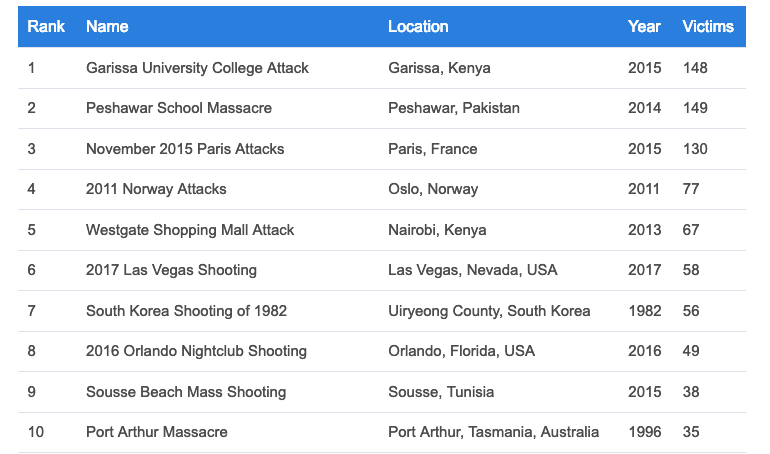
Australia is the envy of many nations because of its 1996 gun law reforms. These were introduced in the wake of Port Arthur, which was then the world’s second largest peace-time gun massacre in recent history. It has since been surpassed eight times

Screen Shot 2019-03-05 at 3.14.14 pm

Source

Australia had 13 mass fatal shootings (5 or more dead, not including the perpetrator) in the 18 years prior to the 1996 law reforms. It took 22 years until that period was interrupted by the family mass shooting in Margaret River, Western Australia when 8 members of a family were murdered by a grandfather.

The gun lobby has tried to talk down the 22 year absence of mass shootings by arguing that these events were rare before, and rare after, so it was impossible to argue anything other than that we were simply looking at a continuation of rare events and that nothing could be made of the 22 year gap.

In 2018, we put that proposition under the statistical microscope in a paper published in Annals of Internal Medicine, (full text and supplement) a high-ranking research journal. We tested this “rare events are still rare” dismissal. Using the eye-watering mathematics brought to our team by a senior maths academic at the University of Sydney,  we tested the likelihood of rare events being truly rare (insurance companies have long used these techniques to assess risk and set premiums). We tested the null hypothesis that the rate of mass shootings in Australia in the 18 years before the 1996 law reforms remained unchanged in the 22 years afterwards. We set out to see if the very obvious, was indeed very obvious.

We concluded the probability of this 22 year absence occurring following the pattern in the preceding 18 years was about 1 in 200,000. That’s odds slightly worse than a ticket holder winning first prize in the NSW $5 jackpot lottery: 1 in 180,000. Or as I once heard a famous statistics professor telling a gormless student “about the same odds of winning if you didn’t have a ticket”.

Before 1996, approximately 3 mass shootings took place every 4 years. Had they continued at this rate, approximately 16 incidents would have been expected since then by February 2018 (the date when we wrote our paper).

This Washington Post special report chronicles the mayhem of mass shootings in the USA.

Ever since the reforms, the gun lobby in Australia has sought to erode the 1996 reforms, which were immensely popular with citizens across the country.

Three political parties intent on eroding our gun laws

In the NSW state elections being held on March 23, three parties which want to introduce major diluting reforms to our gun laws are hoping to get candidates elected, particularly in the Upper House, where they may hold significant power as a voting bloc.

Liberal Democrats

David Leyonhjelm’s Liberal Democrats are unashamedly supportive of putting almost every aspect of our gun laws through the shredder. They want no restrictions on semi-automatic weapons, the sort favoured by mass killers because they can kill so many people so quickly; they want to do away with gun registration so that weapons could be traded as simply as you might sell an unwanted toy on eBay; children should be able to own guns (with no minimum age specified – why not buy an M16 for your 4 year old? None would ever take them to school to settle a grudge as happens with frightening regularity in the US: 89 school shootings since 2015 ); no restrictions on carry concealed weapons; and a loud hint that overthrowing governments by armed uprising might be a great idea (“Ownership of firearms is also the only practical means by which the people can retain any semblance of ensuring that governments remain their servants and not vice versa.”)

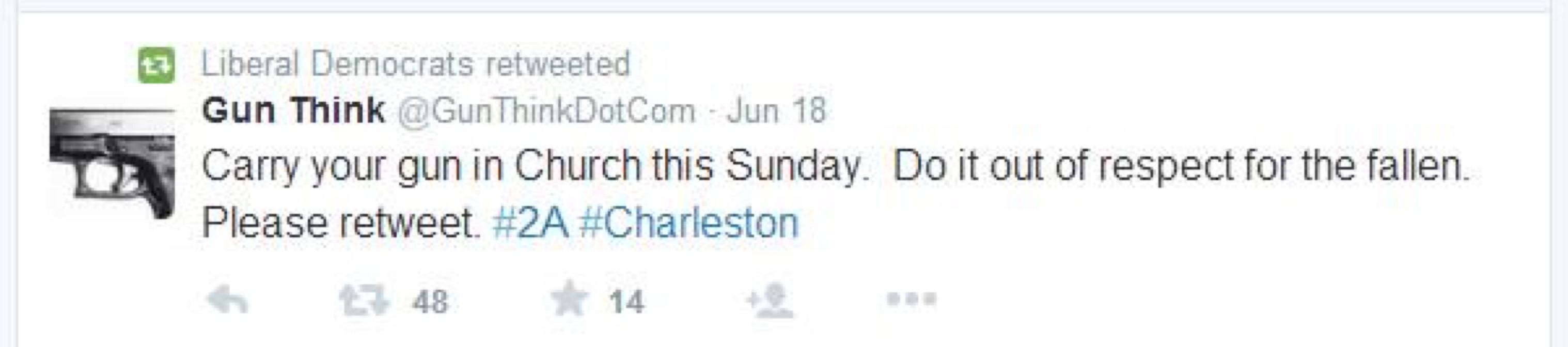
This is a party which retweeted a US tweet after the Charlestown church massacre, urging shooters to take their guns to church on Sunday as a mark of respect.

Carry Gun to Chrich

Pauline Hanson’s One Nation

One Nation’s gun policy is also on the front row of the grid of dreadfulness, channelling Trumpian views. Almost every one of its 20 policy positions opens up a loophole wide enough to lasso an open-cut coalmine. These were clearly penned by interests wanting to see practically every platform of our gun laws eviscerated. An assumption runs through many of these that it is criminals with a record who should be kept away from guns. A minority of Australia’s mass victim killers had any histories of violence. Hanson’s policy wold not have kept the Port Arthur killer from acquiring his weapons.

The NSW One Nation lead candidate, Mark Latham, appears to have some sympathy for some aspects of gun control, as revealed in this interview (warning do not listen after consuming food). If Latham follows the trajectory of several previous elected One Nation members, he’s likely to defect from Hanson’s party soon after being elected. But his visceral hatred of Labor may seem him side with pro-gun cross benchers, despite his apparent views.

Shooters and Fishers

Needless to say, the Shooters and Fishers  party is very pro-gun. While it does not support allowing the open return on semi-automatics, it wants to bring back self-protection as a reason to own a firearm. This was explicitly disallowed in the 1996 reforms and if reintroduced would see a tsunami of guns being purchased all for the apparent noble virtue of protecting one’s family from malevolent intruders. No one has ever better deflated the utter stupidity of this argument than Australian comedian Jim Jeffries here and here, as of today watched by 16.127 million viewers.

This study of 27 high income countries found a very high positive correlation between guns per capita per country and the rate of firearm-related deaths (0.80) and no significant correlation between guns per capita per country and crime rate (0.33.)  Lots of guns do not make nations safer.

I expect that few reading this blog would ever vote for any of the three parties above. But I also expect that many of you will have friends, colleagues or relatives who might. Please forward the link to this blog to them. For 99%, this will achieve nothing, But if a tiny proportion were somehow unaware of what gun control policies they were planning to vote for, and given pause when they are made aware, this could be important.

Footnote: Our 2016 JAMA paper looking at data on gun death trends in Australia 20 years after the 1996 reforms is here. And here is our detailed response the profoundly silly “yes, but…” objections made about our work by US researcher Gary Kleck, locker room pin up boy at gun clubs around the US.


What is it about far right conservatives and vaping activists in Australia?

02 Saturday Mar 2019

Posted by Simon Chapman AO in Blog

≈ 6 Comments

[This blog was updated on 22 Jul, 2022]

In this blog, I’ll mostly just let the pictures do the talking. See if you can spot a trend.

L-R Unknown, Michael Kauter, British American Tobacco Australia’s lobbyist; Senator Pauline Hanson, Prof David Gracey; husband of Kauter and “senior counsel- health” to Kauter’s company; Senior Corporate and Government Affairs Manager Josh Fett
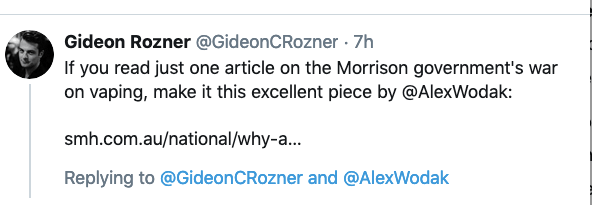
The Institute of Public Affairs’ Gideon Rozner gives ATHRA director Alex Wodak a pat on the back

Australia has two main activist groups out on the hustings for e-cigarettes: ATHRA (the Australian Tobacco Harm Reduction Association) and Legalise Vaping Australia (LGA) .. see more below.

(2018) Mendelsohn,Wilson,Paterson

Above: Tim Wilson MP (left) and Senator James Paterson (right) are former Institute of Public Affairs (IPA) employees. Colin Mendelsohn (centre) is a board member of ATHRA and an inveterate advocate for e-cigarettes. In 2010 Wilson had a very florid case of foot-in-mouth disease about plain tobacco packs when he was at the IPA, arguing that the adventure would cost the Australian government $3 billion (yes, billion) a year (yes, each year) in compensating tobacco companies for their “confiscated” intellectual property (their pack branding, if you can’t follow that). All that went quite down the drain when Australia’s High Court upheld the government’s actions by 6-1 with the World Trade Organization similarly waving it through.  You can read the whole saga here from p144. Mendelsohn’s public brown-nosing of this pair in this tweet caused hilarity among people I talked to.

Wilson-Paterson.png

Above: The sartorially elegant representatives and associates of Legalise Vaping Australia, a project of  the Australian Taxpayers Alliance, which is in turn affiliated with a miscellany of far right “groups”, as we can see by the striking similarity in the wording of these tweets sent by these five twitter accounts after the death of cartoonist Bill Leak on March 10, 2017. Mendelsohn from ATHRA is 6th from the left. Fashion note: it is always important to wear your broad brimmed hat indoors.

AllOneID_2017-04-08 17.37.14

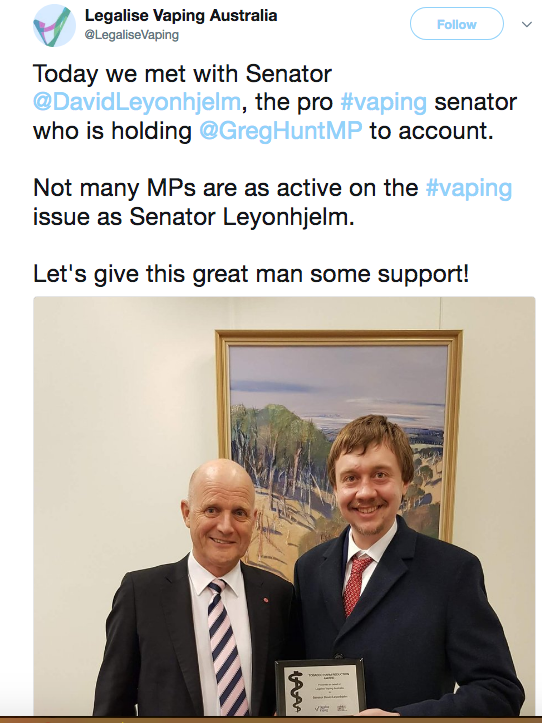
Legalise Vaping Australia has presented its political champions with dinky little awards that obviously would have gone straight to their pool rooms. 

I’ve been unable to ascertain whether the value of these plaques takes them over the threshold for mandatory disclosure on the parliamentary gift register. But suffice to say they are obviously priceless, coming from such an esteemed organisation as the LVA.

Screen Shot 2018-09-17 at 7.55.16 am

Above: Brian Marlow (“campaign coordinator”, Legalise Vaping),  Andrew Laming MP (Liberal, Qld), Tim Andrews, “executive director” of the Australian Taxpayers Alliance, and  Satya Loren, the ATA’s “director of policy”. Some important sounding titles here.

In March 2021, Laming was ordered by the Prime Minister to make an unconditional apology in parliament to two women in his Queensland electorate who he had been trolling. Lots of plain speaking followed on twitter about this.

Back row Senator Hollie Hughes, Liberal NSW (see below), celebrating with Brian Marlow and the gang from Legalise Vaping Australia

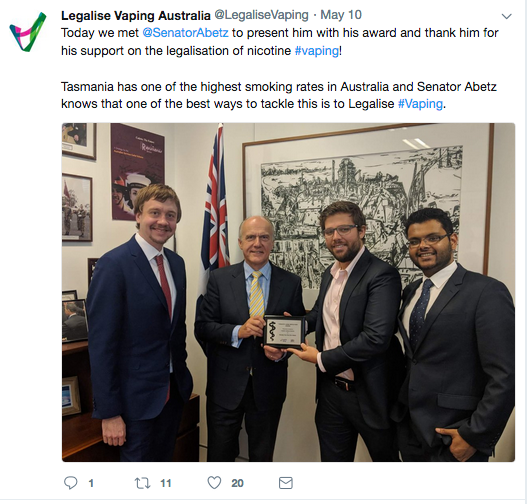
Abetz

Above: Our three ATA/LVA champions with Sen Eric Abetz (Lib, Tasmania).

So how many “members” or “supporters” or whatever word you want to use, does the ATA have? Actually, it depends on where you look on its website, as I found out.

Fluid Nymbers Screen Shot 2018-08-14 at 10.54.39 am
Screen Shot 2019-03-02 at 4.24.46 pm

Above: Hey, they’re all getting gonged! Senator Cory Bernardi (Australian Conservatives, South Australia). And who could ever forget Cory’s concerns that legalising same sex marriage could lead to bestiality (“The next step, quite frankly, is having three people or four people that love each other being able to enter into a permanent union endorsed by society – or any other type of relationship. There are even some creepy people out there… [who] say it is OK to have consensual sexual relations between humans and animals. Will that be a future step? In the future will we say, ‘These two creatures love each other and maybe they should be able to be joined in a union’.I think that these things are the next step.” Australian comedians had a ball with this.

PeterPhelps 2018-06-10 at 1.23.05 pm

Above: “Colourful” NSW Upper House Liberal Peter Phelps is much appreciated by LVA.  In 2011, Phelps made a speech in which he compared scientists who believe in global warming to those who worked for totalitarian regimes. He said it should not be forgotten that “some of the strongest supporters of totalitarian regimes in the last century have been scientists… We should not be so surprised that the contemporary science debate has become so debased,” he said. “At the heart of many scientists – but not all scientists – lies the heart of a totalitarian planner.”

Leyonhjelm

Unkindly dubbed by some as “the Senator representing Philip Morris”, the great man David Leyonhjelm (then Liberal Democrat, NSW) was of course always going to get an award for his ceaseless efforts. The Liberal Democrats are very happy to have it known that they are supported by Philip Morris. Leyonhelm is a staunch enemy of gun control, with his party retweeting the grotesque tweet below after the June 2015 Charleston church massacre, when a gunman murdered 9 black parishioners:

Carry Gun to Chrich

Writing in Farm Online in 2015, he also unforgettably compared the situation of caged battery farmed chickens with sports fans in very crowded stadiums who choose to not take themselves out of such crowding. Sounds a perfectly apposite comparison, eh?

Screenshot 2016-05-19 13.24.26

In 2020, Leyonhjelm lost his appeal in the Federal Court against a judgement that he had defamed South Australian Greens Senator Sarah Hanson-Young by stating publicly in June and July 2018 that Hanson-Young had said “All men are rapists” and was actuated by malice and intended to shame Hanson-Young. He was ordered to pay $120,000 in damages plus costs

Senator Hollie Hughes (Liberal NSW)

In February 2021, veteran journalist Neil Chenoweth at the Australian Financial Review published several lengthy pieces here, here and here about connections between tobacco companies and vaping advocates in Australia, Senator Hollie Hughes, a NSW Liberal senator who has chaired the November 2020 Senate Committee on Tobacco Harm Reduction, only to be rolled into signing a minority report by the majority of the Committee, featured prominently in one of these reports.

L-R Michael Kauter, lobbyist for British American Tobacco Australia; Senator Hollie Hughes, Prof David Gracey (Kauter’s husband and “senior counsel – health” to Kauter’s lobbying company) 5 Oct 2020, in Canberra.
L-R L-R Michael Kauter, lobbyist for British American Tobacco Australia; Senator Hollie Hughes, Prof David Gracey (Kauter’s husband and “senior counsel – health” to Kauter’s lobbying company) Christmas Day 2020

In June 2020, Hollie Hughes appeared on an ABC-TV Four Corners program about vaping where she asked the interviewer “What is Big Tobacco? Define Big Tobacco. Who are they?” Her reaction is unforgettable.

Michael Johnsen (National Party NSW)

NSW Upper House National Party MP Michael Johnsen was lauded by vaping lobby group ATHRA when he announced in November 2020 that he planned to get parliamentary support to make e-cigs “a consumer product”, allowing them to be sold almost anywhere. In late March 2021, Johnsen faced an allegation that he had raped a sex worker, and resigned his government position, moving to the NSW parliamentary cross-bench while police investigate the allegation. Johnsen may have less time for his planned campaigning for e-cigarettes and ATHRA has been curiously quiet about the latest political champion.

These are the political bedfellows of vaping advocacy in Australia today.

Blog Stats

  • 163,470 hits

Top Posts & Pages

  • Why I’m not quitting Spotify because its owner has hugely invested in weaponry
  • Australia takes off the gloves on illegal tobacco while ‘lower the tax’ fantasists plumb new absurdities
  • About/CV
  • Vaping theology: 6 There’s nicotine in potatoes and tomatoes, so should we restrict or ban them too?
  • My books
  • Regrets … I’ve had a few. Paul Hogan and his Winfield role.
  • Thinking of keeping koi? Advice for beginners in NSW
  • Cheap illegal cigarettes save low income pack-a-day smokers over $9000 a year. So why don’t social justice champions give them full support?
  • Why Australia’s illegal tobacco and vape trade continues to flourish and what should be done about it
  • My first seen, best and worst bands 1964-2022

Blog archive

Comment Policy: No anonymous or pseudonymous posts will be published

Recent Posts

  • Australia takes off the gloves on illegal tobacco while ‘lower the tax’ fantasists plumb new absurdities
  • Egg on some faces: statisticians at 10 paces on the impact of New Zealand’s vape laws on youth smoking
  • Lowering tobacco tax to make illegal tobacco sales “disappear overnight”: at last we have a proposed figure and it’s an absolute doozie
  • Why I’m not quitting Spotify because its owner has hugely invested in weaponry
  • Should we believe Fiona Patten on vapes? Here are just a few problems

Recent Comments

Jon Krueger's avatarJon Krueger on Egg on some faces: statisticia…
Atul Kapur's avatarAtul Kapur on Should we believe Fiona Patten…
Unknown's avatarCould a national tob… on If expensive cigarettes are dr…
tahirturk1's avatartahirturk1 on Why Australia’s illegal tobacc…
malonere's avatarmalonere on Words I’ve seen, but didn’t kn…

Archives

  • December 2025
  • August 2025
  • July 2025
  • June 2025
  • May 2025
  • March 2025
  • January 2025
  • November 2024
  • October 2024
  • September 2024
  • July 2024
  • May 2024
  • April 2024
  • March 2024
  • February 2024
  • January 2024
  • December 2023
  • November 2023
  • October 2023
  • September 2023
  • August 2023
  • July 2023
  • June 2023
  • May 2023
  • March 2023
  • February 2023
  • January 2023
  • December 2022
  • November 2022
  • October 2022
  • August 2022
  • June 2022
  • April 2022
  • March 2022
  • February 2022
  • January 2022
  • December 2021
  • October 2021
  • September 2021
  • August 2021
  • June 2021
  • May 2021
  • April 2021
  • March 2021
  • February 2021
  • January 2021
  • December 2020
  • November 2020
  • October 2020
  • September 2020
  • August 2020
  • July 2020
  • June 2020
  • May 2020
  • April 2020
  • March 2020
  • February 2020
  • January 2020
  • December 2019
  • November 2019
  • October 2019
  • September 2019
  • August 2019
  • July 2019
  • June 2019
  • May 2019
  • April 2019
  • March 2019
  • February 2019
  • January 2019
  • December 2018
  • November 2018
  • October 2018
  • September 2018
  • August 2018

Categories

  • Blog

Meta

  • Create account
  • Log in
  • Entries feed
  • Comments feed
  • WordPress.com

Blog at WordPress.com.

  • Subscribe Subscribed
    • Simon Chapman AO
    • Join 198 other subscribers
    • Already have a WordPress.com account? Log in now.
    • Simon Chapman AO
    • Subscribe Subscribed
    • Sign up
    • Log in
    • Report this content
    • View site in Reader
    • Manage subscriptions
    • Collapse this bar
 

Loading Comments...