• Home
  • About/CV
  • Blog
  • Vaping Research Alerts
  • Blog archive list
  • My books
  • Memoirs
  • Music, bands, films
  • Contact

Simon Chapman AO

~ Public health, memoirs, music

Simon Chapman AO

Monthly Archives: June 2022

Four steps Australia’s health ministers must take tomorrow on teenage vaping

29 Wednesday Jun 2022

Posted by Simon Chapman AO in Blog

≈ Leave a comment

Tomorrow, Australia’s state and federal health ministers will meet for the first time since the May election routed the Morrison government. The national explosion in teenage vaping, driven by access to cheap, highly addictive, sickly-sweet, disposable vapes is on their agenda.

As we saw on Four Corners this week, there can be very few schools across Australia not struggling with the growing epidemic of vaping. Australia hasn’t surveyed teenage vaping in schools since 2017 (a new survey is in the field right now), but in New Zealand the government is now desperately trying to put the teenage vaping genie back in the bottle.

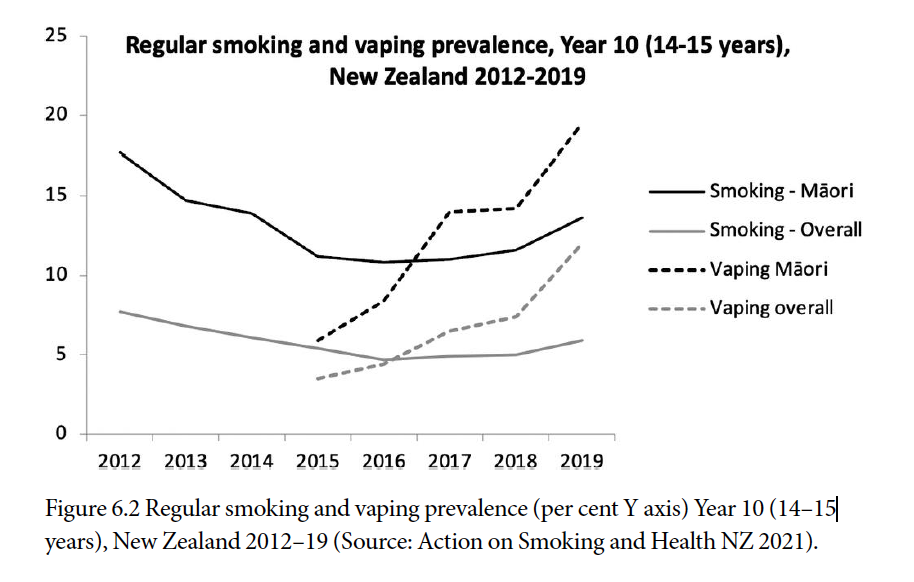
Between 2012 and 2015, prior to the widespread availability of vaping in New Zealand, overall smoking fell by 21% from 6.8% to 5.5% and by 37% from 17.7% to 11.2% in Māori teenagers. But after the advent of vaping, the decline in smoking changed to a growth of 9% between 2015 and 2019, with Māori smoking rising 21%. While this was happening, regular vaping was rising dramatically: between 2015 and 2019, the prevalence of regular vaping rose 173% (5.4% to 12%) and by a roaring 261% in Māori teens (5.4% to 19.5%).

In the USA in 2021, 11.4% of high school students vaped in the last month.
I recently asked my 12-year-old granddaughter what she thought attracted some of her Year 6 classmates to vaping. Instantly she replied “You can get lemonade flavour!”  There are more than 15,000 vaping flavours advertised on the web, many of which would not be out of place at a 5 year old’s birthday party.

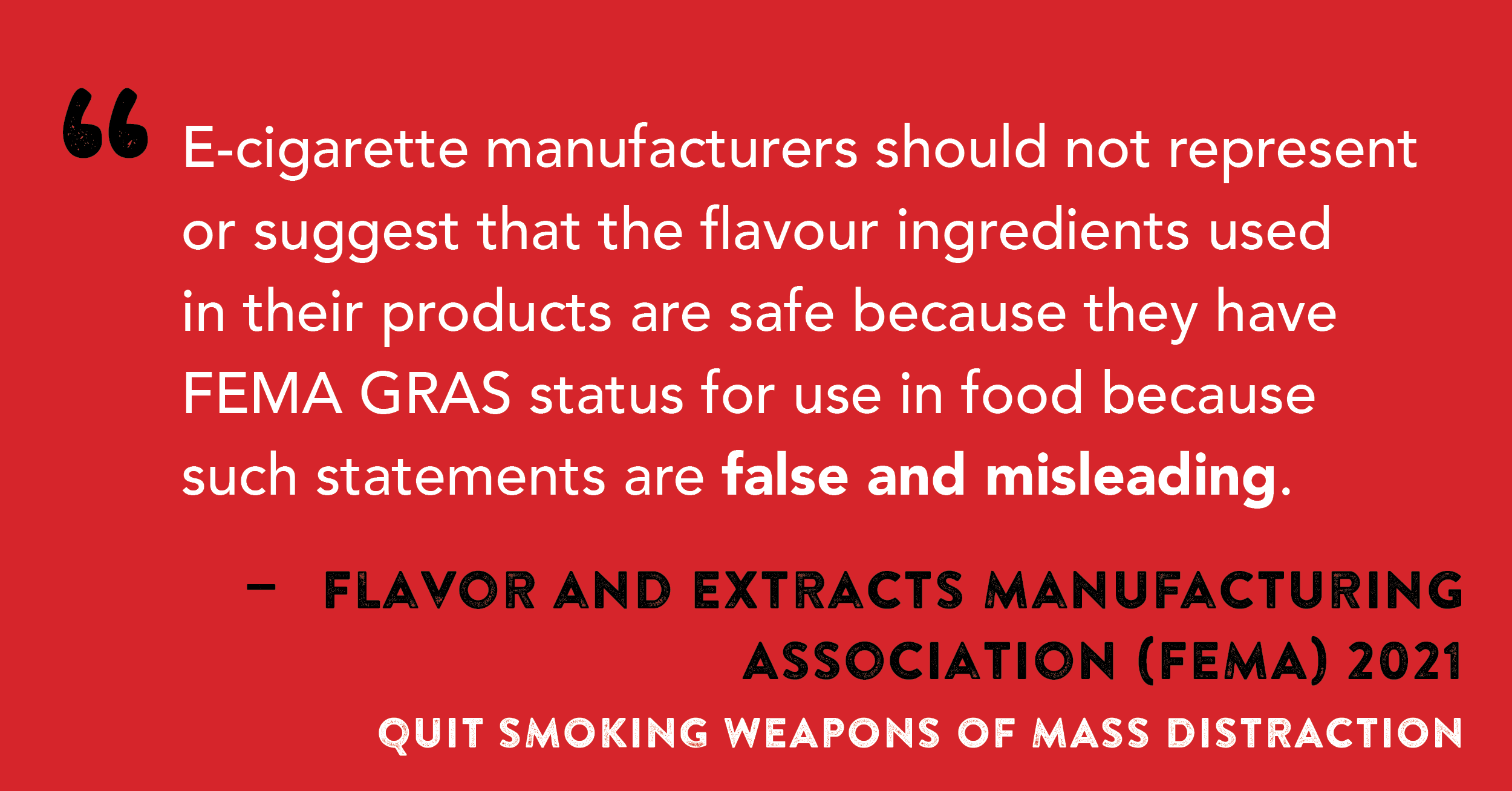
Australia has 2.7 million people living with asthma. Not one of them uses a flavoured puffer to mask the unpleasant medicinal taste of the salbutamol they typically inhale a few times a day. Why? Because no pharmaceutical regulatory body anywhere in the world allows inhalable flavouring chemicals, with the US Flavouring and Extracts Manufacturing Association warning last year  “E-cigarette manufacturers should not represent or suggest that the flavour ingredients used in their products are safe because they are used in food because such statements are false and misleading.”
Daily smokers pull smoke deep into their lungs an average of about 100 times a day. But daily vapers average 500-600, making a mockery of the bizarre denialism spread by some vaping advocates that vaped nicotine is not addictive. As England’s Professor John Britton has said “Inhaling vapour many times a day for decades is unlikely to come without some sort of adverse effect. And time will tell what that will be”

As Four Corners explored on Monday, today’s flood of cheap, disposable vapes can be traced to former health minister Greg Hunt being rolled by a 28-strong backbench revolt led by Queensland National Senator Matt Canavan. Hunt had announced in June 2020 that any adult wanting to vape would need to get a prescription to do so. He also announced it would be illegal (as it has been since July  2019 with cigarettes) to import nicotine-containing vape products. Canavan’s signatories spooked the government and Hunt withdrew the personal import ban.

But the Canavan pro-vaping cabal has been shredded with the departure of Abetz, Falinski, Laming, Wilson and Zimmerman. Its residuals like Hollie Hughes, Canavan and Barnaby Joyce have been rendered political eunuchs by the May election. Hollie Hughes’ performance on Four Corners is causing weapons-grade levels of amusement on Twitter.

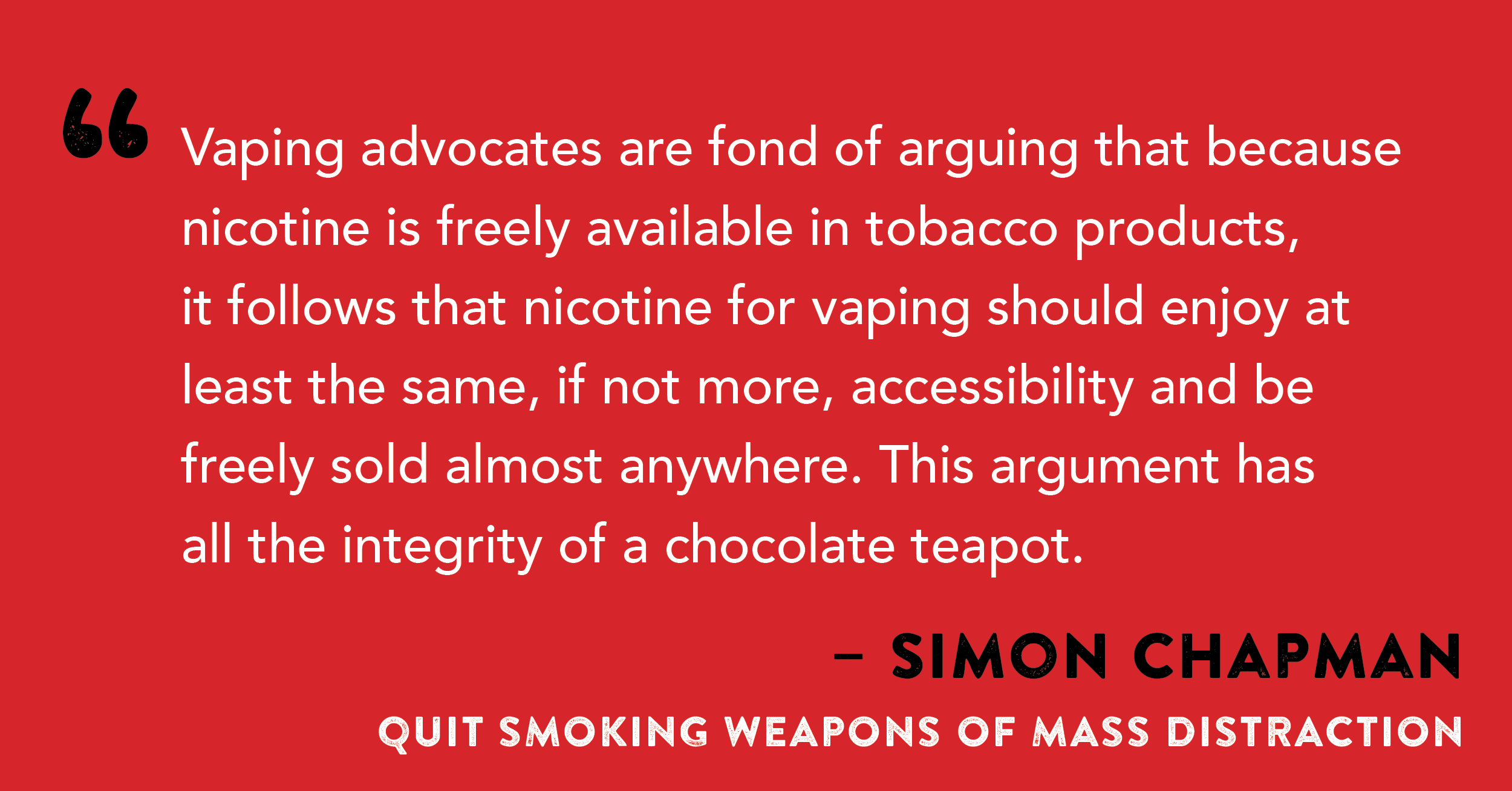
Vaping advocates are fond of arguing that because nicotine is freely available in tobacco products, it follows that nicotine for vaping should enjoy at least the same, if not greater accessibility and be freely sold anywhere as a “consumer good” like milk and groceries. This argument has all the integrity of a chocolate teapot. We made every conceivable mistake by failing to regulate tobacco because governments early last century had no idea of today’s 8 million global annual death smoking health toll that took 30-40 years to emerge. Widespread vaping had only been around about 10 years.
Very few kids import their vapes. Why would they bother when they can just walk into the many shops openly selling them, or buy from entrepreneurial kids who buy them in bulk off sites openly advertising them like Facebook Marketplace (search for “fruit” or “vapes”).  The vaping chain’s weakest links are retailers and on-line wholesalers. Hitting these is essential to seriously curtailing the tsunami of vapes getting kids. All state governments should introduce seriously deterrent fines for importing and any form of retailing.  If corner shops and convenience stores were selling codeine, requiring a prescription, they would be shut down.

Tomorrow, the health ministers should:

  1. Immediately add disposable vapes to the Prohibited Import Scheme (PIS). This is significantly more urgent from a public health perspective than attempting to close down the Personal  Import Scheme for Nicotine Vaping Products (NVPs). This could be achieved very quickly with the stroke of a pen and will cause zero political ructions.
  2. Harmonise large, significant national increases in fines for commercial quantity importing, wholesaling and retailing of NVPs across all states and territories. These fines and confiscations should be big enough to give serious pause to anyone assuming that their illegal trade can go on, with rare busts costing a fraction of the the profits being earned.
  3. Cooling agents should be also be immediately added to the exclusion list in the Therapeutic Goods Administration’s TGO 110 (also achievable with a stroke of a pen). These are being used to facilitate vapers inhaling large, highly  nicotine doses
  4. Closing the Personal Import Scheme (PIS) will be a longer game and careful thought should be given to how encouraging the TGA/APHRA/HCCC to focus on telehealth prescription “factories” which are churning out prescriptions often without any acceptable doctor-patient interaction. This could significantly curtail abuse of the PIS by non-legitimate users.

Prescription access via pharmacies selling pharmaceutical grade products can supply adult smokers wanting to switch. Advocates of continuing the open slather access that is now occurring claim Hunt’s prescription access is “prohibition”. By that very silly argument antibiotics, the pill and every other prescribed drug are prohibited too.

Health Minister Mark Butler should seize his first Nicola Roxon moment, and reintroduce the personal import ban. Roxon was lauded internationally for plain packs and Butler can lead the world with workable prescription access not gutted by leaving the front door open to rampant illegal nicotine vape retailing that is addicting a new generation of kids to nicotine who had never smoked.

Selected quotes from  Quit Smoking Weapons of Mass Distraction

22 Wednesday Jun 2022

Posted by Simon Chapman AO in Blog

≈ 2 Comments

My new book  Quit Smoking Weapons of Mass Distraction (Sydney University Press 2022 359pp ISBN 9781743328538) was published as an e-book on June 26 and as a paperback on July 1, 2020

You can download a full pdf of the book FREE here OPEN ACCESS e-book (over 5,500 accesses) or order the book at Amazon here ($AUD40.00 paperback)

Below are quotes from the book that I hope will stimulate your interest.

The core message of the book

“The core message throughout this book has been that the overwhelming dominance of assisted cessation in the way that quitting has been framed over the past three decades has done a huge disservice to public understanding of how most smokers quit. Around the world, many hundreds of millions of smokers have stopped without professional or pharmacological help.”

On the dominance of unassisted cessation in how most ex-smokers quit

“If we were able to estimate the total number of people who have ever smoked and the total number who later stopped smoking completely, the proportion who were assisted in quitting by the actions of any kind of therapist or interventionist, or by consuming a potion, a pill or nicotine replacement (pharmaceutical, or most recently, from e-cigarettes) would be a small minority.”

“the overwhelming majority of research on smoking cessation has always focused on the “tail” of assisted cessation, not on the “dog” of unassisted quitting.”

“The inverse impact law of smoking cessation states that the volume of research and effort devoted to professionally and pharmacologically mediated cessation is in inverse proportion to that examining how ex-smokers actually quit. Research on cessation is dominated by ever-finely tuned accounts of how smokers can be encouraged to do anything but go it alone when trying to quit – exactly opposite of how a very large majority of ex-smokers succeeded.”

On the medicalisation of quitting:

“Many concerns previously perceived as normal human differences or problems have now been defined as tractable illnesses that can benefit from diagnosis and often lifetime drug taking.”

“It appears that there is no smoker, regardless of how much or little they smoke, and regardless of whether they are not at the point of trying to quit, actively trying to do so or have long stopped smoking, for whom medication and especially NRT is not recommended. It is in the interests of that industry to persuade as many smokers as possible to use pharmaceutical aids for as long as possible.”

On the effectiveness of nicotine replacement therapy

“the best complexion we can put on the question of how good NRT is in keeping smokers abstinent into the longer term (here two years), is to say that NRT fares better than unassisted quitting while it is being used, but that both strongly fade as the months and years go by, to the point that there is no difference at two years. Smokers’ curiosity about whether they will fare better in the long-term with a course of NRT than with unassisted cessation therefore looks like a ‘no’.”

On why results from randomised controlled trials of quitting medications poorly reflect real world use results

 [one review] “found two-thirds of participants with nicotine dependence would have been excluded from clinical trials by at least one criterion … Those in such trials are thus very unrepresentative of all smokers wanting to quit.”

“frequent contact with research staff who are doing their best to ensure low rates of trial dropout, can combine to create an influential backdrop to using a quit-smoking medication or approach which is very different to the way people will use the same drugs or approach in “real-world” conditions outside a trial.”

“Undoubtedly, much smoker resistance to using cessation medication is due to many smokers learning from other smokers that real-world experience of using these drugs does not produce outcomes that remotely compare with benchmarks for other drugs they use for other purposes. Few if any other drugs for any purpose with such abject track records would ever be prescribed.”

“after over four decades of the pharmaceutical industry’s turbo-charged, no-expense-spared efforts to increase physician engagement and erode population resistance to pharmaceutical-based cessation, how many more years can the narrative of getting even more smokers to medicate retain any realistic credibility?”

On the pleasure of smoking

“The argument that smoking and inhaling nicotine is “pleasurable” is a bit like saying that being beaten up several times every day when you haven’t been able to smoke is something you want to continue with, because it feels so good when the beating stops for a while.”

On remaining smokers being “unable” to quit without help

“Those arguing that today’s smokers are increasingly heavily addicted and unable to stop, and therefore need assistance to do so, have very poor evidence supporting their case. Globally, vast numbers of smokers continue to stop or reduce their smoking every year. These include very heavy smokers and … many who quite suddenly stop smoking without making much if any preparation to do so.”

On quitline impacts

 “an estimated 0.87% of all US smokers [ever call a quitline], with the target being 6% or more. In not one year between 2009 and 2017 did the reach exceed 1.19% of smokers, falling some 500% below the minimum target reach set by the quitline consortium management.”

On the unpublicised news that many ex-smokers found quitting easier than expected

“in these striking data about many ex-smokers finding the quitting experience less traumatic than expected, we rarely (if ever) hear comments or see campaigns from those in tobacco control discussing or highlighting this. We very seldom hear any efforts to de-bunk or leaven the “it’s very, very hard to quit smoking” meme by pointing out that many ex-smokers were pleasantly surprised that quitting was not as tortuous as they expected.”

On vaping

“today the dominant narrative about smoking is being undermined by a shift from one about quitting smoking to one about switching to vaping, to the great delight of those in the industries whose very existence rests on the widespread continuation of nicotine dependency.”

“Vaping advocates are fond of arguing that because nicotine is freely available in tobacco products, it follows that nicotine for vaping should enjoy at least the same, if not more accessibility and be freely sold almost anywhere. This argument has all the integrity of a chocolate teapot.”

On vaping safety

“If any scientist had declared in 1920 that cigarette smoking was all but harmless, as vaping advocates insist today about e-cigarettes, history would have judged their call as heroically and dangerously incorrect. But this is the cavalier call that many vaping advocates routinely make, after just 10 years or so of widespread use in some nations.”

“High-quality clinical and epidemiological data on vaping’s health effects are relatively sparse. There are no data on long-term health effects, reflecting the relative novelty of vaping and the rapid evolution of vaping products. Determining even short-term health effects in adults is difficult because most adult vapers are former or current smokers”

“Inhaling vapour many times a day for decades is unlikely to come without some sort of adverse effect. And time will tell what that will be”

“if you both smoke and vape (dual use), you’ll have higher levels than those who only smoke. So if dual use is the Mount Everest of toxicant exposure, then smoking is the K2 exposure, vaping is the Matterhorn and never smoking or vaping is the toxicant exposure at sea level.”

“All tobacco companies now marketing e-cigarettes are delighted to [promote vaping as all but benign], while just down the corridor in their tobacco divisions they continue trying to maximise demand for the cigarettes that will cause the same billion deaths [this century] they claim vaping could prevent.”

“all vaping evangelists believe that no impediment should be placed in the way of their lifesaving work. But medicine of course has a very long history of claims being made by purveyors of a multitude of miracle cures who also believe their crusades are far too important to be regulated.”

On vaping flavours

“I recently asked my 11-year-old granddaughter about what she thought attracted some of her Year 6 classmates to vaping. Instantly she replied, “You can get lemonade flavour!”

“Why aren’t any asthma puffer drugs flavoured? Because the pharmaceutical industry knows it would struggle to demonstrate that inhaling flavours is acceptably safe”

“By 2016–17 [available e-cigarette flavours] had more than doubled to 15,586”

“E-cigarette manufacturers should not represent or suggest that the flavour ingredients used in their products are safe because they have FEMA GRAS status for use in food because such statements are false and misleading (Flavor and Extracts Manufacturing Association (FEMA) 2021).”

“Compare daily inhalation numbers: asthma puffers:4-6; daily smokers:104; daily vapers 500-600 … making a mockery of the bizarre denialism that vaped nicotine is not addictive.”

How good are vapes for quitting smoking?

“17 reviews of the evidence and position statements by professional health associations published since 2017 have concluded that the evidence for e-cigarettes being effective for smoking cessation is inconclusive, insufficient, weak or inadequate”

“But there can be few if any other drugs, used for any purpose, which have even come close to the dismal success rate of e-cigarettes or NRT in achieving their main outcome. If we went along to a doctor for a health problem and were told, “Here, take this. It has a 90% failure rate. But let’s both agree to call this successful,” we would understandably take the view that “success” when used in this context was not the way that it is used in any other treatment context”

On whether vaping reduces amount smoked per day

“Data from 2019 from the UK government’s annual Opinions and Lifestyle Survey also show that the average number of cigarettes smoked daily by smokers who vape (8 a day) is almost identical to that by smokers who have never vaped (8.1 a day)”

Read reviewers’ comments here

Australian vaping advocates hit political rock bottom but keep digging

20 Monday Jun 2022

Posted by Simon Chapman AO in Blog

≈ Leave a comment

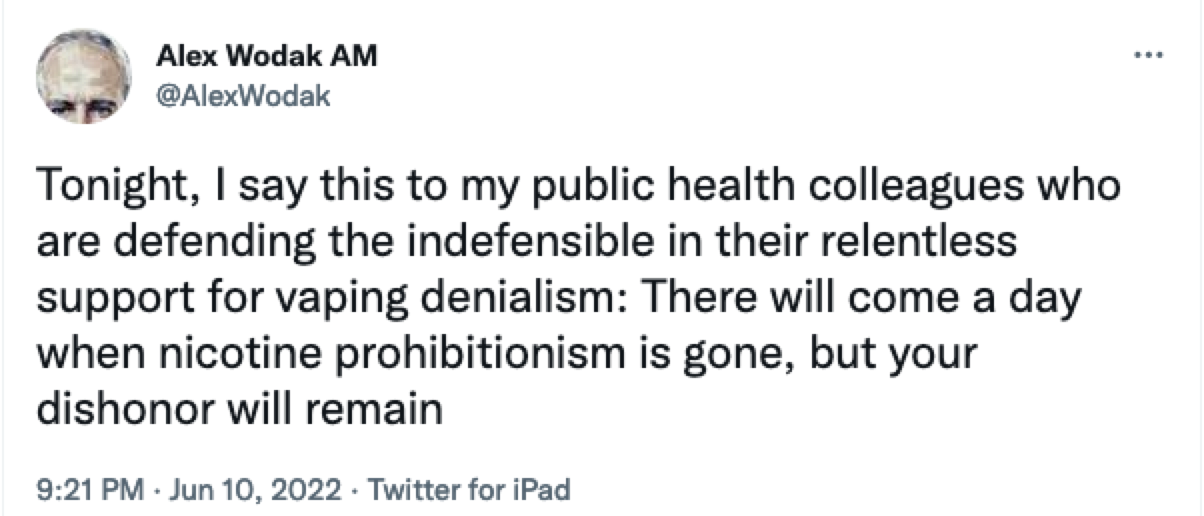
On the evening of 10 June, shortly after ABC-TV screened the first edition of its news backgrounding program The Context looking at the evolution of tobacco control, inveterate vaping proselytiser Alex Wodak, cleared his Twitter throat. In prose redolent of Churchill, he advised the world:

Prohibitionism? The overwhelming position of the Australian public health and medical community has been to strongly support the policy introduced by former health minister Greg Hunt who approved the supply of nicotine vaping products (NVPs) to anyone with a doctor’s prescription from October 2021.

Describing this as “prohibition” is like arguing that prescribed antibiotics, oral contraceptives or cholesterol control drugs are also prohibited.

Last year, 27 LNP government backbenchers plus legendary deputy prime minister Barnaby Joyce internally rolled health minister Greg Hunt’s accompanying policy of banning personal importation of NVPs. They wanted these highly addictive, unregulated products to be made available for sale anywhere that cigarettes can be sold. And that’s anywhere that includes the many places that are supplying kids across Australia with flavoured, disposable vapes.

When the extent of the carnage caused by smoking was first consolidated in the early 1960s, factory made tobacco products had already been sold openly as ordinary items of commerce for 60 years. Across the next 60 years we saw the glacial introduction of policies that began slowly reeling in that disastrous unregulated free-for-all. Every step was fought hard (and all lost) by Big Tobacco, a fight which it continues unabated today. It’s often been said that if cigarettes had been invented in 1960, with their unparalleled risk profile known in advance, they would have never been let onto the market.

Because of this, governments around the world made every possible ignorant mistake possible in failing to regulate cigarettes, but that’s what let-it-rip vaping advocates want to risk again. By contrast, controlled access via prescription builds a platform that can be liberalised or tightened in light of emerging understanding of the risks and benefits of NVPs.

Vaping advocates  in Australia have always nailed themselves to support from deeply conservative and reactionary political figures.  But since the cataclysm of the May 21 election, they have found themselves in the political wilderness where they are likely to remai for years. Today, their former go-to political besties couldn’t make an impression in a soft cushion. Federally, the Liberal Democrats have long been toast, Fiona Patten’s Reason party got homeopathic level votes in May and Pauline Hanson and her little buddy Malcolm Roberts are impotent in the new Senate. The heroic “I vape and I vote” bumper stickers  generated not  a political bang, but a whimper.

During the last year of the Morrison government, open slather vaping advocates were supported by the 28 LNP backbenchers. With the LNP now political eunuchs and prominent LNP vaping spear-carriers Wilson, Abetz, Laming, Zimmerman and Sharma gone from parliament, vaping advocates have no political friends with any policy influence. Hollie Hughes, Matt Canavan, the lugubrious Senator James Patterson and Barnaby Joyce are the best they have. Just think about that.

Vaping’s go-to A-team from 2022

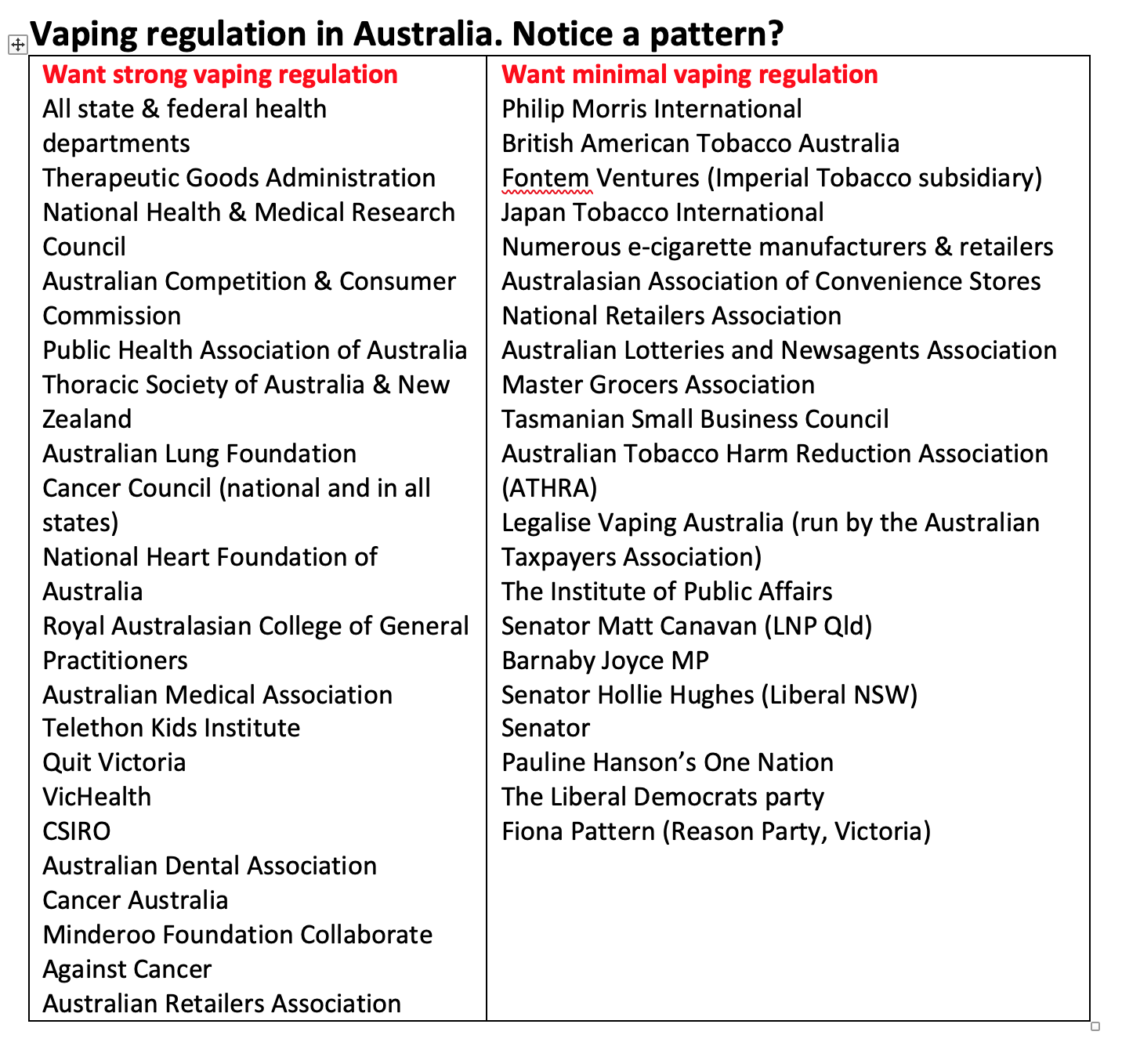
On Jun 12, 2020 this rock bottom epiphany saw a lot of people clearly playing with Wodak’s head. In a tweet he pointed at Labor, the LNP and five of Australia’s biggest health and medical NGOs who were “condemning” vaping. In fact, there are a lot more than five (see table above).

Later that day he also tweeted a graph (below) purportedly demonstrating how Australia seems to have choked badly  in reducing smoking compared with three other nations, all with  more liberal vaping regulations than us. Wow, look at how badly Australia was doing!

But there was a teensy-weensy problem here: the Australian data was for 2019 with a number then projected for 2021, while the other nations showed smoking prevalence for 2020 and 2021. Wodak should have known that the Australian Bureau of Statistics published smoking prevalence data for 2020-21  from its National Health Survey  showing that 10.7% smoked daily with 11.8% smoking daily or less than daily. So why didn’t he cite that inconvenient data? I think we can guess.

And there’s another important problem too. As I pointed out in an earlier blog looking at how Wodak’s advocacy mate Colin Mendelson engages in the same exercise, there are important differences in the way that different countries count “smoking”. Australian and US data on “current smoking” include all combustible tobacco (cigarettes, cigars, pipes, shisha) while England and New Zealand count only cigarettes and roll-your own as “smoking”.

  • Australia ages 18+) (includes cigarette and roll-your-own smokers plus all exclusive users of other combustible tobacco products like pipes, cigars, hookah and shisha)
  • USA: (ages 18+) (like Australia, includes all combustible tobacco product users)
  • New Zealand (ages 15+) (includes cigarettes & RYO only)
  • UK (ages 18+):(includes cigarettes and RYO only)

A 2017 editorial in Addiction made this same point, when looking at the most recent available data at that time:

it is likely that overall combustible tobacco use prevalence for adults18+ in the United States is higher than 15.1% [in 2015], and somewhere in line or just below the 2013–14 National Adult Tobacco Survey (NATS) estimate that 18.4% of US adults aged 18+ were current users of any combustible tobacco product

The COVID 2020-21 lockdowns saw a lot of smokers exposed to repeated advice to quit smoking. With lungs particularly susceptible to COVID, many smokers heard that message many times. In the first 5 months of 2020, downloads of the government’s Quit Buddy app increased 310%. There are good reasons to expect that the projected downward slope in Wodak’s tweeted graph would have been steeper.

So of the four nations shown  in Wodak’s graph updated for the latest national government data, Australia sits at second on 11.8% smoking at any level, behind New Zealand with 10.9% and ahead of England on 12.1% and the USA on 12.4%.

The disastrous abandonment of Hunt’s planned ban on personal importation of NVPs should be revisited. With massive quantities of totally unregulated, illegal disposable NVPs flooding Australia and driving the teenage vaping surge, the universal support of state and federal health departments to shut this down will offer Mark Butler his first Nicola Roxon moment in prevention.

Roxon’s bold introduction of plain packs, now dominoing around the world, was lauded by the health and medical community. Twenty one nations have now finalised plain packaging legislation. Restoring the ban on personal importation of NVPs and introducing and enforcing seriously deterrent fines for their commercial importers and retailers looks like a very smart move.

High Level Meeting of the General Assembly on the prevention and control of non communicable diseases speaking: Nicola Roxon, Minister for Health and Aging, Australia

The rise of progressive community independents should inspire local climate change and environmental action

16 Thursday Jun 2022

Posted by Simon Chapman AO in Blog

≈ Leave a comment

The barnstorming success of progressive independent candidates in the May election underlined Australians’ mass scale disillusionment with two party politics. Very importantly, it also shone 10,000 watt arc lights on the huge power of local action to make political change.  Labor and the LNP will be scrambling to tap into that power or will see their voters drop even further.

No issue energized this election as much as climate change and the environment. The huge rise in the Greens vote as well as the teal independents all giving it centre stage are obvious signs.  Many accounts of the growth of armies of volunteers blanketing suburbs with door knocking conversations, local business engagement and packed out meetings full of people hungry to help with change were inspiring.

To try and harness this sort of energy, I plan to soon set up a Sydney inner west local action for the environment page to encourage government policy and practice change at all levels and to promote local initiatives. I hope these will proliferate across the country.

All we are learning about the vital importance of increasing social interaction in people’s lives in reducing isolation, promoting mental and physical health and delaying and minimizing the onset of dementia (the more physical, social and cognitive activity, the better) make increasing local community interaction a no-brainer.

Here’s a start to an alphabetical list of the many things that local action might be aimed at when it comes to the environment. If you can suggest others, PLEASE do.

Abating food waste and building food security

  • Explore ways to have more local food businesses donate unwanted stock to food security pantries like Marrickville and Camperdown’s  Addi Road for distribution to those in need
  • Organise and promote local monthly residents’ food donation days

Coffee keep-cups and plastic lids

  • Encourage expansion of the list of banned single-use plastics to include coffee cup lids. And in the meantime …
  • Develop and promote “no plastic lid” requests to coffee outlet
  • Survey all local coffee outlets on willingness to fill customers’ keep-cups (some refuse saying they are “unhygienic” to staff)
  • Publicise those outlets which actively encourage keep-cup use
  • Request council (or coffee wholesalers) to supply “coffee keep cups welcome” signs and stickers. It’s all about normalizing their use.

Dumped rubbish

  • Encourage rapid reporting to council of dumped rubbish

Front fence book libraries

  • Help others make these proliferate by sharing construction, decoration and mounting tips and moving your unwanted books to them

Electric vehicles

  • Identify more large carpark sites for EV charging stations (eg: in the Inner West Leichhardt Market Town, Norton Street shopping centre) and lobby management to install them
  • Petition shoppers to sign appeals to shopping centre management about charger installation
  • Survey local interest in potential EV purchasing and identifying lack of local charging as a possible barrier
  • Prepare and share templates for assisting strata building residents to make the case for unit block charging points
  • Investigate challenges and potential solutions for community street charging in areas where many dwellings have no garages or other off-street parking
  • Lobby local and state government council for pilot community street charging
  • Build purchasing pools of local residents to lever EV retailers to offer discount for bulk EV purchasing

Litter patrols

  • Promote local litter abatement by having each block’s residents “own” their block’s litter
  • Promote and normalize litter removal as a routine part of local walking
  • Ask council to supply or subsidise litter pick up tools

Native bird nesting houses

  • Encourage and assist residents to install bird nesting houses (eg: help with construction and installation)

Plastic bags

  • Note any businesses still using single-use plastic bags
  • Gentle reminders to these about the new law
  • Reporting any shops continuing to supply them

Recycling bins

  • Build volunteers to conduct sample surveys of yellow bins to determine the extent of and the most common examples of unacceptable content that ruin recycling collections
  • Circulate (letterbox, local social media) survey results highlighting common problems
  • Encourage council to introduce rejection notices on yellow bins containing unacceptable (contaminating) material
  • Encourage councils to expand acceptable green bin content to include the many things shown here

Solar energy capture

  • Encourage reform of local government planning regulations to maximise incorporation of solar and battery installation in new building construction and relevant renovation

Street lights left on in daylight

  • Encourage reporting of faulty street lights which remain on during daylight (these are easily rectified)

Stormwater drains and mulch

  • Build networks of local residents to “adopt a drain” which clogs with leaves and soil after rain. These can be notified to council or easily cleared by local adoptees, with cleared matter making great mulch
  • Identify suitable locations for locally depositing mulchable material (gutter leaves, lawn clippings)

Tool and labour sharing

  • Set up local tool and labour sharing networks on social media. There are millions of rarely used tools sitting in sheds and cupboards out there. Let’s share them around. Need a neighbour to help you with a small lifting, fixing, clearing or IT job? A pool of community reciprocity would do wonders for community building

Tree planting

  • Promote local government tree planting by assisting councils to identify houses and public spaces wanting extra trees

Those with dementia shut out of Australian voluntary assisted dying laws

09 Thursday Jun 2022

Posted by Simon Chapman AO in Blog

≈ Leave a comment

Photo by Tim Doerfler on Unsplash

With the long overdue and very welcome passage in the NSW parliament of independent MP Alex Greenwich’s bill to legalise voluntary assisted dying, all six states have now legislated to allow the option of medically assisted death to those who are eligible and wish to die at a time of their choosing.  Estimates are that the NSW law will be implemented within 18 months.

Australia’s new Labor government will be quickly lobbied to allow the A.C.T. and Northern Territory governments to do the same. These jurisdictions are still without these laws and were destined to stay there had Morrison remained in power.

With those two gaps inevitably closing, Australia will have closed the book on medically assisted dying for all those who want it, right?

No, far from it. Eligibility criteria rule out large numbers of people who might want medical help to end their lives.

All Australian state legislation is broadly similar in its provisions. The Victorian legislation, which has been in place the longest, has this to say about eligiblity:

“They must have an advanced disease that will cause their death and that is:

  • likely to cause their death within six months (or within 12 months for neurodegenerative diseases like motor neurone disease) and
  • causing the person suffering that is unacceptable to them.”

The second dot point about unacceptable suffering gives sovereignty to the applicant’s tolerance for suffering, although this needs to be assessed and ratified by medical assessors. But the six and 12 month limits mean that a suffering person who has a disease judged by the medical assessors as unlikely to kill the applicant within those times will have their request denied.

The obvious problem here is that there are many thousands of people living with chronic, incurable and progressive diseases which cause them profound suffering – including mental and existential suffering – and whose suffering is likely to go on for longer than six to 12 months. If they apply outside those time limits, regardless of the strength of their desire to die sooner, they are likely to be refused.

Parkinson’s disease, emphysema and dementia are three important and prevalent examples of many more.

Parkinson’s disease

In April 2022, Former NSW Deputy Premier John Watkins wrote a harrowing account of his life with Parkinson’s disease in the Sydney Morning Herald. He was diagnosed 12 years ago in 2010. 70,000 people live with Parkinson’s in NSW alone. He described his life this way:

“a chronic, degenerative disease [which] continues merrily down its chosen path, dragging me behind it. In recent months, I’ve found greater impacts on my psychological and mental health, my speech and cognitive ability. That leads to self-doubt, depression, uncertainty, awful loss of confidence. How long it will torment me in this way before moving on to other things, I do not know.

The challenge of PD has changed my life like nothing else. I never expected it and I know I’m not dealing with it very well.

Me, you, none of us can escape the inevitability of life-changing challenges that are rolling down the years towards us. They make and too often break us. Parkinson’s did that for me. I have hoped over the years since that it would stir a stoic resolve, a capacity to bear the strain, and to move on, despite the weight. Rather it has left me feeling bereft, and hopeless.”

Watkins wrote nothing about wanting to end his life early. But many living in such a way might want to. One of my dearest colleagues took that step several years ago, surrounded by his family after a last meal and his favourite music. He was a doctor who had access to nembutal.

Emphysema

Emphysema is another very prevalent disease, with 4.8% (about in in 21) of those aged 45 and over living with it, sometimes for up to 20 years. It is progressive and incurable, with medication capable of only slowing progress and partially alleviating symptoms. In the final stage, which may sometimes last for several years, quality of life can be abject. It can be an exhausting trial to walk even a few steps, with stairs being very challenging. Those living like this are often housebound and so socially isolated.

I will never forget a woman who called me at work about 15 years ago.  “I’ve smoked for thirty years. I have emphysema. I am virtually housebound. I get exhausted walking more than a few metres. I have urinary incontinence, and because I can’t move quickly to the toilet, I wet myself and smell. I can’t bear the embarrassment, so I stay isolated at home. Smoking has ruined my life. You should start telling people about the living hell smoking causes while you’re still alive, not just that it kills you.”

Some living like this may want to end their lives. But again, they would be ineligible under the current legislation’s time limits until they were as assessed as being six or less months before death.

Dementia

When it comes to dementia, Andrew Denton has said “This is a much longer, and more difficult, conversation … [dementia] is the single most common question I have been asked over the last 6 years – what about people with dementia?”

The Victorian rules say this about those with dementia:

“Having dementia is not sufficient reason for a person to access voluntary assisted dying (the same as disability or mental illness), but a person diagnosed with dementia may be eligible if they meet all of the conditions, including having decision-making ability throughout the entire process.  (my emphasis)

When dementia affects a person’s ability to make a decision about voluntary assisted dying, they will not meet the conditions to receive assistance to die.”

When it comes to dementia, this catch 22 is both cruel and iniquitous.

Those of us who have completed living wills (advanced directives) and lodged them with our GPs and next-of-kin, have done so recognising that there may come a time near our death when we are unconscious and so unable to affirm to medical staff looking after us about what we want to happen. While next-of-kin can over-ride or fail to disclose a living will when a person is dying, this is far less common than them affirming a dying person’s known expressed interests.

So when a person is unconscious, medical and hospital staff cannot check with a clearly dying, terminal patient that they indeed still stand by their written, dated and witnessed preferences to not be given life preserving measures like resuscitation, assisted beathing or tube feeding. The medical staff instead check with next-of-kin what the patient’s wishes would be. Here, an advanced directive produced for corroboration would be of critical importance. Medical staff will generally then respect the past written words of the dying patient, in addition to the assurances of the next-of-kin that hastening death by withdrawal of life support is what the dying person would want.

The NSW Department of Health’s advanced care directive  that I have completed lists six “values” (see below) for the signatory to complete, as well as a number of explicit medical procedures that should not be attempted to prolong life.

If these directions are followed by medical staff, they will actively be failing to take actions in the knowledge that these omissions will cause the death of the person, as they wished in their advanced care directive.

But when it comes to a person with dementia who is legally judged as not being capable of requesting voluntary euthanasia, no such corroboration from proxies or living wills is allowed.

Front and centre of the assessment by those assessing the request that a person with dementia should be assisted to die, is the active, witnessed wishes of the person concerned. But if, while sentient, that person was to provide detailed specifications about when they would wish to be assisted with their suicide, they will have their wishes denied even if, when those conditions apply, they have ticked all the boxes at a time when they were sentient.

The glaring iniquity here is that anyone dying of any disease other than dementia, who either prepares an advanced directive or applies successfully for assisted dying, will have their wishes respected. Even if they are unconscious and cannot give final consent to actions being taken which will speed up their death, they will have their wishes respected.

But anyone seeking to ensure that their wish to not live with advanced dementia is respected (and assisted) will be side-lined and refused. They are destined, against their wishes, to live on for perhaps years in the twilight zone of total isolation, intellectual and sensory deprivation and unable to perform the most basic human functions by themselves.

My father had dementia and died in his sleep with it, not from it, at 89. He never expressed any wish to have assisted suicide and his quality of life, while a pale shadow of his younger self, was dignified and often contented (see my account of this at page 347 in this collection of writing).

But had he lived when voluntary assisted dying was legal, and when fully sentient, specified for example, that he did not wish to live when he could not recognise his own children, could not feed or toilet himself and answer the simplest of questions about his surroundings or circumstances, humane law on voluntary assisted dying should allow his wishes to be respected.

The situations I have described cannot be swept aside as too-hard-basket exceptions not requiring amendments to the various state laws. Certainly, the cardinal principle of sentient consent will be challenging here. But that principle is already considered where advanced directives are respected for terminal unconscious patients.

The challenging difference of course, is that when advanced directives are respected, life-saving medical procedures (CPR, tube feeding, renal dialysis, continuous administration of a drug) are not given. Steps are omitted that will result in death.  With voluntary assisted dying, a commission occurs: the active administration of a drug that will quickly cause death.

But when the intent in both cases is to accelerate death, acts of omission and commission both achieve the same result, albeit at different speeds. The outcomes for both here are the same, but the speed of death different. But why should the speed of accelerating death be at all relevant?

Instead, the respect for the wishes of the person who will die are different. In the case of an unconscious person without dementia with an advanced care directive, medical staff can hasten death by active decisions to not prolong life. They do not say among themselves “but we can’t check with the dying person if they earlier stated wish to die is still their wish – so we must prolong life, not end it”

Yet with the person with dementia who has actively taken steps to ensure they do not live in a state in which they desperately do not wish to live, no such respect is given.

That cannot be either just or right.

A final word to Andrew Denton “I also harbour concerns about asking a doctor to end the life of someone who can no longer competently request that act. I’m not sure an advanced care directive, no matter how meticulous or frequently updated, can fully answer a doctor’s reasonable concerns. That being said … regardless of our existing VAD laws, this conversation will continue.”

Blog Stats

  • 163,470 hits

Top Posts & Pages

  • Why I’m not quitting Spotify because its owner has hugely invested in weaponry
  • Australia takes off the gloves on illegal tobacco while ‘lower the tax’ fantasists plumb new absurdities
  • About/CV
  • Vaping theology: 6 There’s nicotine in potatoes and tomatoes, so should we restrict or ban them too?
  • My books
  • Regrets … I’ve had a few. Paul Hogan and his Winfield role.
  • Thinking of keeping koi? Advice for beginners in NSW
  • Cheap illegal cigarettes save low income pack-a-day smokers over $9000 a year. So why don’t social justice champions give them full support?
  • Why Australia’s illegal tobacco and vape trade continues to flourish and what should be done about it
  • My first seen, best and worst bands 1964-2022

Blog archive

Comment Policy: No anonymous or pseudonymous posts will be published

Recent Posts

  • Australia takes off the gloves on illegal tobacco while ‘lower the tax’ fantasists plumb new absurdities
  • Egg on some faces: statisticians at 10 paces on the impact of New Zealand’s vape laws on youth smoking
  • Lowering tobacco tax to make illegal tobacco sales “disappear overnight”: at last we have a proposed figure and it’s an absolute doozie
  • Why I’m not quitting Spotify because its owner has hugely invested in weaponry
  • Should we believe Fiona Patten on vapes? Here are just a few problems

Recent Comments

Jon Krueger's avatarJon Krueger on Egg on some faces: statisticia…
Atul Kapur's avatarAtul Kapur on Should we believe Fiona Patten…
Unknown's avatarCould a national tob… on If expensive cigarettes are dr…
tahirturk1's avatartahirturk1 on Why Australia’s illegal tobacc…
malonere's avatarmalonere on Words I’ve seen, but didn’t kn…

Archives

  • December 2025
  • August 2025
  • July 2025
  • June 2025
  • May 2025
  • March 2025
  • January 2025
  • November 2024
  • October 2024
  • September 2024
  • July 2024
  • May 2024
  • April 2024
  • March 2024
  • February 2024
  • January 2024
  • December 2023
  • November 2023
  • October 2023
  • September 2023
  • August 2023
  • July 2023
  • June 2023
  • May 2023
  • March 2023
  • February 2023
  • January 2023
  • December 2022
  • November 2022
  • October 2022
  • August 2022
  • June 2022
  • April 2022
  • March 2022
  • February 2022
  • January 2022
  • December 2021
  • October 2021
  • September 2021
  • August 2021
  • June 2021
  • May 2021
  • April 2021
  • March 2021
  • February 2021
  • January 2021
  • December 2020
  • November 2020
  • October 2020
  • September 2020
  • August 2020
  • July 2020
  • June 2020
  • May 2020
  • April 2020
  • March 2020
  • February 2020
  • January 2020
  • December 2019
  • November 2019
  • October 2019
  • September 2019
  • August 2019
  • July 2019
  • June 2019
  • May 2019
  • April 2019
  • March 2019
  • February 2019
  • January 2019
  • December 2018
  • November 2018
  • October 2018
  • September 2018
  • August 2018

Categories

  • Blog

Meta

  • Create account
  • Log in
  • Entries feed
  • Comments feed
  • WordPress.com

Blog at WordPress.com.

  • Subscribe Subscribed
    • Simon Chapman AO
    • Join 198 other subscribers
    • Already have a WordPress.com account? Log in now.
    • Simon Chapman AO
    • Subscribe Subscribed
    • Sign up
    • Log in
    • Report this content
    • View site in Reader
    • Manage subscriptions
    • Collapse this bar
 

Loading Comments...