• Home
  • About/CV
  • Blog
  • Vaping Research Alerts
  • Blog archive list
  • My books
  • Memoirs
  • Music, bands, films
  • Contact

Simon Chapman AO

~ Public health, memoirs, music

Simon Chapman AO

Monthly Archives: June 2019

The Canadian canary in the teenage vaping coalmine

28 Friday Jun 2019

Posted by Simon Chapman AO in Blog

≈ 2 Comments

A recent paper published in the British Medical Journal contains alarming evidence that upswings in vaping by teenagers can see significant parallel rises smoking. The researchers looked at large samples of 16-19 year olds in the USA, Canada and England, and reported changes in vaping and smoking between the years 2017 and 2018.

They summarized their findings this way:

The prevalence of vaping in the past 30 days, in the past week, and on 15 days or more in the past month increased in Canada and the US between 2017 and 2018 (P<0.001 for all), including among non-smokers and experimental smokers, with no changes in England. Smoking prevalence increased in Canada (P<0.001 for all measures), with modest increases in England, and no changes in the US. The percentage of ever vapers who reported more frequent vaping increased in Canada and the US (P<0.01 for all), but not in England. The use of JUUL increased in all countries, particularly the US and Canada—for example, the proportion of current vapers in the US citing JUUL as their usual brand increased threefold between 2017 and 2018.

The Canadian data were particularly alarming. There has not been an increase recorded in teenage smoking in Canada in 30 years. The data on vaping and smoking on 15+ days a month saw a 71% increase from 2.1% to 3.6% for vaping, and a 54% increase in smoking from 4.8% to 7.4%. This was no mere rise in casual experimental vaping or smoking.

Screen Shot 2019-06-20 at 8.55.14 pm

Screen Shot 2019-06-20 at 8.56.14 pm

The four invoilable articles of faith that form the vaping advocacy creed are that

  • nicotine is all but benign
  • inhaling micro-particles of propylene glycol, nicotine, flavouring chemicals approved for ingestion but not inhalation, and metals an average of 200 times a day deep into the lungs (73,000 times a year) is all but inconsequential
  • ecigarettes are highly effective at getting smoker to quit and preventing relapse and
  • vaping by non-smokers (especially kids) will not be followed by any uptake of smoking by the previously nicotine naïve (often called the “gateway” hypothesis).

I’ve taken a skeptical look at several of these before (see the links above), as have at least 45 major health and medical agencies around the world whose policies urge precaution.

Ecig apostles will rush to point out that the US — also awash with large increases in vaping (a 46% increase in past month and a 66% increase in past week) — did not see any increase in teenage smoking, and that the increase in smoking in England was only “modest”. These differences are interesting and deserve greater analysis. But they cannot paper over what has happened in Canada nor provide any assurance that as ecigarette manufacturers salivate over the massive potential of the teenage market becoming addicted to nicotine and play their Piped Piper marketing tunes to ensure this, that the Canadian results won’t consolidate and appear elsewhere.

Gateway concerns  were strengthened with the publication of a meta-analysis of longitudinal studies showing that e-cigarettes can serve as a gateway to later cigarette smoking among some nicotine naïve youth and by the 2018 report of the National Academies of Sciences, Engineering, and Medicine. Public health consequences of e-cigarettes, which concluded that such studies “provided “strong evidence of plausibility and specificity of a possible causal effect of e-cigarette use on smoking…” with the Committee “consider[ing] the overall body of evidence of a causal effect of e-cigarette use on risk of transition from never to ever smoking to be substantial” [p16-32].

Gateway hypothesis critics have relied on several arguments in their dismissals. I coauthored a critique of these in Nicotine & Tobacco Research in 2018. Here’s an edited version of what we wrote.

Are downward trends in adolescent smoking are incompatible with a gateway effect for e-cigarettes?

Several prominent harm reduction proponents have argued that the gateway hypothesis is incompatible with population trends in the USA and UK of declining adolescent smoking. Their argument here runs that vaping has been rising while smoking continues to fall, so vaping cannot be causing smoking to any significant degree among adolescents.

In both nations, declining trends of smoking among youth were apparent well before the introduction of e-cigarettes. Moreover, associations in population trends are known to be prone to the ecological fallacy; i.e. what is true at the population level may not be true at the individual level, especially when other population-level attributes are not considered (e.g. effective tobacco control policies).  Specifically, the ecological argument relies on an assumption that the population net impact of any putative gateway effect of e-cigarette use would be larger than the combined net impact of all other policies, programs and factors which are responsible for reducing adolescent smoking prevalence (e.g. tobacco tax and retail price, measures of the denormalisation of smoking, exposure of children to adult-targeted quit campaigns, retail display bans, health warnings and plain packaging). This is an extremely high bar that gateway critics demand that anyone suggesting gateway effects needs to jump over. The combined impact of such factors in preventing uptake could, thereby, easily mask considerable smoking uptake that might not have occurred in the absence of e-cigarettes.

With smoking prevalence at record lows in the US, England and Australia, only adequately powered longitudinal studies, which control for factors known to be associated with smoking uptake are vital to examining potential gateway effects. Nine such studies were included in the 2017 meta-analysis. Adjusting for demographic, psychosocial, and behavioral risk factors for cigarette smoking, the odds of subsequent cigarette smoking by non-smokers who had any experience of vaping more than tripled among e-cigarette users compared to those with no vaping experience.

Common liability rather than gateway?

One of the main criticisms of the gateway hypothesis lies in the difficulty in excluding other mechanisms for the observed relationship between vaping and later cigarette smoking. The most commonly proposed alternative explanation is based on the “common liability theory”, which emphasizes shared predisposing characteristics among multi-drug users. According to this hypothesis, a “propensity” for drug use predicts multi-drug use. Interestingly, however, several longitudinal studies have reported the strongest association between e-cigarette use and smoking initiation among youth with the lowest risk of smoking. Moreover, recent evidence using national data from the US shows that a third of youth who start with e-cigarettes have risk profiles that make them unlikely to start with cigarettes.

Rather than being mutually exclusive, the gateway and common liability hypotheses are likely to be complementary. Common factors will explain the use of drugs in general, and specific factors will explain why young people use specific drugs and in what contexts. This dynamic perception is in line with contemporary models of behavioral change being dependent on the balance between intention and ability. Intention implies individual factors including any propensity for drug use. However, such factors are contingent on environmental conditions, such as access and feasibility of drug use for intentions to be materialized.

Indeed, most tobacco control successes were the result of targeting those potentiating environmental factors rather than some innate propensity to use drugs. The salience of these environmental factors is also evident from societal trends of smoking propagation in response to tobacco industry marketing and obstruction of tobacco control policies, as well as declines in smoking in response to successful implementation of effective population-based policies.

The wide availability and intense marketing of e-cigarettes, and their putative low-risk appeal may coalesce to increasingly make e-cigarette delivered nicotine the likely first drug on a multi-drug cascade. But, rather than be alarmed, e-cigarettes proponents use this to argue against a specific temporal sequence needed to establish causality. For example, Etter argues that “The temporal sequence argument would not hold if the ordering of product use was explained solely by the ordering of opportunities to use the products, rather than by some inherent capacity of vaping to cause smoking”.  In reality, things are far more complicated, and relationships between risks (causes) and outcomes are complex, nonlinear and multi-directional. For example, obesity leads to joint stress, and joint problems also potentiate obesity through reduced movement. Which of these comes first and how they interact at different stages, ages, and contexts is dynamic rather than static relationship.  A recent study applying a prospective design and causal analytical framework found a bi-directional association between e-cigarette use and cigarette smoking among 11-18-year-olds in Great Britain, yet the association was stronger from ever e-cigarettes use to cigarettes initiation. So if e-cigarettes are a gateway into or away from other drugs/tobacco in different situations that does not constitute a basis to refute causality in both directions.

A recent NEJM review of the molecular basis of nicotine as a gateway drug by the founder the gateway hypothesis (Denise Kandel) and her husband (Eric Kandel, 2000 Nobel Prize winner in Medicine for neurophysiology) concluded that “nicotine acts as a gateway drug on the brain, and this effect is likely to occur whether the exposure is from smoking tobacco, passive tobacco smoke, or e-cigarettes”. Although the biological basis of nicotine’s gateway effect on the brain is likely to be consistent across different delivery means, the manifestation of nicotine dependence can vary according to different nicotine delivery methods (e.g. sensory cues in e-cigarettes can be different from those of traditional cigarettes).

A gateway out of smoking, but not into it?

E-cigarette proponents often assert that vaping is demonstrably a reverse gateway out of smoking for those who quit, while being scathing about suggestions that it could ever be a gateway into smoking  have been repeatedly used as debate enders. Any cessation researcher offering the equally trite “smokers who will quit, will quit” as a serious contribution to understanding the complexity of transitioning out of smoking, would be rightly pilloried for their primitive understanding of the complex processes that can culminate with permanent smoking cessation  Yet, with e-cigarettes, all that is apparently required to be said about anyone who smokes regularly is that that they had a propensity to do so. If this hard determinism was all that was needed to be invoked in understanding smoking uptake, how then do we explain the dramatic falls in uptake that have been seen in nations which have robust, comprehensive tobacco control programs? What eroded the “propensity” of all those who never took up smoking? Nicotine liability may well be a predisposing factor, but what of the known tractable reinforcing and enabling factors that tobacco control has so successfully identified and addressed over decades?

The implausibility of experimental vaping transitioning to smoking?

Another salient argument used by e-cigarette proponents is that studies showing a gateway effect do not differentiate adolescent experimental vaping from more regular use, so “any vaping” is treated the same when the association between vaping and later cigarette smoking is assessed. Etter argued that it is “hardly plausible that a simple puff or a few puffs on an e-cigarette can cause subsequent regular smoking”. But of course every regular smoker started with a “simple puff”, nearly always in adolescence. They then typically progress through more regular use to daily smoking. Birge et al recently reported that over two-thirds of smokers who tried as little as a single puff became, for a time, regular smokers.

Moreover, the assertion about the implausibility of experimental e-cigarette use leading to regular smoking in youth contrasts with an important body of evidence regarding the high susceptibility of children and adolescents to the psychotropic and addictive effects of nicotine. For example, Fidler et al and others have highlighted that children only require a very minimal exposure to develop an important and identified “sleeper effect”: a vulnerability to smoking after trying just a single cigarette, that can lie dormant for three years, or more: “From a neurobiological viewpoint, neural reward pathways might be changed as a consequence of a single exposure to nicotine, thus potentially increasing vulnerability to later smoking uptake”. Others have referred to an established body of evidence relating to youth nicotine exposure; “Importantly, several studies support that a single drug exposure can lead to changes in synaptic strength that are associated with learning and memory. The high susceptibility of children and youth to the “neurobiological insult” of nicotine was recently been highlighted in the US Surgeon General’s report on the potential risks of nicotine and electronic cigarettes to youth. Ultimately, these cellular changes could underlie the long-lasting effects of drugs”.

McNeill, who has been persistently critical of gateway effects  co-authored two heavily cited papers one of which noted that “The first symptoms of nicotine dependence can appear within days to weeks of the onset of occasional use, often before the onset of daily smoking”. Moreover, in a 30-month follow-up of the same subjects, it was noted that “Symptoms of tobacco dependence commonly develop rapidly after the onset of intermittent smoking, although individuals differ widely in this regard. There does not appear to be a minimum nicotine dose or duration of use as a prerequisite for symptoms to appear. The development of a single symptom strongly predicted continued use, supporting the theory that the loss of autonomy over tobacco use begins with the first symptom of dependence”. The clear contrast between the well-established understanding of cigarette smokers’ rapid onset of symptoms of nicotine dependence with efforts to trivialise concerns about initial infrequent use of e-cigarettes is therefore noteworthy.

The NASEM report  emphasizes that  because the e-cigarette phenomenon is relatively recent, “the majority of studies … lack sufficient duration of follow-up to study the naturalistic cigarette smoking progression sequence, which can involve a lengthy period between ever use and reaching daily smoking.”  Emerging longitudinal data should provide greater clarity on the extent to which “ever” smoking after e-cigarette uptake converts to daily smoking.
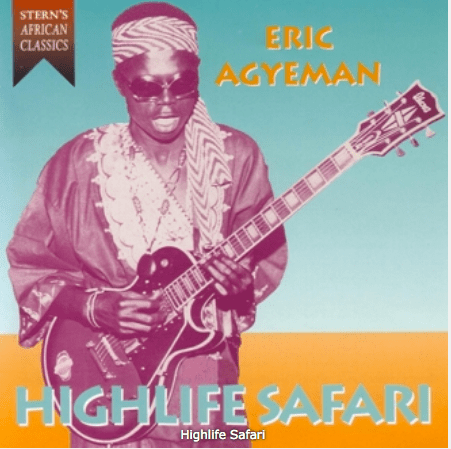
African music for beginners 5: Ghana highlife

23 Sunday Jun 2019

Posted by Simon Chapman AO in Blog

≈ Leave a comment

Screen Shot 2019-06-23 at 3.33.01 pm


I’ve had a passion for contemporary African music since the early 1980s, when I bought my first LPs by South Africa’s (late) Hugh Masekela and Cameroon’s Manu Dibango, went to my first African gig (the Congolese superstar Sam Mangwana and the African Allstars, at London’s Dominion Theatre near Waterloo). In the years since I’ve collected 1000s of LPs, cassettes, CDs and MP3s.

Before traveling to any city, I look up where its African quarter is and try to get out there to see if there are any music shops and bars.  Music shops are very sadly becoming a thing of the past as people move to digital access. I spent many lunch hours listening to music at Stern’s African Record Centre in Whitfield St just behind Tottenham Court Rd in London when I was studying there between March 1984‑November 1985. They are now an on-line shop and also have a blog.

I subscribe to the monthly email from Alastair Johnston’s invaluable Musikifan record review page, buy lots of books on African music, and maintain an ever-expanding Spotify African page. While for some artists it can be very patchy, Spotify has a delightfully vast range of African music, including a lot of very obscure archival music, sometimes replete with scratchy sounds from the old LPs from where it has been digitised.

I have recently started a Youtube page with live African music concerts.

Over the next months, I’ll post country-by-country blogs with lots of recommendations for those starting out to explore the vast catalogue of African music. I’ll only be including those that I like, with links to the tracks on my Spotify page or to Youtube when they are not available on Spotify. These are just a taste that I hope might infect you in the way I was.

EARLIER SELECTIONS

1.Senegal selections here

2.Zimbabwe selections here

3.Mali selections here

4.Nigeria selections here

GHANA (Highlife)

Eric Agyemang

  • I don’t care
  • Neo abe beto

AB Crentsil

  • I go pay you tomorrow
  • Papa Somo
  • Naana
  • Baako Nindi (youtube)

CK Mann

  • Abobrase

Adomako Nyamekye

  • Ano plan
  • Obra twa owuo

African Connexion

  • C’est la dance

Amakye Dede

  • Akwadaa wesoa (youtube)

Kuntum 13 Band

  • Ye beko Yesu

Bassa Bassa Soundz

  • Disturbed (Discogs)

George Darko

  • Odoyewu (Youtube)

Sweet Talks

  • Nawa to be husband
  • Angelina
  • Kyekye pe aware

Pat Thomas

  • Merebre
  • Mewo akoma

West African Highlife Band

  • Taxi driver

ET Mensah

  • All for you
  • Sanbra

African music for beginners 4: Nigeria

17 Monday Jun 2019

Posted by Simon Chapman AO in Blog

≈ Leave a comment

fela-kuti-documentary-music-is-the-weapon

Fela Kuti

I’ve had a passion for contemporary African music since the early 1980s, when I bought my first LPs by South Africa’s (late) Hugh Masekela and Cameroon’s Manu Dibango, went to my first African gig (the Congolese superstar Sam Mangwana and the African Allstars, at London’s Dominion Theatre near Waterloo). In the years since I’ve collected 1000s of LPs, cassettes, CDs and MP3s.

Before traveling to any city, I look up where its African quarter is and try to get out there to see if there are any music shops and bars.  Music shops are very sadly becoming a thing of the past as people move to digital access. I spent many lunch hours listening to music at Stern’s African Record Centre in Whitfield St just behind Tottenham Court Rd in London when I was studying there between March 1984‑November 1985. They are now an on-line shop and also have a blog.

I subscribe to the monthly email from Alastair Johnston’s invaluable Musikifan record review page, buy lots of books on African music, and maintain an ever-expanding Spotify African page. While for some artists it can be very patchy, Spotify has a delightfully vast range of African music, including a lot of very obscure archival music, sometimes replete with scratchy sounds from the old LPs from where it has been digitised.

I have recently started a Youtube page with live African music concerts.

Over the next months, I’ll post country-by-country blogs with lots of recommendations for those starting out to explore the vast catalogue of African music. I’ll only be including those that I like, with links to the tracks on my Spotify page or to Youtube when they are not available on Spotify. These are just a taste that I hope might infect you in the way I was.

Senegal selections here  Zimbabwe selections here Mali selections here

Nigeria

Chief Ebenezer Obey

  • Ohun oju ri laye medley
  • a fi k’oluwa ko wa yo (youtube)

Femi Kuti

  • Traitors of Africa
  • Tension grip Africa

Fela Kuti

  • You give me shit, I give you shit
  • Lady
  • Johnny just drop (JDD)
  • Shakara

Seun Kuti & Egypt 80

  • Na oil

King Sunny Adé

  • Ma jaiye oni
  • Ere bere (youtube)
  • Bobby (youtube)

Lagbaja

  • Side by side (youtube)
  • Toun terin (youtube)

Onyeka Onwenu

  • Ekwe (youtube)

Tony Allen

  • African message

African music for beginners 3: Mali

11 Tuesday Jun 2019

Posted by Simon Chapman AO in Blog

≈ Leave a comment


Vieux
Fatou

I’ve had a passion for contemporary African music since the early 1980s, when I bought my first LPs by South Africa’s (late) Hugh Masekela and Cameroon’s Manu Dibango, went to my first African gig (the Congolese superstar Sam Mangwana and the African Allstars, at London’s Dominion Theatre near Waterloo). In the years since I’ve collected 1000s of LPs, cassettes, CDs and MP3s.

Before traveling to any city, I look up where its African quarter is and try to get out there to see if there are any music shops and bars.  Music shops are very sadly becoming a thing of the past as people move to digital access. I spent many lunch hours listening to music at Stern’s African Record Centre in Whitfield St just behind Tottenham Court Rd in London when I was studying there between March 1984‑November 1985. They are now an on-line shop and also have a blog.

I subscribe to the monthly email from Alastair Johnston’s invaluable Musikifan record review page, buy lots of books on African music, and maintain an ever-expanding Spotify African page. While for some artists it can be very patchy, Spotify has a delightfully vast range of African music, including a lot of very obscure archival music, sometimes replete with scratchy sounds from the old LPs from where it has been digitised.

I have recently started a Youtube page with live African music concerts.

Over the next months, I’ll post country-by-country blogs with lots of recommendations for those starting out to explore the vast catalogue of African music. I’ll only be including those that I like, with links to the tracks on my Spotify page or to Youtube when they are not available on Spotify. These are just a taste that I hope might infect you in the way I was.

Senegal selections here

Zimbabwe selection here


Mali


Ali Farka Touré

  • Asco
  • Ai du
  • Kala djura

Amadou et Mariam

  • Chantez chantez
  • Djanfa

Boubacar Traoré

  • Soundiata
  • Bougoudani

Cheikh Tidane Seck with Hank Jones

  • Fantagué

Djelimady Tounkara

  • Mandé djeliou
  • Fanta bourama

Fatimata Diawara

  • Wililé
  • Sowa

Habib Koité

  • Saramaya
  • Cigarette abana

Issa Bagayago

  • Gnele
  • Filaw
  • M’ba fodi

Kasse Mady

  • Laban djoro
  • Den te san

Mama Sissoko

  • Mannsane cisse

Rail Band de Bamako

  • Konowale
  • Foliba
  • Kamalimba

Rokia Traoré

  • Ka moun kè

Salif Keita

  • N’toman
  • M’bemba
  • Mandjou

Tinariwen

  • Chatma

Vieux Farka Touré

  • Dounia
  • Diallo
  • Diaraby magni

African music for beginners 2: Zimbabwe

06 Thursday Jun 2019

Posted by Simon Chapman AO in Blog

≈ Leave a comment


Screen Shot 2019-06-06 at 11.23.20 am

I’ve had a passion for contemporary African music since the early 1980s, when I bought my first LPs by South Africa’s (late) Hugh Masekela and Cameroon’s Manu Dibango, went to my first African gig (the Congolese superstar Sam Mangwana and the African Allstars, at London’s Dominion Theatre near Waterloo). In the years since I’ve collected 1000s of LPs, cassettes, CDs and MP3s.

Before traveling to any city, I look up where its African quarter is and try to get out there to see if there are any music shops and bars.  Music shops are very sadly becoming a thing of the past as people move to digital access. I spent many lunch hours listening to music at Stern’s African Record Centre in Whitfield St just behind Tottenham Court Rd in London when I was studying there between March 1984‑November 1985. They are now an on-line shop and also have a blog.

I subscribe to the monthly email from Alastair Johnston’s invaluable Musikifan record review page, buy lots of books on African music, and maintain an ever-expanding Spotify African page. While for some artists it can be very patchy, Spotify has a delightfully vast range of African music, including a lot of very obscure archival music, sometimes replete with scratchy sounds from the old LPs from where it has been digitised.

I have recently started a Youtube page with live African music concerts.

Over the next months, I’ll post country-by-country blogs with lots of recommendations for those starting out to explore the vast catalogue of African music. I’ll only be including those that I like, with links to the tracks on my Spotify page or to Youtube when they are not available on Spotify. These are just a taste that I hope might infect you in the way I was.

See Senegal selections here

Zimbabwe

Bhundu Boys

  • Hatisitose (Youtube)
  • Hupenyu hwangu (Youtube)

Four Brothers

  • Makorokoto
  • Emeriah (Youtube)

James Chimombe & the Ocean City Band

  • Bindura
  • Siya wawoneka

Jonah Sithole

  • Ereniya (Youtube)

Lovemore Majaivana

  • Okwabanye

Machanic Manyeruke & the Puritans (gospel)

  • Makorokoto
  • Jesu Pamusoro Pemvura (Youtube)

Oliver Mtukudzi

  • Shanda

Real Sounds

  • Wende Zako

Thomas Mapfumo & Blacks Unlimited

  • Kukuvarira mukati/Suffer in silence (Youtube)
  • Musanyepere
  • Ngoma yekwedu (Youtube)
  • Chako dechako (Youtube)


African music for beginners 1: Senegal

03 Monday Jun 2019

Posted by Simon Chapman AO in Blog

≈ 4 Comments


350px-Orchestra_Baobab

Orchestra Baobab

I’ve had a passion for contemporary African music since the early 1980s, when I bought my first LPs by South Africa’s (late) Hugh Masekela and Cameroon’s Manu Dibango, went to my first African gig (the Congolese superstar Sam Mangwana and the African Allstars, at London’s The Venue near Waterloo station on May 17, 1984). In the years since I’ve collected 1000s of LPs, cassettes, CDs and MP3s. In 1985-6 I ran a late night African music program on Adelaide’s 5MMM radio and more recently, I’ve played African selections three times on Simon Marnie’s Sonic Journey on ABC Sydney.

Before traveling to any city, I look up the location of its  African quarter and try to get out there to see if there are any music shops and bars.  Music shops are very sadly becoming a thing of the past as people move to digital access. I spent many lunch hours listening to music at Stern’s African Record Centre in Whitfield St just behind Tottenham Court Rd in London when I was studying there between March 1984‑November 1985. They are now an on-line shop and also have a blog.

I subscribe to the monthly email from Alastair Johnston’s invaluable Musikifan record review page, buy lots of books on African music, and maintain an ever-expanding Spotify African page. While for some artists it can be very patchy,  Spotify has a delightfully vast range of African music, including a lot of very obscure archival music, sometimes replete with scratchy sounds from the old LPs from where it has been digitised.

I have recently started a Youtube page with live African music concerts.

Over the next months, I’ll post country-by-country blogs with lots of recommendations for those starting out to explore the vast and intimidating catalogue of African music. I’ll only be including examples of those that I like, with links to the tracks on my Spotify page. These are just a taste that I hope might infect you in the way I was.

Senegal

Africando (and Africando Allstars) – African salsa

  • Sey
  • Xale Bile

Baaba Maal

  • Muudo Horomo
  • Cherie
  • Minuit (with Jamaican guitarist Ernest Ranglin)
  • Haayo

Cheikh Lô

  • Bambay Gueej

Dexter Johnson & Super Stars de Dakar (old time jazz)

  • El Corazon
  • Angelitos Negros

Ismaël Lô

  • Nabou

Mansour Seck

  • Soukabe Leydam

Orchestra Baobab

  • Coumba
  • Sutukun
  • Hommage a Tonton Ferrer
  • Utu Horas
  • Digone Ngama

Thione Seck

  • Mane Mi Gnoul
  • Sopekou
  • Ballago

Toure Kunda

  • Emma
  • Salya

Wasis Diop

  • African Dream

Youssou N’Dour

  • Jalo
  • Fakastalu
  • Mame bamba
  • Chimes of freedom

Xalam

  • Kanu2

Blog Stats

  • 163,470 hits

Top Posts & Pages

  • Why I’m not quitting Spotify because its owner has hugely invested in weaponry
  • Australia takes off the gloves on illegal tobacco while ‘lower the tax’ fantasists plumb new absurdities
  • About/CV
  • Vaping theology: 6 There’s nicotine in potatoes and tomatoes, so should we restrict or ban them too?
  • My books
  • Regrets … I’ve had a few. Paul Hogan and his Winfield role.
  • Thinking of keeping koi? Advice for beginners in NSW
  • Cheap illegal cigarettes save low income pack-a-day smokers over $9000 a year. So why don’t social justice champions give them full support?
  • Why Australia’s illegal tobacco and vape trade continues to flourish and what should be done about it
  • My first seen, best and worst bands 1964-2022

Blog archive

Comment Policy: No anonymous or pseudonymous posts will be published

Recent Posts

  • Australia takes off the gloves on illegal tobacco while ‘lower the tax’ fantasists plumb new absurdities
  • Egg on some faces: statisticians at 10 paces on the impact of New Zealand’s vape laws on youth smoking
  • Lowering tobacco tax to make illegal tobacco sales “disappear overnight”: at last we have a proposed figure and it’s an absolute doozie
  • Why I’m not quitting Spotify because its owner has hugely invested in weaponry
  • Should we believe Fiona Patten on vapes? Here are just a few problems

Recent Comments

Jon Krueger's avatarJon Krueger on Egg on some faces: statisticia…
Atul Kapur's avatarAtul Kapur on Should we believe Fiona Patten…
Unknown's avatarCould a national tob… on If expensive cigarettes are dr…
tahirturk1's avatartahirturk1 on Why Australia’s illegal tobacc…
malonere's avatarmalonere on Words I’ve seen, but didn’t kn…

Archives

  • December 2025
  • August 2025
  • July 2025
  • June 2025
  • May 2025
  • March 2025
  • January 2025
  • November 2024
  • October 2024
  • September 2024
  • July 2024
  • May 2024
  • April 2024
  • March 2024
  • February 2024
  • January 2024
  • December 2023
  • November 2023
  • October 2023
  • September 2023
  • August 2023
  • July 2023
  • June 2023
  • May 2023
  • March 2023
  • February 2023
  • January 2023
  • December 2022
  • November 2022
  • October 2022
  • August 2022
  • June 2022
  • April 2022
  • March 2022
  • February 2022
  • January 2022
  • December 2021
  • October 2021
  • September 2021
  • August 2021
  • June 2021
  • May 2021
  • April 2021
  • March 2021
  • February 2021
  • January 2021
  • December 2020
  • November 2020
  • October 2020
  • September 2020
  • August 2020
  • July 2020
  • June 2020
  • May 2020
  • April 2020
  • March 2020
  • February 2020
  • January 2020
  • December 2019
  • November 2019
  • October 2019
  • September 2019
  • August 2019
  • July 2019
  • June 2019
  • May 2019
  • April 2019
  • March 2019
  • February 2019
  • January 2019
  • December 2018
  • November 2018
  • October 2018
  • September 2018
  • August 2018

Categories

  • Blog

Meta

  • Create account
  • Log in
  • Entries feed
  • Comments feed
  • WordPress.com

Blog at WordPress.com.

  • Subscribe Subscribed
    • Simon Chapman AO
    • Join 198 other subscribers
    • Already have a WordPress.com account? Log in now.
    • Simon Chapman AO
    • Subscribe Subscribed
    • Sign up
    • Log in
    • Report this content
    • View site in Reader
    • Manage subscriptions
    • Collapse this bar
 

Loading Comments...