
At 71, I’ve rarely missed an evening meal. Until I was about 20, I had almost no experience with superb cooking, as did most who grew up in the 1950s-60s in Australia. Impoverished student days in the early 1970s were mostly spent eating pasta, stews, sausages and even lean meat offcuts our local butcher sold to greyhound owners (see sordid story at p12 here). But as I moved though the next decades, cooking and eating out became some of the greatest pleasures. Across over 18,000 evening meals and many thousands of lunches across 50 years, here, in no special order, are fourteen I will never forget.
With most, I’ve of course long forgotten exactly what I ate: it was much more about the total experience — the food, the wine, the setting, the company, and in the case of a night out in Istanbul (#14 below), what happened very unexpectedly.
Tetsuya’s Rozelle When I met my wife Trish in 1990, my heart melted. She was my 7 year old son Joe’s school teacher and parent-teacher interviews were a challenge for our concentration. I lived near Tetsuya’s first eponymous restaurant in Rozelle, Sydney and took her there not once but twice for their fabled degustation dinner. She’s small, beautiful inside and out and mesmerising. And so were each of the dishes we ate those nights, especially the confit of ocean trout, shown here. Tetsuya has now long been in Kent Street in the city. Here’s his history. It was very expensive then, and hideously so today. So we very rarely eat out at that level. But Tetsuya’s is unforgettable and compulsory in this selection.
M on the Bund ,Shanghai I was a staff-elected fellow of the governing Senate at the University of Sydney for two terms when Marie Bashir was Chancellor. I travelled to Shanghai with a party of senior academics for a graduation ceremony and meetings with Fudan University contacts. One night, a small party of us booked a balcony table with views across and down the Huangpu river. I sat next to Marie and well remember our conversation but little of what we ate other than it was utterly exquisite from start to finish. If you are ever in Shanghai, just go there.
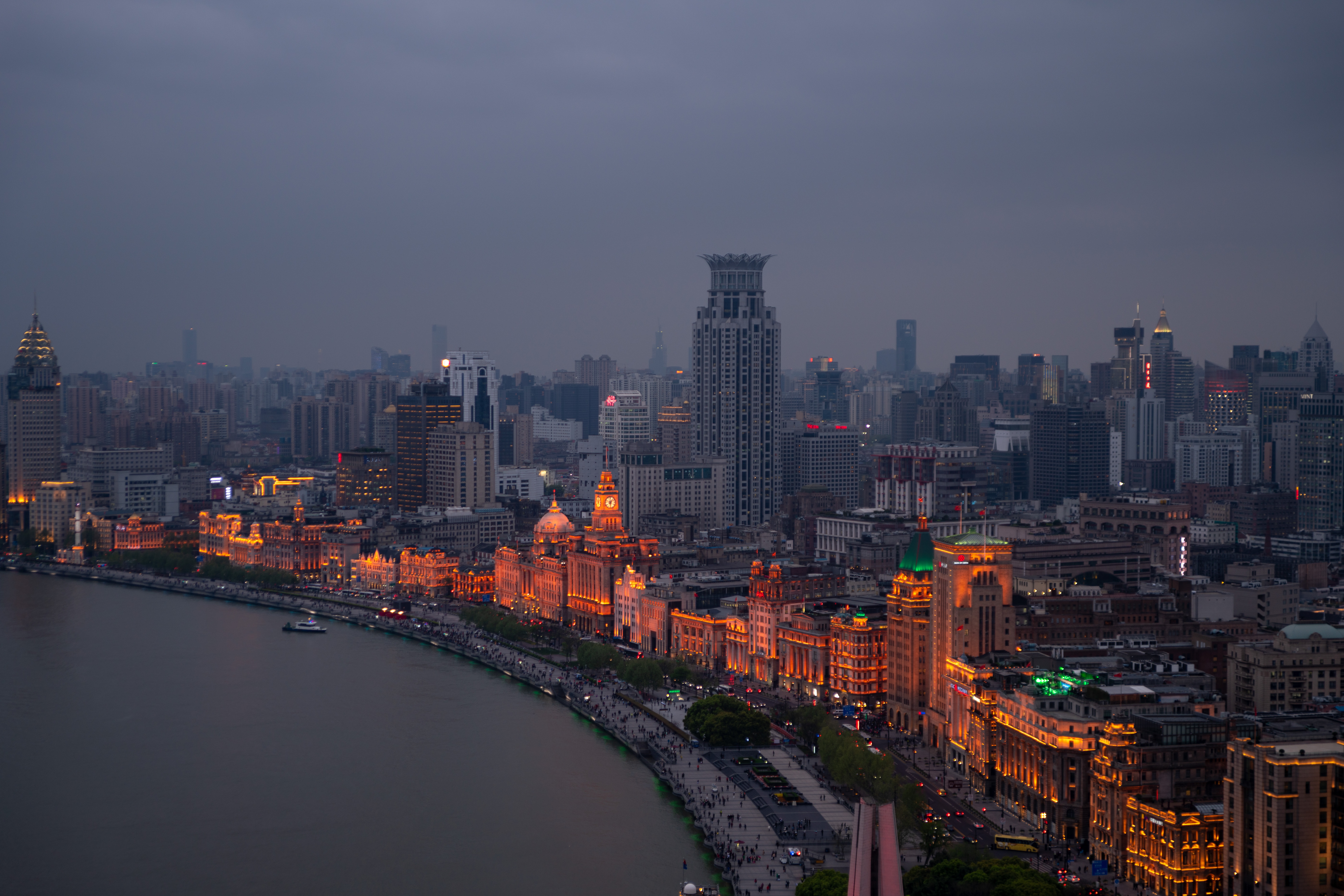
Photo by Darren Nunis on Unsplash
Monoprix, Ledru Rollin, Paris We have a close friend who owns an apartment in Paris, near Bastille. We’ve stayed there twice when she’s back in Sydney. On our second trip, we arrived from the airport mid-morning. I went immediately to a huge Monoprix supermarket across the street and bought for lunch fresh peaches, baguette, porc rillette, an amazing saucisson with peppercorns, Lou Perac sheep’s cheese and a bottle of St Emilion grand cru. All for under 40 euro. You can eat like this all over France. Heaven.

My stewed rabbit in Chianti with porcini
When our three kids were in their early teens, we all flew to Rome, hired a car at the airport and drove for a month up to Paris. In Tuscany we rented a stone cottage from a Mr Botticelli about 10km outside of Poggibonsi. A Dutch couple had an adjacent cottage with the woman sunbathing topless for hours in full view of our captivated adolescent boys.
I drove to the nearest supermarket and found they had lots of skinned rabbit (coniglio). I bought two and using total guesswork without a cookbook or internet reception, seared them in butter, sage and onion, then stewed them in decent Chianti and fresh porcini mushrooms. The entire family, including me, was gobsmacked at the result. It’s been a signature dish in the years since. Three days later we ran into the Dutch couple in a street in Florence and had dinner with them in a restaurant right on the Arno. I ordered fegato (calf liver) with spinach. Unbelievably wonderful after a childhood of dry, overcooked liver.
Reykjavik, Iceland
I went to Iceland in 2003 to give some talks to local health workers. My host, Thor, was a prolific Icelandic author, a former member of the Icelandic football team, my counterpart in the Department of Health and an Icelandic god. He took me to a restaurant and I asked him to order for me. Here’s an excerpt from a travel short story I wrote (see p86).
“At lunch the next day, after I’d given a couple of talks to researchers and health department people, Thor asked me what I’d like to eat. “What you eat in Iceland” I told him. “Something local”, imagining herring pickled or cooked in an Icelandic way or smoked local meats preserved for the long winters. He took me to a small restaurant with a view over the sea and ordered several dishes while we talked about our lives and families. The first dish arrived. It was a small spread of thin strips of a dark meat, cooked in a light vinegary sauce, a little thicker than a carpaccio cut. It was as tender a flesh as I’d ever eaten. “So what is it?” he played with me. I guessed it might have been a prime cut of reindeer backstrap or fillet. No. Perhaps the dark meat of a local goose? No.
It was …. wait for this … puffin, those impossibly cute, small gull-like seabirds with their beautiful half-moon red and black striped beaks and wise little eyes. I’d assumed that they would be protected and that people would all recoil from killing and eating them because of their iconic beauty and cuteness. Well not at all, sunshines. It turned out they are commonly eaten in Iceland and on restaurant menus, listed as lundi, all over the country.
A few dishes later, a decent-sized steak arrived. It was as succulent as I’d ever tasted and assumed it must have been prime local beef. But no. It was whale. I thought Iceland might have been a signatory to some global treaty against whaling as I knew it had progressive social and environmental policies. Thor confirmed this, explaining that entrepreneurs anticipating the ban had stored tonnes of whale meat in refrigerated containers which were being very slowly consumed in the years since, as we had just done. If ever I’d experienced true, deep ambivalence, this was the moment.”
Hotel Windsor, Lake Toya, Hokkaido Japan
In September 2009, I went to Sapporo to give the opening address to the all-Japan conference on tobacco control. The entire meeting was in Japanese, with me being translated. I was keen to get back to Tokyo when my talk ended as I would understand little of what other speakers would be talking about. But the woman appointed by the conference to help me around, quietly advised that this would cause considerable offence and that the conference head, a leading surgeon, planned to show me the sights of Hokkaido. I decided I should stay.
And well I did. We travelled to the north west of the Island by train and were then driven from the station to the most luxurious hotel I could ever imagine, let alone stay in: The Windsor. It had hosted the 34th G8 meeting in 2008 and overlooked the volcanic Lake Toya through silent autumn mists. A Russian string quartet played discretely in the lobby throughout the day. On its top floor, there was a Michelin 3 star French restaurant to which the surgeon invited me and a Seventh Day Adventist from Tasmania who had also been at the conference, along with our interpreter.
The Adventist of course didn’t smoke. But neither did he drink alcohol, eat meat or drink tea or coffee, poor fellow. While we moved from a stunning Pouilly-Fuisse to a grand cru Haut Medoc, he sipped water. My wagyu steak was beyond words. The Adventist’s salad and mushrooms looked pretty good too.

Photo credit: Wotif
Margot Jervies, next door
We’ve lived next to a couple for over 20 years, Margot Jervies and Wayne Wilkinson. The day they bought the house, I quietly asked the real estate agent who our new neighbours would be. “Oh a lovely couple! He’s an engineer and she works for British American Tobacco!” This will be interesting, I thought.
Things were polite and chatty for many years and then began to rapidly thaw after we both retired. You could not wish for better neighbours. Margot won an ABC radio cooking quiz about 10 years ago. We often could smell her dreamy cooking in our garden. When I later saw a whole room in their house with cookbooks from floor to ceiling on every wall, I knew that here was a very serious cook. And then the texts commenced “I’ve just made a big batch of passata [or duck confit, or rillette, or gravlax or baba ganoush &c], if you come to the back gate I’ve put some in a box for you”
There is nothing … nothing Margot cannot cook that doesn’t leap into pole position for the “best I’ve ever had of that” prize.
When COVID first hit in 2020, the isolation was truly dispiriting. I hit on the idea that a few neighbours might meet in the back lane on late Sunday afternoon when we took out the bins. We would dress up fully for the nostalgia of fine dining, using our wheelie bins as tables to rest a few bottles of wine and bring a few horses’ doovers to share. All at strict distancing.

Wayne & Margot, sommelier & chef extraordinaire
Margot and Wayne took this to the next level when COVID restrictions changed to allow small numbers to come to houses. They put on four hour plus le grand bouffe meals for a few of us. Margot’s food brough gasps from all around the table and Wayne, a very serious wine collector, always shares wonderful wines.
They’ve just been away for seven weeks. We’ve been counting the days.
Trish Kirby’s famous chicken and leek pie
Trish has always loved cooking and people who come here swoon at what she can do, especially with cakes. Our family often does a roundtable where we say “if you were going to have your last meal cooked by Trish, what would it be?” The unanimous verdict, across three generations, is always her chicken and leek pie.
A long-time close friend in Newtown had been nursing her aged mother at home for several weeks who was dying from breast cancer. Trish baked a large pie and took it down for respite eating for our exhausted friend and her partner.
The friend phoned the next day and said “you’ll never guess. Mum hadn’t eaten a thing in many days. But when she smelled your chicken and leek pie she asked for some and ate the lot!”
Her mother died the next day.
Kazkazuri, San Sebastian
In September 2016, I’d been running an advocacy course for four days at an old quarantine station on Menorca, in Spain’s Balearic Islands. When it was over we flew to Basque country to revisit San Sebastian where I’d last stayed in a decrepit dormitory hostel in 1972. On a rainy Friday night we threw a dart at the list of the many restaurant recommendations friends and locals had given us. We chose the Kazkauri on the waterfront. It said 25 euro a head for three courses. Yeah, sure. Unlike the chaos of pintxos bars, this one had a sober, rather sterile interior, white napkins and obsequious waiters. And yes, the menu said 25 euro, including wine, water, bread, coffee.
We expected mediocre food and rubbish wine. Trish asked for the blanco, me the tinto, expecting a glass each. But two full bottles of very good white and red arrived, crianza vintage. We then commenced a near-perfect three courses, both starting with stewed cod in rice. I moved to Iberian pork in a sherry sauce and señora chose roast duck. The dessert was an astonishing coconut pudding with chocolate, which was west of heaven.

Trish’s stewed cod in rice, Kazkazuri, San Sebastian, Spain
Pippi spaghetti
When our three kids were little, we’d go most years for a week or two down the south coast of NSW in months when you could swim in warm water. We loved the vast uncrowded beaches, dolphins and (once upon a time, long ago) cheap oysters. We went to Manyana, Culburra, Geroa and Bendalong, sometimes with other families.
Most afternoons, all of us would go down to the beach with a bucket looking for pippis, the common surf clam mainly used by fishers for bait. To find them, low tide is best particularly at tidal estuaries where the shellfish feed on micro organisms that wash down rivers and out to sea. Tell tale signs of good spots include seeing them being rolled in the sand by the waves and quick strikes when you twist, Chubby Checker style, in the sand reaching down for them when you feel them underfoot.
Pippis are a wonderful but under-rated alterative for vongole, a seafood staple in Italian restaurants in pasta dishes. We’d try and get about half a bucket full to allow enough to feed our daily group of five. Once home, you put the live pippis in fresh water, which is supposed to cause them to spit out any sand. This was never successful, so the served product was always a little gritty causing variable protests from the more Princess-and-the-pea members of the family.
You cook them up in white wine, with a base of garlic, lemon and olive oil, or a standard tomato base. A big bowl goes in the centre of the table for the spent shells.
This meal is imprinted in the childhood memories of all our kids, as well as two grandchildren. The photo shows Florence, aged about seven, jubilant at finding lots of shells after being knocked over fully clothed by a wave seconds after starting.
There’s something wonderful about collecting the food you want to eat and seeing everyone enjoy it so much.

Rhodes harbour café In the 1980s one summer I stayed a few nights on a friend’s modest yacht in Rhodes harbour, once overlooked by the Colossos of Rhodes, the largest statue in the ancient world until it fell into the harbour in an earthquake in 226 BC. We talked and drank with other yachties till about 11pm and then decided it was time to eat. A small harbourside café produced bottles of the local white wine to go with plates of fried marida (whitebait) and the sweet barbouni (red mullet) with lemon. Still hungry, the only food left was BBQ’d quails, so a plate of them with ouzo was produced. We got back to the boat about 2am and slept till midday
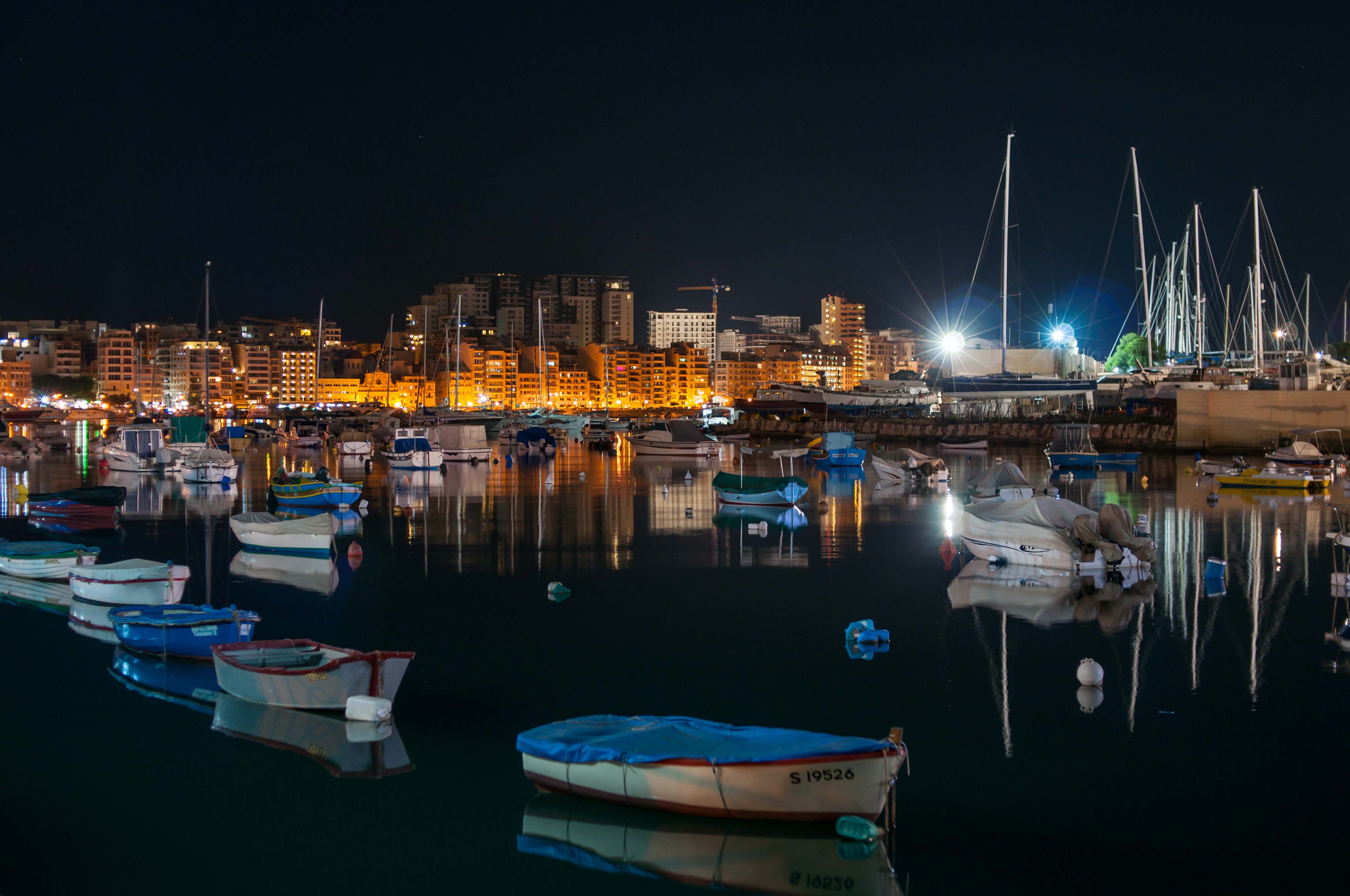
Photo by Alexander Serzhantov on Unsplash
Ristorante Vecchia Urbino, Marche, Italy
Kenneth Clarke’s Civilisation TV series has been etched into my memory for years, especially the episode on Raphael who painted at Urbino in Italy’s Marche region in the northeast. So on a trip to Italy, we looped from Umbria to Urbino, then on to Bologna, Parma and Milan. The one night we planned to stay in Urbino took us to a potluck choice of a restaurant a few streets off the main drag through the small town.
There was a central table covered in a huge selection of top drawer antipasto. Our waiter asked us for our wine selection. We’d had a superb glass of a local white, verdicchio, at lunch. Trish was very keen to have it again. I like both red and white, but prefer red. The waiter gave me an understanding look but brought the verdicchio.
When he bought our mains, mine was a glorious bistecca. He put it in front of me and returned with a steak knife and a huge glass of red. I said “oh, sorry I didn’t order that”. He replied “I know that you like red wine, so please have this one with our compliments.” He’d also brought us about five small bowls with different olive oil in them to soak with bread, all gratis.
And at the end of the meal, when we thought we’d need a forklift to get us out of our seats and declined dessert, he insisted and brought those as well, also gratis with several dessert wines.
The entire meal was perfect in every way and we drove the next today to Bologna feeling that we had been blessed to have lucked that choice and that we might not eat such a meal again for a very long time.
Ten minutes from the end of the 170km trip down the autostrada to Bologna, Trish asked me for my passport to get ready for the hotel registration. Ahh. I’d forgotten to collect it from reception at the Urbino hotel. Like groundhog day, we turned the car around, drove back to the hotel, booked in again and ate again that night at the perfect restaurant. Some shine was missing the second time, but still 9 out of 10.
Linda’s on King, Newtown
I’d walked past this small restaurant many times but never noticed it. It’s on lower King St – the St Peters end — and right next to the European Grill, a Macedonian grill which is a carnivore’s eating orgy temple. Linda’s had been recommended by Newtown friends. I’d never even heard of it. But after our first meal there, I knew I would be a regular.
Linda cooks and her partner does all the front of house. The food is French. Well, modern French I guess. You can bring your own wine (although their list has some very good selections at reasonable markups). The last time I ate there I had a superb home made pork terrine of very generous proportions, followed by a perfectly cooked eye fillet steak with bearnaise sauce and perfect fritte, then a perfect vanilla pannacotta, mango sorbet, lychee granita and macadamia praline. Perfect, perfect. Sorry, but there was no other word for it all. Here’s the current menu. Astonishing value.
Istanbul. The mesmerising item not on the menu
I leave the most unforgettable to last. It happened in Istanbul’s Taksim district one evening in 2014 when, as a wonderful Turkish meal got into full swing, something happened that took the attention of every diner in the restaurant. Full details here.




 Simon Chapman AO