
Ron Phillips was health minister in the NSW Fahey Liberal government from June 1992- March 1995. One day I was invited to meet with him in his office. I wasn’t briefed about the purpose of the meeting but when I got there, I found myself with a handful of colleagues I knew well from tobacco control.
Phillips adopted a confidential tone and explained that a delegation from the International Olympic Committee would soon be in Sydney to meet with government, sporting and business officials at a critical phase in the selection process for which city would host the 2000 Olympics.
His message to us was that several key members of the IOC group were smokers known to be irritated by not being able to smoke wherever they wished. Australia was internationally in the forefront of tobacco control policies like banning advertising and increasing smoke-free spaces. There were concerns that while the IOC was in town that if we opportunistically turned up the heat on the government to ban smoking at all Olympic facilities and in restaurants, pubs and clubs throughout the state this might irritate some of the smoking members of the delegation and jeopardise their votes. Every possibility was being covered off.
Phillips asked if we would all please put any concerns we might have on ice until the delegation left town and voted. He was highly sensitive to how this request might go down, and subtly hinted that if we would cooperate, the government would be immensely grateful. He emphasised that there was lots of support within the government for finishing the job on smoke-free areas. Public transport, airports, cinemas and theatres had long been smoke-free. A large number of workplaces had banned smoking indoors and many restaurants voluntary offered non-smoking sections, with magic lines dividing smoking from non-smoking sections. However, somebody had forgotten to tell the smoke about how it was supposed to behave, so policy reform was well overdue.
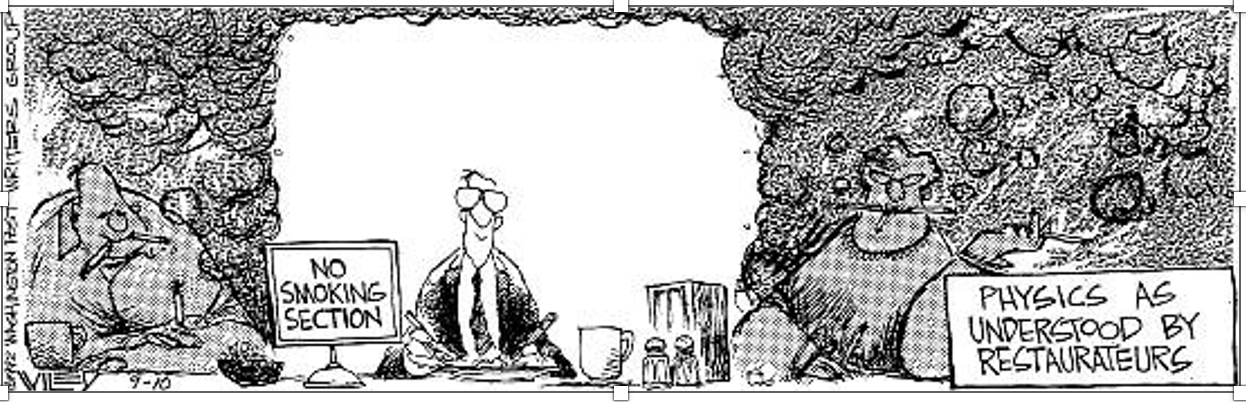
The barely hidden subtext was that if we played ball and kept temporarily quiet, things could change after the Olympics announcement. We all instinctively and immediately agreed that this was a very sensible thing to do.
Around coffee, I noted aloud that someone who was prominent in tobacco control advocacy in NSW was absent. Phillips said this person had not been invited because it was feared that they would rush straight from the meeting and megaphone what had been said to the media. For this person, there could be no compromise: if environmental tobacco smoke was harmful, it was harmful in every setting, not just those already lost by pro-smoking lobby groups.
We all of course agreed with this colleague’s aims. But where we differed was in the tactical process that would best achieve the reforms we wanted.
The announcement that Sydney had won the bid was made on September 24, 1993, seven years out from 2000. The Fahey government lost power to the Bob Carr Labor opposition in March 1995. No advances in smokefree policy were made in the 25 months between the Olympics host announcement and the defeat of the Liberal government but we had avoided the possibility of tobacco policy being blamed if Sydney had lost the Olympics. Then, with the new Labor government, we all rapidly cranked up smoke-free policy advocacy, and well before the 2000 Olympics, the government declared Olympic facilities would be smoke free. Restaurants banned smoking 10 days before the Olympics commenced. This was politically assured by personal leadership especially from premier Bob Carr and his health minister (1999-2003) Craig Knowles. Pubs and clubs followed in 2004, with Frank Sartor, NSW Minister Assisting the Minister for Health (Cancer), being politically resolute in the face of fierce lobbying from the pubs and clubs lobbies.
Long game perspectives
Phillip’s remark about the uninvited advocate burned into my understanding of the long game of how policy changes. I incorporated the episode into my public health advocacy teaching in the Master of Public Health at the University of Sydney. It kindled a research interest into questions of the nature of public health influence and of how it is that politicians, their staff and senior bureaucrats decide to consult and work with particular experts, leaders and lobby groups and ignore others.
A 2008-10 NHMRC grant I led, What characterises influential public health policy research in Australia? produced seven papers. Four of the most important were:
- Chapman S, Haynes A, Derrick G, Sturk H, Hall WS, St.George A. Reaching “an audience that you would never dream of speaking to”: influential public health researchers’ views on the role of news media in influencing policy and public understanding. J Health Communication 2014;19(2):260–73
- Haynes AS, Derrick GE, Redman S, Hall WD, JA Gillespie, Chapman S, Sturk H. Identifying trustworthy experts: the ways that policymakers find and assess researchers for consultation and collaboration. PloS One 2012; 7(3): e32665.
- Haynes A, Derrick G, Chapman S, Gillespie J, Redman S, Hall W, Sturk H. Galvanisers, guides, champions and shields: the many ways that policymakers use public health researchers. Milbank Quarterly 2011;89:564–98
- Haynes AS, Derrick GE, Chapman S, Redman S, Hall WD, Gillespie J, Sturk H. From ‘our world’ to the ‘real world’: exploring the behavior of policy influential Australian public health researchers. Soc Sci Med 2011;72:1047–55
The characteristics that most would expect that politicians would seek in the experts they chose to consult were invariably mentioned by the senior informants we interviewed. These included research seniority and reputation, prestige of their institution, prominence, ability to communicate scientific complexity to non-experts, and responsiveness to urgent requests for guidance. But we were also struck by how often informants mentioned qualities that were decidedly personal.
Personal attributes important
Outstanding among these were comments about experts’ sophistication in understanding the complexity and contested nature of the policy process, the frequent need to play the longer, incremental game rather than always expect iconoclastic, rapid change and critically, what we might bluntly call the “no dickheads” rule.
Professional attributes such as deep knowledge, a helicopter view of evidence, determination, passion, persistence and effective communication skills were highlighted by those we interviewed. But interpersonal factors such as likability, friendliness, generosity and having a sense of humour were given equal emphasis by many interviewees. Those who were seen as prickly, dogmatic or selfish were viewed as seldom influential by both other researchers and policy makers.
These personal attributes are not the sort of qualities that are typically taught or coached in postgraduate public health degrees alongside epidemiology, biostatistics, health promotion, health economics and the myriad disease or injury specific specialisations that students elect to study.
Instead they are lessons that many of us learn very early in life in our upbringing and from reflections about the type of people we respect, like and want to keep company with, and the obverse, those whom we deliberately ignore and avoid.
We can all immediately think of some we know whom we don’t respect, are obnoxious in some way and who consequently we actively avoid. We see them coming toward us at a social gathering and say to those around us “quick, let’s move away. Dickhead X is on his way over”. We don’t return their calls and emails, ignore, mute or block their tweets and often share our assessment of them with others who typically instantly reciprocate with their own florid experiences.
A lightning-fast route into this purdah is the truly bizarre belief that the best way to have a politician, health agency or expert group want to rush you into their inner circle of confidence and trust, is to rain down florid abuse and criticism on them from the outset.
Imagine you were a health minister who hears a critic tearing into her day-after-day in the media. Strange as it may seem, most people actively avoid those who regularly berate them. Politicians are no different.
Vaping advocates’ self-exile outside the policy tent
In recent years, policy development on vaping has seen a tiny group of “let it rip” medical advocates in policy lock-step with extreme-right politicians, all Big Tobacco companies and the cash-hungry convenience store lobby, with its Big Tobacco connections. During the Turnbull and Morrison years, they might have expected much common ground with a conservative government, except that they came up against Health Minister Greg Hunt who was implacably committed to strong regulation of vapes, a baton seamlessly accepted by Labor via an equally committed Mark Butler.
These advocates’ unerring response to this has been to turn up the pillory volume to 11, and play endless pantomime-standard roles as heroic Galilean truth-tellers who are locked out of the political tent but will one day be vindicated as their truths are validated.
They seem blind to the reality that they are reaping the legacy of their fervid embrace of their right-wing political bedfellows who are marks of Cain on all those known to have fawned over them.
In concluding, I emphasise that all this does not mean that effective advocates need to be slavering sycophants to politicians, agreeing with their every pronouncement if they want to secure influence. Most experienced politicians immensely value independence and integrity in their advisors and understand that there will always be areas of disagreement.
In periods when various factors conspire to make it unlikely that a policy you are advocating will be quickly adopted, the long game need not be barren. While dickhead public health advocates blaze away at their political enemies, guaranteeing an enduring lack of influence that can last years or even decades, there are long game objectives about building enduring respect.
During the Howard years, I was rarely consulted or invited onto committees because I had spent 20 years as a strong advocate for regulations that gave many conservative governments dyspepsia. Labor governments have generally been more willing to embrace public health reforms. Instead, in those lean years I put effort into assisting colleagues who were inside the tent in bureaucracy or on committees who often reached out for advice, as well as continuing to publicise my research to the media.
I saw this as a long game which would eventually mature with changes in government. The first time I met Nicola Roxon was in her final months of being in political opposition. I mentioned that I didn’t believe we had ever met. She instantly replied that she felt like she’d known me all her adult life, presumably because of my many years of policy advocacy. After she became Health Minister, I was delighted to be one of those whose advice she followed in introducing plain packaging and other strong tobacco control measures. It was similar with Mark Butler, whom I’d also never met or written to. Within weeks of the new government coming to power he organised a meeting where I gave an overview of where tobacco control might head.
Australia’s vaping advocates, like the tobacco industry before them, are totally marginalised in political circles with any power. Their public voices are confined to a diminishing number of news outlets, to social media echo chambers, blogs and personal videos with mostly desultory viewing numbers. Without exception, Big Tobacco has lost every policy battle it fought. Vaping promoters are on the same trajectory. Their regular splenetic ranting at anyone not sharing their vaping theology precepts is seeing their credibility evaporate. Keep it up, guys.





 Simon Chapman AO