• Home
  • About/CV
  • Blog
  • Vaping Research Alerts
  • Blog archive list
  • My books
  • Memoirs
  • Music, bands, films
  • Contact

Simon Chapman AO

~ Public health, memoirs, music

Simon Chapman AO

Monthly Archives: November 2023

Vaping theology 19: vaping explosions are rare and those who mention them are hypocrites

17 Friday Nov 2023

Posted by Simon Chapman AO in Blog

≈ 1 Comment

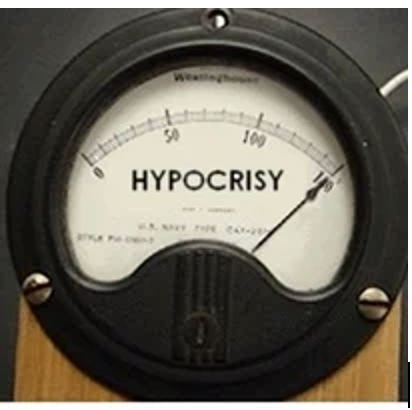
This week, on the cusp of the rollout of their worst nightmare of vaping regulation,  serial vaping barrel-scrapers Colin Mendelsohn and Alex Wodak reached deep into the murky depths of their vaping theology lexicon and pulled out the old hypocrisy meme.

This was also a week where Mendelsohn, with “the greatest humility” let us know that he was gonged with a coveted award from the UK Vaping Industry Association (UKVIA) as their new public health golden boy.

In his blog, he helpfully explained UKVIA’s  impact on smoking:

Col also updated his website FAQs (see under ‘fires and explosions’) with a generally sensible series of tips on how to prevent your vape exploding. But he just couldn’t resist adding a photo of me and my electric vehicle.

His tag-team partner in sophistry, someone who goes on and on and on about the need for civility, politeness and respect, helped out by making the relevance of the photo explicit in a subsequent tweet.

Exploding vapes have grabbed headlines for good reason, as this show-reel of incidents illustrates. Here’s a 2018 review of 164 cases on e-cigarette explosion injuries. 35% resulted in second degree burns and 20% in third degree burns (the worst), with many necessitating skin grafts. The most common sites were thighs, hands, face and genitals.

But when it comes to catastrophic risk, it’s explosions on aircraft that are most concerning. The US Federal Aviation Administration (FAA) advises that any device using lithium batteries should be stored in carry-on  luggage. But its regulations only prohibit a small range of devices from stowed luggage and these include … you guessed it … electronic cigarettes and vapes. Now why would that be? Because as they explain:

“Electronic smoking devices, like vapes and e-cigarettes, contain lithium batteries and are considered dangerous goods due to their risk of smoke, fire and extreme heat. As such, they are restricted to on how they can be packed when preparing for travel on an aircraft. These devices were the leading cause of lithium battery incidents on aircraft in 2022.” 

The potential consequence of an intense heat vape battery fire deep in the hold of a crowded airliner is dire.

But hey, what would the world’s largest airline regulator know, when Col and Alex think it’s all just “exploiting fear” to mention explosions as a concern?

Yes, I drive an electric vehicle. And undoubtedly just like both Mendelsohn’s and Wodak’s, my house is also full of appliances that use lithium batteries: laptops, tablets, mobile phones, power banks, torches, remote controls, fitness monitors, and power tools. When these products very rarely catch on fire, we typically see highly publicised global recalls like this laptop, these power tool batteries  and the infamous Samsung Galaxy Note 7.

But Google couldn’t show me any examples of recalls for exploding vapes. This almost certainly reflects the cowboy nature of vast segments of the vaping manufacturing industry and the thousands of equally dodgy retailers willing to stock them.

Electric vehicles have much lower probability of catching fire than internal combustion engine (ICE) vehicles. From 2010-2023 EV FireSafe has verified 393 EV battery fires globally. To put this in context, there are some 30 million EVs on the world’s roads. This Conversation review points to fires in ICE vehicles being some 80 times more common than in EVs. Tesla’s 2020 impact report argued that there was one Tesla fire for every 330 million kilometres  their vehicles have travelled. Tesla automatically collects full kilometer and incident data for every car it has ever sold, across all owners.

After reading about the explosion risks of vapes and EVs, I’m very pleased to warm my nether regions in winter driving on the Tesla’s  battery powered seat warmers rather than risk molten lithium trickling around my testicles if I vaped. Goodness, gracious great balls of fire!

Wodak’s apparent understanding of the comparative risks and consequences of vape explosions with those occurring in EVs seems about as informed as his unforgettable comparison of nicotine in tobacco with that in vegetables like eggplants and potatoes, the most opened of all blogs in this series.

Hypocrisy? Not guilty m’lud.

Other blogs in this series

Vaping theology: 1 The Cancer Council Australia takes huge donations from cigarette retailers. WordPress  30 Jul, 2020

Vaping theology: 2 Tobacco control advocates help Big Tobacco. WordPress 12 Aug, 2020

Vaping theology: 3 Australia’s prescribed vaping model “privileges” Big Tobacco WordPress Feb 15, 2020

Vaping theology: 4 Many in tobacco control do not support open access to vapes because they are just protecting their jobs. WordPress 27 Feb 2021

Vaping theology: 5 I take money from China and Bloomberg to conduct bogus studies. WordPress 6 Mar, 2021

Vaping theology: 6 There’s nicotine in potatoes and tomatoes so should we restrict or ban them too? WordPress 9 Mar, 2021

Vaping theology: 7 Vaping prohibitionists have been punished, hurt, suffered and damaged by Big Tobacco WordPress 2 Jun, 2021

Vaping theology: 8 I hide behind troll account. WordPress 29 Jun, 2021

Vaping theology: 9 “Won’t somebody please think of the children”. WordPress 6 Sep, 2021

Vaping theology: 10: Almost all young people who vape regularly are already smokers before they tried vaping. WordPress 10 Sep, 2021

Vaping theology: 11 The sky is about to fall in as nicotine vaping starts to require a prescription in Australia. WordPress 28 Sep, 2021

Vaping theology: 12 Nicotine is not very addictive WordPress 3 Jan 2022

Vaping theology 13: Kids who try vaping and then start smoking,would have started smoking regardless. WordPress 20 Jan, 2023

Vaping theology 14: Policies that strictly regulate vaping will drive huge numbers of vapers back to smoking, causing many deaths. WordPress 13 Feb, 2023

Vaping theology 15: The government’s prescription vape access scheme has failed, so let’s regulate and reward illegal sellers for what they’ve been doing. WordPress 27 Mar 2023

Vaping theology 16: “Humans are not rats, so everybody calm down about nicotine being harmful to teenage brains”. WordPress 13 Jul, 2023

Vaping theology 17: “Vaping advocates need to be civil, polite and respectful” … oh wait. WordPress 3 Oct, 2023

Vaping theology 18: Vaping is a fatally disruptive “Kodak moment” for smoking. WordPress Oct 30, 2023

Vaping theology 19: Vaping explosions are rare and those who mention them are hypocrites. WordPress 17 Nov, 2023

Vaping theology 20 : Today’s smokers are hard core nicotine dependent who’ve tried everything and failed – so they need vapes. WordPress 14 Dec, 2023

Vaping theology 21: Australia’s prescription vapes policy failed and saw rises in underage vaping and smoking. WordPress 10 Jan, 2024

Vaping theology 22: “Prohibition has never worked at any point for any other illicit substance”. WordPress 17 Mar 2024

Vaping theology 23: “84% of the Australian public are opposed to the way the government will regulate vapes” WordPress 2 Apr, 2024

Vaping Theology 24: “Tobacco control advocates are responsible for vape retail store fire bombings and murders. WordPress 27 May, 2024

Three amendments to Australia’s vaping regulations that would make them even more powerful

14 Tuesday Nov 2023

Posted by Simon Chapman AO in Blog

≈ Leave a comment

Image by Kjerstin Michaela Noomi Sakura Gihle Martinsen Haraldsen from Pixabay

Australia will soon fully implement its new vaping regulations. The twin pillars of these are :

(1) that nicotine vaping products will only be legally available to those with a doctor’s prescription. As prescribed substances can only be sold by registered pharmacists, all other retailing will be illegal. Flavoured, disposable vapes will be banned. The Therapeutic Goods Administration and state and territory governments are empowered to penalise anyone unauthorised who sells or advertises vapes. Very recently, the Federal Court ordered a vaping company to pay a penalty of $4.9 million plus the legal costs of the Commonwealth for advertising vapes. Such penalties are likely to have a major deterrent effect on illegal retailing.

(2) vapes (both with nicotine and without) will be illegal to manufacture or import into Australia unless these products are intended for sale to pharmacists who will dispense them to those with prescriptions. Seizures weighing 32 tonnes and valued at $11 million have recently been made as police and customs surveillance increases.

The TGA recently invited responses to its proposed regulations. Below is my brief submission. It recommends three amendments that I believe would sharpen the Government’s regulatory intent.

Responses to Proposed Reforms to the Regulation of Vapes

Thank you for the opportunity to respond to the proposed reforms to the regulation of vapes. Overall, the proposed reforms are quite outstanding. They are likely to attract international attention as a template for international Nicotine Vaping Products (NVP) regulation. I am in strong support of all proposals with the exception of those set out below.

Tank systems

On page 6, the document specifies that refillable tank systems are included in the definition of permitted vapes.

This is concerning as it will circumvent the regulatory intent to greatly limit the use of flavours in prescription-accessible vaping products. While only two permissible flavours are prescribed (tobacco and mint), many tank system users will undoubtedly add flavours not intended for vaping (aromatics, essential oils etc) to their tanks. It will be impossible to regulate the availability of such flavours as they are widely used in cooking, air freshening and perfumery.  Vaping chat rooms have long had extensive discussions about flavouring ingredients which participants have been using. This may well greatly accelerate with the proscriptions on all but two flavours.

The document also states early that:

“Vaping devices are currently excluded from regulation under the TG Act unless they are intended exclusively for the vaporisation and administration by inhalation of a medicine. It is proposed that the exclusion is revisited in the context of these reforms to ensure that proper controls and oversight are applied to device components of vapes moving forward.”

This looks like the door could be closed on legal sale of mods and tanks, with all that goes along with user adjustable coil temperature settings and adding non prescribed liquid flavours.

The exclusion of tank systems seems ripe to foment a whole new rise in tank use and the commerce that supports it. I would urge the TGA  to revisit the exclusion of vaping devices from the TG Act and advise the government that only closed pod system NVPs should be legal in Australia and that for ex-prescription sales of mod and tank vaping devices to remain legal would threaten the integrity of the proposed NVP regulations.

Collateral uses of vaping devices

An outstanding concern here is also that mod/tank vaping apparatus can be used to vapourise other drugs which according to this San Diego drug treatment centre can include cannabis. LSD, GHB (gamma hydroxybutyrate) and ketamine.  This is far from rare. A 2022 Kings College London survey found that 14.7% of people aged 18+ in the UK had ever vaped a non-nicotine drug, with nearly 1 in 56 (1.8%) currently doing it. In 2019, 3.9% of 19-24 Americans (1 in 26) had vaped cannabis in the last 30 days. I’ve found no data on other drug vaping by under 18s, which of course does not mean it is not happening.

As of February 18, 2020 a total of 2,807  people had been hospitalised in the USA for vaping product use-associated lung injury (EVALI). 68 people died. Of these:

  • 82% reported using THC-containing products; 33% reported exclusive use of THC-containing products.
  • 57% reported using nicotine-containing products; 14% reported exclusive use of nicotine-containing products.

No data appear to be available on the incidence of health incidents following vaping other drugs, but  the World Drug Survey included questions on it in a recent survey..

Mod/tank systems were invented and marketed to facilitate nicotine vaping. But like a Trojan horse, they have also enabled widespread vaping of non-nicotine drugs which have killed and seriously harmed thousands in the US alone.

Collateral damage (negative externalities) from intended use is routinely considered in all formal risk assessments in health and community safety.  For example, gun control policy considers gun misuse, not just approved uses in hunting and target shooting; DDT was widely used in Australia in agriculture and termite control where it was extremely effective, but banned in 1987 because of its collateral residual health risks to humans.  

There are many mods and tanks now in the community. If the Act disallows nicotine e-juice intended to be decanted into tanks, these mods and tanks will sit in drawers as useless without the legal availability of nicotine e-juice essential to nicotine vaping.  I strongly urge you to reconsider allowing prescription supply of nicotine e-juice for tanks and also to prohibit the sale of mods and tanks vaping apparatus for the reasons I have outlined.

Section 3.1 Mint and tobacco flavours

Comment: No inhalable therapeutic goods contain flavouring chemicals for the very important reason that it is inadvisable to inhale chemical agents which have not been thoroughly assessed as being generally regarded as safe (GRAS) for inhalation. Asthma inhalants like salbutamol are a perfect example of this. This is particularly important with the regulation of NVPs because daily vapers typically inhale vapes some 500 times daily. The long term health consequences of this remain unknown.

I therefore strongly agree with the critical importance of strictly limiting the range of flavours in prescription accessible NVPs. I also accept that it is important that the taste of NVPs should not be so unpleasant and unpalatable to those using them for smoking cessation so as to cause many intending NVP users to rapidly abandon them.

As far as I am aware, there are no GRAS data available for the proposed mint flavour when being inhaled.  However, in the trade-off between this concern about possible long term consequences of  deeply inhaling vapourised mint some 500 times a day by daily vapers, and the concern to make NVPs not taste or smell repulsive, I believe allowing mint flavour would be a reasonable compromise.

However, I do not support the proposal to allow a flavour named “tobacco” flavour. If it is proposed that there be a specific,  standard, fully prescribed (defined)  flavour known as “tobacco” this will presumably taste and smell like the taste and smell of tobacco. This is likely to strongly remind smokers who are vaping of the taste and smell of the tobacco they had been (and for dual users) still are smoking. If we reasonably assume that for many smokers this smell and taste will evoke strong positive associations, then the availability of a tobacco vape flavour may act as “pull” factor back toward smoking which would not be sensible.

It would be far preferable to permit a flavour with an anodyne name that neither denoted or connoted any appealing associations. Examples of such names might include “standard”, “classic”, “basic” or “regular”.  Here is an example of advertising for Nicorette NRT gum using “classic”. I do not believe any NRT products are flavoured with “tobacco”.

The flavour and smell sensations delivered by such anodyne descriptors would be such that users would not instantly associate the taste or flavour with any fruit, confectionary, beverage or food. Taste panels could be used to rate taste acceptability and to ensure that candidate flavours did not evoke any proscribed associated tastes or smells.

Section 3.1.3 Lowering maximum nicotine concentration in e-liquids to 20 mg/mL in base form (or base equivalent), to align with the limits in the EU, UK and Canada.

It is critically important to note that, unlike Australia, the EU, EK and Canada do not yet have a prescription-access only NVP policy like Australia. They have set the 20 mg/mL nicotine limit to try and reduce the likelihood of nicotine naïve children becoming addicted.

Australia’s limit is not being set for prevention of regular use by children (who will rarely be prescribed NVPs) but for already addicted smokers trying to quit. This is a very important difference against which the wisdom of reducing the current limit of 100 mg/mL to 20 mg/mL needs to be considered. I believe such a large reduction is misguided.

Medicinal cannabis which has been legally prescribable in Australia for several years is not seeing diversion from prescription access to those without prescriptions. This would seem relevant to concerns about limiting prescription vapes to 20mg/mL. If there is indeed concern that major diversion might occur and therefore a  low limit justified for safety reasons, the unlikelihood of diversion occurring is a strong counterpoint to this.

NRT nicotine limits produce dismal cessation rates

For decades, it has been widely acknowledged that nicotine replacement therapy’s dismal effectiveness in smoking cessation under conditions of real-world use is in large part due to its poor ability to successfully satisfy nicotine cravings developed by smokers. Even under the highly artificial conditions in which RCTs are conducted, some 95% of smokers using NRT in RCTs are smoking at post six months follow-up. In this 2021 systematic review, 61% of smokers  allocated to NRT in RCTs adhered to the recommended use throughout trials, compared to only 26% in longitudinal population (real world) studies.

The research literature on NRT contains many recommendations about contemporaneous multiple modes of NRT use and lifetime use. This points further to recognition that NRT in the limited very low nicotine doses that have been approved performs very poorly in cessation under conditions of real world use.

It is fundamental to the understanding of vaping behaviour that those with nicotine dependence change their puff parameters (puff frequency, puff volume, between puff intervals) to obtain the nicotine dose that satisfies their cravings.  When there is a low maximum nicotine level in a vape, more dependent users will typically puff more and in larger volumes to reduce their cravings. If the nicotine level was higher, across a 24 hour period they would take less puffs from a higher yielding vape than from a much lower yielding one.

The growing research literature on airways inflammation is too immature to be certain about which components of vape emissions are likely to be of most concern. But it seems very unlikely that the normal dose-response relationship would be somehow different with vaping than it is for any other cause of lung damage, including smoking. The higher the exposure, the more likely the risk. A higher puff frequency and volume when using a low nicotine vape means users will be exposing their lungs to higher doses of excipients (propylene glycol/vegetable glycerine)  than they would if they were using a higher nicotine yielding vape.

This study notes that “in experimental animal studies, unheated PG or VG have minimal lung toxicity (14). However, when delivered from e-cigs, there are measurable increases in lung inflammatory infiltrates, cytokines, infections, reactive oxygen species, and gene expression (9, 15, 16).

By maximisng NVP nicotine concentration  at 20 mg/mL, it is highly probable that, as has long occurred with NRT, many heavily nicotine addicted users will similarly quickly desist from using prescribed vapes after finding that their cravings remain. This is obviously not the outcome being sought via prescription access to NVPs for those who are already nicotine addicted.

I would recommend a compromise here by lowering the maximum limit by half from 100 mg/mL to 50 mg/mL.

Competing interests

In July 2023 I was engaged as a temporary advisor by the World Health Organisation for a three day meeting on NVPs held in Geneva.

Submission to inquiry into e-cigarette regulation and compliance in New South Wales

07 Tuesday Nov 2023

Posted by Simon Chapman AO in Blog

≈ Leave a comment

I write to provide your Inquiry with information and suggestions about the regulation of vaping in NSW.

Here is a summary of my relevant expertise and background in this matter.

I am an Emeritus Professor in Public Health at the University of Sydney, from which I retired in February 2016.

My full CV with links to most publications

My personal blog at simonhapman6.com (see 66 blogs on vaping here https://simonchapman6.com/blog-archive-list/). The blog has been visited 119,378 times. 

My Conversation column and articles (n=113): 3.734 million reads

Ranked 16,808 for citations among 9,749,150 authors worldwide with 5 or more publications (in any field) from 1996-2022 (see here) and 132 among 59,062 public health authors

Career highlights

• Deputy editor (1992-97), Editor (1998-2008), Emeritus Editor since 2009, BMJ’s Tobacco Control

• World Health Organization World No Tobacco Day Medal for tobacco control, 1997

• National Heart Foundation (Australia), President’s Gold Medal, 1999

• American Cancer Society’s Luther Terry Medal for Outstanding Individual Leadership. 13th World Conference on Tobacco or Health, Helsinki, August 2003

• President’s Award Thoracic Society of Australia, 2006

• NSW Premier’s Award (medal and $50,000): Outstanding Cancer Researcher of the Year, 22 May 2008

• Elected Fellow of the Academy of Social Sciences of Australia (FASSA) 2008

• Sidney Sax Medal 2008: Public Health Association of Australia

• Distinguished Professorial Achievement Award, Faculty of Medicine, University of Sydney $10,000. November 2012

• Elected Honorary Fellow, Faculty of Public Health of Royal Colleges of Physicians of the United Kingdom March 2013

• Officer in the Order of Australia (AO) Jun 10, 2013 “for distinguished service to medical research as an academic and author, particularly in the area of public health policy, and to the community.”

• Australian Skeptic of the Year (awarded by Australian Skeptics Inc, Nov 23, 2013)

My latest book is  Quit smoking weapons of mass distraction. Sydney University Press (2022) OPEN ACCESS e-book (6,280 accesses since Jul 25, 2022)

***************************************************************************

In the matter of vaping in Australia,  state governments’ main responsibilities and powers lie in ensuring that the only supply of vaping products (VPs) occurs via prescribed access through pharmacies; in cooperating with the Therapeutic Goods Administration and the Commonwealth Government to ensure that VPs are not advertised or promoted in any way defined in the Bill soon to be tabled in the Federal Parliament; and in regulating where VPs can be consumed.

In this submission, I will focus only on those matters where the NSW Government has responsibilities. I have previously made a public submission to the TGA’s call in late 2022 for comment on issues such as the safety and effectiveness of vaping in assisting smoking cessation. I append that submission to this present submission.

A thought experiment

First, let me begin with a thought experiment.

Imagine the consequences if a huge, national pharmacy chain, in intense competition with its rivals for the multi-billion dollar prescription drug market was to say “We have decided to ignore the need for a prescription and supply prescription-only medicines to anyone asking for any prescribed drug.” Anyone wanting antibiotics, codeine, statins, steroids, anti-hypertensive drugs … you name it … could walk in, hand over their money and walk out with whatever drugs they wanted.

The reaction to this would be swift and iron-fisted, as shown here and here in cases where pharmacists were investigated and disciplined over unaccounted-for scheduled drugs.

Yet this is in effect what has been happening on a national scale in Australia since Oct 1, 2021, the date when the only legal access to nicotine vaping products became via a prescription legally needing to be dispensed at pharmacies and nowhere else.  But as is now blindingly obvious, only a tiny proportion of people who vape – estimates put this at below 4% — are today getting their vapes in this way. The rest are still buying them openly online, from shops brazenly signed with “Vapes sold here” or from many hundreds of suburban and town market stalls. Corner shops, petrol stations and an army of on-line sellers are openly defying the law.

There has been widespread, wholesale ignoring of the law across the country. Retailers have openly displayed, advertised and sold vaping products containing nicotine, often including those falsely labelled as not containing nicotine. (This recent study of VPs confiscated from 598 Sydney school student found that nearly all nearly all had av 40mg/ML nicotine, high levels of WS-23 coolant chemical and unapproved for inhalation flavour chemicals.)

This has occurred because of a perfect storm of the following factors:

  • There has been strong, rising demand for VPs, particularly by school children and persons aged under 35. Many of these vapers have never smoked. Many others continue to smoke for years after they also take up vaping
  • Those importing and retailing these products can earn extraordinary profit margins (see below)
  • The number of seizures and prosecutions for illegal selling have been tiny, relative the number of outlets selling these products and the number of illegal (by definition) black market transactions that occur across all of these outlets
  • The maximum fines for selling VPs in NSW are paltry, sending a signal to illegal retailers that the government does not take this illegal trade seriously
  • Retailers illegally selling VPs reason that the probability of being apprehended, stock seized, charges laid, prosecutions proceeding and maximum fines given by courts is exceedingly small: simply an unlikely irritant-level potential cost to be balanced against the massive profits to be made by breaking the law

Below is a screenshot I took on 31 Oct at 4.25pm of the results of searching on Facebook Marketplace for  the innocuous word “fruit”. But these advertisements are not for actual fruit. “Fruit” is instead being used as a code word for fruit flavoured vapes. The screen shot shows just a small sample of many such ads on Facebook Marketplace. I’m told that similar commerce is occurring on other social media platforms. They have been appearing unabated for several years.

Arguments that the illegal sale of VPs is now so widespread as to make it “impossible” to meaningfully mitigate its extent – that the genie is now so far out of the bottle that it cannot be returned — are VERY ignorant about the history tobacco control.

When I commenced my work in tobacco control the late 1970s, over 40% of men and 30% of women smoked, Today, some 10.7% of Australians smoke daily. If the attitude was taken in the 1970s that it was an impossible task to radically reduce smoking prevalence to and beyond the levels we have today, many thousands more than would have died than still occur each year despite Australia being internationally acknowledged as being in the forefront of tobacco control.

Highly profitable

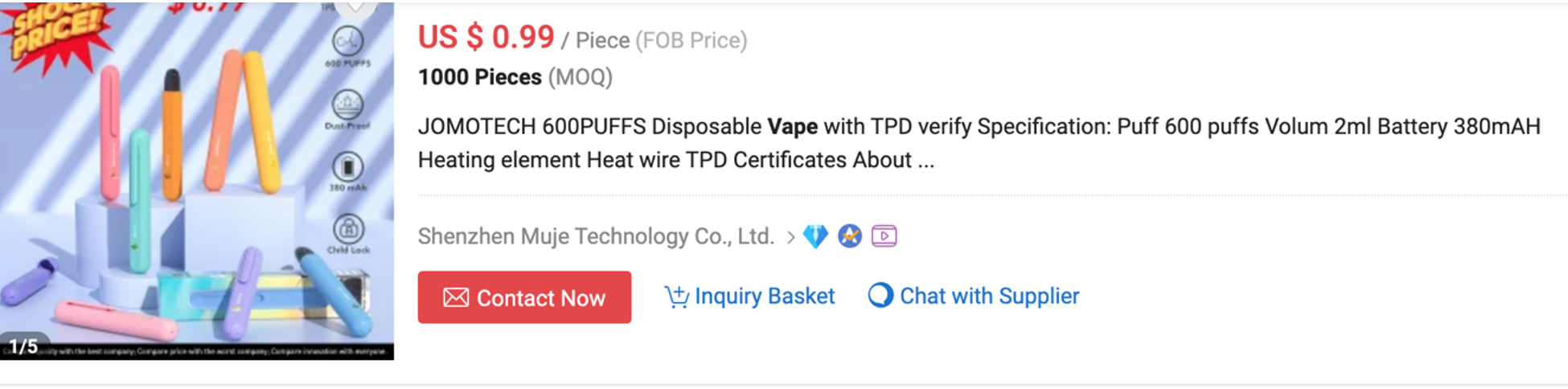
This website provides pricing for importers of many Chinese made VPs. Prices vary according to different models including the number of puffs available.  In the examples below (1) shows a 600 puff model that costs US$0.99 when purchased in lots of 1000; and (2) US3.50 -$3.80 for an 8000 puff model

(1)

(2)

An importer with control of retailing in Australia who invested $US50,000 (AUD$79,000) in example (1) — the 600 puff JOMOTECH above — and retailed each for AUD$15 would stand to make an AUD $1.106 million profit, 14 times their investment. If they invested the same US$50,000 (AUD$79,000) in the 8,000 puff EGO at a unit price of US$3.50 (this buying 22,571 EGO vapes) and retailed them for AUD$25 each (see Facebook Marketplace prices above for indicative retail prices) they would make $564,275 less their $79,000 investment, leaving $485,275 profit – over 6 times their investment.

Cheap disposable flavoured vapes thus promise enormous returns to those seeking to make fast money. The market segments most attracted to cheap vapes are those on low incomes, which importantly includes school children.

Critical importance of seriously deterrent fines

In NSW, the current maximum penalty for selling VPs is $1,650, six months in prison or both, in addition  to the loss incurred by confiscation and destruction of illegal stock without compensation. This maximum penalty contrasts dramatically with those being handed out by the TGA for advertising vapes.

This week, the Federal Court penalised a vaping company and its director $4.9m plus costs for unlawfully advertising VPs in Australia, after being prosecuted by the TGA. This follows penalties to other illegal VP advertisers and importers which have included of $105,600 (Jul 2023), $588,840 for illegal VP importing (Jun 2023); $16,000 to an individual importing VPs (May 2023); and $66,000 for importing VPs  (April 2023).

In Taiwan businesses which manufacture, import, sell or advertise VPs face a fine of a  minimum NT$10 million (AUD$493,000) up to NT$50 million (AUD2.466 million). 

In Singapore, any person convicted of selling VPs is liable to a fine of up to $10,000 (AUD$12,000) or imprisonment of up to 6 months or both for the first offence, and a fine of up to $20,000 (AUD$23,000) or imprisonment of up to 12 months or both for the second or subsequent offence.

Unless NSW lifts its penalties to seriously deterrent levels, most retailers who have long been knowingly breaking the law, will continue to do so. They will understandably reason that in the unlikely event that they are prosecuted, that the maximum fines they face are frankly petty cash inconveniences, with next to zero risk to their rivers of money from continuing to sell vapes.

NSW Health has released data in August on the number of successful prosecutions for selling NVPs between Jan 2020-Jun 2023. There have been just 27 of these, with 441,645 NVPs seized.

I’m advised that several factors have inhibited far wider prosecutions and seizures.

  1. At present only VPs containing nicotine are prohibited from sale in Australia other than to those with a prescription. This will change with the passage of Commonwealth legislation in the coming months when all VPs, regardless of whether they contain nicotine, will be proscribed from sale in any other retailer than licensed pharmacies to those with a doctor’s prescription. Until that time, successful prosecutions have required enforcement officers to determine whether a VP contains nicotine. This involves laboratory testing which is time-consuming and expensive. This has clearly greatly inhibited far more widespread efforts at prosecution
  2. During the COVID pandemic, many Health Department staff were reassigned to COVID-related duties. It is possible that raiding vaping retailers was given low priority across this time.
  3. While there is a link on NSW Health’s website to report retailers selling or advertising VPs, it has been given scant publicity compared with, for example, Crime Stoppers. You have to go looking hard for it. I have personally reported several retailers but have never received any follow-up advice on any of these reports. This silence would discourage the public from reporting more than once.

The Cancer Council NSW has an army of active volunteers  around the state who participate in fund raising, education and support for cancer control.  I would encourage the government to consider partnering with the Cancer Council to have its volunteers systematically attempt to purchase VPs across the state on a regular basis, providing statutory declarations and photographic evidence of their efforts.

This may greatly increase the number of reports that NSW Health would receive and with significantly increased penalties, would greatly facilitate more prosecutions and compliance with the law.

Unless all Australian state and territory governments seriously address the rampant vape sales law-breaking in each jurisdiction, the Federal Government’s prescription access policy will fail because many vapers will continue to purchase illegal VPs.

“Prohibition?”

To those who argue that the prescription access model is “prohibition”, it only needs to be pointed out that by this definition of prohibition all prescribed drugs are equally “prohibited”: all antibiotics, statins, hypertension control drugs, cholesterol drugs, oral contraceptives, strong pain killers, anti malarials etc. In 2020=21, in a population of 25 million, 314.8 million prescriptions were dispensed under the PBS and RPBS. Added to that were many more non-subsidised prescriptions.

It is clearly absurd to argue that such widespread access to restricted drugs via prescription is remotely akin to true prohibition of the sort that applies to illicit drugs.

Public vaping

With vapes not being banned under the proposed Federal legislation but allowed only to be sold to those with a doctors’ prescription, vaping, like smoking, of course should not be illegal.  However vaping causes significant indoor air pollution, particularly when large numbers of vapers vape in confined settings.

Here, it is significant that there is no airline in the world which allows vaping on board aircraft.

This study measured suspended particulate matter at an indoor vaping  meeting.During 6 time points when the event was ongoing, between 59 and 86 active vapers were present in the event room (room volume=4023 m3 ). While the event was ongoing, median PM2.5 concentrations in the event room increased from a baseline of 1.92–3.20 μg/m3 to concentrations that ranged from 311.68 μg/m3 (IQR 253.44–411.84 μg/m3 ) to 818.88 μg/m3 (IQR 760.64–975.04 μg/m3 ).

Importantly, PM2.5 concentrations observed at the vaping event were higher than concentrations reported previously in hookah cafés and bars that allowed cigarette smoking. This study indicates that indoor vaping can expose non-users to significant secondhand vape aerosol. Governments should prohibit vaping anywhere smoking is prohibited.

I would be pleased to answer any questions in person at the Inquiry.

Simon Chapman AO

Emeritus Professor School of Public Health

University of Sydney

2 Nov 2023

Blog Stats

  • 163,470 hits

Top Posts & Pages

  • Why I’m not quitting Spotify because its owner has hugely invested in weaponry
  • Australia takes off the gloves on illegal tobacco while ‘lower the tax’ fantasists plumb new absurdities
  • About/CV
  • Vaping theology: 6 There’s nicotine in potatoes and tomatoes, so should we restrict or ban them too?
  • My books
  • Regrets … I’ve had a few. Paul Hogan and his Winfield role.
  • Thinking of keeping koi? Advice for beginners in NSW
  • Cheap illegal cigarettes save low income pack-a-day smokers over $9000 a year. So why don’t social justice champions give them full support?
  • Why Australia’s illegal tobacco and vape trade continues to flourish and what should be done about it
  • My first seen, best and worst bands 1964-2022

Blog archive

Comment Policy: No anonymous or pseudonymous posts will be published

Recent Posts

  • Australia takes off the gloves on illegal tobacco while ‘lower the tax’ fantasists plumb new absurdities
  • Egg on some faces: statisticians at 10 paces on the impact of New Zealand’s vape laws on youth smoking
  • Lowering tobacco tax to make illegal tobacco sales “disappear overnight”: at last we have a proposed figure and it’s an absolute doozie
  • Why I’m not quitting Spotify because its owner has hugely invested in weaponry
  • Should we believe Fiona Patten on vapes? Here are just a few problems

Recent Comments

Jon Krueger's avatarJon Krueger on Egg on some faces: statisticia…
Atul Kapur's avatarAtul Kapur on Should we believe Fiona Patten…
Unknown's avatarCould a national tob… on If expensive cigarettes are dr…
tahirturk1's avatartahirturk1 on Why Australia’s illegal tobacc…
malonere's avatarmalonere on Words I’ve seen, but didn’t kn…

Archives

  • December 2025
  • August 2025
  • July 2025
  • June 2025
  • May 2025
  • March 2025
  • January 2025
  • November 2024
  • October 2024
  • September 2024
  • July 2024
  • May 2024
  • April 2024
  • March 2024
  • February 2024
  • January 2024
  • December 2023
  • November 2023
  • October 2023
  • September 2023
  • August 2023
  • July 2023
  • June 2023
  • May 2023
  • March 2023
  • February 2023
  • January 2023
  • December 2022
  • November 2022
  • October 2022
  • August 2022
  • June 2022
  • April 2022
  • March 2022
  • February 2022
  • January 2022
  • December 2021
  • October 2021
  • September 2021
  • August 2021
  • June 2021
  • May 2021
  • April 2021
  • March 2021
  • February 2021
  • January 2021
  • December 2020
  • November 2020
  • October 2020
  • September 2020
  • August 2020
  • July 2020
  • June 2020
  • May 2020
  • April 2020
  • March 2020
  • February 2020
  • January 2020
  • December 2019
  • November 2019
  • October 2019
  • September 2019
  • August 2019
  • July 2019
  • June 2019
  • May 2019
  • April 2019
  • March 2019
  • February 2019
  • January 2019
  • December 2018
  • November 2018
  • October 2018
  • September 2018
  • August 2018

Categories

  • Blog

Meta

  • Create account
  • Log in
  • Entries feed
  • Comments feed
  • WordPress.com

Blog at WordPress.com.

  • Subscribe Subscribed
    • Simon Chapman AO
    • Join 198 other subscribers
    • Already have a WordPress.com account? Log in now.
    • Simon Chapman AO
    • Subscribe Subscribed
    • Sign up
    • Log in
    • Report this content
    • View site in Reader
    • Manage subscriptions
    • Collapse this bar
 

Loading Comments...