All a conspiracy: anti-mobile phone fruitcake argues that all university research toes government cover-up line on 5G dangers

In 2016, I published with three cancer epidemiologists and biostatisticians, a paper that examined age and gender specific incidence rates of 19,858 male and 14,222 females diagnosed with brain cancer in Australia between 1982 and 2012, and mobile phone usage data from 1987 to 2012. We modelled expected age specific brain cancer rates (20–39, 40–59, 60–69, 70–84 years), based on published reports from case-control studies of relative risks (RR) of 1.5 (a 50% increase) in ever-users of mobile phones, and RR of 2.5 in a proportion of ‘heavy users’ (19% of all users), assuming a 10-year lag period between commencement of use and new cancer incidence.

We found no increases in the rates of brain cancer for any age group other than those aged 70+, but the increases in this age group commenced in the years before mobile phones were available in Australia. We concluded: “The observed stability of brain cancer incidence in Australia between 1982 and 2012 in all age groups except in those over 70 years compared to increasing modelled expected estimates, suggests that the observed increases in brain cancer incidence in the older age group are unlikely to be related to mobile phone use. Rather, we hypothesize that the observed increases in brain cancer incidence in Australia are related to the advent of improved diagnostic procedures when computed tomography and related imaging technologies were introduced in the early 1980s.”

Our results were consistent with studies showing the same lack of increase in the USA, New Zealand, the UK and the Nordic countries (see our paper for the references). A more fine-grained analysis of the Australian data published this year confirmed our findings

The Blue Mountains City Council west of Sydney, is currently being implored by  a small group of residents to somehow stop 5G mobile telephony coming to the area. I received requests for information from a councillor and “replied all” to a very long recipient list which I soon found out contained at least one anti 5G activist who soon got busy over several emails sending me a predictable litany of reasons why our study should be heavily discounted. I suggested that she might like to put her points in formal correspondence to Cancer Epidemiology, the journal which published our paper.

A fishy sociologist, employed by a university, funded by government favouring 5G
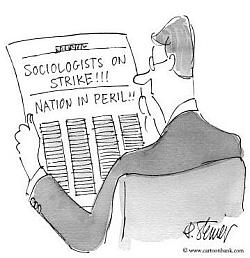
Sociologists strike

But I was highly amused by a section of her email that threw down triple gauntlets that a social scientist like me was not a “scientist”, that my work was “fishy” because I had once had a small grant from the mobile phone industry (21 years ago) to investigate the life-saving use of mobiles in emergency situations, and that I worked for a government-funded university and the government was supporting 5G.

She wrote:

“If you are a sociologist, which please understand is a noble profession, I am just wondering if that qualified you to be doing scientific research as when people find out you are a sociologist, wouldn’t that sort of take away a bit of credibility?

I am a little skeptical as to why you would do a research paper about phones use and brain cancers when you do say you did not get any funding for it (even though you have been funded before by Telcos for what i would regard as a large amount, if $23,895). Do you agree that people might think this is a little bit fishy, especially when you are not even a scientist but a sociologist. Even though you say you were not funded, aren’t you paid by the University which is in effect partially funded by the Federal Govt, which is pro 5G. So, even though you are not directly funded, you indirectly are by a group that is pro 5G. Sorry, this seems glaringly obvious to me but I may be wrong. Also, doesn’t it mean that your research is not really independent and you should be saying that rather than say you were not funded.?”

I replied:

“Your insinuation that my research was not independent is frankly offensive and profoundly silly. I repeat, it was NOT funded by anyone as funding was not necessary to simply analyse publicly available data.

If you or your associates were to repeat that in public, you would be making false and defamatory remarks. That would include any circulation of such comments by email which come to my attention.

The implication of your argument that, because I got  my salary from the government, that no one in a research institution that receives government funding can ever produce independent research on any matter because it somehow all reflects government policy, and, what … we all have our work scrutinized by an Orwellian committee to make sure it conforms to particular government policy (on here, 5G?) is beyond ludicrous.

You may be unaware, but I have spent most of my career researching and advocating for policy reforms in many areas (gun control, tobacco control, renewable energy etc ie: trying to get government policy changed). I have often been highly critical of government policy and governments.

So how do you begin to explain that I’ve had many government research grants, awards etc, if the research game is all about producing policy conforming research outputs that never challenge government policy?

This sails very close to conspiracy theory about universities researchers all being puppets of governments (which change far more often than many staff do in universities).  If that is your thing, I have nothing further to say to someone who seems attracted to such claptrap.

Similarly, your statement ‘you are not a scientist but a sociologist’ and your question ‘I am just wondering if that qualified you to be doing scientific research as when people find out you are a sociologist, wouldn’t that sort of take away a bit of credibility?’ are similarly offensive.

They suggest you are quite ignorant of what research is and the multi-disciplinary nature of research across all complex fields in medicine today.  I am an elected fellow of the Australian Academy of Social Science. The three other authors on my paper are all cancer epidemiologists. In 2008, I won the NSW Premier’s Cancer Researcher of the Year. My AO citation is  “for distinguished service to medical research as an academic and author, particularly in the area of public health policy, and to the community.”

A couple of weeks later, she replied, refusing to let go of her conspiracist bone:

“My apologies. You do work for the university and most people who have a degree of wisdom know that there is an increasing amount of control over university academia. One just has to look at the decreasing numbers of undergraduate studies to confirm this and the attacks against academics that may speak their mind. Whilst some free thinking academics remain, they are decreasing.”

In a paper I co-authored in 1998 looking at common themes in press reportage of anti-vaccination advocates, we identified cover up of vaccine risks by an unholy alliance of conspiracists in government, science and the pharmaceutical industry as dominant themes. It’s a meme which has a long history, invoked without fail by any interest group which fails to win arguments based on evidence. “All these reports are published by a global cabal of conspirators who push particular lines and suppress others. We are today’s Galileo’s speaking out against the modern church of science!” they plead.

The idea that universities in open societies have mechanisms that ensure all their staff never investigate or publish on any research question which might upset government or business interests is beyond preposterous and contradicted by oceans of examples across all fields of research. Those who persist in peddling this massively ignorant bilge deserve to have 10,000watt arc lights trained on their nonsense.

 

sprayCoffee

NSW elections: the three political parties intent on shredding Australia’s gun laws

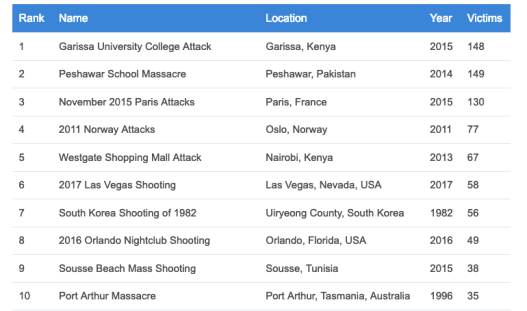
Australia is the envy of many nations because of its 1996 gun law reforms. These were introduced in the wake of Port Arthur, which was then the world’s second largest peace-time gun massacre in recent history. It has since been surpassed eight times

Screen Shot 2019-03-05 at 3.14.14 pm

Source

Australia had 13 mass fatal shootings (5 or more dead, not including the perpetrator) in the 18 years prior to the 1996 law reforms. It took 22 years until that period was interrupted by the family mass shooting in Margaret River, Western Australia when 8 members of a family were murdered by a grandfather.

The gun lobby has tried to talk down the 22 year absence of mass shootings by arguing that these events were rare before, and rare after, so it was impossible to argue anything other than that we were simply looking at a continuation of rare events and that nothing could be made of the 22 year gap.

In 2018, we put that proposition under the statistical microscope in a paper published in Annals of Internal Medicine, (full text and supplement) a high-ranking research journal. We tested this “rare events are still rare” dismissal. Using the eye-watering mathematics brought to our team by a senior maths academic at the University of Sydney,  we tested the likelihood of rare events being truly rare (insurance companies have long used these techniques to assess risk and set premiums). We tested the null hypothesis that the rate of mass shootings in Australia in the 18 years before the 1996 law reforms remained unchanged in the 22 years afterwards. We set out to see if the very obvious, was indeed very obvious.

We concluded the probability of this 22 year absence occurring following the pattern in the preceding 18 years was about 1 in 200,000. That’s odds slightly worse than a ticket holder winning first prize in the NSW $5 jackpot lottery: 1 in 180,000. Or as I once heard a famous statistics professor telling a gormless student “about the same odds of winning if you didn’t have a ticket”.

Before 1996, approximately 3 mass shootings took place every 4 years. Had they continued at this rate, approximately 16 incidents would have been expected since then by February 2018 (the date when we wrote our paper).

This Washington Post special report chronicles the mayhem of mass shootings in the USA.

Ever since the reforms, the gun lobby in Australia has sought to erode the 1996 reforms, which were immensely popular with citizens across the country.

Three political parties intent on eroding our gun laws

In the NSW state elections being held on March 23, three parties which want to introduce major diluting reforms to our gun laws are hoping to get candidates elected, particularly in the Upper House, where they may hold significant power as a voting bloc.

Liberal Democrats

David Leyonhjelm’s Liberal Democrats are unashamedly supportive of putting almost every aspect of our gun laws through the shredder. They want no restrictions on semi-automatic weapons, the sort favoured by mass killers because they can kill so many people so quickly; they want to do away with gun registration so that weapons could be traded as simply as you might sell an unwanted toy on eBay; children should be able to own guns (with no minimum age specified – why not buy an M16 for your 4 year old? None would ever take them to school to settle a grudge as happens with frightening regularity in the US: 89 school shootings since 2015 ); no restrictions on carry concealed weapons; and a loud hint that overthrowing governments by armed uprising might be a great idea (“Ownership of firearms is also the only practical means by which the people can retain any semblance of ensuring that governments remain their servants and not vice versa.”)

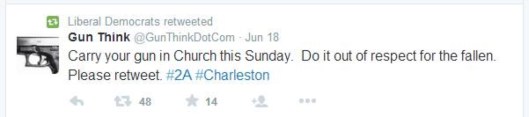
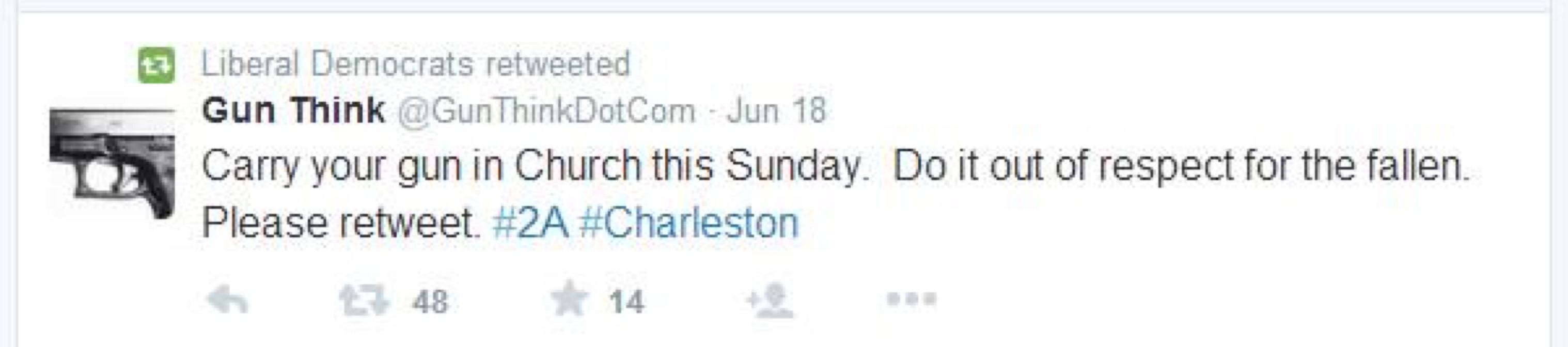
This is a party which retweeted a US tweet after the Charlestown church massacre, urging shooters to take their guns to church on Sunday as a mark of respect.

Carry Gun to Chrich

Pauline Hanson’s One Nation

One Nation’s gun policy is also on the front row of the grid of dreadfulness, channelling Trumpian views. Almost every one of its 20 policy positions opens up a loophole wide enough to lasso an open-cut coalmine. These were clearly penned by interests wanting to see practically every platform of our gun laws eviscerated. An assumption runs through many of these that it is criminals with a record who should be kept away from guns. A minority of Australia’s mass victim killers had any histories of violence. Hanson’s policy wold not have kept the Port Arthur killer from acquiring his weapons.

The NSW One Nation lead candidate, Mark Latham, appears to have some sympathy for some aspects of gun control, as revealed in this interview (warning do not listen after consuming food). If Latham follows the trajectory of several previous elected One Nation members, he’s likely to defect from Hanson’s party soon after being elected. But his visceral hatred of Labor may seem him side with pro-gun cross benchers, despite his apparent views.

Shooters and Fishers

Needless to say, the Shooters and Fishers  party is very pro-gun. While it does not support allowing the open return on semi-automatics, it wants to bring back self-protection as a reason to own a firearm. This was explicitly disallowed in the 1996 reforms and if reintroduced would see a tsunami of guns being purchased all for the apparent noble virtue of protecting one’s family from malevolent intruders. No one has ever better deflated the utter stupidity of this argument than Australian comedian Jim Jeffries here and here, as of today watched by 16.127 million viewers.

This study of 27 high income countries found a very high positive correlation between guns per capita per country and the rate of firearm-related deaths (0.80) and no significant correlation between guns per capita per country and crime rate (0.33.)  Lots of guns do not make nations safer.

I expect that few reading this blog would ever vote for any of the three parties above. But I also expect that many of you will have friends, colleagues or relatives who might. Please forward the link to this blog to them. For 99%, this will achieve nothing, But if a tiny proportion were somehow unaware of what gun control policies they were planning to vote for, and given pause when they are made aware, this could be important.

Footnote: Our 2016 JAMA paper looking at data on gun death trends in Australia 20 years after the 1996 reforms is here. And here is our detailed response the profoundly silly “yes, but…” objections made about our work by US researcher Gary Kleck, locker room pin up boy at gun clubs around the US.


What is it about far right conservatives and vaping activists in Australia?

[This blog was updated on 22 Jul, 2022]

In this blog, I’ll mostly just let the pictures do the talking. See if you can spot a trend.

L-R Unknown, Michael Kauter, British American Tobacco Australia’s lobbyist; Senator Pauline Hanson, Prof David Gracey; husband of Kauter and “senior counsel- health” to Kauter’s company; Senior Corporate and Government Affairs Manager Josh Fett
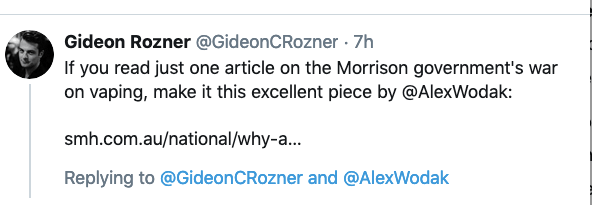
The Institute of Public Affairs’ Gideon Rozner gives ATHRA director Alex Wodak a pat on the back

Australia has two main activist groups out on the hustings for e-cigarettes: ATHRA (the Australian Tobacco Harm Reduction Association) and Legalise Vaping Australia (LGA) .. see more below.

(2018) Mendelsohn,Wilson,Paterson

Above: Tim Wilson MP (left) and Senator James Paterson (right) are former Institute of Public Affairs (IPA) employees. Colin Mendelsohn (centre) is a board member of ATHRA and an inveterate advocate for e-cigarettes. In 2010 Wilson had a very florid case of foot-in-mouth disease about plain tobacco packs when he was at the IPA, arguing that the adventure would cost the Australian government $3 billion (yes, billion) a year (yes, each year) in compensating tobacco companies for their “confiscated” intellectual property (their pack branding, if you can’t follow that). All that went quite down the drain when Australia’s High Court upheld the government’s actions by 6-1 with the World Trade Organization similarly waving it through.  You can read the whole saga here from p144. Mendelsohn’s public brown-nosing of this pair in this tweet caused hilarity among people I talked to.

Wilson-Paterson.png

Above: The sartorially elegant representatives and associates of Legalise Vaping Australia, a project of  the Australian Taxpayers Alliance, which is in turn affiliated with a miscellany of far right “groups”, as we can see by the striking similarity in the wording of these tweets sent by these five twitter accounts after the death of cartoonist Bill Leak on March 10, 2017. Mendelsohn from ATHRA is 6th from the left. Fashion note: it is always important to wear your broad brimmed hat indoors.

AllOneID_2017-04-08 17.37.14

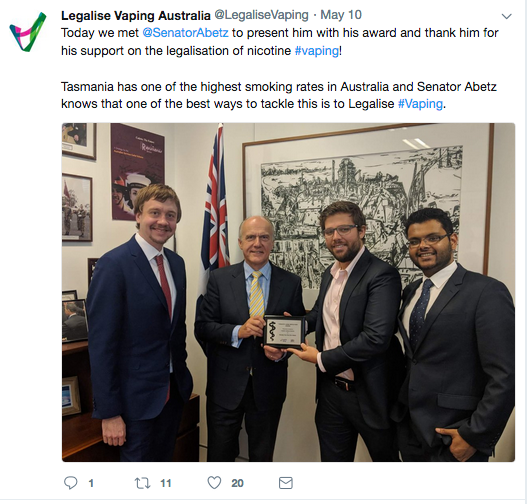
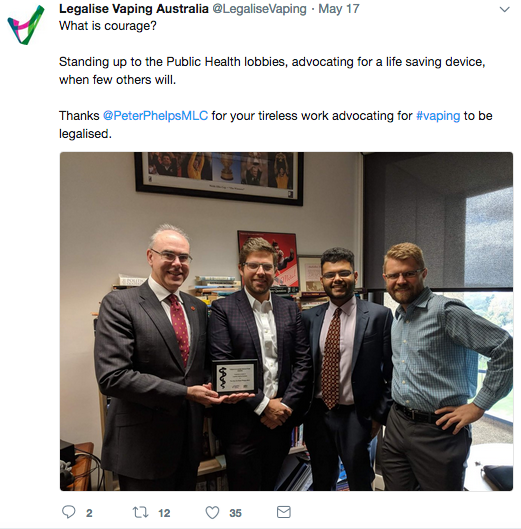
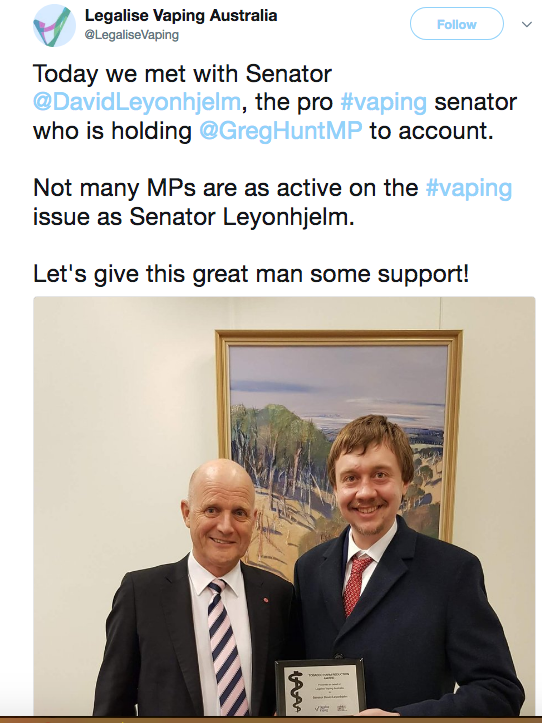
Legalise Vaping Australia has presented its political champions with dinky little awards that obviously would have gone straight to their pool rooms. 

I’ve been unable to ascertain whether the value of these plaques takes them over the threshold for mandatory disclosure on the parliamentary gift register. But suffice to say they are obviously priceless, coming from such an esteemed organisation as the LVA.

Screen Shot 2018-09-17 at 7.55.16 am

Above: Brian Marlow (“campaign coordinator”, Legalise Vaping),  Andrew Laming MP (Liberal, Qld), Tim Andrews, “executive director” of the Australian Taxpayers Alliance, and  Satya Loren, the ATA’s “director of policy”. Some important sounding titles here.

In March 2021, Laming was ordered by the Prime Minister to make an unconditional apology in parliament to two women in his Queensland electorate who he had been trolling. Lots of plain speaking followed on twitter about this.

Back row Senator Hollie Hughes, Liberal NSW (see below), celebrating with Brian Marlow and the gang from Legalise Vaping Australia

Abetz

Above: Our three ATA/LVA champions with Sen Eric Abetz (Lib, Tasmania).

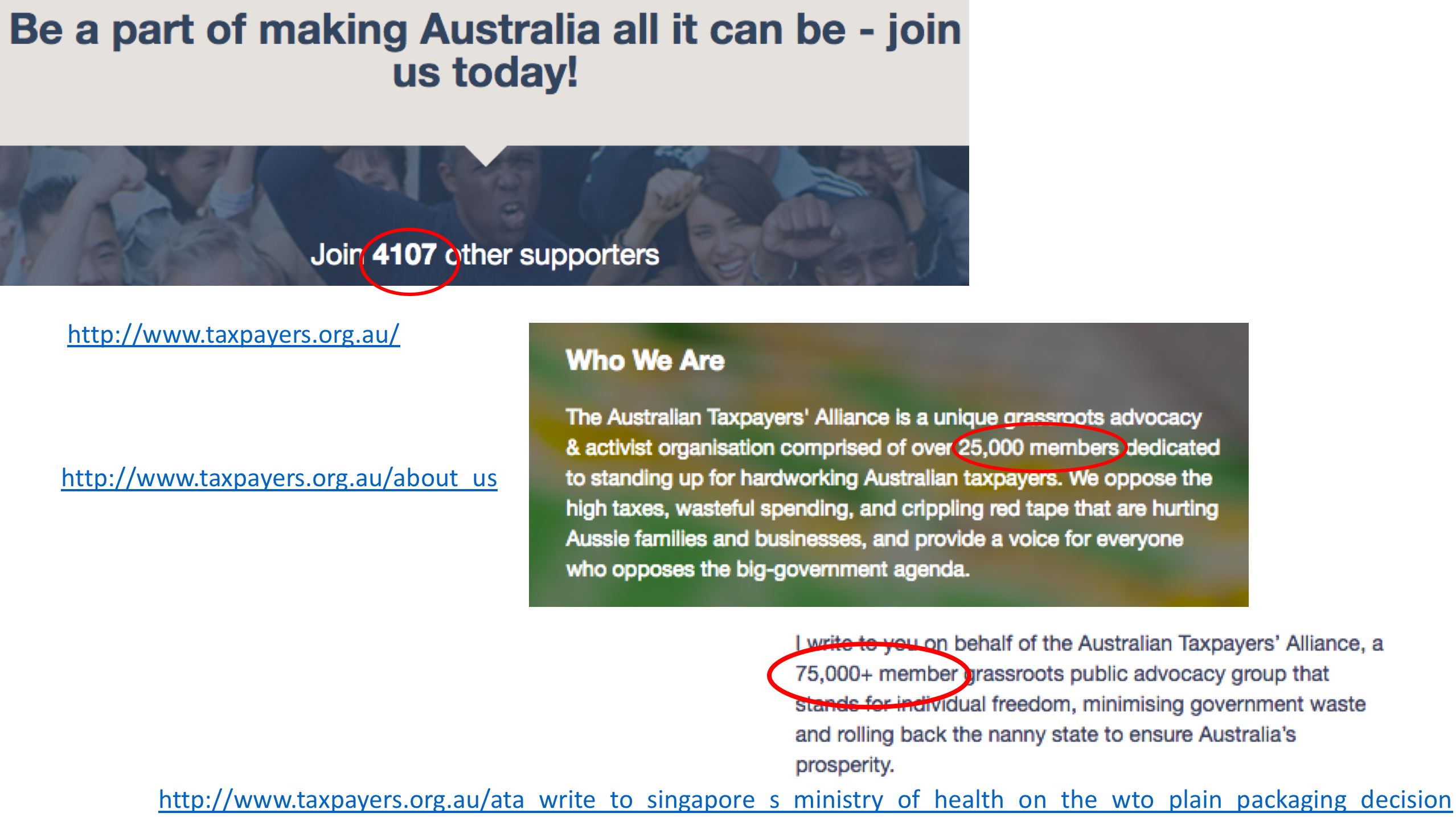
So how many “members” or “supporters” or whatever word you want to use, does the ATA have? Actually, it depends on where you look on its website, as I found out.

Fluid Nymbers Screen Shot 2018-08-14 at 10.54.39 am
Screen Shot 2019-03-02 at 4.24.46 pm

Above: Hey, they’re all getting gonged! Senator Cory Bernardi (Australian Conservatives, South Australia). And who could ever forget Cory’s concerns that legalising same sex marriage could lead to bestiality (“The next step, quite frankly, is having three people or four people that love each other being able to enter into a permanent union endorsed by society – or any other type of relationship. There are even some creepy people out there… [who] say it is OK to have consensual sexual relations between humans and animals. Will that be a future step? In the future will we say, ‘These two creatures love each other and maybe they should be able to be joined in a union’.I think that these things are the next step.” Australian comedians had a ball with this.

PeterPhelps 2018-06-10 at 1.23.05 pm

Above: “Colourful” NSW Upper House Liberal Peter Phelps is much appreciated by LVA.  In 2011, Phelps made a speech in which he compared scientists who believe in global warming to those who worked for totalitarian regimes. He said it should not be forgotten that “some of the strongest supporters of totalitarian regimes in the last century have been scientists… We should not be so surprised that the contemporary science debate has become so debased,” he said. “At the heart of many scientists – but not all scientists – lies the heart of a totalitarian planner.”

Leyonhjelm

Unkindly dubbed by some as “the Senator representing Philip Morris”, the great man David Leyonhjelm (then Liberal Democrat, NSW) was of course always going to get an award for his ceaseless efforts. The Liberal Democrats are very happy to have it known that they are supported by Philip Morris. Leyonhelm is a staunch enemy of gun control, with his party retweeting the grotesque tweet below after the June 2015 Charleston church massacre, when a gunman murdered 9 black parishioners:

Carry Gun to Chrich

Writing in Farm Online in 2015, he also unforgettably compared the situation of caged battery farmed chickens with sports fans in very crowded stadiums who choose to not take themselves out of such crowding. Sounds a perfectly apposite comparison, eh?

Screenshot 2016-05-19 13.24.26

In 2020, Leyonhjelm lost his appeal in the Federal Court against a judgement that he had defamed South Australian Greens Senator Sarah Hanson-Young by stating publicly in June and July 2018 that Hanson-Young had said “All men are rapists” and was actuated by malice and intended to shame Hanson-Young. He was ordered to pay $120,000 in damages plus costs

Senator Hollie Hughes (Liberal NSW)

In February 2021, veteran journalist Neil Chenoweth at the Australian Financial Review published several lengthy pieces here, here and here about connections between tobacco companies and vaping advocates in Australia, Senator Hollie Hughes, a NSW Liberal senator who has chaired the November 2020 Senate Committee on Tobacco Harm Reduction, only to be rolled into signing a minority report by the majority of the Committee, featured prominently in one of these reports.

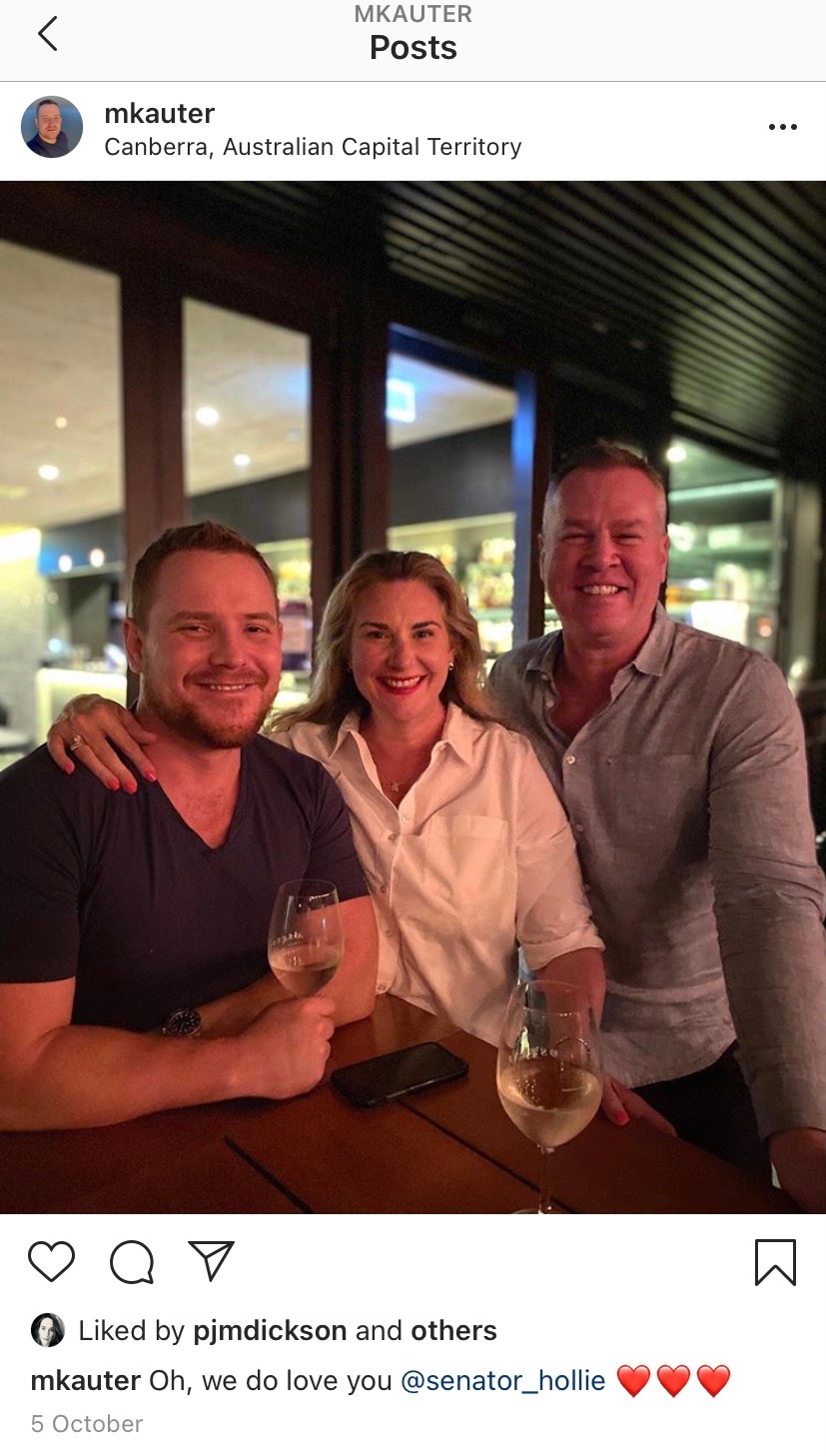
L-R Michael Kauter, lobbyist for British American Tobacco Australia; Senator Hollie Hughes, Prof David Gracey (Kauter’s husband and “senior counsel – health” to Kauter’s lobbying company) 5 Oct 2020, in Canberra.
L-R L-R Michael Kauter, lobbyist for British American Tobacco Australia; Senator Hollie Hughes, Prof David Gracey (Kauter’s husband and “senior counsel – health” to Kauter’s lobbying company) Christmas Day 2020

In June 2020, Hollie Hughes appeared on an ABC-TV Four Corners program about vaping where she asked the interviewer “What is Big Tobacco? Define Big Tobacco. Who are they?” Her reaction is unforgettable.

Michael Johnsen (National Party NSW)

NSW Upper House National Party MP Michael Johnsen was lauded by vaping lobby group ATHRA when he announced in November 2020 that he planned to get parliamentary support to make e-cigs “a consumer product”, allowing them to be sold almost anywhere. In late March 2021, Johnsen faced an allegation that he had raped a sex worker, and resigned his government position, moving to the NSW parliamentary cross-bench while police investigate the allegation. Johnsen may have less time for his planned campaigning for e-cigarettes and ATHRA has been curiously quiet about the latest political champion.

These are the political bedfellows of vaping advocacy in Australia today.

10 questions for Philip Morris International on their “transformation”

Like salivating foxes outside a henhouse, Big Tobacco companies like Philip Morris International and British American Tobacco are deep in global charm offensives, trying to convince the public, the corporate world, governments and public health leaders that they have changed. They want to be embraced as health promoters!

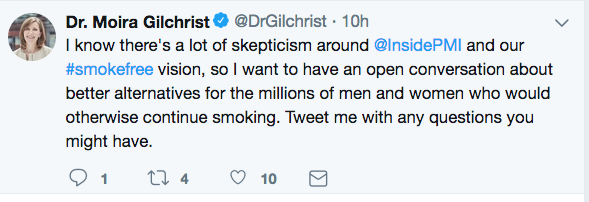
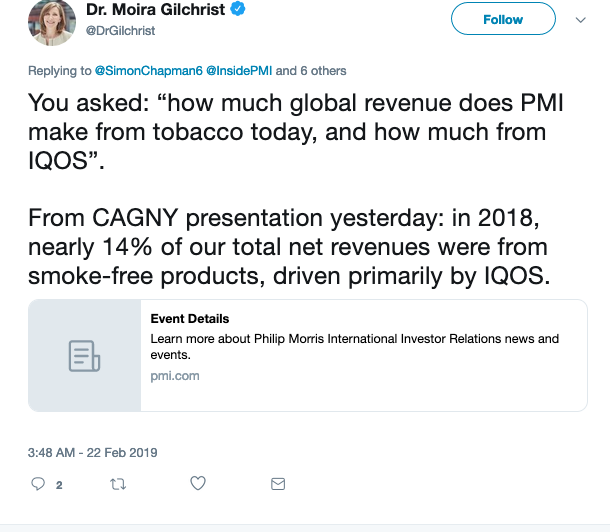
Overnight, Moira Gilchrist, Vice President at Philip Morris International, tweeted this

Screen Shot 2019-02-21 at 7.40.33 am

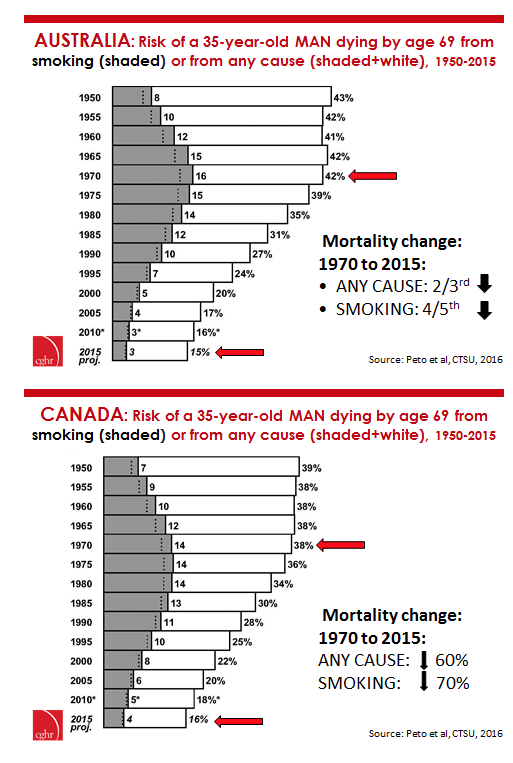
Here’s some news for you Moira, we’re doing very, very well in helping  smokers “who would otherwise continue smoking” to stop doing just that. It’s been going on for decades, despite your industry’s best efforts to thwart what we’ve been doing. And look at the harm we’re been able to reduce, in spite of your industry’s opposition.

Australia mortality drops v Canada 1970-2015

Despite decades of abject failures in producing reduced harm products, they are still at it, this time with ecigarettes and heat-not-burn nicotine delivery systems.

The development of cigarette filters from the 1930s was the daddy of all harm reduction false assurances. While anyone looking at the brown gunk discolouring a cigarette filter gets it that this nasty stuff is caught in the filter and not inhaled, few appreciate that filters do not stop a lot of toxic material being inhaled.

Screen Shot 2019-02-21 at 8.07.52 am

And few are likely to appreciate that what gets inhaled deep into the lungs does not all come out when a smoker exhales, as this elegantly simple video demonstration makes very clear.

Throughout my career, journalists have often asked me for sets of questions I might suggest that they could ask visiting spin doctors from tobacco companies at conferences, press conference or during interviews.

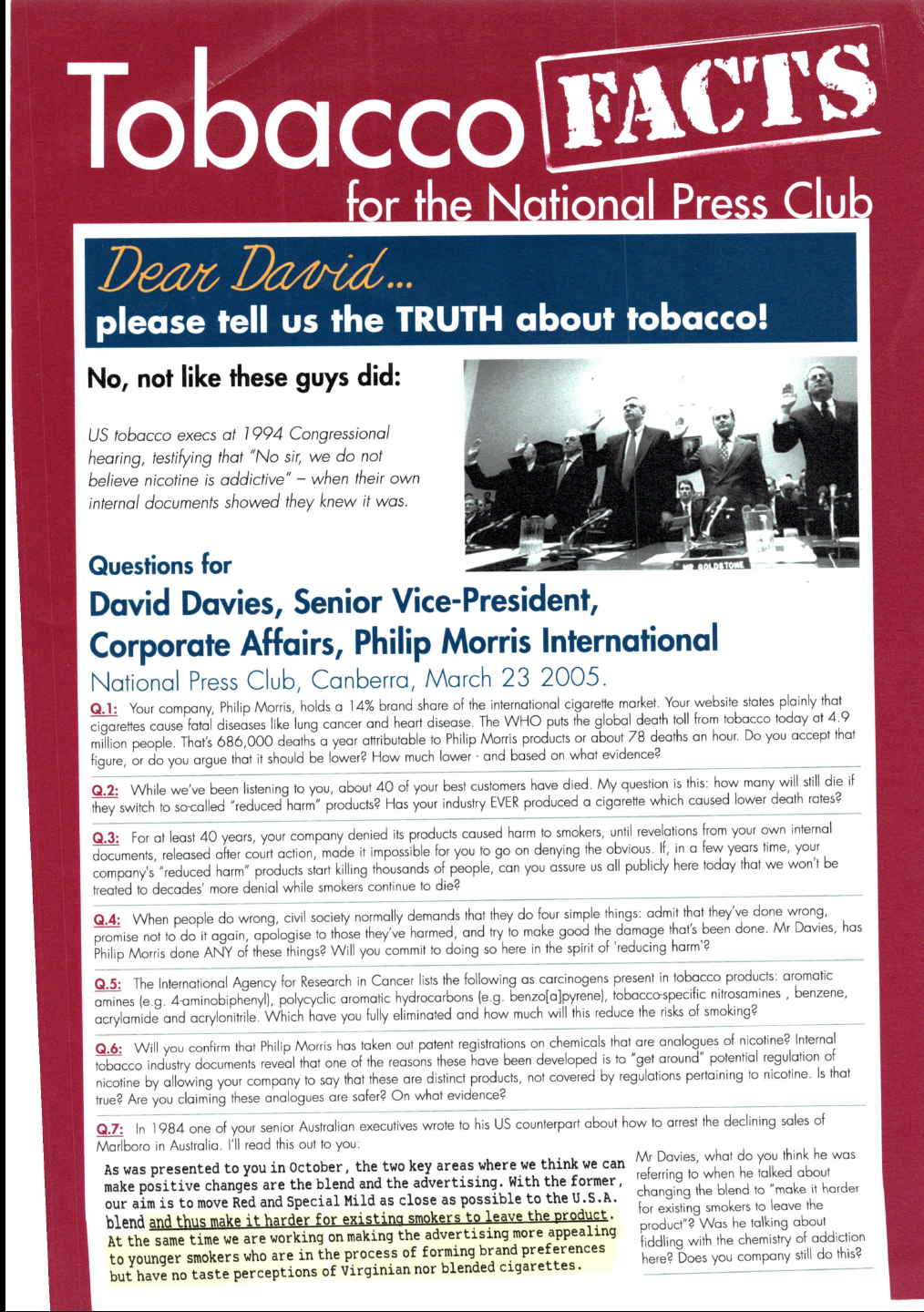
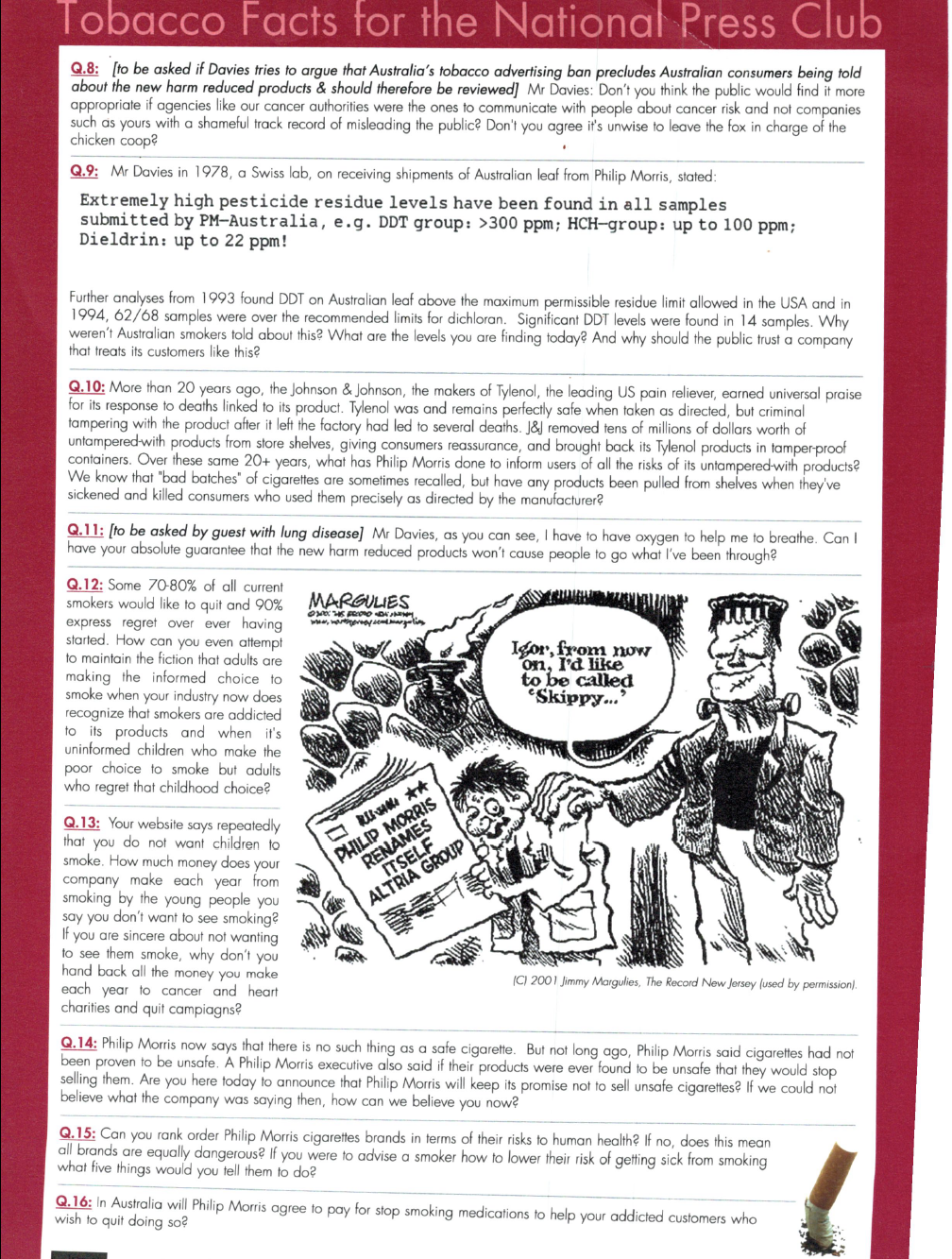
Here’s one I put together in 2005 for David Davies, then vice president for corporate affairs for Philip Morris, when he spoke about harm reduction at Australia’s National Press Club in Canberra.

Screen Shot 2019-02-21 at 9.37.55 am

Screen Shot 2019-02-21 at 9.38.33 am

So, journalists, here are 10 questions you might like to be impertinent enough to ask a tobacco company wanting to explain to you their latest vision. And Moira, you are very welcome to answer these here. I will publish your responses, and will give you up to 2000 words to do so.

10 Questions for Philip Morris International

  1. You say you want smokers to switch to IQOS, but  Philip Morris USA (a separate company to Philip Morris International which just happens to share the words “Philip Morris” in its title) is on record recently as saying on its website that cigarettes are “our core product” and that they are working hard to keep their smokers happy with “best quality” cigarette products. Are cigarettes also PMI’s “core product’? Or asking another way, how much global revenue does PMI make from tobacco today, and how much from IQOS and what are your forecasts for these numbers in the next 10 years? Are your shareholders happy with you purposefully trying to drive south (by far) your biggest income stream?
  2. What are the KPIs (key performance indicators) for the sales, marketing and public affairs staff in your cigarette division today? Are they being asked to try and sell less cigarettes or to keep on trying to sell more? Could we all see copies of some of those please?
  3. In Indonesia, Philip Morris International owns the Sampoerna tobacco company. In 2016, Reuters reported that you were trying to get “wider reach” there via “stronger cigarettes” What do you say to those who say you are being duplicitous with all this reduced harm talk when this is what you are doing when you calculate that people in the west might not notice? Similarly, when the city of Balanga, Luzon in the Philippines wanted to implement a smokefree campus and surrounding environs, you supported the Philippine Tobacco Institute in its (successful) legal case against the proposal. So you say you want people to quit smoking, but only if they switch to IQoS, is that it? And if not you will continue fight effective tobacco control as usual?
  4. In recent years, your company has aggressively opposed tobacco control policies like graphic health warnings, plain packs, and increasing tobacco tax, all known to reduce smoking. When you do this, can you understand that many people think you are flagrantly lying when you say you want to help tobacco control?
  5. What do you say to critics who say that your business model is surely all about smoking AND vaping, not smoking OR vaping?
  6. I don’t think I’ve ever met a smoker who wanted their kids to grow up and start smoking. Do you feel the same way? Would you also hope that children would not take up vaping? If you really believe ecigs are of minimal risk, why not openly encourage kids to vape?
  7. Smoking by Australian teens is at a record low (1.9% of 15-17 year olds currently smoke) I find it hard to believe if your company had not modeled the impact of such a dire situation on your bottom line into the future if this was to continue. So what does that modelling show? And am I wrong in thinking that if your IQOS product does not attract a significant number of kids into regularly using it, then your company will wither and die within a few decades because if only smokers switch, many of those will quit and die, with no cohort of young people moving through to replace them.
  8.  The  parent company of Philip Morris USA, Altria, just invested $US12.8billon in Juul, the vaping product that has spearheaded 20% of US teens using ecigs in the last 30 days.  Are you going to tell me that this teen use of ecigs “concerns” you or that there were a lot of champagne corks popping at work when you all saw that data?
  9. The average daily vaper inhales 200 times a day and up to 600. The average daily smoker inhales about 95 times a day. Does that comparison suggest that nicotine delivered via vaping might be very, very addictive? Does that bother you?
  10. I’ve heard people very unkindly quip that it would be a good idea if all tobacco company employees were obliged to smoke or vape (in the obverse way that no cancer control agency would hire a smoker). It would be hard to imagine a senior executive in a car company who chose to not drive or own a car, but to always cycle or walk and openly declare that; or the head of a meat marketing board who was an open vegetarian, or a skin cancer prevention advocate who was deeply tanned. So why do you think your company is comfortable with some of its employees choosing not to smoke or vape? Do you smoke or vape yourself?

Follow-up (1 March 2019)

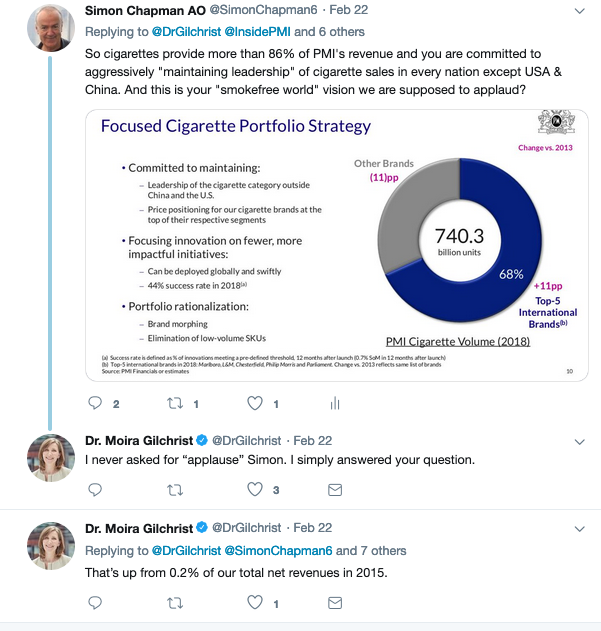
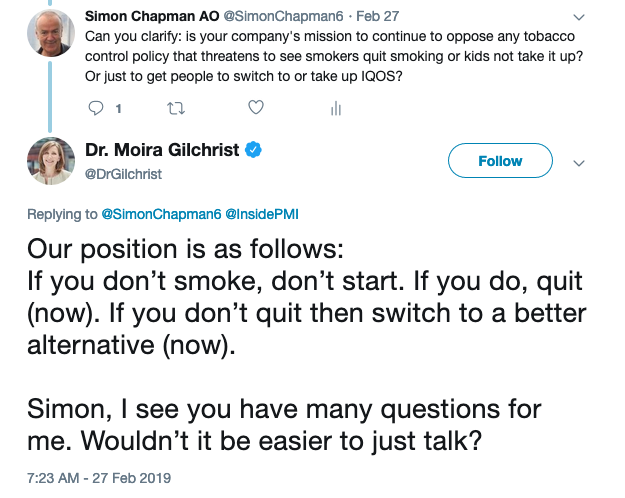
After I posted this piece a week ago, and tweeted a link to Moira Gilchrist from PMI, the following exchanges occurred (see thread here)

Screen Shot 2019-03-01 at 5.30.43 amScreen Shot 2019-03-01 at 5.31.08 amScreen Shot 2019-03-01 at 5.31.36 am

So. Thank you Moira, for partially answering the first bit of question 1 above (“Or asking another way, how much global revenue does PMI make from tobacco today, and how much from IQOS and what are your forecasts for these numbers in the next 10 years?”) and this below

Screen Shot 2019-03-01 at 5.26.00 am.png

Moira, this is clear as far as it goes, but it sits very awkwardly with all the unanswered questions I posed above about your company’s continuing efforts to attack tobacco control policies designed to get non-smokers (mostly kids) to “don’t start” (eg: high tobacco taxes, graphic health warnings, plain packs) and to motivate smokers to “quit now” (again, high taxes, graphic warnings, plain packs, plus smoke free policies like the one you helped stop recently in Balanga, Philippines).

So, no fudging please. When can we expect your answers to the questions you  publicly invited on Twitter from people like me who are (profoundly) skeptical of what we read as yet another wolf in sheep’s clothing exercise from your industry?
21 March 2019: update. Moira has posted this reply on the PMI website. Here‘s my reply

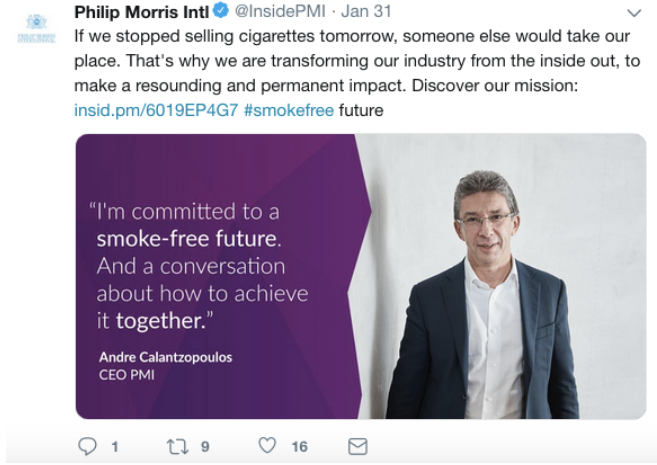
“If we stopped selling cigarettes tomorrow, someone else would take our place”.

Late last month, Philip Morris International tweeted one of its daily attempts to convince the world that it is now a health promotion company, firmly aligned with global public health to try and reduce the disease and death caused by tobacco use. Its mainstay, cigarettes, kill two out of every three long term users.

The company is aggressively marketing its heat-not-burn product IQOS (see footnote below) in several markets and  Altria, which owns Philip Morris USA, recently invested $US12.8 billion in the tearaway e-cigarette market leader, Juul. PMI has bankrolled the establishment of the fully “independent” Foundation for a Smokefree World with a grant of $US960 million dollars over 12 years in a classic exercise in astroturfing its messages to also come from a third party.

The Foundation has attracted incendiary criticism since it was first announced. See here, here, here, here, here and here, as just a few examples.

Last month a PMI tweet stated “If we stopped selling cigarettes tomorrow, someone else would take our place”.

Screen Shot 2019-02-12 at 1.09.45 pm

This was clearly a response to what any review of how its “we’ve changed” message is traveling would have undoubtedly identified as its most hobbling Achilles’ heels: its long-standing track record in both attacking tobacco control policies that threaten to actually reduce smoking (high cigarette tax, plain packs, graphic health warnings, smoking restrictions), and its on-going aggressive global marketing and promotion of its cigarettes.

For example, in Indonesia, the world’s fourth most populous nation where it is almost compulsory for men to smoke, the tobacco industry exploits this smokers’ paradise. A pack of cigarettes can sell for less than a small bottled water, tobacco advertising virtually wallpapers the entire country and non-smoking areas are uncommon and mostly ignored. Philip Morris owns the local manufacturer Sampoerna, which controls about one-third of the massive market there. In 2011, a Sampoerna advertisement proposed “Dying is better than leaving a friend. Sampoerna is a cool friend”. In 2015, the company began aggressively promoting its U-bold brand, a “stronger flavoured” brand, often code for higher yielding tar and nicotine brands.

Screen Shot 2019-02-12 at 10.18.31 am

In July, 2018, a legal action brought by the Philippine Tobacco Institute (PTI), representing Philip Morris and other tobacco manufacturers,  succeeded in preventing an ordinance being implemented in Balanga City, Luzon which would have banned smoking and the sale, distribution and promotion of cigarettes within the 80-hectare University Town and its kilometer radius. A press report stated that “PTI had argued that Philip Morris Philippines Manufacturing Inc. would lose P15 million in sales due to the city’s ban.”

In 2018, the company opened a new $30m cigarette factory in Tanzania

These are  hardly actions compatible with ad nauseum statements from company that it wants smokers to quit.

The tweeted admission “If we stopped selling cigarettes tomorrow, someone else would take our place” disrobes the entire charade. The “we’ve changed” emperor now quite clearly has no clothes.

Let’s pick the statement apart, one ethically bankrupt sub-text at a time.

Like a wolf outside a henhouse, Philip Morris has gushed an incontinent deluge of claims that it really, really wants smokers to switch to its alleged low risk products. But never once in all this has it set any target dates. Nowhere can we find when the company plans to actively take steps to end its own role in encouraging and promoting smoking and attacking policies known to reduce smoking. Will this happen in 5 years? 10 years? 30 years? Never?

All we know now is that it won’t happen “tomorrow”. And the great beauty of it never being tomorrow, is that tomorrow never comes.

We might think they were serious if they were to, for example, voluntarily move their cigarette products to dull plain packaging and add large pictorial warnings, or declare that they wre going to voluntarily stop all cigarette advertising in nations where it is still allowed, or axe their “Mission Winnow” sponsorship of Ferrari in the F1 Grand Prix and Ducati in the Moto GP  when Mission Winnow’s advertising livery is red and white, coincidentally we can be certain, the same colours as Marlboro.

But hell might freeze over before they did any of these things.

The company is not simply going to passively sit by and watch smoking prevalence continue to head south by taking its feet off its marketing accelerators or slamming them hard in concert with public health on the tobacco control policy brakes. It has said and done nothing to indicate that it won’t continue to do what it can to preserve and expand its cigarette sales.

PMI’s statement requires those reading it to understand that the company has been called out by critics to show that they are being serious about wanting to actively  end smoking. But by invoking the  “someone else will do bad things if we stopped” they seek to make a virtue out of knowingly and purposefully continuing to do the wrong thing.

Their pitch here is like a brazenly misbehaving 5 year old who knows he is doing something wrong, but says to the teacher “why should I stop? Why pick on me? Everyone else is doing it too!” Or a drug dealer saying to the court “yes, I was cutting my heroin with cheap adulterants that put all who used it at extra risk, but that’s what my competitors are all doing too, and I just needed to keep up with them price-wise or go under. Please sympathise with my situation!”

Screen Shot 2019-02-13 at 1.23.50 pm

As I wrote in 2014:

“My wife is a primary school teacher with 35 years experience. She has often described incidents where 5-9 year olds with poorly developed moral compasses have been caught red-handed bullying, stealing, cheating or lying but unblinkingly deny it regardless of the evidence in front of them.  More than once, she’s suggested that such a child might one day make an ideal applicant for a job in a tobacco company.

Globally, different legal, moral and religious codes tend to share basic principles when it comes to how to deal with those who have done serious wrong. Sentencing often takes note of evidence of contrition and civilized societies and judiciaries tend look for five broad pre-conditions in considering punishment”

  • Full public acknowledgement of the misdeeds and harms caused
  • apologising for these harms
  • promising never to repeat them
  • making good the damage done, and
  • undertaking some form of public penance to symbolise your changed moral status.

Like many caught-out five year olds and recidivist adult sociopaths, the tobacco industry has done none of these things. Its corrective advertising is being done reluctantly after 15 years of legal kicking and screaming, while schmoozing with the global corporate social responsibility movement, publicizing its donations to carefully selected charities and just getting on with trying to sell as much tobacco as possible, regardless of the misery it causes.

They have all the ethics of a cash register.”

At least cash registers don’t pretend to be something they are not.

Footnote: a just published report comparing the impact of  IQOS with cigarette smoke on human lung cells  concluded “IQOS exposure is as detrimental as cigarette smoking and vaping to human lung cells. Persistent allergic, smoke or environmental-triggered inflammation leads to airway remodelling/scarring through re-organisation of ECM and airway cell proliferation, and mitochondrial dysfunction plays a pivotal role in this process. These are the principal causes for airflow limitation in asthma and COPD.”

[updated 24 Jan 2020]

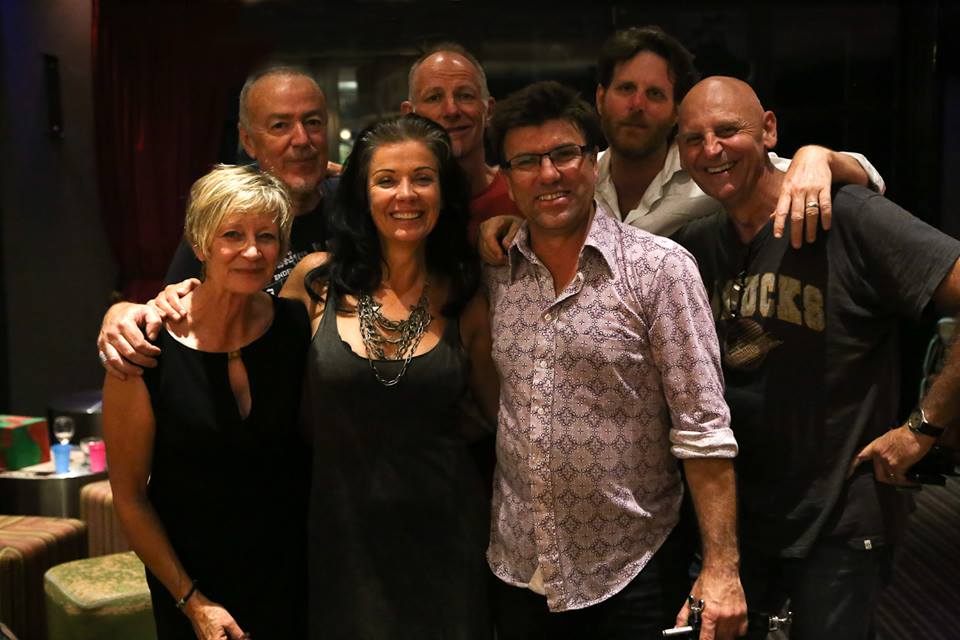
Cover bands: the most fun you can have

BestBandShot
Some years ago, the ABC ran an almost continuous promotion across several weeks for The Librarians, a poke at an occupation popularly synonymous with purse-lipped, dull people who love orderliness. The promo gag centred on a gormless Kym Gyngell taking his garage cover band very seriously, and channeling a flailing Peter Garrett from Midnight Oil. Along with a lot of weekend cover band tragics, I’m afraid I just didn’t see the joke.
In 2004, the seeds of my cover band The Original Faux Pas (later rebirthed as The Bleeding Hearts), emerged from secret afternoons in our guitarist’s living room to play a handful of classics like the Swallows’ It ain’t the meat, it’s the motion and Eydie Gormé’s Blame it on the bossa nova at my wife Trish’s 50th birthday. I was the singer.
Polite friends mumbled that we weren’t too bad, so of course there was then no stopping it. Over the next 14 years, we played 42 gigs in pubs, clubs, festivals, harbour cruises, conference dinners and house parties. On election night in 2007 we renamed ourselves Howard’s End, incontestably causing conservative prime minister John Howard to lose the election to Labor’s Kevin Rudd.
We always played to raise funds for causes and charities we liked and helped raise $127,000 for causes like the UNHCR, Amnesty International, the Cancer Council, domestic violence, and the homeless charity, Missionbeat. We played two well attended gigs in Glebe’s Harold Park Hotel for Peter Greste, the journalist jailed in Egypt, and later two for a school for girls in South Sudan, as featured in Tom Zubrycki’s 2017 documentary Hope Road.
.
In 2012, I tempted ABC Sydney’s breakfast radio host Adam Spencer to play with us in two fundraisers for Somalian refugees in a massive camp at Dolo in Ethiopia. I’d heard him explaining he was learning guitar and correctly anticipated that it would be every guitar student’s ambition to be invited to sit in with an acclaimed stadium-filling band like ours. We pulled $25,000 in door money and pledges given across both nights.
We played as the final band late at night at two festivals held on our long-time keyboardist’s farm at Ourimbah on the central coast north of Sydney, to raise money for multiple sclerosis research. There were about 400 at each event who danced and cheered throughout our set.
We realised we could get up there and make lots of people have a great night and help causes at the same time. As all bands will agree, nearly everyone is oblivious to the mistakes you make every night, including once when our keyboard player Rob Heard completely forgot to play the entire critical organ solo in the middle of the Doors’ Love her madly. All was forgiven and asking a few people in the crowd later, no one but us knew. But not once in 42 gigs did we ever have a song collapse and have to start again, something you often see with pub bands.
At the other end of the scale, we played two inexplicable fizzers. Our bass player Dave Petroni, had a small farm near Bowral in the southern highlands. The publican at his local pub begged him to bring the band to Bowral one Saturday night. So, along with our $300 soundie, we made the trek down the Hume highway. I’d plugged it  across NSW that morning on ABC radio weekend’s Simon Marnie’s regular ‘what’s on’ segment. We were all anxious if security would be needed and whether we should have informed the local police to set up a traffic contraflow on the approaches to the pub.
We sound-checked at 6pm to an all but empty pub and then ordered pub food. At 6.30 the publican nervously asked when we planned to start playing. We told him about 8pm. “There won’t be anyone here by then” he told us. “They all go home by about 7.30 to watch telly.” At this point there were about 15 people in addition to us in the room. All but two were wives and friends.
The other two were an aged couple, the man in a wheelchair. They’d heard me spruiking it on the radio that morning and had driven down from Campbelltown. They left half way through our first set. So we played to ourselves, our dutiful entourage and a local gasbag who arrived late and told us he was very good mates with the shock jock Alan Jones who had a place down there. “I can get Alan to promote you guys next time you come down” he promised. The pub even messed up our name on the sign outside. Faux Pas? Paux Pas? Fox pus? Oxford/Cambridge, tomayto/tomarto?
A second doozie was raising money for a major charity, at the Grandstand at Sydney University. The charity staff gushed with enthusiasm when I approached them, but disappointingly declined to push it on their website or by direct email to their Sydney supporters. Instead, they said they would ask a bunch of students who volunteered for them to leaflet lecture theatres and bring all their friends. But somehow, the two volunteer students who arrived late, apparently had no other friends. They sheepishly assisted in barbequing a few of the half tonne of sausages that the Grandstand management had generously donated to attract hordes of students from the adjacent colleges who would be clamouring to be there. A colleague of mine and band fan had dragged her three teenage kids along. They whined from the minute they arrived and had to be taken home by their embarrassed mother. We’d convinced another superb cover band we’d played with once before to share the gig. We had door takings about $60, well short of even paying our soundie, so the charity got nothing – the only time that ever happened.
Over the years we had five different guitarists, two of whom (Paul Grogan and Bob Jones) had very extensive band experience. We also had a veteran bass player, Dave Petroni, who could knock the socks off the Who’s John Entwhistle in My Generation, our anthem to zimmer frame rock. Some of us had limited to zero time in other bands, various commitment to practising, and musical abilities.
Like all bands, we had our share of tensions. A short-lived member said soto voce to our drummer one night that if he didn’t hit the skins more softly, he would walk out. We lived in hope until he soon moved along. One of our guitarists would often stop playing mid-song at rehearsal, shouting his exasperation at others he felt were not up to scratch on a song. This happened at more rehearsals than it didn’t. He’d rapidly apologise profusely, saying “sorry, sorry, sorry” ad libitum.
One night the other guitarist said cheerily “Hey, no need to apologise. We all know you’re an arsehole. You’ve just displayed it a bit earlier than usual tonight.”
Well, he was, and he wasn’t. His talent was the absolute backbone of the band for years. Everyone I’ve ever talked with who’s been in a band will tell similar stories of the foibles and peccadillos of just about everyone they ever played with, except of course themselves.
We all understood that we promoted ourselves as a dance band, so any dance floor clearers that anyone suggested we rehearse were supposed to be assessed against that criterion first. But everyone had different preferences like blues, country, or 60s pop which they tried to insinuate into rehearsals. Compromises saw core material retained that everyone liked but many songs were on death row, executed by anyone in the band who barely tolerated it after a gig when such a song had even half a bar of problems. We all had power of veto though: I refused to ever sing Nutbush City Limits, My Sharona, Smoke on the water  or similar perennial entries on collections of best beer hall hits and ocean cruise liner request lists.
Dave, our bass player, would roll his eyes at anything remotely country, while Suzanne Plater who shared the lead vocals with me for several years was on a mission to be a white Etta James.
When Australia’s health minister, Nicola Roxon, led Australia to introduce plain tobacco packaging, Trish who was at that time doing back-up vocals, rewrote the lyrics to the Shangrila’s Leader of the Pack as a tribute to Nicola. Four of us were having dinner one night, and sang it to an iPad camera, with Trish in a lurid Julia Gillard $15 red wig. We put it up on YouTube and over the next months it had 1500 hits.
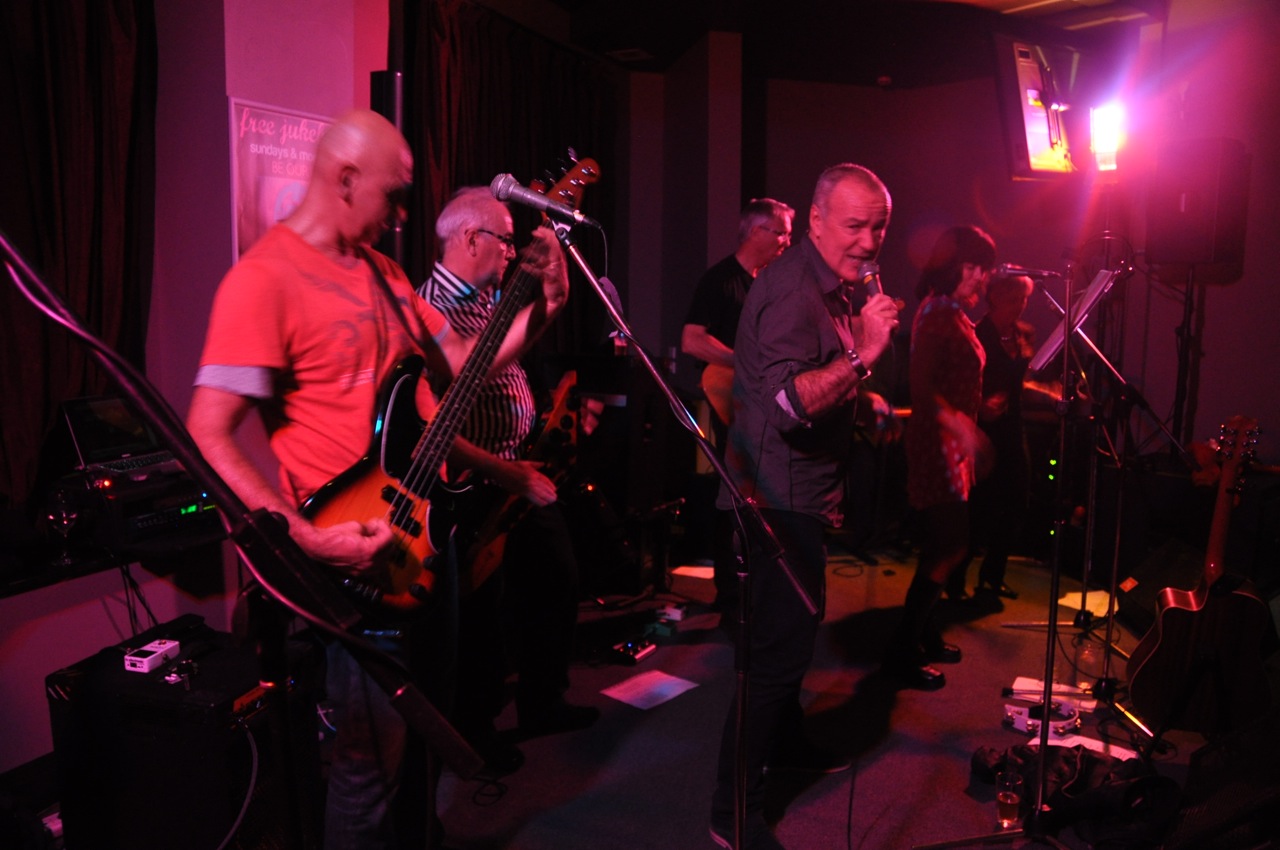
DSC_1055
Exchange Hotel, Annandale
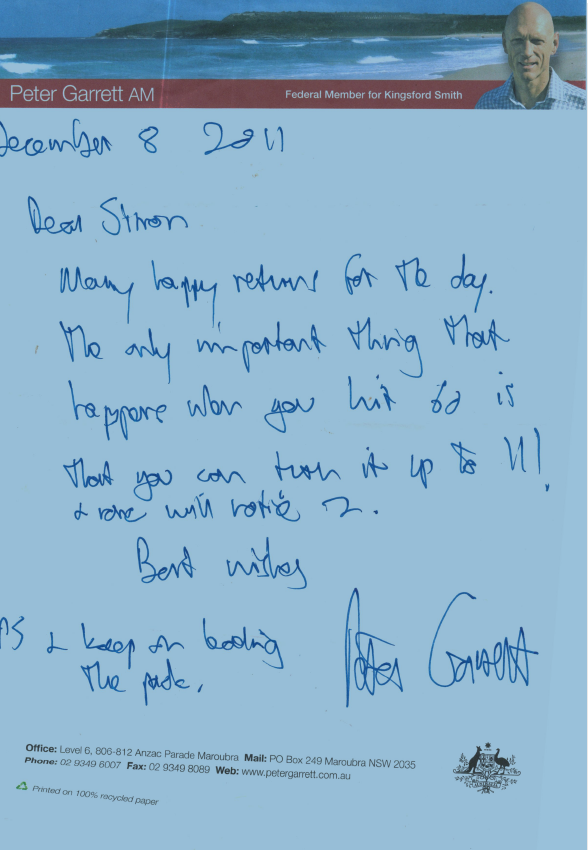
Some months later I was with a friend in a Canberra restaurant near Parliament House and in walked Nicola, soon joined by her parliamentary colleagues Jenny Macklin, Peter Garrett, Greg Combet, Kevin Rudd and Craig Emerson. We chatted to Nicola before the others arrived and then continued our dinner. As we were leaving, I heard a male voice behind me call my name. I turned and it was Peter Garrett who had followed us out. I’d never met him before. The next words of the world famous rock star turned politician were “I hear you are a world famous rock star!”
He said Nicola had sent the video link to many of her colleagues, and thought it was wonderful fun. The three of us stood on the footpath swapping early bad gig stories. A few months later, he sent me a birthday note for my 60th birthday, referencing the famous Spinal Tap scene about “turning it up to 11”.
It’s fashionable to put cover bands down, just because we get around. Several times we’ve played with earnest bands playing their often dreary ‘original material’. But when the crowd hears the ghosts of Roy Orbison with George Harrison and Tom Petty jangling out the opening to Handle with care, or the irresistible beat of T-Rex’s Get it on they are instantly on their feet. A few of the youngest head for the door, but for the rest, cover bands are a connection with a lifetime of songs that are hard-wired in our heads. The Rolling Stones’ Hey McLoud get offa my ewe has not been number one in New Zealand for 50 years for nothing.
You have to wait till page 491 of Keith Richards’ biography to read the essential lines that resonate for anyone who’s been in a band. “The real release is getting on stage. Once we’re up there doing it, it’s sheer fun and joy …feeding off the energy that we get back from an audience. That’s my fuel … I get an incredible raging glee when they get out of their seats. Yeah, come on, let it go. Give me some energy and I’ll give you double back.”
Anyone who’s had a band behind them playing the guitar power chords in Hunters and Collectors’ Holy Grail or has belted out the Young Rascals’ Good Lovin’or the Stones’ Rocks Off knows that feeling when you play to a room full of people wanting to let loose on the weekend with a loud band playing anthems from across their lives. It’s exhilarating.
Garrett note
Turn it up to 11
Now it’s true that there were some differences and similarities between us and the Stones. We had to lug our own gear and we never had a jet but some of us are nearly the same age as Keef and the rest. When I sing to the smiley one in the one row deep mosh pit that “I’m a king bee. I can buzz better baby, when your man is gone”, it may not have quite the same potential as Mick singing it. But the Canada Bay Club, where we once played to 35 mostly non-dancers, was our equivalent of the Stones’ Crawdaddy Club in Richmond south of London in the early 1960s. The barman at the Canada Bay Club who said he was the brother of a member of the original AC/DC, swore we had the same potential. He’d know, right? So we played a blinder in the second set and hit them with our rhythm sticks.
As support act at Wamberal Surf Club to some local favourites (who unforgivably played a Neil Diamond song), we were each serially approached afterwards by a drunk middle aged woman, indecently younger than most of us. But we all drove home able to say  we had attracted our first groupie. Band crowds aren’t pleased much easier than Japanese conference delegates in kimonos on a Sydney harbour cruise in summer. They stare at you for about 20 minutes, then start to pogo and go nuts. While they can make strange requests like The lady in red in the middle of a sweating dance set, I’ll have them anytime over kids who are dragooned by their parents to come and hear this great music. They look pole-axed with disdain and then leave.
Wednesday nights rehearsing at Stagedoor studios in Alexandria is the best $25 a head of fun it’s possible to have. Over the years we shared the venue with uncounted death metal thrash bands, but also silverchair, Barnsey, the Angels, the Choirboys, various Australian Idol winners and even that astute judge of talent Marcia Hines who all had booked adjacent rooms on the same nights as us to quietly pick up tips. We just walked past them and they tried to look cool, pretending not to know us.
One night we were all set to rehearse the Angels’ Take a long line until we heard the unmistakable riff seeping from beneath the soundproof door in the next studio room. It was the Angels rehearsing a comeback tour. Uh-oh. Park that one.
In my mid 50s, a sports car proved an empty illusion. When I brought a sleek black Nissan 300ZX with a sports exhaust home, my wife named it the Jeff Fenech-mobile, after the gold chain wearing Australian boxer, the Marrickville Mauler. “Why didn’t you just pick up a megaphone at a disposal store and walk down the street telling everyone you are worried about your dick? It would have been a lot cheaper” she said.
But a cover band is the real thing. After several Nellie Melba departures as a back-up singer, she soon became as addicted as the rest of us, and switched to keyboard. We had a sax player who was a senior partner in Australia’s biggest law firm. His wife said he was helpless after just a couple of gigs. Paul Grogan who played lead guitar with us for much of the period and works for a big health charity, played Brisbane pubs in the 80s and then wrote love songs for Filipino pop singers, but he could cut it like Carlos Santana on a good night.
One Christmas, I saw a band of guys in their late 60s singing crooner and 2CH hits-and-memories songs to an enraptured room at my late mother-in-law’s nursing home. One was a state parliamentarian. Not our demographic, yet. But each generation defines itself partly by the music that refuses to leave its collective heads. Cover bands will not fade away.
Here’s a collection of some of our performances

Cigarettes are sold everywhere and unregulated. So hey, let’s do that with e-cigarettes?

In a recent Medical Journal of Australia Insight blog on e-cigarette regulation, vaping promoter Colin Mendelsohn responded to a comment, writing “ecigs are consumer products. Medicines regulation is not appropriate. Why should they be regulated more strictly than cigarettes which can be bought at every corner shop?”

Then, without pausing for breath, in his very next sentence he goes on to tell us about how effective in smoking cessation they are, compared to nicotine replacement therapy (NRT), as one recent study reported them to be.  In case you missed it, NRT is a medicine regulated by the  Therapeutic Goods Administration, not a “consumer product” , whatever that might mean.  (see my previous blog and here for comments on the major limitations of the evidence that Mendelsohn cited)

Excitable News Corp journalist Joe Hildebrand puts it this way “How come it’s legal for me to walk into a convenience store and buy something that’s going to kill me but it’s illegal to buy the one thing that could save me?”

The one thing, eh Joe. Tell that to the 30% of Australia’s adult population who are ex-smokers who somehow managed to quit smoking without using an e-cigarette. About 5,440,800 of them, according to 2017-18 ABS data on smoking.

One problem with this trite comparison is that tobacco products are regulated in Australia in many ways that  Mendelsohn strongly opposes for ecigarettes.

  • All advertising and promotion for tobacco products has been banned since 1994. Mendelsohn wants advertising for ecigarettes allowed
  • the sale of fruit and confectionary flavoured cigarettes is prohibited in South Australia, New South Wales and Tasmania. He is strongly in favour of allowing many flavours, including those that may have high appeal to both adults and teens
  • smoking is banned in all enclosed and several crowded outdoor areas like stadiums. He wants vapers to be allowed to smoke in areas where smoking is banned because he says this will add to the appeal of vaping and cause smokers to quit. The rest of us can just put up with clouds of vape like this is bars, restaurants and cinemas, apparently. When many vapers are present (and that would never happen of course), particulate matter levels can reach and exceed those that used to be recorded when smoking was allowed in crowded bars.
  • Tobacco products are heavily taxed, depressing demand particularly among low income group and children. Mendelsohn supports reducing tax on ecigs, a policy that would make them more accessible to Australian children, of who only 1.9% smoke daily today.
  • Retail display of tobacco products is banned nationally. Ecigarettes are on open display in retailers, something he fully supports
  • All products are plain packaged, with large health warnings while packaging for ejuice is a cornucopia of beguiling images

Let’s repeat the same mistakes we made in allowing open slather sales and promotions with cigarettes

But more fundamentally, the galactic dangers of smoking were not fully understood for at least 40-50 years after mass consumption and the commerce that facilitated it had commenced in the first decades of the twentieth century. After mechanisation of cigarette production made them cheap as chips, it then took us 40 -50 years between the 1960s and today to fight for all the policies and campaign funding that have together taken smoking down to its lowest ever levels.

Out of ignorance and under sustained pressure from the tobacco industry, we began by making every regulatory mistake possible when cheap, mass produced cigarettes appeared. Our understanding of the health risks that may be posed by ecigarettes is in its early infancy, given the latency periods that apply with the development of chronic disease.

It is often said that if cigarettes were invented tomorrow, and we knew now what we didn’t know when they entered the market, no government in the world would permit their sale, let alone allow them to be sold in every convenience store.

With pharmaceutical products that save lives, treat illness and reduce severe pain, we allow only those with a 4 year pharmacy degree to sell them. And only to those with a temporary license issued by a doctor (a prescription) to use them. With cigarettes, we foolishly allow them to be sold everywhere.

Very few people (me included) are saying we should ban ecigarettes. But nearly every health and medical agency in Australia and many internationally, including the WHO, are saying that they should be strongly regulated through the TGA so that over time, as knowledge increases we could review whether looser or stronger regulation (perhaps including bans) was appropriate when that knowledge is available.

That’s the way nearly every country regulates pharmaceutical products. Strict, prescription-only regulation at first,  followed by evidence-driven loosening or tightening down the track.

Vaping advocates seem to have understood little from where we went so wrong in unleashing cigarettes and allowing them to be sold everywhere from the get-go. Today they are trying to walk on both sides of the street by insisting ecigs are not therapeutic goods, but in the next breath megaphoning claims about how good they allegedly are in helping smokers quit compared to other therapeutic goods.

Make up your minds?

This 2016  Lancet meta-analysis of smoking cessation and ecigarettes concluded that  ecigs were associated with less quitting among smokers. The 2018 report of the US National Academies of Science, Engineering and Medicine on ecigarettes concluded “Conclusion 17.1 Overall, there is limited evidence that e-cigarettes may be effective aids to promote smoking cessation.” NASEM rated limited evidence four rungs below “conclusive” evidence and just two above “no available evidence”.

What are the limitations of the randomised controlled trial of ecigs v NRT, just published in NEJM?

[updated 27 March, 2020]

Since I published this blog this time last year, I’ve seen a further critique written by  Prof Matthew Peters, a respiratory specialist from Sydney’s Concord Hospital and former chair of Action on Smoking and Health Australia.  Here it is, with the original blog following below)

Electronic cigarettes vs NRT for smoking cessation – the sting is in the tale.

In February 2019, Hajek and others published results of a randomised trial of nicotine replacement therapy (NRT n=446) vs use of a second-generation refillable e-cigarette device (n=438) in the New England Journal of Medicine. Subjects were all self-selecting attenders at U.K. National Health Service stop-smoking services.

The  paper attracted considerable attention as it was a randomised study with an active control arm and used modern e-cigarette (EC) devices. Compared to the few previous randomised trials which used earlier generation ECs, it had a substantially greater effect size with relative risk of 1.75-1.84, (depending on adjustments and exclusion of certain subjects) for the primary outcome variable of continuous abstinence at 52 weeks. In media discussions since, this  effect was commonly rounded up to a doubling of smoking cessation compared to NRT.

Three other smoking cessation outcomes were also reported or calculable from data in the paper and the associated supplement. 

  1. Intention to treat (ITT) allocation to EC was not associated with reduced risk of relapse beyond 4 weeks after the target quit date. This was so even though EC use continued at a rate of 40% vs 4% for NRT.
  2. The relative risk (RR) for 7 days point-prevalence abstinence at 52 weeks was 1.52 for EC vs NRT
  3. The RR for continuous abstinence and being smoke and nicotine free at 52 weeks was approximately 0.5 for EC vs NRT. The ITT e-cigarette arm had 14 (3.1% smoke-free/nicotine free subjects compared to 31(6.9%) in the NRT arm.

If the beneficial effect is based on factors within the first 4 weeks, it is critical to exclude biases in the administration of the intervention and control treatments and to consider whether there may have been participant biases. Here, it is a problem that the control intervention was poorly applied. In the first 4 weeks, only 10% reported use of NRT daily vs 53% for those randomised to e-cigarettes. 25% of the NRT subjects used it on 19 or fewer days.

The investigators sought per protocol to exclude potential participants who may not have been equally disposed to one or other treatment but probably did not succeed. 91 NRT subjects did not complete 4-week follow-up compared with only 63  with e-cigarettes and these were counted as continuing or relapsed smokers as is standard practice in trials. Reinforcing the probability that the participating subjects were more favourably disposed to EC than NRT, crossover from NRT to e-cigarettes occurred around three times more often than e-cigarettes to NRT. In contrast, there was no difference for varenicline.

Critically, a statistical oddity underpins the high relative risk for continuous abstinence at 52 weeks. Continuous (CA) or prolonged abstinence and CO-confirmed 7-day point prevalence abstinence (PPA) are equally valid, highly correlated smoking cessation study end-points. CA cannot, by definition, exceed PPA. Hughes and others found a ratio of 0.74 from a systematic review of smoking cessation intervention studies. Viewing consolidated data from the paper and supplement in one table provides the best insight into the problem.

  PPA- EC (n) CA-EC(n) CA/PPA Ratio PPA-NRT(n) CA-NRT(n) CA/PPA Ratio RR for PPA

(unadjusted)

RR for CA

(unadjusted)

4 weeks 195 192 .985 136 134 .985 1.46 1.45
26 weeks 158 155 .981 115 112 .974 1.39 1.40
52 weeks 146 79 .541 98 44 .449 1.52 1.83

(Primary comparison)

Abbreviations used: CA continuous abstinence; PPA point prevalence abstinence; RR relative risk

What is clear that a dramatic fall at 52 weeks in CA/PPA for e-cigarettes and an even greater fall for NRT were required to achieve the headline relative risk for continuous abstinence with both ratios being well outside Hughes’ mean estimate. It is possible that the standard for continuous abstinence (not more than 5 cigarettes after quit date) contributed to CA/PPA being so different at 52 weeks compared to 26 weeks but this does not explain why the decline for NRT was so much greater.

Until this anomaly is explained, we are left with the more solid smoking cessation data being 7-day point prevalence CO-confirmed abstinence. That figure of about 1.5 at 52 weeks could still suggest that high nicotine delivery systems outperform older generation e-cigarettes for cessation outcomes but this finding would still need to be considered in the light of sharp differences in the application of e-cigarettes and NRT control in the critical first 4 weeks.

Behavioural support

Importantly, all trial participants also receivedweekly behavioural support for at least 4 weeks”, with the authors noting in their conclusion that “E-cigarettes were more effective for smoking cessation than nicotine-replacement therapy, when both products were accompanied by behavioral support.”. This support “involved weekly one-on-one sessions with local clinicians, who also monitored expired carbon monoxide levels for at least 4 weeks after the quit date.” Eighty one percent of participants received 4 or 5 support sessions.

However, in real world use of either NRT or ecigs for smoking cessation, only a very small proportion of smokers would receive such support. Important questions therefore arise about the relative contributions of NRT and ecigs, to that of the support which all received. A study of a national English prospective cohort of 1560 smokers found “the adjusted odds of remaining abstinent up to the time of the 6-month follow-up survey were 2.58 (95% CI, 1.48-4.52) times higher in users of prescription medication in combination with specialist behavioral support”. However “The use of NRT bought over the counter was associated with a lower odds of abstinence (odds ratio, 0.68; 95% CI, 0.49-0.94).” This suggests that real world use of NRT without support may be ineffective.

Serious adverse events

The notion that new-generation e-cigarettes would be able to deliver more of the “good stuff”, nicotine, and not more of the bad stuff – toxic products of superheated vehicle solvents and flavourants was always questionable. This study reports numerically more serious adverse events in the e-cigarette arm than the NRT arm – 27 vs 22. Excluding malignancies, there were 7 potentially smoking related serious adverse events (SAEs) – one fatal- in the e-cigarette arm and 4 in the NRT group even though smoking rates remained higher in the NRT arm. Of the 5 respiratory events with e-cigarettes (vs 1 with NRT), the investigator concluded in each case that e-cigarette use was unrelated. The risk disparity 1.1% vs 0.2% was in the authors’ published conclusion – “likely a chance event”. This would suggest that there is a lack of objectivity and/or openness to emerging risks of e-cigarettes.

These safety findings are consistent with the failure of e-cigarette use, whether as complete or partial substitution for smoking, to reduce potential smoking-related disease or to meaningfully improve general health in a 4-year prospective study. Here with no reduction in potentially smoking related serious adverse events and an imbalance in respiratory SAE’s, serious doubts are created in relation to claims that use of latest generation e-cigarettes is 95% safer than smoking; if it is safer at all.

********************************************************************************

Original blog

The New England Journal of Medicine has just published the results of a randomised controlled trial on the relative efficacy of e-cigarettes v nicotine replacement therapy.

Here are the results and conclusions from the abstract (the full article is paywalled).

Results A total of 886 participants underwent randomization. The 1-year abstinence rate was 18.0% in the e-cigarette group, as compared with 9.9% in the nicotine-replacement group (relative risk, 1.83; 95% confidence interval [CI], 1.30 to 2.58; P<0.001). Among participants with 1-year abstinence, those in the e-cigarette group were more likely than those in the nicotine-replacement group to use their assigned product at 52 weeks (80% [63 of 79 participants] vs. 9% [4 of 44 participants]). Overall, throat or mouth irritation was reported more frequently in the e-cigarette group (65.3%, vs. 51.2% in the nicotine-replacement group) and nausea more frequently in the nicotine-replacement group (37.9%, vs. 31.3% in the e-cigarette group). The e-cigarette group reported greater declines in the incidence of cough and phlegm production from baseline to 52 weeks than did the nicotine-replacement group (relative risk for cough, 0.8; 95% CI, 0.6 to 0.9; relative risk for phlegm, 0.7; 95% CI, 0.6 to 0.9). There were no significant between-group differences in the incidence of wheezing or shortness of breath.

Conclusions E-cigarettes were more effective for smoking cessation than nicotine-replacement therapy, when both products were accompanied by behavioral support.

This study is already causing the predicted outbreak of gushing hyperbole from e-cigarette interests and their urgers.

Professor Martin McKee, from the London School of Hygiene and Tropical Medicine, has shared the following comments about the paper that are very useful.

“The subjects were people who had already decided to attend a stop smoking service. Then, randomisation only began after they had set a quit date. In other words, they were very far from a random sample of smokers. They also excluded existing dual users. [note dual e-cig and cigarette use is by far the most common way that e-cigarettes are used].

Outcome was self-reported use of less than 5 cigarettes from 2 weeks post enrollment to 1 year, and validated, but only by 1 biochemical (CO) test at 1 year, which would only capture very recent smoking.

Among those who did give up, 80% in the e-cig group were still using them, but only 9% of the NRT group were using NRT. Given evidence from other studies, such as the US PATH study, that over longer periods quite a lot of e-cig users relapse, it will be important to look at longer term follow up. (The authors say 80% is “fairly high”!)

They say “Provided that ongoing e-cigarette use has similar effects to long-term NRT…” but then refer to 1988 study. And they say nothing about health risks of e-cigs.

Finally, as they note, this study is inconsistent with 3 previous ones.

So, in summary, I would say:

“This study differs from previous ones in finding that e-cigarettes do seem to be better than NRT at maintaining abstinence, at least for one year, in a highly selected group of people who have already decided to quit and have taken steps to get help with it. Of course, the vast majority of those who quit do so unaided, but, nonetheless, these findings are interesting, although it will be important to see what happens in the longer term. It is, however, important to recognise that it only relates to those who are using e-cigarettes when linked to face-to-face support from a smoking cessation service. It tells us nothing about their use in the wider population of smokers, which is where many of the concerns lie.”

Here’s another comment

“E-cigarettes may be better than the nicotine replacement alternative in the [NEJM] study — but they only helped a minority of participants in the vaping group quit. “In spite of the concerted effort and encouraging findings, it is still disappointing,” said David Liddell Ashley, the previous director of the office of science in the Center for Tobacco Products at FDA [Food & Drug Administration]… So this randomized controlled trial might — and probably should — encourage health professionals to consider e-cigarettes, at least the type shown to be effective in the study, as a tool for their smoking patients. But it also shows e-cigarettes are far from the panacea some suggest they might be.” [Julia Belluz. Study: Vaping helps smokers quit. Sort of. Vox] 

Behavioural support: little real world relevance

To this I would emphasie that the participants in the trial received not only e-cigarettes or NRT, but they self-selected to attend a quit smoking service and received “behavioural support”.  This means these subjects were very different to random e-cigarette or NRT users in the English community, the great majority of whom do not elect to attend such services.

In Australia, despite the quitline phone number being on  every cigarette pack and it being hammered in many quit smoking campaign ads, only 3.6% of smokers ever called the quitline over a year. Far fewer are interested in attending “behavioural support” sessions. So this paper has very important limitations in its relevance for debates about whether e-cigarettes (or NRT) can assist people to quit under conditions of real world use.

We know from recent real world longitudinal studies of people who vape in the USA that e-cigarette users actually do worse with quitting than those who use other forms of smoking cessation aids, and particularly those who quit unaided. I covered this in an earlier blog here.

We also know that over-the-counter NRT, used without support in the normal way that nearly all users use it, is not effective. See for example here  (“The use of NRT bought over the counter was associated with a lower odds of abstinence (odds ratio, 0.68; 95% CI, 0.49-0.94).). In other words, using NRT like this might actually prevent quitting. Big Tobacco, now with major investments in e-cigs and heat-not-burn products, will be praying the same thing is true for e-cigs. And if they are wise investors, also very confident that the net effect of e-cigarette proliferation will be to keep far more people in smoking than are tipped  out of it, and that it will provide nicotine addiction training wheels to many children who have never smoked and probably never would have.

Is the Darling River dead fish clean-up just porcine aviation?

This week’s Menindee fish kill is third major kill in the upper Darling River  in five weeks. It reportedly involves hundreds of thousands of fish, coming on top of an estimated “up to a million” three weeks ago. On January 15, the ABC reported that contractors would start  the next week on the task of cleaning up the fish carcasses and that they had a window of five days to remove them before most would have sunk to the bottom to rot.

With the wait that occurred to appoint the contractors, it is plain that huge numbers would have sunk into the mud where the bacteria that causes putrefaction would have massively added to the oxygen depleted water problem initially caused by algal blooms. Ecosystem disaster language is being used without exaggeration.

A Central Darling Shire Council spokesman said that there were “very few contractors with the resources to deal with a problem of this scale.”  But the task they would face with a million floating dead fish is of galactic proportions.

Removing a million fish in five days before they sink means 200,000 a day. If contractors worked eight hours a day at the task, that would require 25,000 per hour or 417 a minute. If the average fish weighed 2kg, that would mean 50 tonnes per hour would need to be hauled in from drag nets, then removed into dump trucks and transported to landfill.

The figure of a “million” dead fish has been repeated in nearly every news report of the biggest kill. It remains a guesstimate because no one knows with any accuracy how many fish are actually in our rivers. It could be less, but with many thousands of fish having already sunk, it may well have been even more.

Drag netting a river as narrow as the Darling, with its river bank vegetation, tree roots and dead wood often blocking your way is a totally different proposition to unimpeded ocean net fishing where massive numbers can be scooped up quickly. The disruptions and entanglements this would cause would mean untold thousands of fish will need to be painstakingly removed with scoops and gaff hooks where nets can’t be used.

screen shot 2019-01-29 at 5.03.57 pmSource: Sydney Morning Herald

If this Armageddon scale clean-up was in fact proceeding on schedule, embattled politicians would have surely lost no time in having the flotilla of boats, the armies of workers, the convoys of dump trucks laden with carcasses and the squadrons of bulldozers burying the bodies shown on every news bulletin, just like we saw with the unforgettable pictures of the 1996 gun buyback.  So where are they? “Porcine aviation” is a likely apposite comparison.

These unplanned incidents should give us alarming pause at the still-active plans to release carp herpes virus into Australian rivers in the hope that this will eradicate these maligned river rabbits. Championed by Barnaby Joyce, the National Carp Control Plan has not yet been abandoned, despite its leader resigning last year  The same blithe assurances we have just seen with the Menindee mass kills have also been given about clean-up teams whisking away the millions of dead carp.

Yet in all that has been said about the herpes release plan, no detail has been provided about clean-up, beyond vague talk about paying local Dad’s Army groups to remove and dispose of dead fish. The task here would be more than daunting. The Lachlan river is 1,440 kilometres long, the Murrumbidgee 1,600 and the Murray-Darling, 2,507km.  Huge stretches of these are sparsely populated.

The unplanned clean-up “death rehearsal” in real world conditions we are now seeing shows that herpes cure for the carp problem may well be far worse that the concerns it now poses. To cap off the folly, last November, aquatic zoologists from the University of Sydney concluded that the carp virus plan would not work anyway, saying there was little evidence to suggest that repeated carp virus outbreaks would recur at a magnitude to counter the reproductive potential of surviving, resistant carp.

Disclosure: I am patron of the Australian Koi Association. See previous writing on this issue here:

Chapman S. Plan to kill carp with herpes could prove as foolish as the cane toad. Sydney Morning Herald 2018; May 4.

Chapman S. Carpageddon is coming, but we’re not prepared. Sydney Morning Herald 2017 Apr 11

Chapman S. Stinking dead fish portend major problem with carp herpes release. The Conversation 2017; Jan 18.

Chapman S. Should we release the deadly carp virus into our rivers and water supplies? The Conversation April 18, 2016

Whack-a-mole: Knocking the “mobile phones cause cancer” claim on the head

giphy

The first mobile phone in Australia was switched on in 1987. Since then, their use has grown to become almost universal among teenagers and adults for 15 years. There are millions of Australians who have used the phones many times daily since the mid 1990s (24 years). WiFi has been spreading massively in Australia since 2002 (17 years).  If I look at the WiFi neighbourhood networks visible to my home computer, there are 13. If you do the same in a Hong Kong hotel room, pages and pages of network addresses point to a EMR bath you are living in.

If mobile phones really caused brain cancer, today we are in a very good position to test that hypothesis because of the massive numbers who have been exposed, the duration of that exposure and the very high reliability of the outcome endpoint: brain cancer incidence.

If you are diagnosed with any cancer (including brain cancer) in Australia (and many high income nations) your doctors have long been legally obliged to notify cancer registries of the fact. It is not like a diagnosis of  back pain, a bad cold, or migraine where your medical records will contain that information, but only sampling studies of such records can be used to estimate national incidence.

In 2016, three colleagues and I published a study designed to test the proposition that the proliferation of mobile phones and transmitter towers since the late 1980s, as well as  WiFi, cordless phones, Bluetooth and smart meters, may have been “causing” an increased incidence of brain cancer. Brain cancer is the usual focus of alarmist groups pointing the finger at the alleged risks of these devices.

We found no increases for any age group except the very oldest age group, and that increase commenced before mobile phones were even available in Australia, and so clearly could not be explained by their introduction. It was almost certainly due to the introduction of advanced medical diagnostic scanning equipment which likely saw some events once diagnosed as cerebrovascular, reclassified as brain cancers.

Where are all the bodies?

So the teensy-weensy problem-ette with mobile phone alarmists central claim is that there has been no increase in brain cancer incidence (ie: the age-adjusted rate of newly diagnosed cases per 100,000 population) in Australia since cancer registry records began being kept in 1982. This has now been the exclusive focus of two papers: ours plus a 2018 reworking of the same data to also consider sub-types of brain cancer.  Similar results have been reported for England, the USA, the Nordic countries  and New Zealand.

The most elementary test of the hypothesis that your mobile phone and other appliances may give you brain cancer has now repeatedly fallen at the first and most obvious hurdle. If they cause brain cancer, where are all the bodies?

When the 2018 paper was published, we saw some of the same usual suspects reprising their favourite arguments on social media. Several of these were thrown at out 2016 paper, which we rebutted  here (reader warning: barely restrained academic bloodsport).

Mobile phone alarmists are a relentless (small) lobby group who are risk-phobic about almost every new form of communication. Every time there’s a new generation of cell phone or electronic technology, they crank out the same fear-mongering stuff.  Cult-like, they wake every morning, to spread the word about the deadly rays they believe are being foisted on the world by the evil telecommunications industry. They follow in the hallowed footsteps of those in history who raised health alarms about railway travel, electric light, ordinary phones, radio, TV, electric blankets, computers, microwave ovens, wind turbines and solar roof cells etc. Some are also anti-vaccination (eg: this is one of their US queen bees).

The most amusing example was the terrifying prediction published in 2006, that by 2017, half of the entire world’s population would be struck down with “electrosensitivity” caused by exposure to electrical equipment and power lines.

They often are associated with formal sounding agencies or networks which are nothing but lobby groups of like-minded electrophobics.

The most common  “yes, but…” card dealt by these people to studies showing no rise in brain cancer is that “it is too soon to know .. the tidal wave of brain cancer is a few years off yet.” They often use the 30-40 latency period between onset of smoking and lung cancer as an analogy. But this is simply a case of these people trying to walk on both sides of the street. As we wrote in our response:

” Further, we are perplexed that on the one hand, Bandara [one of our critics] argues that this association needs to be studied for “several decades until common use would accumulate decades of exposure comparable to long latency periods of brain tumours”, while in Morgan’s paper (written by 3 out of 4 authors affiliated with the Environmental Health Trust with which she [Bandara] is also affiliated) excess relative risks between mobile phone use and brain cancer are argued as occurring following exposures of as little as between 5 and 10 years of mobile phone use. Morgan et al. even suggest that the INTERPHONE study may suggest a “promotion effect” with use as few as 1–4 years (see their Table 2).”

With any cancer, we see latency periods between exposure onset and peak new incidence of the cancer of concern. But in the years and decades before that maximum incidence rate is reached, we see evidence of a slowly rising incidence.

For example, smoking prevalence grew rapidly from the late nineteenth century, following dramatic price falls when cigarette manufacturing became mechanised. In 1971, Alton Oschner. a renowned US surgeon, reflected on his first encounters with a lung cancer case in 1919 and the slow-burn rise in the incidence of the disease in the decades that followed.

“Bronchogenic carcinoma, which was an extremely rare disease until the mid 1930’s, is increasing faster than any other cancer in civilized countries. In 1919, its incidence was so rare that when I was a junior medical student in Washington University, the two senior classes were asked to witness the autopsy of a man having died of carcinoma of the lung because Dr. George Dock, Professor of Medicine, thought we might never see another such case as long as we lived. Being young and impressionable, this impressed me very much. It was not until 1936, 17 years later, that I saw my next case of bronchogenic cancer, and in a period of six months

I saw nine cases. Having been impressed with the rarity of the condition in 1919, this seemed indeed an epidemic. Because all the patients were men, heavy smokers, and had begun smoking at the beginning of the first World War, and after determining that the consumption of cigarettes was relatively low in the United States until the first World War, when there was a tremendous increase, I had the temerity to predict that cigarette smoking was responsible for the increased incidence.”

With the brain cancer-mobile phone claim, we are not seeing even an upward trickle in incidence despite many millions of person-years exposure.

As it dawns on these cultists that the evidence from whole population cancer incidence studies is not allowing them to win this argument, some start trying to blame all sorts of problems on the exposure using the fallacy “after, therefore because of”.  Health problems that are increasing include autism and depression.  And so is mobile phone use. Ergo,  mobile phones are probably causing these problems, runs the next phase in their argument.

A recent determined emailer asked me, knowingly: “If someone repeated your study with respect to the incidence of depression since the introduction of mobile phones, instead of with respect to brain cancer, I wonder what they would find. The following graph suggests that depression is on the rise with ever higher rates at earlier ages in every new generation.”

When I was teaching in my university’s Master of Public Health program I used to set my more wide-eyed students a question to try and get them to understand the difference between association and causation: “95% of people involved in car crashes on the way to work are found to have eaten breakfast in the 90 minutes before. Eating breakfast causes car crashes. Discuss.”  Mobile phone phobics might learn something from thinking about that question. But I doubt it.


Declaration: mobile phone opponents often ask if I have any competing interests in this issue (ie support from the mobile phone industry). In 1997 (22 years) ago, I had a small grant ($23,895) from the  Australian Mobile Telephone Association (AMTA) to conduct a national survey of mobile phone use in emergency situations. None of that money benefited me or my co-author personally but paid for the conduct of the survey. We published this paper: Chapman S, Schofield WN. Lifesavers and samaritans: emergency use of cellular (mobile) phones in  Australia. Accident Anal Prev 1998;30:815-9.

Most research grant agencies and journals have policies that competing interests extinguish after (typically) 3-5 years from the end of the grant. I have never received any support for my work on mobile phones and cancer, and could not name a single employee of AMTA or any telecommunications company.