
The federal government has announced a set of reforms on gambling advertising that have been universally pilloried by those at the coalface of gambling harm prevention.
It’s not hard to see why. I’ll examine the holes in this malodorous Swiss cheese later. But first, some relevant history.
Half pregnant tobacco control policies: history
Since 1976 Australian governments have long supported total bans on both tobacco advertising and promotion and smoking bans in indoor public spaces and crowded outdoor venues like stadiums and music events.
The total ban on tobacco advertising took a staggering 31 years, from the first bans on smoking in buses, trains and cinemas introduced by NSW transport minister Peter Cox in 1976, through to bans on indoor workplace smoking in the 1980s, on domestic airlines in 1987, in restaurants in time for the 2000 Olympics, and in the last bastions — pubs and clubs — from July 1 2007 – nearly 19 years ago.
Once the first smoking ban was implemented, there could be no turning back: if breathing other people’s smoke was harmful on a city bus or train, by what tortured logic could it be safe on an intercity train or plane, or breathing it in across a whole workday in an office? The pub test failed every time it was asked.
The longest and hardest fought bans here came with those in pubs and clubs, Bar staff, arguably the most exposed of all occupations to tobacco smoke, were apparently unlike every other indoor occupation who were protected by smoking bans. This was always going to be indefensible.
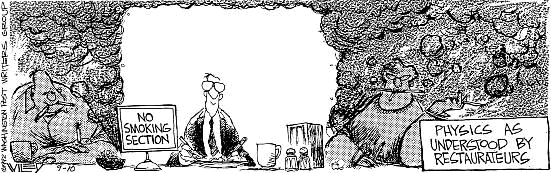
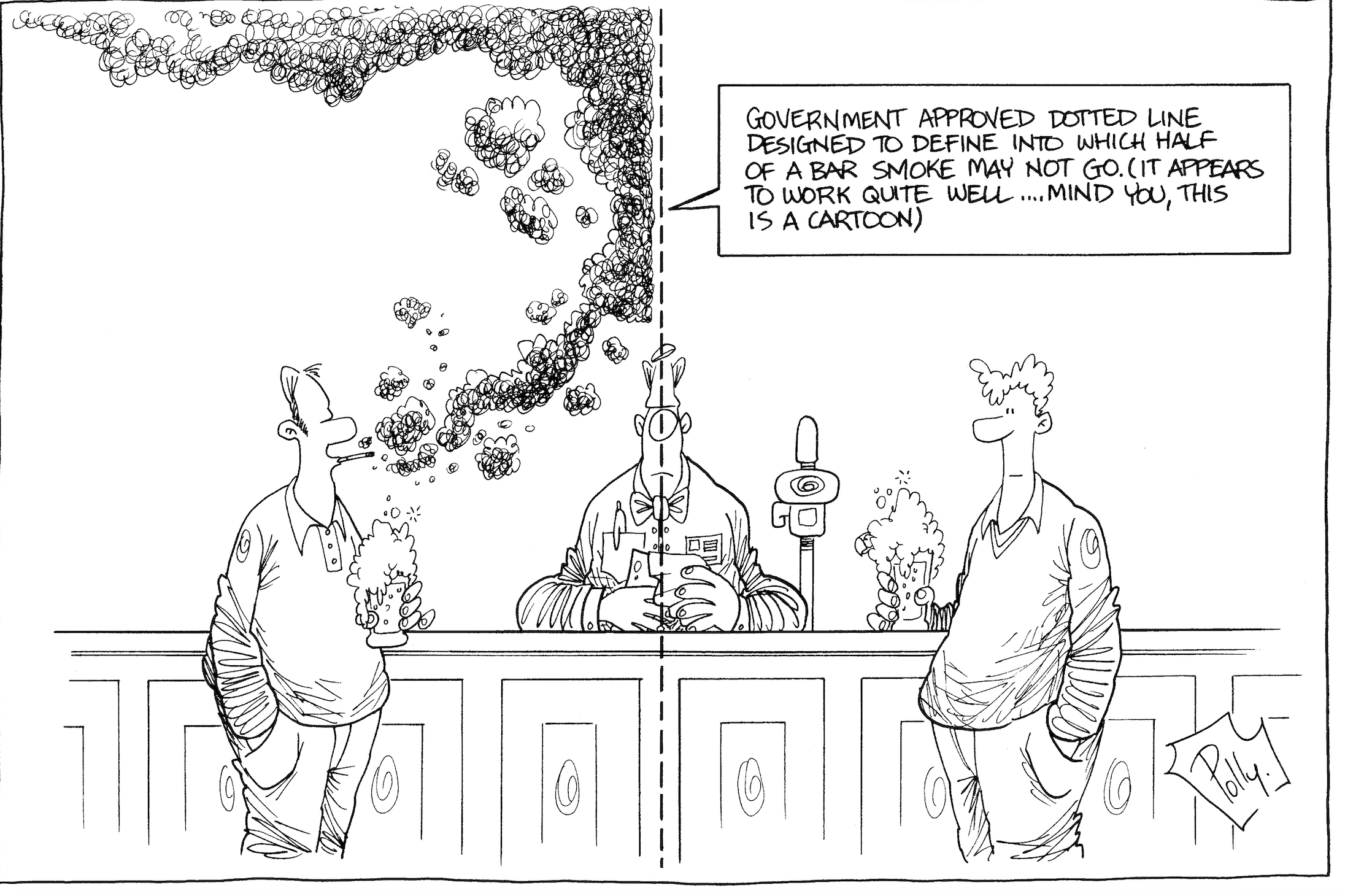
The pub and club industry fed us the hilarious compromise for a few years that smoking was banned within a few metres of a bar, but allowed elsewhere. But somebody forgot to tell the smoke to stay put. Cartoonists had a field day. We saw high-powered exhaust fans proposed that threatened to suck your beer out of the glass; arguments about the birthright of decent Australians to have a smoke with their beer and pie after a hard day’s work (but harming bar staff’s lungs was presumably quite Australian); and as with advertising bans ruining sport and TV profits, endless screaming about economic catasptrophe if you couldn’t smoke in a pub.
Of course, none of this came to pass. Television has not had direct tobacco advertisng revenue since 1976 and smoking has not been allowed in restaurants for 26 years.
When the casino at Barangaroo in Sydney was being built, the O’Farrell Liberal government announced that high roller rooms would be exempt from the smoking ban. I wrote this piece for the Sydney Morning Herald where I sarcastically suggested the government must have obtained research showing that smoke from wealthy high-end gamblers was non-toxic to others. This craziness ended in 2022.
With advertising bans, ads on TV ad radio were the first to go in September 1976 because — as is now being implicitly argued with gambling ads– children watch TV and listen to the radio and would be exposed and stimulated to smoke. But the very same children who saw the very same tobacco ads on billboards, in cinemas, promoting music events or at sporting events were protected by some magic barrier that prevented the ads influencing then there.
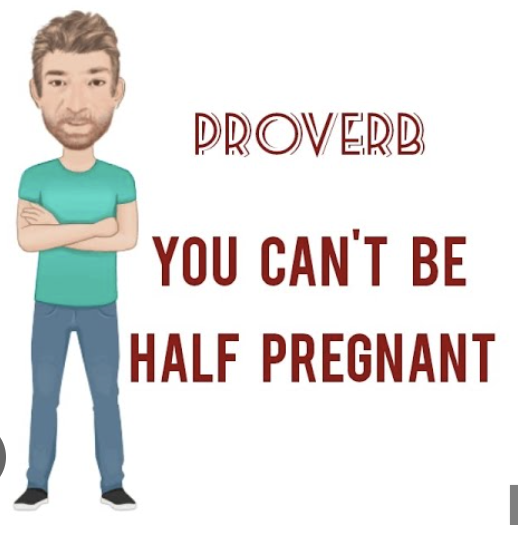
Everyone knew this was complete bovine excrement. You can’t be half pregnant so, if ads could influence kids on radio and TV, they obviously could do so anywhere else they saw them. Which was just about everywhere. Politicians had baited their own future traps by conceding ads influenced kids. It was then only a matter of time
So let’s look at the proposed gambling ad reforms
- Gambling ads will be banned during live sports broadcasts between 6 am and 8:30 pm, with a limit of three ads per hour outside of play
So it’s OK, yes, for kids staying up late or rising early to watch telecasts of the World Cup football, the Olympics etc and see lots of the same ads that won’t be run in the restricted times? And this never happens. And where’s the data that show up to three ads is benign, while any more are persuasive?
- Ads will be prohibited from being targeted at children and cannot be broadcast on radio during school drop-off/pick-up times (8-9 am and 3-4 pm).
But radio ads in the school holidays, all weekend and outside these time on weekdays are all just fine? It’s just those deadly influential ones they might hear on the car radio? And any first year cadet in an advertising agency could argue the case that ads shown to appeal to kids were nonetheless not targeted at them. With this truly pathetic provision, the government has learned nothing from the banning of Paul Hogan from Winfield ads in 1980, when Rothmans tried and failed to use this very reasoning.
- Online gambling ads will be restricted to users over 18, and platforms must offer an opt-out mechanism.
This is a notorious quagmire, as we have seen with many reports of under 16s in Australia being able to use VPN workarounds to access social media they are banned from accessing. And critically here, opt out policies are loved by advertisers, because the alternative (opt in) produce drastically lower traffic. The gambling companies could not believe their luck with this inclusion.
- Ads must not feature celebrities or professional athletes, and they must include responsible gambling messaging, such as “What’s gambling really costing you?”
Where are these highly fluid class of “celebrities” defined? Will it include the hundreds of vapid come-and-go “influencers”? And what about former athletes? Any suburban solicitor could drive a tank through these porous descriptors.
Australian Labor governments have had strong, world leading appetites for bold tobacco control policy and stood up to powerful industry opposition. Think plain packaging and pharmacy access to vapes. Three in four Australians want gambling ads stopped. This is much higher than support for the 2017 marriage equality plebiscite (61.6%) and even higher than support for more investment in renewable energy (70%).
Banning all gambling advertising would be highly supported by Australians.
 Simon Chapman AO