
Tags
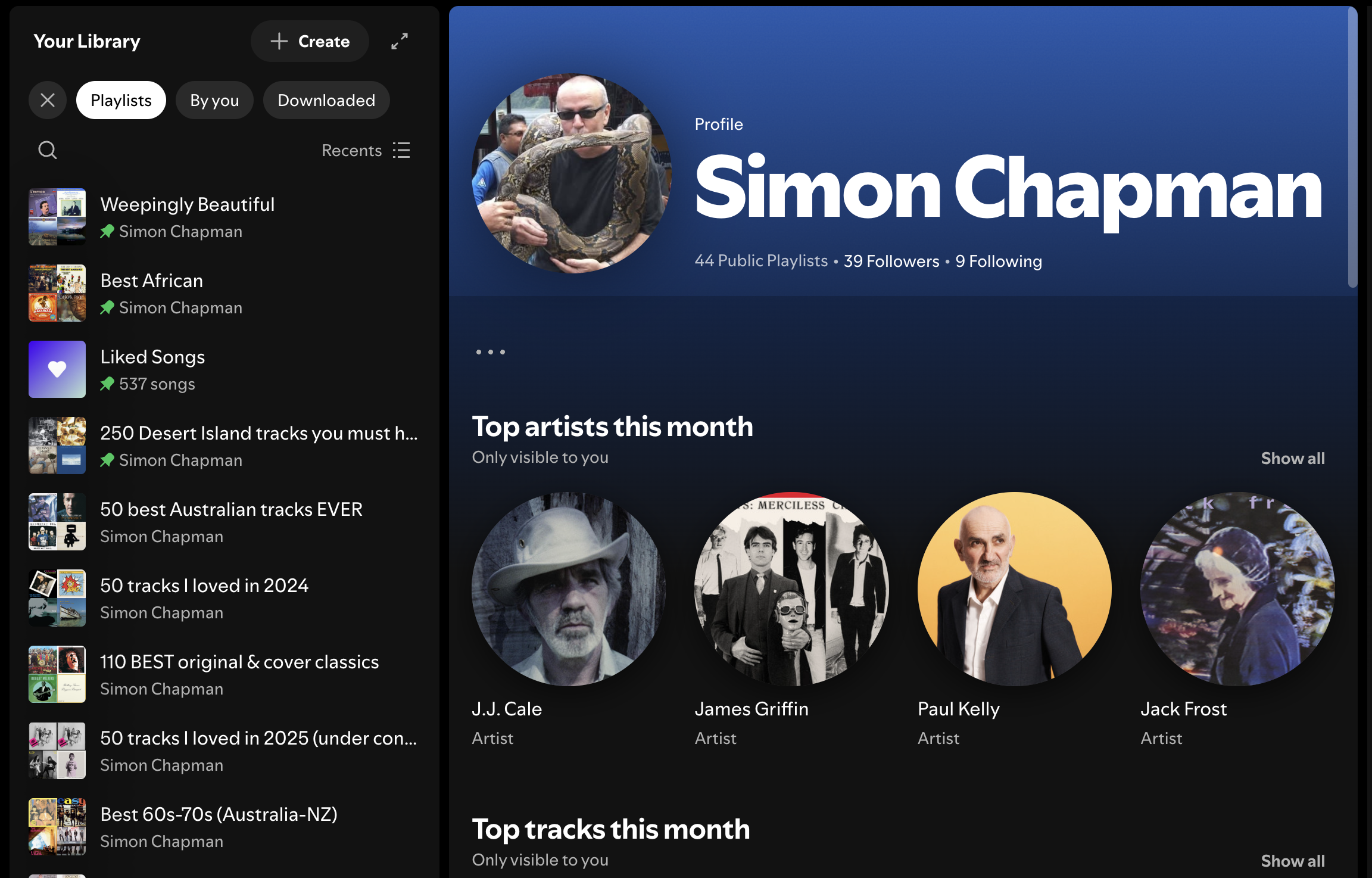
I’m a daily user of Spotify. I have it on daily in the car, the house and at my desk. My tastes are very eclectic with extensive playlists across almost every genre of music with the exceptions of metal and all its variants, rap/hip hop, “musicals” and light orchestral. It has hugely expanded my discovery and appreciation of unimagined music.
The other day a close friend asked me whether I knew that Spotify’s owner Daniel Ek, had recently invested €600 million ($AUD1.074 billion) in military armaments in Hesling, a German based company which he chairs. I didn’t, but was concerned enough to find out more.
My friend sent a link to the best painless ways to move to other music streaming platforms and said he was planning to move in protest.
A Guardian report listed all of three bands, one Australian and two from the US, who were leading a so-called “exodus” from Spotiify. One stated “We just removed our music from the platform. Can we put pressure on these Dr. Evil tech bros to do better?” Another band was taking all its music off “garbage hole violent armageddon portal Spotify”.
Australian musician David Bridie also bought into all this with this Guardian article. He’s removed his work from Spotify, explaining “In recent years, we’ve witnessed the horror of AI drone wars in Ukraine and Gaza – children killed and hospitals destroyed with the press of the space bar. Ek is investing in technology that can cause suffering and death. Spotify used to seem like a necessary evil. By association, it now just seems evil.”
So what does Hesling’s website (Protecting our democracies) tell us? That it’s a military defence company providing “mass and autonomous capabilities to democracies so they can deter and protect”.
Among its products are:
- An Electronic Warfare (EW) system using AI to classify radio signals
- Underwater drone swarms for surveillance and signal detection
- Software for command centers
- Strike drones using AI for defeating jamming/spoofing
In February, the company announced it was producing 6,000 strike drones for use by Ukraine against Russian attacks, supplementing an early 4,000 already produced. Its website talks about ethical practices in supplying its products to nations.
Since Russia began pounding Ukraine, killing 46,000 civilians and 120,000 troops plus 180,000 injuries with 7 million having fled the country, the western world has held its breath hoping that NATO members and the US would adequately fund Ukrainian resistance. Nations bordering Russia are all vitally interested in anything that might give Russia pause to invade them.
So Spotify/Daniel Ek/Hesling are not so much as trying to cause suffering and death (except to Russian invading troops), but trying to prevent it as much as possible by shooting down incoming missiles, destroying Russian tanks and troop convoys.
Is all warfare weaponry inherently unethical?
Ethical investment funds typically refuse to invest in “fossil fuels, weapons, gambling, tobacco and other unethical industries”. Weapons are an interesting and challenging inclusion. Costa Rica, Iceland, Mauritius, Panama, and Vanuatu have no military forces. Other minnow nations, like Andorra, Kiribati, Liechtenstein, and the Marshall Islands, rely on other nations or agreements for their defence. But all large nations have military investments. So are they all unethical in investing in military defence?
Advanced technology useful in preventing enemy capability to wreak havoc on nations is morally neutral until we start dividing nations possessing this technology into bad and good actors. If Hesling is indeed only selling its drone and other AI driven defensive technology to nations fearful of Russian or other bad actor aggression, what’s not to like?
As one Reddit contributor put it succinctly “So I should boycott Spotify because their CEO is investing into one of the companies that is trying to beat the Russians in the drone race, support Ukraine, and protect Europe and western democracies and values against tyranny?
I’ll pass on that, thanks.
Boycott Spotify for ripping off musicians?
Then there’s the argument that Spotify is killing the music industry. I’ve friends who are musicians who are scathing about the derisory returns Spotify pays them per play. At the moment it is 0.00318 cents. They argue passionately that these music platforms are all parasitical, making huge profits from the creative talents of musicians while giving little back. Streaming has dramatically reduced musicians’ earnings from LP and CD sales, leaving live performance as the main income source. (I sometimes still buy CDs at gigs, but have long sold about 90% of the large number of CDs and LPs I owned, having rarely played them across many years).
| Platform | Pay per Stream |
| Pandora | $0.00133 |
| Spotify | $0.00318 |
| Amazon Music | $0.00402 |
| Deezer | $0.0011 |
| YouTube Music | $0.002 |
| Apple Music | $0.008 |
| Tidal | $0.01284 |
But this simple comparison of differences between platforms is confounded by the different subscriber and audience sizes of these platforms. In April 2025 Spotify had 276 million paying subscribers in their total user base of 696 million monthly active users. Spotify’s royalties are based on total plays, not just those by paying subscribers. In June 2023 Apple Music had over 93 million subscribers, an increase from its 88 million subscribers in 2022. I’ve not found later data.
So a smaller per stream payment on a platform with more users could earn more than a larger payment on a rival platform with far fewer users.
For 10,000 plays, Spotify will pay an artist all of $31.80. David Bridie’s most listened-to track on Spotify is his quite wonderful I’ve got a plan (from his 1994 My Friend the Chocolate Cake collaboration). As of today it’s had 517,792 plays. That’s royalties of $1,647.With 6 in the band, that’s $275 each.
I’m not an Apple music subscriber so don’t know how many plays that track has had over there. But as has been emphatically argued many times before, streaming royalties make only a tiny minority of performers rich, regardless of the platform. And that has always been the case: many musicians don’t make a living, while relatively few make fortunes.
This page on Spotify reports on royalties paid since 2017. $10 billion was paid out in 2024 Under the payouts you can look at growth in nine levels of royalty earnings from $5000 and over (110,500) to $10 million and over (70 acts).


 Simon Chapman AO