
Tags
Throughout my life, there are places and cities that have hypnotized me with the mere sound of their names, their history and promise. I’ve been to a few: Bali, Paris, Salamanca, Granada, Barcelona, Paris, Iceland, Khartoum, Herat, Kandahar and Kabul, Istanbul, Urbino, Naples, Luang Prabang, Hanoi and Lijiang, Yunnan are some.
There are many I’ve not managed to yet visit: Senegal, the Congo, Mali, Trinidad, St Petersburg, Zanzibar, Samarkand, Kyoto and Mexico City.
Then there is Fes in the north east of Morocco. When I first heard the name as a boy, I went straight to the encylopaedia and drank in the information. Imagine a city named after a hat, or was it that the hat was named after the city?
We were having a holiday in Italy and needed to go to Barcelona where I’d been invited to give a lecture. So let’s fly from Rome to Fes, take the train to Marrakech and then fly up to Barcelona! It was all about to happen.
Our flight went via Casablanca. Mid flight Trish read in the guide book that hotels were known to refuse couples with different surnames a shared room. Oh dear, that was us. We composed a text to the kids back home, describing where they could find our marriage certificate. Send us a photo please. We sent it from the transit lounge at Casablanca and received the photo as we disembarked at Fes about an hour later. The reception desk guy at the beautiful, secluded riad where we had booked a room just within the walls of Fes’s old town (the medina), could not have cared less, so we kept the marriage certificate photo to ourselves.
We arrived in Fes after dark on November 12, 2004, the day after Yasser Arafat had died. It was also about a week after the revelations of widespread torture by allied troops in Abu Grahib prison in Iraq had rocked the world. And it was the day before the end of the Islamic holy month of Ramadan. And amid all this, here we were: two infidels in Fes, one of the more conservative cities in Morocco. We sensed that this confluence was not exactly propitious for our time in the city.
The next morning after breakfast in the marble courtyard of the ancient riad, we walked the 300m to the huge gates leading into the ancient labyrinthine souk. We passed coffee shops filled with men talking and playing cards and dominoes. There were no women in these. None. As we approached the gate about 15 young boys aged about 12 to 16 surrounded us, all trying to get our custom as guides around the vast souk.
We’d both been in many tourist places where you are pestered continuously by shopkeepers, massage services, cafes, guides and taxi drivers. You refine strategies for declining and then are generally little bothered by their efforts. But Fes was like nothing we’d ever experienced, till then or since. The boys were absolutely insistent that we select one of them as a guide. This looked like a recipe for interminable visits to their many ”uncles’” shops for tawdry souvenirs with zero appeal and massively inflated prices for gormless tourists.
So we held our ground, slowly moving in the centre of this swarm of touts, who rapidly became more than insistent: they began firmly grabbing us both by the arms and clothing, as we clutched our day bags for dear life fearing an imminent robbery. We soon turned and strode back toward our hotel. Trish was quite shaken demanding that we get out of there.
Back at the hotel almost as soon as we’d left, the concierge calmly tried to have us see that what we had experienced would instantly disappear if we simply chose a guide. The others would melt away and there would be no further harassment. We were not going to spend days in Fes without exploring its fabled souk, so we relented. I went straight up to a boy who exuded street smarts and toughness. The concierge had told us to pay no more than $25 for half a day in the vast market. Our guy agreed immediately.
We set off and just inside the gates of the souk, he led us into what looked like an abandoned old building of four or so stories (see photo). There was no one to be seen in or outside it. We crossed the dilapidated courtyard with a waterless fountain, following him as he headed to an internal staircase. Two flights up and not seeing daylight above, things started quickly feeling ominous. We’d seen no one since entering the building. What a perfect place for a hand over of your bags in a money ambush by his pals we’d yet to meet. Maybe worse, given the week’s events I described.
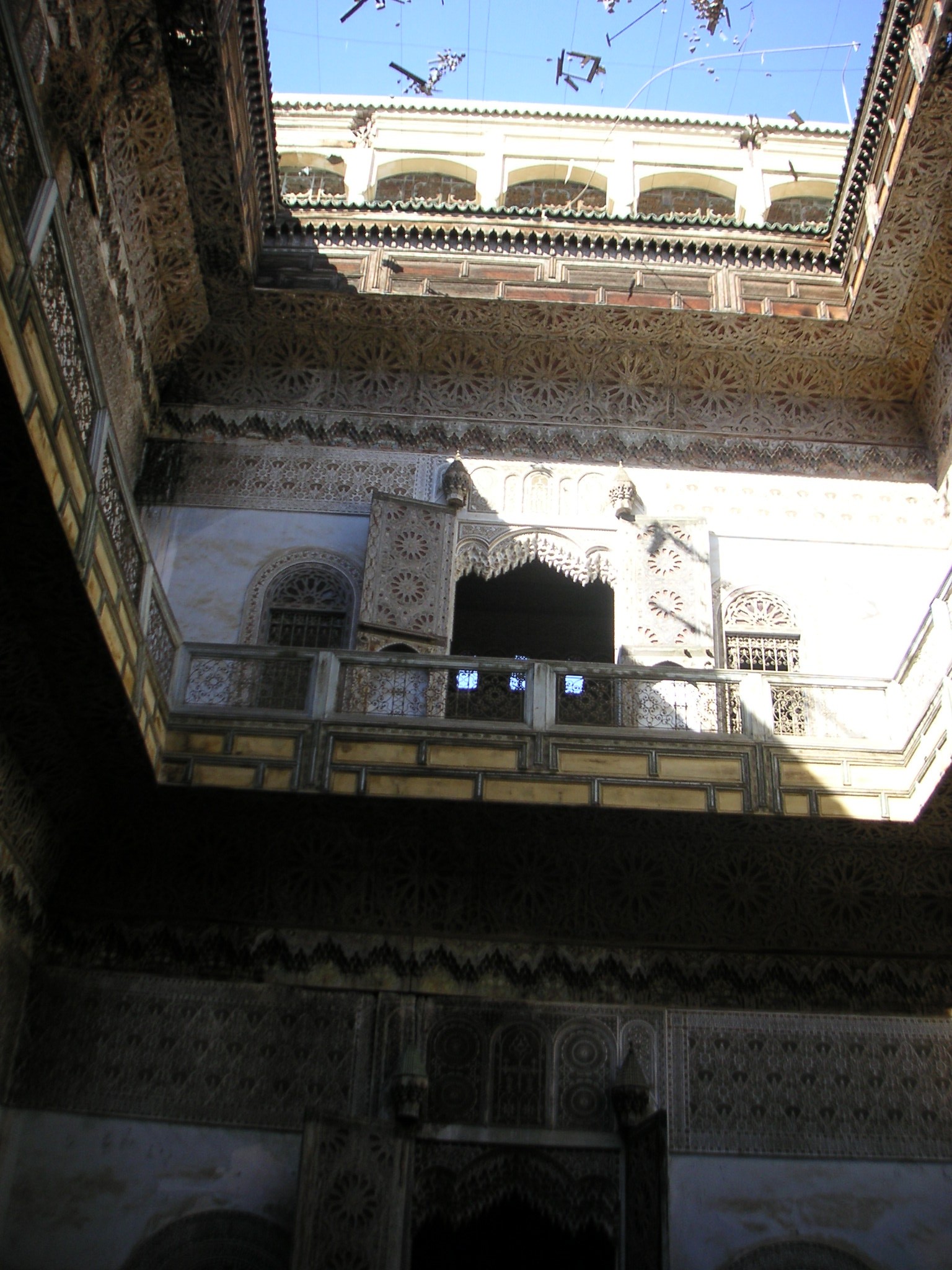
We stopped going up the stairs and he came back down a flight for us. “What are we doing here?” I asked. “Beautiful view” he pointed above us. We sheepishly continued expecting any second to be surrounded by a bunch of brigands. But we emerged from the stairs on to the roof, to see an astonishing panoramic view of the roof of the souk, the old town and much of the new, more modern city in the distance.
He was starting our tour with a jaw-dropper, and one that we sensed would be nowhere to be found in guidebooks or brochures for tourists. We immediately relaxed.
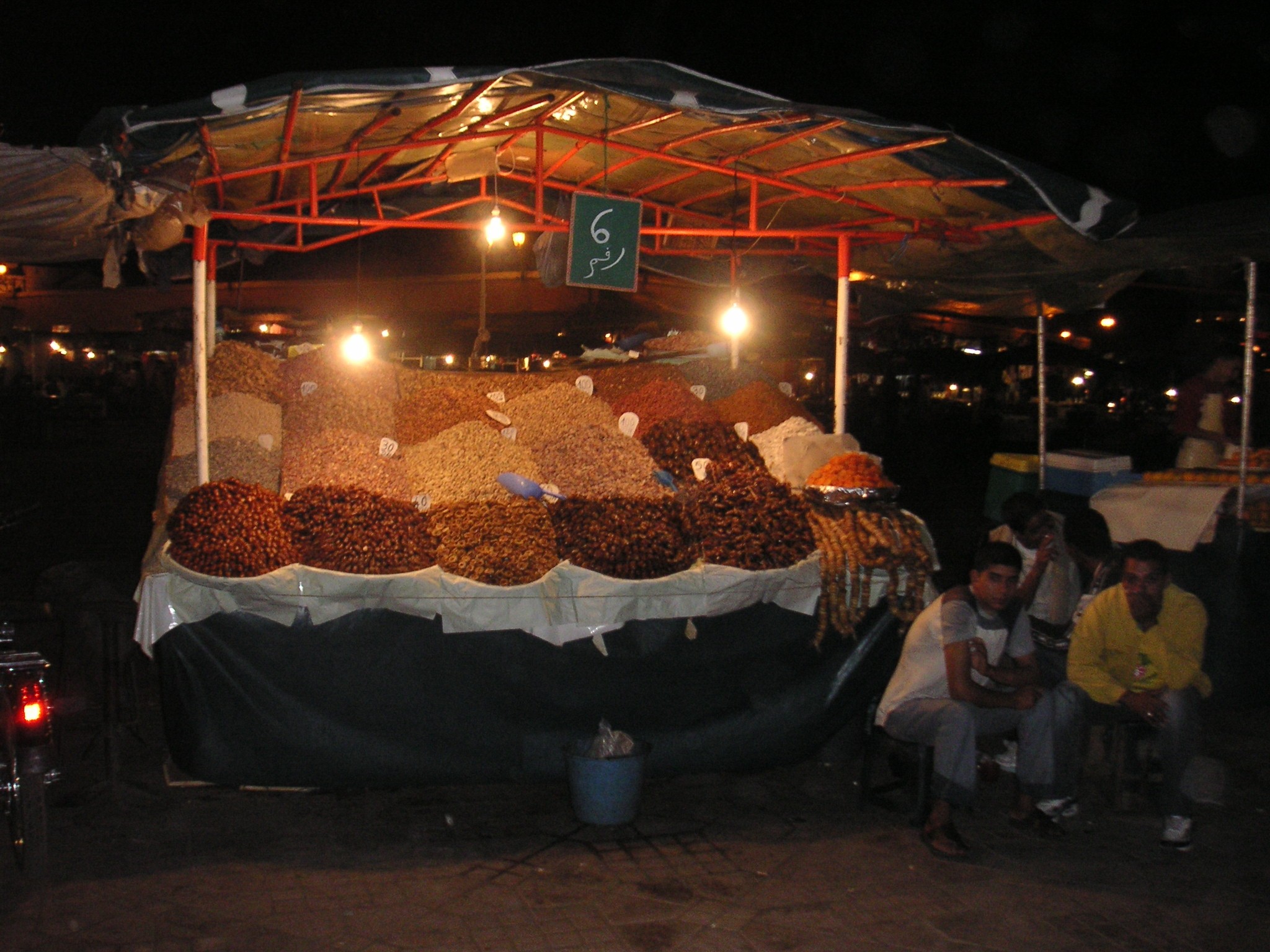
The souk seemed unending, with endless rug, pottery, leather, pouffes, dates, butchers, basketry, spice, lamps, locks and hardware, clothing, body oils, barbers and cafes. We sampled plump, succulent dates of various colours and saw several severed camel heads swinging on steel hooks in butchers. It was permeated with cooking smells and the stench from open air leather curing ponds. We were unavoidably steered into rug shops by the most polished salesmen I have ever encountered. They seemed to read our tastes by our gaze on particular rugs and our cost pinch points. We left with two which we later regretted and sold on eBay.


More than one shop keeper, seeing my hairy forearms, gripped me and looking at Trish knowingly declared I must be a virile “Berber man”. The greeting has secured its place in our house in the years since.

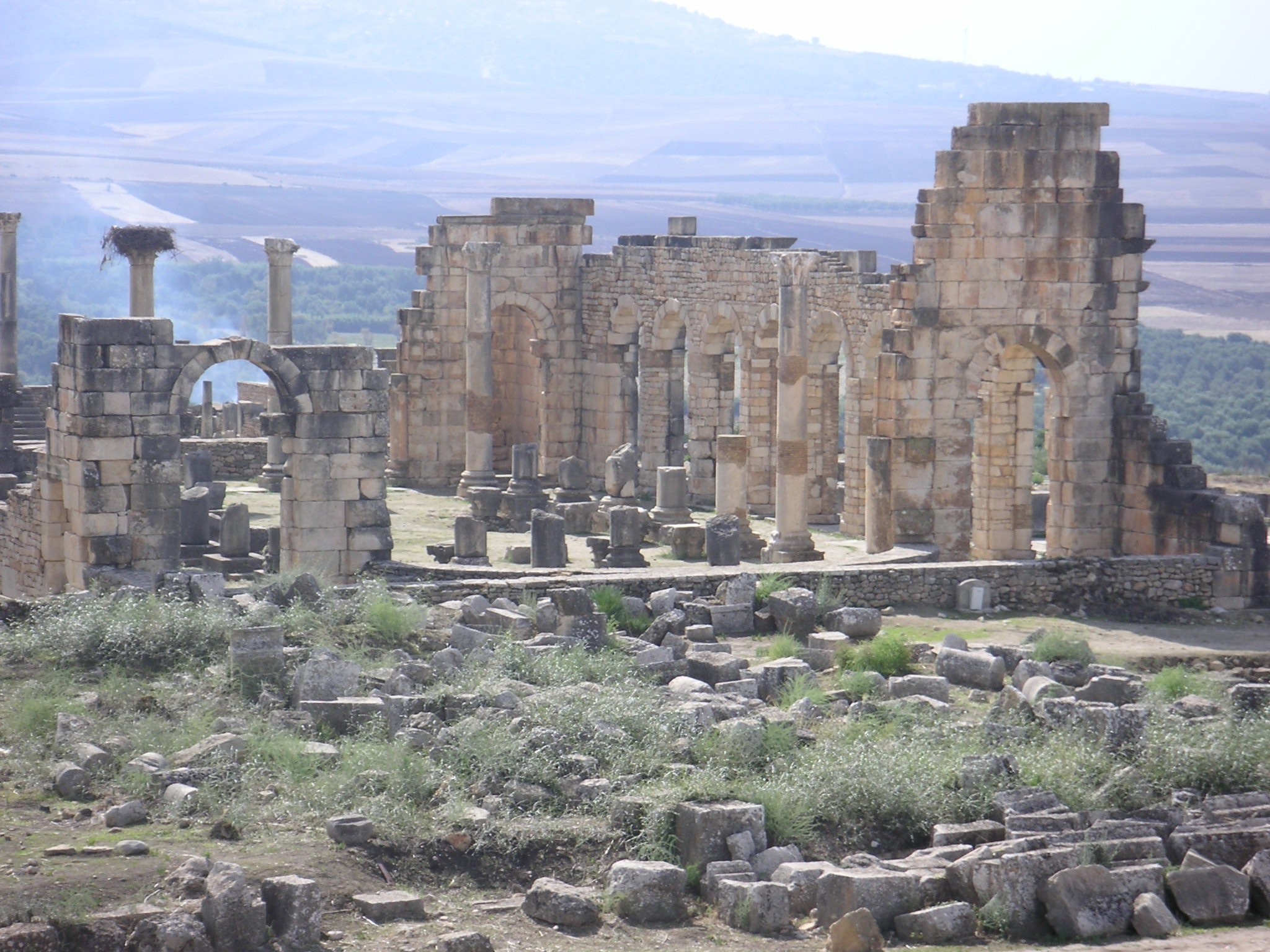
One evening we shared a table in our riad with an American couple. They invited us to share the cost of a day trip in an ancient large Mercedes to the small city of Meknes and the nearby ruins of Volubilis, inhabited for 600 years from 300BC till 300AD. Ruins are mostly low on my travel priorities, but the many extensive Roman mozaics were quite wonderful. Do not miss them if you’re ever out that way.
The next day we boarded the train bound for Marrakech. It would take us through Meknes, Rabat and Casablanca and was amazingly cheap.
An enduring memory was that across almost the entire trip, it seemed obvious that local people used the area on either side of the rail tracks as a place to dump their rubbish. It was an 8 hour almost continual ride through a narrow dump, but averting your eyes upward was often a treat.
I texted dozens of friends “Do you know we’re riding on the Marrakech express?” with a link to the Crosby, Stills and Nash classic.
We shared our small compartment with two elderly men, who wore garments that suggested they were Muslim clerics. The two of them almost constantly fingered prayer beads across the whole trip, talked very little to each other and avoided eye contact with us.
At Casablanca, a young woman probably in her early 20s joined our cabin. I saw her struggle to lift her suitcase into the luggage rack and immediately helped her up with it. As she hoisted it up, her shirt rode up revealing her stomach and back. The clerics did not avert their gaze. She spoke English well so chatted with us as well as in Arabic with the clerics, listening to music through her ear pieces and reading western fashion magazines. Here was a small microcosm of the old and new of Moroccan society, seemingly mutually tolerant.
We stayed in a small riad in a laneway just off Marrakech’s main Jemaa el Fnaa square and market. Across only two days we skimmed the surface of what was a fabled, exotic city from our childhood reading. A few photos give some glimpses. A vivid, unforgettable trip.



 Simon Chapman AO