This was also a week where Mendelsohn, with “the greatest humility” let us know that he was gonged with a coveted award from the UK Vaping Industry Association (UKVIA) as their new public health golden boy.
In his blog, he helpfully explained UKVIA’s impact on smoking:
Col also updated his website FAQs (see under ‘fires and explosions’) with a generally sensible series of tips on how to prevent your vape exploding. But he just couldn’t resist adding a photo of me and my electric vehicle.
His tag-team partner in sophistry, someone who goes on and on and on about the need for civility, politeness and respect, helped out by making the relevance of the photo explicit in a subsequent tweet.
Exploding vapes have grabbed headlines for good reason, as this show-reel of incidents illustrates. Here’s a 2018 review of 164 cases on e-cigarette explosion injuries. 35% resulted in second degree burns and 20% in third degree burns (the worst), with many necessitating skin grafts. The most common sites were thighs, hands, face and genitals.
But when it comes to catastrophic risk, it’s explosions on aircraft that are most concerning. The US Federal Aviation Administration (FAA) advises that any device using lithium batteries should be stored in carry-on luggage. But its regulations only prohibit a small range of devices from stowed luggage and these include … you guessed it … electronic cigarettes and vapes. Now why would that be? Because as they explain:
“Electronic smoking devices, like vapes and e-cigarettes, contain lithium batteries and are considered dangerous goods due to their risk of smoke, fire and extreme heat. As such, they are restricted to on how they can be packed when preparing for travel on an aircraft. These devices were the leading cause of lithium battery incidents on aircraft in 2022.”
The potential consequence of an intense heat vape battery fire deep in the hold of a crowded airliner is dire.
But hey, what would the world’s largest airline regulator know, when Col and Alex think it’s all just “exploiting fear” to mention explosions as a concern?
Yes, I drive an electric vehicle. And undoubtedly just like both Mendelsohn’s and Wodak’s, my house is also full of appliances that use lithium batteries: laptops, tablets, mobile phones, power banks, torches, remote controls, fitness monitors, and power tools. When these products very rarely catch on fire, we typically see highly publicised global recalls like this laptop, these power tool batteries and the infamous Samsung Galaxy Note 7.
But Google couldn’t show me any examples of recalls for exploding vapes. This almost certainly reflects the cowboy nature of vast segments of the vaping manufacturing industry and the thousands of equally dodgy retailers willing to stock them.
Electric vehicles have much lower probability of catching fire than internal combustion engine (ICE) vehicles. From 2010-2023 EV FireSafe has verified 393 EV battery fires globally. To put this in context, there are some 30 million EVs on the world’s roads. This Conversation review points to fires in ICE vehicles being some 80 times more common than in EVs. Tesla’s 2020 impact report argued that there was one Tesla fire for every 330 million kilometres their vehicles have travelled. Tesla automatically collects full kilometer and incident data for every car it has ever sold, across all owners.
After reading about the explosion risks of vapes and EVs, I’m very pleased to warm my nether regions in winter driving on the Tesla’s battery powered seat warmers rather than risk molten lithium trickling around my testicles if I vaped. Goodness, gracious great balls of fire!
Wodak’s apparent understanding of the comparative risks and consequences of vape explosions with those occurring in EVs seems about as informed as his unforgettable comparison of nicotine in tobacco with that in vegetables like eggplants and potatoes, the most opened of all blogs in this series.
Hypocrisy? Not guilty m’lud.
Other blogs in this series
Vaping theology: 1 The Cancer Council Australia takes huge donations from cigarette retailers. WordPress 30 Jul, 2020
Vaping theology: 2 Tobacco control advocates help Big Tobacco. WordPress 12 Aug, 2020
Vaping theology: 3 Australia’s prescribed vaping model “privileges” Big Tobacco WordPress Feb 15, 2020
Vaping theology: 4 Many in tobacco control do not support open access to vapes because they are just protecting their jobs. WordPress 27 Feb 2021
Vaping theology: 5 I take money from China and Bloomberg to conduct bogus studies. WordPress 6 Mar, 2021
Vaping theology: 6 There’s nicotine in potatoes and tomatoes so should we restrict or ban them too? WordPress 9 Mar, 2021
Vaping theology: 7 Vaping prohibitionists have been punished, hurt, suffered and damaged by Big Tobacco WordPress 2 Jun, 2021
Vaping theology: 9 “Won’t somebody please think of the children”. WordPress 6 Sep, 2021
Vaping theology: 10: Almost all young people who vape regularly are already smokers before they tried vaping. WordPress 10 Sep, 2021
Vaping theology: 11 The sky is about to fall in as nicotine vaping starts to require a prescription in Australia. WordPress 28 Sep, 2021
Vaping theology: 12 Nicotine is not very addictive WordPress 3 Jan 2022
Vaping theology 13: Kids who try vaping and then start smoking,would have started smoking regardless. WordPress 20 Jan, 2023
Vaping theology 14: Policies that strictly regulate vaping will drive huge numbers of vapers back to smoking, causing many deaths. WordPress 13 Feb, 2023
Vaping theology 15: The government’s prescription vape access scheme has failed, so let’s regulate and reward illegal sellers for what they’ve been doing. WordPress 27 Mar 2023
Vaping theology 16: “Humans are not rats, so everybody calm down about nicotine being harmful to teenage brains”. WordPress 13 Jul, 2023
Vaping theology 17: “Vaping advocates need to be civil, polite and respectful” … oh wait. WordPress 3 Oct, 2023
Vaping theology 18: Vaping is a fatally disruptive “Kodak moment” for smoking. WordPress Oct 30, 2023
Vaping theology 19: Vaping explosions are rare and those who mention them are hypocrites. WordPress 17 Nov, 2023
Vaping theology 20 : Today’s smokers are hard core nicotine dependent who’ve tried everything and failed – so they need vapes. WordPress 14 Dec, 2023
Vaping theology 21: Australia’s prescription vapes policy failed and saw rises in underage vaping and smoking. WordPress 10 Jan, 2024
Vaping theology 22: “Prohibition has never worked at any point for any other illicit substance”. WordPress 17 Mar 2024
Vaping theology 23: “84% of the Australian public are opposed to the way the government will regulate vapes” WordPress 2 Apr, 2024
Vaping Theology 24: “Tobacco control advocates are responsible for vape retail store fire bombings and murders. WordPress 27 May, 2024
Australia will soon fully implement its new vaping regulations. The twin pillars of these are :
(1) that nicotine vaping products will only be legally available to those with a doctor’s prescription. As prescribed substances can only be sold by registered pharmacists, all other retailing will be illegal. Flavoured, disposable vapes will be banned. The Therapeutic Goods Administration and state and territory governments are empowered to penalise anyone unauthorised who sells or advertises vapes. Very recently, the Federal Court ordered a vaping company to pay a penalty of $4.9 million plus the legal costs of the Commonwealth for advertising vapes. Such penalties are likely to have a major deterrent effect on illegal retailing.
(2) vapes (both with nicotine and without) will be illegal to manufacture or import into Australia unless these products are intended for sale to pharmacists who will dispense them to those with prescriptions. Seizures weighing 32 tonnes and valued at $11 million have recently been made as police and customs surveillance increases.
The TGA recently invited responses to its proposed regulations. Below is my brief submission. It recommends three amendments that I believe would sharpen the Government’s regulatory intent.
Responses to Proposed Reforms to the Regulation of Vapes
Thank you for the opportunity to respond to the proposed reforms to the regulation of vapes. Overall, the proposed reforms are quite outstanding. They are likely to attract international attention as a template for international Nicotine Vaping Products (NVP) regulation. I am in strong support of all proposals with the exception of those set out below.
Tank systems
On page 6, the document specifies that refillable tank systems are included in the definition of permitted vapes.
This is concerning as it will circumvent the regulatory intent to greatly limit the use of flavours in prescription-accessible vaping products. While only two permissible flavours are prescribed (tobacco and mint), many tank system users will undoubtedly add flavours not intended for vaping (aromatics, essential oils etc) to their tanks. It will be impossible to regulate the availability of such flavours as they are widely used in cooking, air freshening and perfumery. Vaping chat rooms have long had extensive discussions about flavouring ingredients which participants have been using. This may well greatly accelerate with the proscriptions on all but two flavours.
The document also states early that:
“Vaping devices are currently excluded from regulation under the TG Act unless they are intended exclusively for the vaporisation and administration by inhalation of a medicine. It is proposed that the exclusion is revisited in the context of these reforms to ensure that proper controls and oversight are applied to device components of vapes moving forward.”
This looks like the door could be closed on legal sale of mods and tanks, with all that goes along with user adjustable coil temperature settings and adding non prescribed liquid flavours.
The exclusion of tank systems seems ripe to foment a whole new rise in tank use and the commerce that supports it. I would urge the TGA to revisit the exclusion of vaping devices from the TG Act and advise the government that only closed pod system NVPs should be legal in Australia and that for ex-prescription sales of mod and tank vaping devices to remain legal would threaten the integrity of the proposed NVP regulations.
Collateral uses of vaping devices
An outstanding concern here is also that mod/tank vaping apparatus can be used to vapourise other drugs which according to this San Diego drug treatment centre can include cannabis. LSD, GHB (gamma hydroxybutyrate) and ketamine. This is far from rare. A 2022 Kings College London survey found that 14.7% of people aged 18+ in the UK had ever vaped a non-nicotine drug, with nearly 1 in 56 (1.8%) currently doing it. In 2019, 3.9% of 19-24 Americans (1 in 26) had vaped cannabis in the last 30 days. I’ve found no data on other drug vaping by under 18s, which of course does not mean it is not happening.
82% reported using THC-containing products; 33% reported exclusive use of THC-containing products.
57% reported using nicotine-containing products; 14% reported exclusive use of nicotine-containing products.
No data appear to be available on the incidence of health incidents following vaping other drugs, but the World Drug Survey included questions on it in a recent survey..
Mod/tank systems were invented and marketed to facilitate nicotine vaping. But like a Trojan horse, they have also enabled widespread vaping of non-nicotine drugs which have killed and seriously harmed thousands in the US alone.
Collateral damage (negative externalities) from intended use is routinely considered in all formal risk assessments in health and community safety. For example, gun control policy considers gun misuse, not just approved uses in hunting and target shooting; DDT was widely used in Australia in agriculture and termite control where it was extremely effective, but banned in 1987 because of its collateral residual health risks to humans.
There are many mods and tanks now in the community. If the Act disallows nicotine e-juice intended to be decanted into tanks, these mods and tanks will sit in drawers as useless without the legal availability of nicotine e-juice essential to nicotine vaping. I strongly urge you to reconsider allowing prescription supply of nicotine e-juice for tanks and also to prohibit the sale of mods and tanks vaping apparatus for the reasons I have outlined.
Section 3.1 Mint and tobacco flavours
Comment: No inhalable therapeutic goods contain flavouring chemicals for the very important reason that it is inadvisable to inhale chemical agents which have not been thoroughly assessed as being generally regarded as safe (GRAS) for inhalation. Asthma inhalants like salbutamol are a perfect example of this. This is particularly important with the regulation of NVPs because daily vapers typically inhale vapes some 500 times daily. The long term health consequences of this remain unknown.
I therefore strongly agree with the critical importance of strictly limiting the range of flavours in prescription accessible NVPs. I also accept that it is important that the taste of NVPs should not be so unpleasant and unpalatable to those using them for smoking cessation so as to cause many intending NVP users to rapidly abandon them.
As far as I am aware, there are no GRAS data available for the proposed mint flavour when being inhaled. However, in the trade-off between this concern about possible long term consequences of deeply inhaling vapourised mint some 500 times a day by daily vapers, and the concern to make NVPs not taste or smell repulsive, I believe allowing mint flavour would be a reasonable compromise.
However, I do not support the proposal to allow a flavour named “tobacco” flavour. If it is proposed that there be a specific, standard, fully prescribed (defined) flavour known as “tobacco” this will presumably taste and smell like the taste and smell of tobacco. This is likely to strongly remind smokers who are vaping of the taste and smell of the tobacco they had been (and for dual users) still are smoking. If we reasonably assume that for many smokers this smell and taste will evoke strong positive associations, then the availability of a tobacco vape flavour may act as “pull” factor back toward smoking which would not be sensible.
It would be far preferable to permit a flavour with an anodyne name that neither denoted or connoted any appealing associations. Examples of such names might include “standard”, “classic”, “basic” or “regular”. Here is an example of advertising for Nicorette NRT gum using “classic”. I do not believe any NRT products are flavoured with “tobacco”.
The flavour and smell sensations delivered by such anodyne descriptors would be such that users would not instantly associate the taste or flavour with any fruit, confectionary, beverage or food. Taste panels could be used to rate taste acceptability and to ensure that candidate flavours did not evoke any proscribed associated tastes or smells.
Section 3.1.3 Lowering maximum nicotine concentration in e-liquids to 20 mg/mL in base form (or base equivalent), to align with the limits in the EU, UK and Canada.
It is critically important to note that, unlike Australia, the EU, EK and Canada do not yet have a prescription-access only NVP policy like Australia. They have set the 20 mg/mL nicotine limit to try and reduce the likelihood of nicotine naïve children becoming addicted.
Australia’s limit is not being set for prevention of regular use by children (who will rarely be prescribed NVPs) but for already addicted smokers trying to quit. This is a very important difference against which the wisdom of reducing the current limit of 100 mg/mL to 20 mg/mL needs to be considered. I believe such a large reduction is misguided.
Medicinal cannabis which has been legally prescribable in Australia for several years is not seeing diversion from prescription access to those without prescriptions. This would seem relevant to concerns about limiting prescription vapes to 20mg/mL. If there is indeed concern that major diversion might occur and therefore a low limit justified for safety reasons, the unlikelihood of diversion occurring is a strong counterpoint to this.
NRT nicotine limits produce dismal cessation rates
For decades, it has been widely acknowledged that nicotine replacement therapy’s dismal effectiveness in smoking cessation under conditions of real-world use is in large part due to its poor ability to successfully satisfy nicotine cravings developed by smokers. Even under the highly artificial conditions in which RCTs are conducted, some 95% of smokers using NRT in RCTs are smoking at post six months follow-up. In this 2021 systematic review, 61% of smokers allocated to NRT in RCTs adhered to the recommended use throughout trials, compared to only 26% in longitudinal population (real world) studies.
The research literature on NRT contains many recommendations about contemporaneous multiple modes of NRT use and lifetime use. This points further to recognition that NRT in the limited very low nicotine doses that have been approved performs very poorly in cessation under conditions of real world use.
It is fundamental to the understanding of vaping behaviour that those with nicotine dependence change their puff parameters (puff frequency, puff volume, between puff intervals) to obtain the nicotine dose that satisfies their cravings. When there is a low maximum nicotine level in a vape, more dependent users will typically puff more and in larger volumes to reduce their cravings. If the nicotine level was higher, across a 24 hour period they would take less puffs from a higher yielding vape than from a much lower yielding one.
The growing research literature on airways inflammation is too immature to be certain about which components of vape emissions are likely to be of most concern. But it seems very unlikely that the normal dose-response relationship would be somehow different with vaping than it is for any other cause of lung damage, including smoking. The higher the exposure, the more likely the risk. A higher puff frequency and volume when using a low nicotine vape means users will be exposing their lungs to higher doses of excipients (propylene glycol/vegetable glycerine) than they would if they were using a higher nicotine yielding vape.
This study notes that “in experimental animal studies, unheated PG or VG have minimal lung toxicity (14). However, when delivered from e-cigs, there are measurable increases in lung inflammatory infiltrates, cytokines, infections, reactive oxygen species, and gene expression (9, 15, 16).
By maximisng NVP nicotine concentration at 20 mg/mL, it is highly probable that, as has long occurred with NRT, many heavily nicotine addicted users will similarly quickly desist from using prescribed vapes after finding that their cravings remain. This is obviously not the outcome being sought via prescription access to NVPs for those who are already nicotine addicted.
I would recommend a compromise here by lowering the maximum limit by half from 100 mg/mL to 50 mg/mL.
Competing interests
In July 2023 I was engaged as a temporary advisor by the World Health Organisation for a three day meeting on NVPs held in Geneva.
Ranked 16,808 for citations among 9,749,150 authors worldwide with 5 or more publications (in any field) from 1996-2022 (see here) and 132 among 59,062 public health authors
Career highlights
• Deputy editor (1992-97), Editor (1998-2008), Emeritus Editor since 2009, BMJ’s Tobacco Control
• World Health Organization World No Tobacco Day Medal for tobacco control, 1997
• National Heart Foundation (Australia), President’s Gold Medal, 1999
• American Cancer Society’s Luther Terry Medal for Outstanding Individual Leadership. 13th World Conference on Tobacco or Health, Helsinki, August 2003
• Distinguished Professorial Achievement Award, Faculty of Medicine, University of Sydney $10,000. November 2012
• Elected Honorary Fellow, Faculty of Public Health of Royal Colleges of Physicians of the United Kingdom March 2013
• Officer in the Order of Australia (AO) Jun 10, 2013 “for distinguished service to medical research as an academic and author, particularly in the area of public health policy, and to the community.”
In the matter of vaping in Australia, state governments’ main responsibilities and powers lie in ensuring that the only supply of vaping products (VPs) occurs via prescribed access through pharmacies; in cooperating with the Therapeutic Goods Administration and the Commonwealth Government to ensure that VPs are not advertised or promoted in any way defined in the Bill soon to be tabled in the Federal Parliament; and in regulating where VPs can be consumed.
In this submission, I will focus only on those matters where the NSW Government has responsibilities. I have previously made a public submission to the TGA’s call in late 2022 for comment on issues such as the safety and effectiveness of vaping in assisting smoking cessation. I append that submission to this present submission.
A thought experiment
First, let me begin with a thought experiment.
Imagine the consequences if a huge, national pharmacy chain, in intense competition with its rivals for the multi-billion dollar prescription drug market was to say “We have decided to ignore the need for a prescription and supply prescription-only medicines to anyone asking for any prescribed drug.” Anyone wanting antibiotics, codeine, statins, steroids, anti-hypertensive drugs … you name it … could walk in, hand over their money and walk out with whatever drugs they wanted.
The reaction to this would be swift and iron-fisted, as shown here and here in cases where pharmacists were investigated and disciplined over unaccounted-for scheduled drugs.
Yet this is in effect what has been happening on a national scale in Australia since Oct 1, 2021, the date when the only legal access to nicotine vaping products became via a prescription legally needing to be dispensed at pharmacies and nowhere else. But as is now blindingly obvious, only a tiny proportion of people who vape – estimates put this at below 4% — are today getting their vapes in this way. The rest are still buying them openly online, from shops brazenly signed with “Vapes sold here” or from many hundreds of suburban and town market stalls. Corner shops, petrol stations and an army of on-line sellers are openly defying the law.
There has been widespread, wholesale ignoring of the law across the country. Retailers have openly displayed, advertised and sold vaping products containing nicotine, often including those falsely labelled as not containing nicotine. (This recent study of VPs confiscated from 598 Sydney school student found that nearly all nearly all had av 40mg/ML nicotine, high levels of WS-23 coolant chemical and unapproved for inhalation flavour chemicals.)
This has occurred because of a perfect storm of the following factors:
There has been strong, rising demand for VPs, particularly by school children and persons aged under 35. Many of these vapers have never smoked. Many others continue to smoke for years after they also take up vaping
Those importing and retailing these products can earn extraordinary profit margins (see below)
The number of seizures and prosecutions for illegal selling have been tiny, relative the number of outlets selling these products and the number of illegal (by definition) black market transactions that occur across all of these outlets
The maximum fines for selling VPs in NSW are paltry, sending a signal to illegal retailers that the government does not take this illegal trade seriously
Retailers illegally selling VPs reason that the probability of being apprehended, stock seized, charges laid, prosecutions proceeding and maximum fines given by courts is exceedingly small: simply an unlikely irritant-level potential cost to be balanced against the massive profits to be made by breaking the law
Below is a screenshot I took on 31 Oct at 4.25pm of the results of searching on Facebook Marketplace for the innocuous word “fruit”. But these advertisements are not for actual fruit. “Fruit” is instead being used as a code word for fruit flavoured vapes. The screen shot shows just a small sample of many such ads on Facebook Marketplace. I’m told that similar commerce is occurring on other social media platforms. They have been appearing unabated for several years.
Arguments that the illegal sale of VPs is now so widespread as to make it “impossible” to meaningfully mitigate its extent – that the genie is now so far out of the bottle that it cannot be returned — are VERY ignorant about the history tobacco control.
When I commenced my work in tobacco control the late 1970s, over 40% of men and 30% of women smoked, Today, some 10.7% of Australians smoke daily. If the attitude was taken in the 1970s that it was an impossible task to radically reduce smoking prevalence to and beyond the levels we have today, many thousands more than would have died than still occur each year despite Australia being internationally acknowledged as being in the forefront of tobacco control.
Highly profitable
This website provides pricing for importers of many Chinese made VPs. Prices vary according to different models including the number of puffs available. In the examples below (1) shows a 600 puff model that costs US$0.99 when purchased in lots of 1000; and (2) US3.50 -$3.80 for an 8000 puff model
(1)
(2)
An importer with control of retailing in Australia who invested $US50,000 (AUD$79,000) in example (1) — the 600 puff JOMOTECH above — and retailed each for AUD$15 would stand to make an AUD $1.106 million profit, 14 times their investment. If they invested the same US$50,000 (AUD$79,000) in the 8,000 puff EGO at a unit price of US$3.50 (this buying 22,571 EGO vapes) and retailed them for AUD$25 each (see Facebook Marketplace prices above for indicative retail prices) they would make $564,275 less their $79,000 investment, leaving $485,275 profit – over 6 times their investment.
Cheap disposable flavoured vapes thus promise enormous returns to those seeking to make fast money. The market segments most attracted to cheap vapes are those on low incomes, which importantly includes school children.
Critical importance of seriously deterrent fines
In NSW, the current maximum penalty for selling VPs is $1,650, six months in prison or both, in addition to the loss incurred by confiscation and destruction of illegal stock without compensation. This maximum penalty contrasts dramatically with those being handed out by the TGA for advertising vapes.
In Singapore, any person convicted of selling VPs is liable to a fine of up to $10,000 (AUD$12,000) or imprisonment of up to 6 months or both for the first offence, and a fine of up to $20,000 (AUD$23,000) or imprisonment of up to 12 months or both for the second or subsequent offence.
Unless NSW lifts its penalties to seriously deterrent levels, most retailers who have long been knowingly breaking the law, will continue to do so. They will understandably reason that in the unlikely event that they are prosecuted, that the maximum fines they face are frankly petty cash inconveniences, with next to zero risk to their rivers of money from continuing to sell vapes.
NSW Health has released data in August on the number of successful prosecutions for selling NVPs between Jan 2020-Jun 2023. There have been just 27 of these, with 441,645 NVPs seized.
I’m advised that several factors have inhibited far wider prosecutions and seizures.
At present only VPs containing nicotine are prohibited from sale in Australia other than to those with a prescription. This will change with the passage of Commonwealth legislation in the coming months when all VPs, regardless of whether they contain nicotine, will be proscribed from sale in any other retailer than licensed pharmacies to those with a doctor’s prescription. Until that time, successful prosecutions have required enforcement officers to determine whether a VP contains nicotine. This involves laboratory testing which is time-consuming and expensive. This has clearly greatly inhibited far more widespread efforts at prosecution
During the COVID pandemic, many Health Department staff were reassigned to COVID-related duties. It is possible that raiding vaping retailers was given low priority across this time.
While there is a link on NSW Health’s website to report retailers selling or advertising VPs, it has been given scant publicity compared with, for example, Crime Stoppers. You have to go looking hard for it. I have personally reported several retailers but have never received any follow-up advice on any of these reports. This silence would discourage the public from reporting more than once.
The Cancer Council NSW has an army of active volunteers around the state who participate in fund raising, education and support for cancer control. I would encourage the government to consider partnering with the Cancer Council to have its volunteers systematically attempt to purchase VPs across the state on a regular basis, providing statutory declarations and photographic evidence of their efforts.
This may greatly increase the number of reports that NSW Health would receive and with significantly increased penalties, would greatly facilitate more prosecutions and compliance with the law.
Unless all Australian state and territory governments seriously address the rampant vape sales law-breaking in each jurisdiction, the Federal Government’s prescription access policy will fail because many vapers will continue to purchase illegal VPs.
“Prohibition?”
To those who argue that the prescription access model is “prohibition”, it only needs to be pointed out that by this definition of prohibition all prescribed drugs are equally “prohibited”: all antibiotics, statins, hypertension control drugs, cholesterol drugs, oral contraceptives, strong pain killers, anti malarials etc. In 2020=21, in a population of 25 million, 314.8 million prescriptions were dispensed under the PBS and RPBS. Added to that were many more non-subsidised prescriptions.
It is clearly absurd to argue that such widespread access to restricted drugs via prescription is remotely akin to true prohibition of the sort that applies to illicit drugs.
Public vaping
With vapes not being banned under the proposed Federal legislation but allowed only to be sold to those with a doctors’ prescription, vaping, like smoking, of course should not be illegal. However vaping causes significant indoor air pollution, particularly when large numbers of vapers vape in confined settings.
Here, it is significant that there is no airline in the world which allows vaping on board aircraft.
This study measured suspended particulate matter at an indoor vaping meeting.During 6 time points when the event was ongoing, between 59 and 86 active vapers were present in the event room (room volume=4023 m3 ). While the event was ongoing, median PM2.5 concentrations in the event room increased from a baseline of 1.92–3.20 μg/m3 to concentrations that ranged from 311.68 μg/m3 (IQR 253.44–411.84 μg/m3 ) to 818.88 μg/m3 (IQR 760.64–975.04 μg/m3 ).
Importantly, PM2.5 concentrations observed at the vaping event were higher than concentrations reported previously in hookah cafés and bars that allowed cigarette smoking. This study indicates that indoor vaping can expose non-users to significant secondhand vape aerosol. Governments should prohibit vaping anywhere smoking is prohibited.
I would be pleased to answer any questions in person at the Inquiry.
Vaping advocates love to frame vaping as Big Tobacco having its very own, huge “Kodak moment” – a sweeping, game-changing point in an industry’s history when a revolutionary change saw an old way rapidly swept away by a technological breakthrough. Kodak made cameras and film, with hundreds of millions of snappers buying and fiddling with the film spools we needed to take photos. The arrival of digital cameras and then mobile phones with cameras relegated film cameras to niche enclaves of collectors and specialised photographers. Kodak infamously failed to appreciate the epoch-ending arrival and growth of digital photography and nose-dived into oblivion.
There are many, many other examples of such disruptive technology transforming industries: refrigeration replacing ice boxes and community cooling houses; vinyl records being replaced by cassette tapes which were then superseded by CDs which were then overtaken by MP3s and music streaming; the horse and buggy industry by the internal combustion engine, now being inexorably hammered by the rise of electric vehicles; telephone landlines by digital phones; fax machines by digital file transfers; and city street directories by GPS navigation. Cash and ATMs may soon be a thing of the past with tap card and phone payments.
So the Kodak moment/disruptive technology analogy pulls many powerful historic rhetorical levers. With each example that is likened to vaping, we reflect on the cumbersome and inefficient rituals that dragged on our time with the old ways. Who remembers using pencil to re-spool a favourite cassette tape that had become entangled in a Walkman? Or taking your film cannister to the local chemist and waiting days for your photos to come back. As an EV driver, it’s been two and a half years since I queued to fill a petrol tank.
We think of the obvious benefits of the new compared to the old. Why would anyone today bother with a home landline telephone unless they lived remotely and away from mobile reception? The multitude of advantages of cell phones are why their use is nearly universal today.
Those who cling to old technology are seen as quaint, doddery types needing to move with the times but who are rusted on to a decrepit past. They have no sense of history or perspective, unlike serial hyperbolist Prof David Nutt.
But the vaping replacing cigarettes “Kodak” progress analogy fails very badly when compared with the truly disrupting examples like those I mentioned above. In each of the examples above, the new technology rapidly caused redundancy and all but completely saw the old technology confined to collectors. The new technology was rapidly embraced because it was affordable and had clear benefits over the old.
But this is proving to be anything but the case with cigarettes. The two big pitches constantly made for vaping are that it is far less dangerous than smoking and far superior to any other way of quitting. But when you peer beneath these sales pitch slogans, it’s once again the story of empty vessels making the most sound.
Are vapes obviously less dangerous than cigarettes?
It’s clear that head-to-head, nicotine vaping products (NVPs) emit significantly less of most toxins than do cigarettes, the Mount Everests of risk. From this, many assume that it therefore follows that the reduced risks to health will simply be as proportionately less dangerous as the magnitude of the differences in toxin emissions. If there are twice as many of toxins X, Y and Z in cigarettes than in vapes, then hey, vapes are 100% less dangerous than cigarettes, right? Surely it’s then a no-brainer that vapes are all but “safe” compared to cigarettes?
The LD50s (median lethal dose of a toxin that will kill 50% of those exposed) for arsenic, cyanide, sarin and strychnine are all levels of magnitude different too. But no one proceeds from that to argue that any of them are relatively benign compared to the most lethal.
The argument assumes that any health impacts of vaping will be the same as those from smoking, but far less in magnitude. But vaping and cigarettes are very different products. This 2021 Johns Hopkins University study found fingerprints of nearly 2000 different chemicals in four popular vape brands by undertaking a full non-targeted analysis to determine the full range of chemicals in both vaping liquids and aerosols. Many of the chemicals were uncharacterised.
And daily vapers inhale much more than do daily smokers. In a recent (2023) study, observers found vapers took an average of 71.9 puffs across 90 minutes – 47.3 puffs an hour.
So across 24 hours, if we (conservatively?) assume 8 hours of sleep and four waking hours with no vaping, then a person vaping across the remaining 12 hours a day at this 47.3 puffs per hour rate, would pull 568 puffs deep into their lungs, 207,462 times in a year and 2.075 million times across 10 years.
By comparison, the average number of cigarettes smoked per day by Australian daily smokers today is 10.7. Unobtrusive observations of smokers smoking in outdoor leisure settings like beer gardens and parks show the average smoker inhales 8.7 times per cigarette. This suggests the average smoker inhales 93 times a day, about 34,000 times a year and 340,000 times across a decade.
Daily vapers thus inhale on average at just over 5 times the rate that daily smokers inhale. This is an almost frantic rate.
But you don’t just inhale nicotine when you vape. Vapers learn to titrate their puffing to obtain the desired level of blood nicotine. Importantly, the nicotine is mixed with an excipient – a substance that serves as the vehicle or medium for a drug to be consumed. Propylene glycol (PG) is the most common excipient used in vapes. Dow Chemical is a leading manufacturer of PG. Here’s what it has to say about breathing it in.
“Therefore breathing spray mists of these materials should be avoided … Dow does not support or recommend glycols in applications where breathing … is likely”
So with ~568 puffs a day by daily vapers, that’s 568 point blank deep lungfuls of vapourised PG – not just nicotine – that that vapers are getting.
Put simply, there has never been any precedent for the mass exposure of hundreds of millions of people – dominated by 15-30 year olds – to the humungous frequency of point-blank lung bastings of the chemical cocktail that includes vapourised nicotine, thousands of unregulated flavouring chemicals (none approved as “generally regarded as safe (GRAS) for inhalation), propylene glycol and metal particles sloughed from heated metal coils in vapes.
Thank goodness there is no shortage of vaping advocates around –often industry supported — to assure us that there is really just nothing at all to worry about here.
Long disease latency periods
Chronic diseases caused by smoking like cancer, respiratory and cardiovascular disease take decades to manifest clinically, and widespread vaping has only been around for 10-15 years in nations where it is now widespread. The famous 1994 graph (see below) known by every public health student on the lag time between smoking uptake and its death rates, showed that several decades pass between the uptake of smoking and deaths from the diseases it causes.
Another example of such a lagged effect is the always-fatal asbestos caused respiratory cancer mesothelioma which has a median age of diagnosis of 75, when many workers have been first exposed to it from their late teens onward.
No one but the epidemiologically ignorant or wilfully deceptive could seriously claim that the evidence jury was now in on how risky vaping will prove to be across the decades to come. John Britton, a senior British physician who has been a supporter of vaping nonetheless said in 2017 “Inhaling vapour many times a day for decades is unlikely to come without some sort of adverse effect. And time will tell what that will be.”
And, as 15 former presidents of the Society for Research in Nicotine and Tobacco emphasised in 2021 “there are no data on long term health effects, reflecting the relative novelty of vaping and the rapid evolution of vaping products. Determining even short term health effects is difficult because most adult vapers are former or current smokers”
So just how exceptional are vapes in helping smokers quit?
The other big claim for NVPs being the Kodak moment for cigarettes is the idea that they are driving unprecedented numbers of smokers to quit, far more than any previous way of stopping smoking.
Australian vaping advocates repeatedly argue out of one side of their mouth that Australia’s comparatively restrictive vaping policies are preventing teeming thousands of smokers from quitting and that Australia’s recent record of driving smoking down is an embarrassing failure. But out of the other side, they claim that there some 600,000 Australians who vape.
So how compatible are both statements if vaping is such a fast lane into quitting smoking? If so many are vaping and vaping is so good at driving down smoking, why then is smoking in the population not falling dramatically as these statements would imply? Surely we would be seeing turbo-charged smoking cessation?
The obvious answers here are (1) that many who are vaping are not vaping to quit – this includes those who have never smoked but now vape, and dual users (vaping and smoking) who we know have comparable quit rates to smokers who don’t vape and (2) that in the real world, vaping is not very good at helping smokers quit. Here are 16 reviews published since 2017 summarising this evidence.
In chapter 6 of my 2022 book Quit Smoking Weapons of Mass Distraction, I looked at length at the evidence from England that vaping was driving down smoking across that population. The evidence is desultory rather than strong on vaping having being a decisively Kodak moment force.
The Cochrane Collaboration’s systematic reviews show vaping performs marginally better than nicotine replacement therapy (NRT) under the entirely artificial conditions of randomised trials. But RCTs differ radically from real world conditions of use. Chapter 2 of my book summarises the main reasons for this. For example:
Some 70% of smokers are illegible for RCT enrolment because factors like of mental health history, health problems or pregnancy
There are many “cohort retention” strategies routinely used in RCTs which greatly enhance adherence to recommended dose and duration of use compared with unsupervised real world use where drop out rates are often large.
RCT participants get free drugs and are sometimes paid, both factors that never happen with real world use.
Many smokers allocated to the placebo (no nicotine) arm of a smoking cessation trial will guess very quickly that they are not getting nicotine because for years they have had strong bio-feedback from their brains that they need re-dosing with nicotine. They will then have little confidence that what they are using will be effective
Vaping theology: 9 “Won’t somebody please think of the children”. WordPress 6 Sep, 2021
Vaping theology: 10: Almost all young people who vape regularly are already smokers before they tried vaping. WordPress 10 Sep, 2021
Vaping theology: 11 The sky is about to fall in as nicotine vaping starts to require a prescription in Australia. WordPress 28 Sep, 2021
Vaping theology: 12 Nicotine is not very addictive WordPress 3 Jan 2022
Vaping theology 13: Kids who try vaping and then start smoking,would have started smoking regardless. WordPress 20 Jan, 2023
Vaping theology 14: Policies that strictly regulate vaping will drive huge numbers of vapers back to smoking, causing many deaths. WordPress 13 Feb, 2023
Vaping theology 15: The government’s prescription vape access scheme has failed, so let’s regulate and reward illegal sellers for what they’ve been doing. WordPress 27 Mar 2023
Vaping theology 16: “Humans are not rats, so everybody calm down about nicotine being harmful to teenage brains”. WordPress 13 Jul, 2023
Vaping theology 17: “Vaping advocates need to be civil, polite and respectful” … oh wait. WordPress 3 Oct, 2023
Vaping theology 18: Vaping is a fatally disruptive “Kodak moment” for smoking. WordPress Oct 30, 2023
Vaping theology 19: Vaping explosions are rare and those who mention them are hypocrites. WordPress 17 Nov, 2023
Vaping theology 20 : Today’s smokers are hard core nicotine dependent who’ve tried everything and failed – so they need vapes. WordPress 14 Dec, 2023
Vaping theology 21: Australia’s prescription vapes policy failed and saw rises in underage vaping and smoking. WordPress 10 Jan, 2024
Vaping theology 22: “Prohibition has never worked at any point for any other illicit substance”. WordPress 17 Mar 2024
Vaping theology 23: “84% of the Australian public are opposed to the way the government will regulate vapes” WordPress 2 Apr, 2024
Vaping Theology 24: “Tobacco control advocates are responsible for vape retail store fire bombings and murders. WordPress 27 May, 2024
As happens with all new and emerging science, things are moving fast in the research evidence base that informs vaping policy. When there are huge vested interests (commercial, personal/doctrinal) involved in generating, interpreting and critically appraising research evidence, things can get heated. Here, vaping research and advocacy has fast moved to the very front of the grid when it comes to relentless nastiness.
Across my 45 year career in public health, I’ve come under sustained attacks from the gun lobby, mandatory backyard swimming pool fence and bicycle helmet opponents; anti windfarm, mobile phone and WiFi radiation phobic fruitcakes; climate change deniers; far right and extreme libertarian opponents of state regulation and the dreaded nanny state; and of course the tobacco industry. One of my favourites was an anti-vax queen bee from the Blue Mountains who once challenged me to bare my backside on national television to be jabbed with multiple vaccines. As it turned out, I’d then recently been vaccinated for typhoid, cholera, hepatitis A, tetanus and even plague because of planned travel to central Africa, Pakistan and India.
Dr Alex Wodak, who has an entry in that list, is a veteran advocate for harm reduction in the drug field. In recent years, he’s become a prominent advocate for vaping.
He’s also a prodigious, almost incontinent user of Twitter.
If you go to Wodak’s twitter feed and search for “polite”, “civil” or “respectful” you will find many tweets like those below. He unctuously bangs on about this with great regularity.
But like many vaping theologians, Wodak has a deep penchant for rushing into abuse and sheer nastiness. Here are a few examples.
He has repeatedly and falsely accused the Cancer Council of taking money from Australia’s biggest tobacco retailers (supermarkets) and never apologised. (the truth is that supermarkets pass to the Cancer Council money collected in their stores from customers and staff making donations and buying Daffodil Day pins).
He’s played the Nazi card, implying those supporting the serious regulation of vapes are group-speak Nazis, like those in the photo he selected below. Another strike for Godwin’s Law which states “As an online discussion grows longer, the probability of a comparison involving Nazis or Hitler approaches one”. Wodak should read the brilliant essay by Stanford University’s historian Robert Proctor on Playing the Nazi card in tobacco control which I published in 2008 when editing Tobacco Control. Proctor is the author of the seminal The Nazi War on Cancer.
Note above the gratuitous slur that anyone not in complete agreement with his take on vaping is “a Big Tobacco Little Helper.” I’ve explored this galactic nonsense here.
He’s accused the Australian Council on Smoking and Health in Perth (formerly directed by Maurice Swanson) of being quietly funded via Michael Bloomberg money apparently routed through “a few [of course nameless] organisations”. Very odd indeed, that neither Swanson, ACOSH nor Bloomberg know anything about this. It must be like one of those effusive letters we sometimes get from Nigerian correspondents saying that untold, unexpected riches are waiting unclaimed to be delivered to us.
He retweeted a tweet claiming my university (and therefore me presumably) also took money from Bloomberg and a Chinese Research Centre to critique vaping, when neither was in any way true.
He tweeted in agreement with someone who said I hid behind a fake Twitter account. I have never done this. He offered no evidence and never apologised.
He retweeted some miscreant’s twitter push poll inviting people to vote that tobacco control researchers’ highest priority was to “murder smokers & vapers” (below).
Wodak is not averse to arrogant Jurassic “Dr knows best” rhetoric either.
Does he imagine that Quitlines across the country which talk with many 1000s of smokers a year are staffed by clinicians?
His co-director Joe Kosterich at ATHRA, the vaping lobbying group that today has three directors and no members and which hasn’t put out a press release on its website for 42 months, went one better with this little cracker below, when interacting with a post from England’s Prof Robert West who (whoops!) has no medical qualifications.
This one is pants-wettingly funny because a large number of the pro-vaping leadership are not medical clinicians either. What must have Scott Balin, Clive Bates, Linda Bauld, Ron Borland, Jamie Brown, Paddy Costal, Cliff Douglas, J-F Etter, Wayne Hall, Peter Hajek, Martin Jarvis, Lyn Kozlowski, Ann McNeill, Ethan Nadelman, Ray Niaura, Lion Shahab, Gerry Stimson, David Sweanor, Ken Warner and Robert West –all “clowns” with no medical degree and no “real world experience” all made of their fellow vaping enthusiast’s excoriating criticism?
Wodak goes full offensive
On 29 January 2023, thirsty for polite, respectful debate, Wodak published the tweet below, responding to a tweet posted by the Northern Territory Seniors for Tobacco Harm Reduction (yes, there really is such an account).
Wodak used a tortured analogy to declare that Dr Sandro Demaio, the CEO of VicHealth, was a “leading Baptist”. During alcohol prohibition in the USA, both Baptists and liquor bootleggers campaigned for restrictions on alcohol for different motives. But they should both be thought of as similarly misguided, the argument runs.
VicHealth and Sandro Demaio, along with all the groups shown on the left of the table below, support the provision of nicotine vapes via prescription, and therefore only through pharmacies. To call this “prohibition” as vaping theology decrees, makes as much sense as calling prohibition the regulated supply of statins, blood pressure drugs, antibiotics, oral contraceptives and indeed, all prescription drugs. The most recent available data show 315m prescriptions were filled in a year in Australia in a population of 25 million. Pharmaceutical “prohibition” is clearly getting lots of drugs to lots who need them.
Wodak wants to see vapes made as equally available as cigarettes, as if he had been in a tobacco control cave all his life and learned nothing about the unmitigated historical disaster that followed making cheap cigarettes available almost everywhere, promoted by massive advertising.
The Northern Territory Seniors tweet proposed that Demaio ought to be thought of as a valued Marlboro (a Philip Morris brand) employee because, presumably, they would just love his efforts to support the prescription-only access to vapes. Philip Morris International sells its IQOS NVPs internationally and wants nothing to do with prescription access.
A few days later, Wodak doubled down and retweeted the picture again (below).
Vile US troll retweeted by Wodak
Another who responded to the Northern Territory Seniors tweet was @vapelawguy from the USA, a brave anonymous keyboard vape warrior with all of 535 followers. Wodak republished it in a retweet (see below)
So let’s parse the message in Mr Vapelawguy’s tweet that Wodak passed on to his 11,000-some followers. The illustration shows a vape with the acronym PENIS for Personal Electronic Nicotine Inhalation System. Sandro Domaio does not vape, so it’s clear that he’s not being called out as a hypocrite by claiming he not only vapes, but puts two or three vapes in his mouth at once. Instead, it is obvious what they are plainly suggesting that Demaio “often” has in his mouth.
Tweeted and retweeted in response to the context of the purposefully insulting “Marlboro Employee of the month” tweet, the penis tweet was intended to add an extra dimension to that insult.
Sandro Demaio was clearly playing deep inside Wodak’s head. Demaio is an articulate, evidence-based advocate with vast experience in advocacy. Wodak did not seem to realise that Philip Morris (Marlboro) is implacably opposed to NVPs being available only through prescription access. Philip Morris have never submitted an application to sell their NVPs via TGA authority. They and all Big Tobacco companies are fully committed to the “consumer model”, in lockstep with Wodak and those shown in the right hand column of the table above.
So why then, would Philip Morris make Demaio — a potent advocate for the very policy they virulently oppose — their employee of the month with the imminence of what they then faced under Australian government vaping reforms?
A huge proportion of those who vape are also smokers (dual users). So this group would not be “driven back” to smoking: they already smoke.
In the latest national data available (2020-21), by far the largest group of people who have vaped in Australia are those who “formerly” tried vaping (1.428m) compared to those who currently vape (442,800 – which includes a majority who also still smoke). The overwhelming number of these lapsed vapers are not smokers who vaped then quit for good, but smokers who tried vaping but then quit vaping and continued smoking. And guess what? All this happened before prescription access policy was introduced.
Sandro Demaio replied to this vileness:
Wodak’s retweet was utterly shameless. He should delete the tweet, and prominently apologise to Demaio and to the public.
His righteous tweets about polite, civil and respectful dialogue need to be seen against the foreground of his regular unapologetic offensiveness.
Update: 31 Jan 2024
The doyen of decency, civility and respectful debate was at it again in late January 2024 tweeting the nasty and frankly unhinged little contribution below
His reasoning seems to go like this:
Criminal gangs are extorting Victorian tobacconists to stock their illegal tobacco and vapes
Refusal can result in their shops being firebombed and even death, presumably hoping news of this will persuade others to comply with their demands
If duty-not-paid tobacco and vapes could instead be sold freely everywhere, there would be no black market
Those named in the tweet are among many who have advocated for prescription access to vapes and for increased tobacco tax as a critical component of potent tobacco control. They are therefore culpable in causing the current spate of criminal extortion and standover violence
There are just a few small problems with this analysis. Criminals have long and often stood over a wide variety of enterprises throughout the last century (eg illicit drugs, firearms, liquor, prostitution, land development, car rebirthing) using bribery, corruption, extortion, violence and blackmail. Moreover, open supply is no barrier to black markets developing, usually via tax avoidance where smuggled goods can be sold at much lower prices than those where duty and sales taxes are paid. We have seen this for years with cigarettes, freely sold everywhere all around the world.
The view that criminality would disappear from the nicotine addiction industry if strong taxes were reduced or eliminated and vapes sold “responsibly” by the very retailers who have been openly ignoring the law for several years is beyond naive and would see smoking skyrocket commensurate with the fall in prices that would occur.
So this is all very inconvenient to his simplistic and childish narrative.
See this extended blog on this issue
Also in this series
Vaping theology: 1 The Cancer Council Australia takes huge donations from cigarette retailers. WordPress 30 Jul, 2020
Vaping theology: 2 Tobacco control advocates help Big Tobacco. WordPress 12 Aug, 2020
Vaping theology: 3 Australia’s prescribed vaping model “privileges” Big Tobacco WordPress Feb 15, 2020
Vaping theology: 4 Many in tobacco control do not support open access to vapes because they are just protecting their jobs. WordPress 27 Feb 2021
Vaping theology: 5 I take money from China and Bloomberg to conduct bogus studies. WordPress 6 Mar, 2021
Vaping theology: 6 There’s nicotine in potatoes and tomatoes so should we restrict or ban them too? WordPress 9 Mar, 2021
Vaping theology: 7 Vaping prohibitionists have been punished, hurt, suffered and damaged by Big Tobacco WordPress 2 Jun, 2021
Vaping theology: 9 “Won’t somebody please think of the children”. WordPress 6 Sep, 2021
Vaping theology: 10: Almost all young people who vape regularly are already smokers before they tried vaping. WordPress 10 Sep, 2021
Vaping theology: 11 The sky is about to fall in as nicotine vaping starts to require a prescription in Australia. WordPress 28 Sep, 2021
Vaping theology: 12 Nicotine is not very addictive WordPress 3 Jan 2022
Vaping theology 13: Kids who try vaping and then start smoking,would have started smoking regardless. WordPress 20 Jan, 2023
Vaping theology 14: Policies that strictly regulate vaping will drive huge numbers of vapers back to smoking, causing many deaths. WordPress 13 Feb, 2023
Vaping theology 15: The government’s prescription vape access scheme has failed, so let’s regulate and reward illegal sellers for what they’ve been doing. WordPress 27 Mar 2023
Vaping theology 16: “Humans are not rats, so everybody calm down about nicotine being harmful to teenage brains”. WordPress 13 Jul, 2023
Vaping theology 17: “Vaping advocates need to be civil, polite and respectful” … oh wait. WordPress 3 Oct, 2023
Vaping theology 18: Vaping is a fatally disruptive “Kodak moment” for smoking. WordPress Oct 30, 2023
Vaping theology 19: Vaping explosions are rare and those who mention them are hypocrites. WordPress 17 Nov, 2023
Vaping theology 20 : Today’s smokers are hard core nicotine dependent who’ve tried everything and failed – so they need vapes. WordPress 14 Dec, 2023
Vaping theology 21: Australia’s prescription vapes policy failed and saw rises in underage vaping and smoking. WordPress 10 Jan, 2024
Vaping theology 22: “Prohibition has never worked at any point for any other illicit substance”. WordPress 17 Mar 2024
Vaping theology 23: “84% of the Australian public are opposed to the way the government will regulate vapes” WordPress 2 Apr, 2024
Vaping Theology 24: “Tobacco control advocates are responsible for vape retail store fire bombings and murders. WordPress 27 May, 2024
When our three children were growing up, we had a cavalcade of house guests who stayed for a few days and sometimes longer. I invited all of them, despite the first one badly overstaying his welcome and Trish chasing me around the house with murderous intent saying “don’t you ever do that again!”
My motivation was always an entirely do-unto-others thing. When I heard about someone I knew who was arriving in Sydney and needed a place to stay for a while, I ‘d think “well, I know just how they’d be feeling. They’ll be in a strange city, know no one, and will jump at an offer of short term accommodation until they find their feet and get a suitable place.”
I remembered how lucky I’d felt staying with an aunt and uncle in London the first time I travelled overseas. I’ve stayed at friends homes in San Francisco, Edinburgh, Washington DC, Istanbul and Tokyo. Having locals guide you around, explain how things like the subway worked, finding cheap good restaurants and telling you about tourist traps to avoid is a godsend. And the opportunity to immerse yourself in the routines of a family who speak a different language is almost always unforgettable.
I often think of the people who hosted me, their sincere joy and pride in showing me around their cities and their ease in appearing disheveled at breakfast time in the kitchen making breakfast with someone they had only known from conferences and email chat. I thought that putting my hand up first to signal to new guests that we were the sort of people who liked this stuff ourselves, so we’ve got your back in a new city, was the right thing to do.
So how did it all work out?
Geoffreyopoulos from Greece
Our first guest was a very old friend, Geoffrey. He’s been a neighbour in the early 1970s, and had turned his back on the usual grinding trajectory of job promotions and left a career in civil engineering to become a peripatetic resident of whatever port his 35 foot yacht found him in. I’d stayed with him in Rhodes harbour and stayed on his boat for a week with Trish in Dominica in the Caribbean’s Windward Islands (see Volcanoes, tsunamis, storms and near-death experiences in the Caribbeanat p74 here ). He was one of the greatest raconteurs I’d ever known. I always called him Geoffreyopoulos because he’d lived so long in the Greek Islands.
Geoffrey had a house in Paddington and lived on the rent it provided. Every five years or so he’d be back in Sydney to do repairs, get medical attention for things like his eyes and catch up with old friends. So one day there was a tap on the door, completely out of the blue and there stood my old friend with his dilapidated backback. Geoffrey had almost no possessions, picked up cast off clothes and shoes in recycling shops and had no taste for the baubles of success.
“Could I stay for a little while?” he asked. Of course, we said. Nothing so proprietarily bourgeoise as “and for how long might that be for” ever crossed our minds.
Looking back, I imagine we thought maybe a week or two. But he left for Europe after three months.
Geoffrey was what Trish calls “a real man”. He could fix anything that needed fixing, and knew where to get second had parts to avoid being gouged. So in the first few weeks he fixed some loose roofing and guttering and rehung some wonky doors and supervised buying us a second car, helping us avoid some money traps. He’d often come home with a bottle of wine that was from the very lowest shelf in a wine shop. He’d help with the washing up and run small errands when we were at work.
We had many dinners late into the night where his inexhaustible supply of amazing tales from the Baltic, to Ireland, sailing solo several times solo across the Atlantic, North Africa and the Caribbean enthralled all who were there.
He had a teenage daughter who also lived on a boat in Cornwall. Every Friday night at the same time, he would use our phone to call a phone booth near her boat. They would speak for at least an hour. Let me know the cost when the bill comes, he said.
On the week he was due to leave, he said he’d like to take us out to dinner. And pay. This would be something. We went to a wonderful Shanghai dumpling shop in Ashfield where the bill for the three of us was all of $30. At the end of the meal, he was embarrassed to say that he’d accidentally left his wallet at home. It can happen to anyone.
We covered it. On the day he left we arrived home from work to find a note explaining that he’d worked out he’d spent more than the $30 farewell dinner he owed us on some fittings for our roof. We shrugged it off. But then a month later, we got a phone bill which was off the charts. Many hundreds of dollars. But Geoffrey’s ship had sailed.
Xisca from Barcelona
A close colleague from Barcelona contacted me with a small favour. His longtime cleaning lady’s daughter Xisca was coming to Sydney as the jumping off point for an Australian working holiday. She was only 19 and had never travelled abroad. Her mum was worried that she might be all at sea here, having only schoolgirl English. Would it be possible that she might stay with us for a short time to find her feet? Could we give her some tips about getting casual work?
Sure. We’d just love to do that. So on the day of her arrival we opened the door to a petite, raven-haired pretty Spanish girl with a thick accent and a backpack. It would be remiss of me not to note that she also had very large breasts with unavoidable cleavage.
So our two sons, then aged 13 and 15 had their eyes popping out of their heads from the moment she came through the door. They would nearly knock each other over trying to get to her first to help with a question or advice on the Sydney night life they’d never experienced but were of course fully expert about.
Within days Xisca began arriving back home at 2am or later. One night we peered out the window and saw her get out of a top end black Mercedes convertible driven by a man of Mediterranean or Middle Eastern appearance, as crime reports always like to phrase it.
This happened very regularly to the young woman we felt we’d been entrusted to chaperone by her anxious mother whom we’d never met. But was it any of our business? Did we want to start behaving like her mother and interrogating her about what she was going out late most nights? Should we ask her about the nice gentleman in the drug dealer type car who seemed to be seeing a lot of her? Nah, no. We suggested that she might like to find a nice share house.
Indira from India
Indira was a young researcher I knew from India. She was coming to Sydney to study. She stayed with us for over a month, sleeping on a mattress in the lounge room. She cooked wonderful Tamil food and was polite and friendly to a fault. But there was one problem. At that time, we had one bathroom including a toilet that needed to be used by two adults and three teenagers, plus Indira.
We quickly discovered that when she went into the bathroom, she rarely emerged for at least 30 minutes. We would hear the toilet flush, and we would hear the sound of the shower on the tiles. And then the shower would stop. There’d then be silence and then the shower would start up again. After the first time this happened, we explained that we all needed to use the bathroom in the morning before leaving the house, so would she mind being the last one to use it? This generally worked, but in lieu of a roll-call about whether everyone else had finished with the bathroom, there were often people missed who then had to wait for her bathroom marathons.
I and the two boys would go outside to fertilise the garden, but Trish and our daughter would be pacing up and down hoping she was nearly finished. No explanation was ever given. Did she have some body-oiling, washing and re-oiling ritual? Did she have major bowel problems she wanted to keep private? Was there some sort of silent prayer thing happening in there? We didn’t feel we could ask.
David from Canada
David was a younger colleague from Canada. I’d met him a few times at conferences overseas. He was coming to Sydney for a sabbatical and asked if he, his wife and an infant child could stay with us for a short while when they had a gap between rents. They did and they were lovely.
A few years later he emailed asking if he might stay a few nights. He was a huge fan of the US band Wilco and had bought tickets for two of their Australian gigs. Sure, no problem. On the first night he took a shower. Sydney was having water shortages and David apparently thought having a shower meant staying in there for weeks.
Trish kept on coming up to me saying “he’s STILL in there! What the fuck is he doing!” These observations rose in intensity until she could bear it no longer and went up to the bathroom door and said “David, sorry mate but we have serious water shortages in Sydney. We only have very quick showers here.”
He was suitably sheepish when he emerged, so Trish took the opportunity to ask him to please also turn the lights off in the house before he left for the day. We’d noticed lots of people regarded lights as a free good, kindly donated by the government. On the night he went to a Wilco concert, we heard him come in about midnight. About 2am Trish woke and said to me “Bloody David has left the lights on in the living room!!”. She got out of bed naked and went down there to turn them off. David was lying on the lounge reading and copped a full gawk at his tormentor.
Mary from Canada
An old Canadian colleague emailed to ask if we might look after her daughter who had recently graduated. Mary wanted to live in Sydney for a bit to see how she liked it and whether she might later enrol in the graduate medical degree at Sydney University where I was in the faculty. “No worries! Our place is used to visitors. We love it!”
So Mary arrived. She was chatty and vivacious, and again, our boys thought they had won the lottery. Like others before her, she stayed and stayed. And paid no rent or keep.
One day she came home from Bondi Beach with a tale of how a photographer had chosen her to pose in her bikini holding a surfboad. It was for some high-end fashion magazine and as payment, she would get a pair of Manolo Blahnik shoes which we were all supposed to know were worth well over $1000. This seemed as likely as pigs flying. But it turned out to be totally true. She clopped around the house in her terribly expensive shoes, with the magazine duly being published with a rear view of Mary in a bum-floss string bikini bottom lasciviously caressing a surfboard. The boys snuck it to school to show their mates evidence of the debauched life they led at home.
Aunt Rose from the Isle of Wight
When my dad was in his 80s and sliding slowly into dementia, we decided it would be a nice idea to fly his slightly younger sister Rose out from England to stay for a few months. She lived in the Isle of Wight and had never been abroad, except to Calais and back for the day.
When she arrived, it was summer. We explained that our then only bathroom was being renovated and it would take several weeks before it was ready. We showed her how we had rigged up a hose to the kitchen water tap. The hose went out to the back garden where it hung over a tree branch, with the water falling from a showerhead. We’d all been enjoying hot water outdoor showers in the privacy of the back garden. The rest of the family would all remain in the front of the house, we assured her. “When you holiday in Bali, you pay extra for the luxury of a private garden shower”we told her.
But she went ashen, soon taking Trish aside and saying that she simply could not bring herself to shower like this. Or even think about it. So for the first month of her visit she moved in with my sister in a nearby suburb until out bathroom was complete.
We noticed that she enjoyed a sweet white wine with dinner. One night we went with my sister’s family and Rose to a local Vietnamese restaurant. My brother-in-law Paul was extremely attentive with topping up Rose’s glass. So much so, that she needed to be helped out of the restaurant and into the car afterwards. I doubt if she had ever drunk so much, even across a month. Back at the house, the room began spinning around and Trish had to sit for an hour mopping her forehead with a wet flannel, with a bucket beside the bed.
Her visit was wonderful for dad, He came over often from his nursing home and they would sit talking lucidly about their childhood and the war years before he immigrated to Australia. His long term memory was in fine shape. She came out again once before he died in 2000.
When we recount these and many other stories to friends, they often say “I really couldn’t do that.” For some the sanctity of a home is inviolate. While we groan when we retell some of these stories, the net effect was undeniably positive for the family. They have all been inveterate travelers themselves, all love food from all over the world and I think are all richer for the experience.
This week we are having a man from Timbuktu in Mali and now living in Canberra staying for the weekend. I met him at an African festival recently. We talked music and realised we are going to the same gig. Come and stay I said.
Last week, the major global influencers conference, the Concordia Summit, was held in New York. Concordia, according to its website “ is a global convener of heads of state, government officials, C-suite executives, and leaders of nonprofits, think tanks, and foundations to find cross-sector solutions that address the biggest challenges of our time. The Concordia Annual Summit is the largest and most inclusive nonpartisan forum alongside the UN General Assembly.”
One speaker billed in the weeks leading up to the Summit was Philip Morris International’s (PMI) CEO Jacek Olczak. But on the cusp of his big moment he was swiftly cancelled from the program and the text of his planned speech removed from Concordia’s website. PMI was also removed from the list of patron members. The Concordia CEO announced a “new policy of not working with any tobacco companies, starting with the 2023 Annual Summit.” PMI had been patron member since 2020.
The removal and new policy followed a history of calls by tobacco control groups for Concordia to remove Philip Morris from its program. With Tony Blair and London mayor Sadiq Khan announced as also speaking in New York, Peter Geoghegan, author of the Democracy For Sale newsletter renewed these calls on September 15. Within days PMI was shown the door and told never to darken it again. Olczak, whose company shipped more than a trillion cigarette between 2019-2021, promptly moaned on youtube about the injustice of it all. The loved ones of the two in three long term smokers who have died from their smoking would likely see it differently.
This snub was a weapons-grade, high-end humiliation by senior politicians, the world’s corporate giants, think tanks and foundations. It was an unambiguous, nose-holding “keep away from us” message to PMI. This was despite its decades-long rebirthing efforts promote itself as an ethical company supposedly now dedicated to combating with new highly addictive products the very problem (smoking caused disease) that its combustible products continue to cause at stratospheric levels.
It shows that nothing has changed since the publication of the Reputation Institute’s 2010 last place ranking of the tobacco industry as peerless reputational bottom-feeders.
This is far from the first time Big Tobacco has been internationally spurned. To give just two examples: in 2004, Ethical Corporation magazine removed PMI from a business ethics conference in Hong Kong after protests from leading ethicists and withdrawals from other speakers. In the same year Australian Public Relations and Corporate Communications Summit “de-invited” Philip Morris after protests from health leaders.
Alfa Romeo (in Europe, North America, China) by 2027
Audi 2026
Bentley 2030
BMW 2030
Fiat 2030
Ford (in Europe) 2030
General Motors 2035
Honda 2040
Hyundi 2040
Jaguar 2025
Mercedes 2030
Mini 2026
Nissan (in Japan, China, USA, Europe) early 2030s
Renault 90% by 2030
Rolls Royce 2030
Volvo 2030
Philip Morris’ response to questions about why it refuses to name a date when it will stop manufacturing tobacco products is to argue that if it did so, other tobacco companies would simply grab its tobacco customers. This response has all the ethical weight of criminals rationalising that they may as well keep selling stolen goods or drug dealers saying they have no qualms about selling narcotics, because if they didn’t sell them, there are plenty of others who would.
This has the ethical sophistication of 5 year olds who shoot back “but he’s doing it too” when asked by a parent or teacher why they persist doing something they know they shouldn’t be doing.
PMI has two feet firmly to the global floor: one accelerating its so-called reduced risk products, and the other continuing to do all it can to keep manufacturing and selling tobacco products for as long as possible. Their business plan is obvious: they want to maximise sales of both.
The Bloomberg Philanthropies funded Expose Tobacco campaign has highlighted details from recent PMI reports to investors.
Recently, on its 2022 earnings call, PMI celebrated growth in revenues from cigarettes, saying: ‘In combustibles, we delivered a robust performance with a 3.7% growth in organic net revenues…’
The easiest way to see through PMI’s supposed “smoke-free” aspirations is to look at its thriving cigarette business. In 2022 alone, PMI shipped 621 billion cigarettes, according to its full-year results report. While cigarette shipment volume between 2021 and 2022 declined in some markets, shipments increased by nearly 5% in the Middle East and Africa, by about 2% in the Americas and by 1.5% in South and Southeast Asia. There’s nothing “smoke-free” about sending more cigarettes into these regions.
Despite claiming in its “smoke-free”-oriented corporate communications that it’s best to never start smoking, PMI continues to advertise cigarettes, including to populations that historically have low rates of smoking. A recent study of cigarette advertisements in Israeli newspapers found that 87% of the ads were targeted at the Haredi population, a group that has the lowest smoking rate in Israel.
PMI has also fought for the ability to advertise cigarettes. For example, in 2020, PMI’s Indonesian subsidiary, PT HM Sampoerna, wrote to a government official in Bali asking him to revoke a ban on outdoor cigarette advertising. The company also funded a counter-campaign in Switzerland to persuade people to vote against a tobacco advertising ban meant to protect young people. The purpose of advertising is to acquire new customers. If PMI genuinely believes it’s better for people not to smoke cigarettes, why do they continue advertising them?
British American Tobacco hasn’t so far had the gall to say it wants to get out of tobacco. Nup, it opened a new tobacco factory in Jordan and it’s been happy to break US trade sanctions with North Korea, being fined $US635.2m this year for selling cigarettes to the bellicose hermit state via its Singapore branch.
Vaping cheer leader Alex Wodak, whom I’ve criticised many times in this blog, didn’t surprise with his reaction to the Concordia shafting of PMI. Here he is actually saying wide-eyed from his parallel universe that PMI is no longer “Old Big Tobacco [deserving] strongest condemnation” but actually deserves lots of praise.
Also last week, across the other side of the world in Seoul, Big Tobacco held its annual gathering of the clan, the Global Tobacco and Nicotine Forum where it grapples with how best to short circuit effective tobacco control after wining and dining its latest little helpers at the BAT sponsored welcome reception.
This year the Australian participants included tobacco and vaping conference globe-trotter Colin Mendelsohn. Mendelsohn has long embraced vaping theologies that vaping is all but 100% benign, that it’s peerless as a quit smoking route and that there’s almost nowhere that vapes should not be sold. But Mendelsohn’s mission these days has dropped almost every pretence that he thinks any concern about vaping by kids is warranted and that nicotine is virtually a wonder drug (see two slides below from his Seoul spiel).
In Seoul among the big players in Big Tobacco and their extreme right libertarian acolytes, our champion reprised some of the main messages he published in August in a school education magazine article announcing his seven point la-la land plan to “address” teenage vaping.
In the magazine piece he left the very best bit until the last of his seven points, writing:
schools could consider a designated outdoor vaping area. This should ideally be out of sight, for example behind the toilets, and restricted to students who:
Are ‘registered’ as vapers
Are over a certain age (eg 16 years), and
Have the written parental permission.
Vaping won’t be as appealing to teens if they are allowed to do it.
This proposal should not be seen as an endorsement of youth vaping, but as a pragmatic solution for the reality of nicotine dependence.
And not only designated vaping areas in schools. Mendelsohn wants regular vaping breaks for addicted vapers.
Some students are addicted to nicotine and need to vape at regular intervals during the day. Consider allowing addicted students to take short breaks to vape outside if needed during class hours.
All this comes after his earlier emphasis that most vaping in young people is transitory and experimental and that “most young people who try vaping do not get addicted to nicotine”. He writes “a supportive and compassionate approach is more likely to be effective and acceptable” about a problem he also says seldom is a problem.
Picture the scene every day in out-of-control classrooms when one kid after another pleads with the teacher to be compassionate and allow them to have yet another break so that they can get relief from the grip of nicotine withdrawal that, oh wait, Col has just told us is highly unlikely to be happening anyway.
With sales of nicotine vapes being illegal in Australia to anyone without a prescription, and all smoking banned on school grounds by anyone of any age, I wonder when Mendelsohn will also call for cocktail hours, and dope smoking and cocaine snorting areas in schools? All illegal too, but hey, schools need to be pragmatic and compassionate, right?
While Philip Morris and other tobacco companies continue unabated in their efforts to market tobacco products, rejoicing over any sales or profit increases in their reports to investors, their “we’re changing” charades are simply air cover for their business-as-usual of massively profiting from unspeakably deadly products.
They are like the owners of the White Star Line telling the public “we spent lots of money removing the splinters from the handrails of the Titanic.” Those who fall for this while chiming in support for the industry’s PR events are reprising a version of the age-old Faustian morality tale. And we all know how that ends.
The sinking of the Titanic as depicted in Untergang der Titanic, a 1912 illustration by Willy Stöwer
Ron Phillips was health minister in the NSW Fahey Liberal government from June 1992- March 1995. One day I was invited to meet with him in his office. I wasn’t briefed about the purpose of the meeting but when I got there, I found myself with a handful of colleagues I knew well from tobacco control.
Phillips adopted a confidential tone and explained that a delegation from the International Olympic Committee would soon be in Sydney to meet with government, sporting and business officials at a critical phase in the selection process for which city would host the 2000 Olympics.
His message to us was that several key members of the IOC group were smokers known to be irritated by not being able to smoke wherever they wished. Australia was internationally in the forefront of tobacco control policies like banning advertising and increasing smoke-free spaces. There were concerns that while the IOC was in town that if we opportunistically turned up the heat on the government to ban smoking at all Olympic facilities and in restaurants, pubs and clubs throughout the state this might irritate some of the smoking members of the delegation and jeopardise their votes. Every possibility was being covered off.
Phillips asked if we would all please put any concerns we might have on ice until the delegation left town and voted. He was highly sensitive to how this request might go down, and subtly hinted that if we would cooperate, the government would be immensely grateful. He emphasised that there was lots of support within the government for finishing the job on smoke-free areas. Public transport, airports, cinemas and theatres had long been smoke-free. A large number of workplaces had banned smoking indoors and many restaurants voluntary offered non-smoking sections, with magic lines dividing smoking from non-smoking sections. However, somebody had forgotten to tell the smoke about how it was supposed to behave, so policy reform was well overdue.
The barely hidden subtext was that if we played ball and kept temporarily quiet, things could change after the Olympics announcement. We all instinctively and immediately agreed that this was a very sensible thing to do.
Around coffee, I noted aloud that someone who was prominent in tobacco control advocacy in NSW was absent. Phillips said this person had not been invited because it was feared that they would rush straight from the meeting and megaphone what had been said to the media. For this person, there could be no compromise: if environmental tobacco smoke was harmful, it was harmful in every setting, not just those already lost by pro-smoking lobby groups.
We all of course agreed with this colleague’s aims. But where we differed was in the tactical process that would best achieve the reforms we wanted.
The announcement that Sydney had won the bid was made on September 24, 1993, seven years out from 2000. The Fahey government lost power to the Bob Carr Labor opposition in March 1995. No advances in smokefree policy were made in the 25 months between the Olympics host announcement and the defeat of the Liberal government but we had avoided the possibility of tobacco policy being blamed if Sydney had lost the Olympics. Then, with the new Labor government, we all rapidly cranked up smoke-free policy advocacy, and well before the 2000 Olympics, the government declared Olympic facilities would be smoke free. Restaurants banned smoking 10 days before the Olympics commenced. This was politically assured by personal leadership especially from premier Bob Carr and his health minister (1999-2003) Craig Knowles. Pubs and clubs followed in 2004, with Frank Sartor, NSW Minister Assisting the Minister for Health (Cancer), being politically resolute in the face of fierce lobbying from the pubs and clubs lobbies.
Long game perspectives
Phillip’s remark about the uninvited advocate burned into my understanding of the long game of how policy changes. I incorporated the episode into my public health advocacy teaching in the Master of Public Health at the University of Sydney. It kindled a research interest into questions of the nature of public health influence and of how it is that politicians, their staff and senior bureaucrats decide to consult and work with particular experts, leaders and lobby groups and ignore others.
A 2008-10 NHMRC grant I led, What characterises influential public health policy research in Australia? produced seven papers. Four of the most important were:
Chapman S, Haynes A, Derrick G, Sturk H, Hall WS, St.George A. Reaching “an audience that you would never dream of speaking to”: influential public health researchers’ views on the role of news media in influencing policy and public understanding. J Health Communication 2014;19(2):260–73
Haynes AS, Derrick GE, Redman S, Hall WD, JA Gillespie, Chapman S, Sturk H. Identifying trustworthy experts: the ways that policymakers find and assess researchers for consultation and collaboration. PloS One 2012; 7(3): e32665.
Haynes A, Derrick G, Chapman S, Gillespie J, Redman S, Hall W, Sturk H. Galvanisers, guides, champions and shields: the many ways that policymakers use public health researchers. Milbank Quarterly 2011;89:564–98
Haynes AS, Derrick GE, Chapman S, Redman S, Hall WD, Gillespie J, Sturk H. From ‘our world’ to the ‘real world’: exploring the behavior of policy influential Australian public health researchers. Soc Sci Med 2011;72:1047–55
The characteristics that most would expect that politicians would seek in the experts they chose to consult were invariably mentioned by the senior informants we interviewed. These included research seniority and reputation, prestige of their institution, prominence, ability to communicate scientific complexity to non-experts, and responsiveness to urgent requests for guidance. But we were also struck by how often informants mentioned qualities that were decidedly personal.
Personal attributes important
Outstanding among these were comments about experts’ sophistication in understanding the complexity and contested nature of the policy process, the frequent need to play the longer, incremental game rather than always expect iconoclastic, rapid change and critically, what we might bluntly call the “no dickheads” rule.
Professional attributes such as deep knowledge, a helicopter view of evidence, determination, passion, persistence and effective communication skills were highlighted by those we interviewed. But interpersonal factors such as likability, friendliness, generosity and having a sense of humour were given equal emphasis by many interviewees. Those who were seen as prickly, dogmatic or selfish were viewed as seldom influential by both other researchers and policy makers.
These personal attributes are not the sort of qualities that are typically taught or coached in postgraduate public health degrees alongside epidemiology, biostatistics, health promotion, health economics and the myriad disease or injury specific specialisations that students elect to study.
Instead they are lessons that many of us learn very early in life in our upbringing and from reflections about the type of people we respect, like and want to keep company with, and the obverse, those whom we deliberately ignore and avoid.
We can all immediately think of some we know whom we don’t respect, are obnoxious in some way and who consequently we actively avoid. We see them coming toward us at a social gathering and say to those around us “quick, let’s move away. Dickhead X is on his way over”. We don’t return their calls and emails, ignore, mute or block their tweets and often share our assessment of them with others who typically instantly reciprocate with their own florid experiences.
A lightning-fast route into this purdah is the truly bizarre belief that the best way to have a politician, health agency or expert group want to rush you into their inner circle of confidence and trust, is to rain down florid abuse and criticism on them from the outset.
Imagine you were a health minister who hears a critic tearing into her day-after-day in the media. Strange as it may seem, most people actively avoid those who regularly berate them. Politicians are no different.
Vaping advocates’ self-exile outside the policy tent
In recent years, policy development on vaping has seen a tiny group of “let it rip” medical advocates in policy lock-step with extreme-right politicians, all Big Tobacco companies and the cash-hungry convenience store lobby, with its Big Tobacco connections. During the Turnbull and Morrison years, they might have expected much common ground with a conservative government, except that they came up against Health Minister Greg Hunt who was implacably committed to strong regulation of vapes, a baton seamlessly accepted by Labor via an equally committed Mark Butler.
These advocates’ unerring response to this has been to turn up the pillory volume to 11, and play endless pantomime-standard roles as heroic Galilean truth-tellers who are locked out of the political tent but will one day be vindicated as their truths are validated.
They seem blind to the reality that they are reaping the legacy of their fervid embrace of their right-wing political bedfellows who are marks of Cain on all those known to have fawned over them.
In concluding, I emphasise that all this does not mean that effective advocates need to be slavering sycophants to politicians, agreeing with their every pronouncement if they want to secure influence. Most experienced politicians immensely value independence and integrity in their advisors and understand that there will always be areas of disagreement.
In periods when various factors conspire to make it unlikely that a policy you are advocating will be quickly adopted, the long game need not be barren. While dickhead public health advocates blaze away at their political enemies, guaranteeing an enduring lack of influence that can last years or even decades, there are long game objectives about building enduring respect.
During the Howard years, I was rarely consulted or invited onto committees because I had spent 20 years as a strong advocate for regulations that gave many conservative governments dyspepsia. Labor governments have generally been more willing to embrace public health reforms. Instead, in those lean years I put effort into assisting colleagues who were inside the tent in bureaucracy or on committees who often reached out for advice, as well as continuing to publicise my research to the media.
I saw this as a long game which would eventually mature with changes in government. The first time I met Nicola Roxon was in her final months of being in political opposition. I mentioned that I didn’t believe we had ever met. She instantly replied that she felt like she’d known me all her adult life, presumably because of my many years of policy advocacy. After she became Health Minister, I was delighted to be one of those whose advice she followed in introducing plain packaging and other strong tobacco control measures. It was similar with Mark Butler, whom I’d also never met or written to. Within weeks of the new government coming to power he organised a meeting where I gave an overview of where tobacco control might head.
Australia’s vaping advocates, like the tobacco industry before them, are totally marginalised in political circles with any power. Their public voices are confined to a diminishing number of news outlets, to social media echo chambers, blogs and personal videos with mostly desultory viewing numbers. Without exception, Big Tobacco has lost every policy battle it fought. Vaping promoters are on the same trajectory. Their regular splenetic ranting at anyone not sharing their vaping theology precepts is seeing their credibility evaporate. Keep it up, guys.
I’ve written about the most memorable meals I’ve ever had the pleasure to eat. So now it’s time for the very worst. Here are five traumatic experiences.
I ordered this once in 2006 at a renowned restaurant, Les Adrets on Rue de Boeuf in Lyon’s old town. We lived in that wonderful city for 7 months. The menu described a classic French sausage, served on a bed of mustard sauce. I’d eaten and loved many market-bought French saucisson, so what could go wrong?
Dear readers, a whole lot. The large near semi-circular andouillete arrived. I could smell it coming from across the room. As I later learned, someone had described it “something that looked, smelled and tasted like it belonged in a toilet.” It smelled for everything like the smell of the first concentrated warm piss that greets you on a cold winter’s morning.
Oh well, in for a penny, in for a pound I thought and sliced off the first of what I could see would need to be many discs of the rotund beast on my plate. Now, I confess here that I have never tasted warm urine (I am unpersuaded by arguments for its virtues). But this was the overwhelming sense of what I was eating. The texture was also confronting. On inspection, the creature was made from tightly wound intestine, which I later learned to be pig. What to do in such a refined setting? The napkins were linen and so unsuitable for a mouthful of barely chewed pig-inards. So I borrowed a tissue from Trish, surreptitiously spat into it and put the mess in my pocket for later.
I sat there glum while the other three at our table enjoyed their wonderful choices. The waitress passed and noticed my disconsolate demeanour. “Oh, you do not like l’andouillete?” she said to the Australian culinary philistine. No, I simpered in sheepish apology. She whisked it off the table and moments later returned with the tourist meal stand-by, coquille St Jacques. It was delicious.
Here’s Stanley Tucci absolutely nailing the attractions of anandouilette.
Papuan mumu cooked pig flaps
In 1983, I was working in Papua New Guinea for WHO. A guy I was staying with in Port Moresby ran an adventure travel business. He asked if I might be interested in spending the weekend rafting with him and about a dozen paying customers down the Angabanga river, which sounded like something straight out of a Phantom comic. There was a space in one of the rubber boats they used. It was on the house, he said. We’d be leaving the next morning and back in Moresby late Sunday night. Is the Pope a catholic, I asked.
On the second day around 11am we pulled into a small village where a family had an arrangement to cook up pig meat in a ground oven (mumu in tok pisin). In a shallow earth pit, a fire had been heating up rocks before our arrival. Banana leaves were then placed on top of the rocks, and large flaps of raw pig and yams positioned on top of this. More banana leaves were then added, then soil and more fire started above the soil, if I remember it well enough.
We all then sat in a raised, wall-less hut and tried chewing betel nut while dranking warm South Pacific lager from cans with a few of the men from the household.
About four hours after arriving, and with us all nearly dropping with hunger and the forgettable effort to politely drink lousy warm, flat beer in the heat, steps were taken to check whether the meat was showing signs of being ready. The soil and top layer of banana leaves were removed and after some discussion about whether it needed to stay in for another hour, the vote was to give it a try.
With a few exceptions, the slabs of meat were barely warm. A few from down near the hot rocks were almost there and these were sliced up and given to us with a chunk of barely cooked yam and another can of warm beer. The skin still had bristles all over it, now covered with half congealed, oozing fat making it all the more appetising. Forget crackling. Forget the idea of any meat you wouldn’t have thrown straight in the bin anywhere else. I tried to extract what might have been a sliver of lean meat from its thick fat surrounds. The little I got was barely past raw, and whatever hunger I had rapidly abated at thoughts of all the stomach problems I could imagine erupting a few hours later.
It was clear the others held this gustatory feast in the same esteem as I did. So we took a few tentative bites out of the bland, under-cooked yams and indicated to our crew leader that we thought we’d best continue our journey. Never again.
Chiko rolls
The legendary Chiko roll was an early pioneer in Australian take-away food. I my hometown of Bathurst in the 1950s and 60s it graced the bain maries of every cafe and fish and chip shop in the town, along with gelatinous dim sims, potato scallops, and hamburgers-with-the-lot.
I cannot do more justice to this excrescence than to cite Sydney gastronome David Dale from his Facebook seriesEverything Ever Invented, illuminated by cartoonist Matthew Martin.
“In my high school playground, The Big Question, after “Who’s better, the Beatles or the Stones?” was this: “What is actually IN the deep-fried Chiko rolls we buy at the fish and chip shop on the way home from school (alternating with potato scallops)?” When you bit the blackened end off, you could see bits of cabbage and carrot in the filling, held together by a translucent mucus. But were those greyish-brown bits supposed to be meat, and if so, from what animal? And if animal, from what parts of the animal?
We did not know at the time that the Chiko roll had been “invented” in 1950 by Frank McEnroe, a former boilermaker who used to drive around country shows in outback Victoria and southern NSW selling pies and pastries from a caravan. His aim was to build a sturdier and more portable version of the spring rolls he’d eaten in the Chinese cafes that abounded in Australian small towns (often beside the Greek milk bar). The first place McEnroe sold the prototype was Wagga Wagga, which now proudly proclaims itself the birthplace of the Chiko.
Having constructed the roll, McEnroe went into partnership with a freezing works, which enabled him to send the cylinders around the nation to any food outlet that possessed a deep fryer, along with special bags into which they would squirt tomato sauce before sliding in an orange cylinder freshly tonged from the boiling fat.
Now it can be told: The lumps inside were mutton and, in more recent times, beef. Plus, in the version now made by Simplot, Flavour Enhancer 635.”
Chartreuse liqueur
There’s not much I don’t like drinking, although the attractions of Campari, Greek retsina and Laphroaig single malt are completely lost on me. But I once bought a bottle of Chartreuse, in a period where I was intrigued by French art house film, impenetrable existential philosophy and Bridget Bardot. Made since 1737 by Carthusian monks north of Grenoble, it blends distilled alcohol with 160 herbs and flowers. I cannot put it any plainer than this. It is absolutely vile, tasting as I imagine castor oil must taste. Never, ever make the mistake of buying it.
Maotai liqueur
Maotai is a Chinese liqueur. It is the toasting drink of choice at many Chinese dinners. I’ve visited China about six times for research collaboration with Fudan University scholars in Shanghai and to teach for a week in Shandong province, near Korea. At the dinner at end of that week, the leader of the Chinese group stood to thank me for my efforts. He filled my glass with a liquid I couldn’t guess at. At different times in his speech he’d toast various senior people in the group, and me for a variety of reasons.
After the first toast, I knew I was in big trouble. The drink I later learned was maotai was quite disgusting. I swallowed the first toast in a gulp and knew I couldn’t do it again. So I politely tilted the glass each time and kissed the surface of the vile stuff.
I knew from toasting rounds in previous visits that this would go on for some time, as new speakers rose to go through the ritual. Finally, it would be my turn, all translated by an interpreter. So I left the room on a toilet pretext, went up to my room and brought down my unopened duty free litre of Glenmorangie. I could do my toasts with this in a kind of muddled thinking gesture of respect.
When it came to my turn to toast I poured about half a glass, mentally calculating the number of people I would need to thank. This worked well. But when I’d finished, mandatory government party official who’d hovered in the classroom throughout the week, picked up the Glenmorangie bottle, filled his glass to near the top, then filled mine. He made a short speech then sculled the lot in several huge gulps. He then signalled that I should do the same. It was drink-the-foreigner- under-the-table time. I chickened out to gales of laughter.
The Australian government announced in May that it is now illegal to import or retail nicotine vaping products into Australia unless these products are destined for sale in pharmacies to those with a doctor’s prescription for a nicotine vaping product.
These products will be sealed “pod” systems where the liquid containing nicotine and flavouring chemicals and the battery that heats and vapourises the liquid will be sealed, with attempts to open it destroying the integrity of the product.
Many older vapers use vaping systems which allow the user to remove the tank containing the liquid and refill it with new liquid once the tank has emptied. Users have been able to openly buy liquid flavours and nicotine either pre-mixed or that they mix up themselves. The charge from the battery that heats up the metal coil that vapourises the liquid can also be adjusted.
If these liquids had nicotine in them, they have always been illegal in Australia. But the wholesale diversion of many health department staff to COVID duties across three years has seen only a few prosecutions occur, with thousands of retailers openly breaking the law knowing they had a homeopathic probability of being prosecuted.
The Labor government, in collaboration with six Labor-led states and Tasmania will see a dramatic change in this. We are seeing momentum in significant seizures and fines. In May a Queensland retailer had 45,000 vapes seized and was fined $88,000 including court costs. The Therapeutic Goods Administration has recently issued infringement notices of $105,600 (July 2023), $558,840 in June, $16,000 in May, and $66.600 in April.
The word on the street is that in the hiatus period before widespread raids on retailers commence, vape sales are booming with customers being told “you’d better stock up now because all this is going to end pretty soon”.
When this happens and personal supplies are exhausted, there will be thousands of mod/tank systems lying unused in drawers around the country with other redundant technologies like VHS tapes, film cameras, Walkmans, cassette tapes and passé gaming units.
The Therapeutic Goods Administration was able to make regulations on nicotine because nicotine when sold outside of cigarettes is classified in Australia as either a poison or a therapeutic substance. So it has no remit to make recommendations about mods/tanks themselves other than in relation to approved NVPs that would be approved for sale as prescription items.
This raises the serious question about whether the government ought to consider adding mods/tanks systems to the prohibited imports list. This can be done simply by the stroke of a pen under customs regulations. Few Australians would realise for example, that cat and dog fur products, dog collar protrusions, electronic insect swatters, kava and ice pipes are among all 71 prohibited import items that were included without extended parliamentary or community debate.
Use of mod/tank systems by children in Australia is rare, with disposable sickly sweet flavoured vapes overwhelmingly dominating. But adult use is far more common.
What’s the problem with mods/tanks?
The primary issue has always been the devices themselves. Users are able to control the power settings. More power means that more ‘juice’ is being consumed, i.e., increasing exposure to the nasties. In less complicated devices, more power also translates to higher temperatures which creates even higher levels of by-products of thermal degradation (e.g., acetaldehyde, acrolein, formaldehyde and others).
But if there is no legal access to liquid nicotine, then why should anyone worry? Why would anyone bother buying one of these devices from now on? It’s common to see bongs, pipes and other dope-smoking paraphernalia on open display in shop windows. So why not also allow mods/tanks to be imported and displayed in shop windows?
The outstanding concern here is that mod/tank vaping apparatus can be used to vapourise other drugs which according to this San Diego drug treatment centre can include cannabis. LSD, GHB (gamma hydroxybutyrate) and ketamine. This is far from rare. A 2022 Kings College London survey found that 14.7% of people aged 18+ in the UK had ever vaped a non-nicotine drug, with nearly 1 in 56 (1.8%) currently doing it. In 2019, 3.9% of 19-24 Americans ( 1 in 26) had vaped cannabis in the last 30 days. I’ve found no data on other drug vaping by under 18s, which of course does not mean it is not happening.
No data appear to be available on the incidence of health incidents following vaping other drugs, but the World Drug Survey included questions on it in a recent survey.
Australia’s vaping advocates have repeatedly emphasised their unswerving, inviolable conviction that vaping nicotine is all but benign. They have also warned vapers never to vape other substances. In doing this they have wedged themselves on this issue. They regularly retort that no one has ever died from vaping nicotine. With smoking-caused chronic diseases like respiratory, cardiovascular and cancers taking decades to manifest after smoking uptake, that would be entirely expected. The median age at which asbestos-caused, invariably fatal mesothelioma is diagnosed in Australia is 77, with first exposure typically 40-60 years earlier. Vaping has been widespread for less than a decade in Australia.
Mod/tank systems were invented and marketed to facilitate nicotine vaping. But like a Trojan horse, they have also enabled widespread vaping of non-nicotine drugs which have killed and seriously harmed thousands in the US alone. Vaping advocates just shrug at this and argue that this legacy is all irrelevant to nicotine vaping. But it’s not.
Collateral damage (what economists call negative externalities) from intended use is routinely considered in all formal risk assessments in health and community safety. For example, gun control policy considers gun misuse, not just approved uses in hunting and target shooting; DDT was widely used in Australia in agriculture and termite control where it was extremely effective, but banned in 1987 because of its collateral residual health risks to humans. Vaping advocates sneer at efforts to reduce kids’ access to vapes, sarcastically bleating “won’t someone please think of the children” memes, as they do all they can to wreck policies designed to do just that.
So here again, don’t hold your breath waiting for any calls for open vape systems to be banned from import or sale. Vaping leaders will unashamedly walk on both sides of the street, warning about the risks of vaping other drugs while demanding that the open systems being used should be openly available to make some nicotine vapers happy.
Update 8 Aug
It seems my blog passed the proverbial scream test with flying colours. “Dr Col” Mendelsohn the vaping promoter was quick out of the blocks in apoplexy tweeting that it was “highly misleading” for me to cite this UK study showing that 1 in 56 UK adults had vaped drugs other than nicotine in the past 30 days. He implied that vaping cannabis in “a dry herb vaporiser”, and vaping caffeine or alcohol were not of “potential concern”, words he agreed applied to vaping opioids and benzodiazapines.
So what is the evidence that vaping caffeine and alcohol are of no concern? This site outlines the risks of vaping alcohol. And what about caffeine? In December 2019, the Australian government approved the banning of the sale of pure caffeine and foods and beverages containing high concentrations of caffeine. This followed the death from caffeine toxicity of a 21 year old Blackheath man, Lachlan Foote, after drinking a protein drink with added caffeine powder on New Year’s eve. A single teaspoon of caffeine can be fatal, containing the equivalent of between 25 to 50 cups of coffee. But hey, nothing to worry about in sticking caffeine in your vape tank and pulling anyone’s guess of whatever amount of vapourised caffeine deep into your lungs, according to our expert, Dr Col.
Dry herb vaporisers are already on sale in Australia (see this example). A search on PubMed for “dry herb vaporiser” (or “dry herb vaping”) shows that no studies appear to have been published in indexed journals on the toxicology of emissions from dry herb vaporisers. So how do these differ from nicotine vaporisers?
“A popular misconception is that dry herb vaporizers are the same as e-cig type of vapes. Dry herb vaporizers are not the same as e-cigs. Unlike e-cigs, dry herb vaporizers are not intended to deliver nicotine or other substances found in tobacco-containing cigarettes. Instead, they are used to inhale various substances that are found in a plant called cannabis, which is better known as marijuana.”
So have we all got that? The only difference appears to be that one is used for vaping nicotine and the other for vaping cannabis.




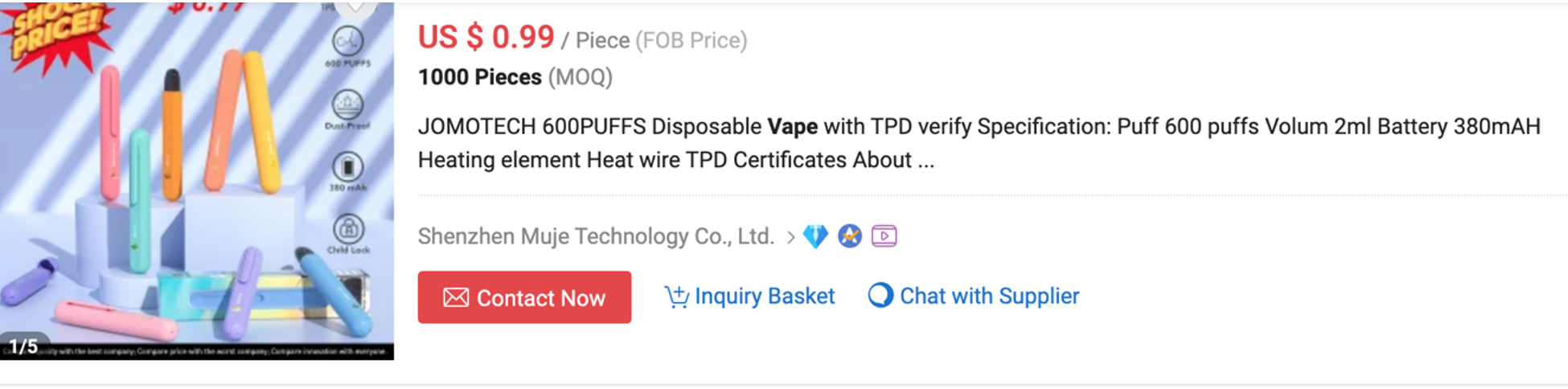



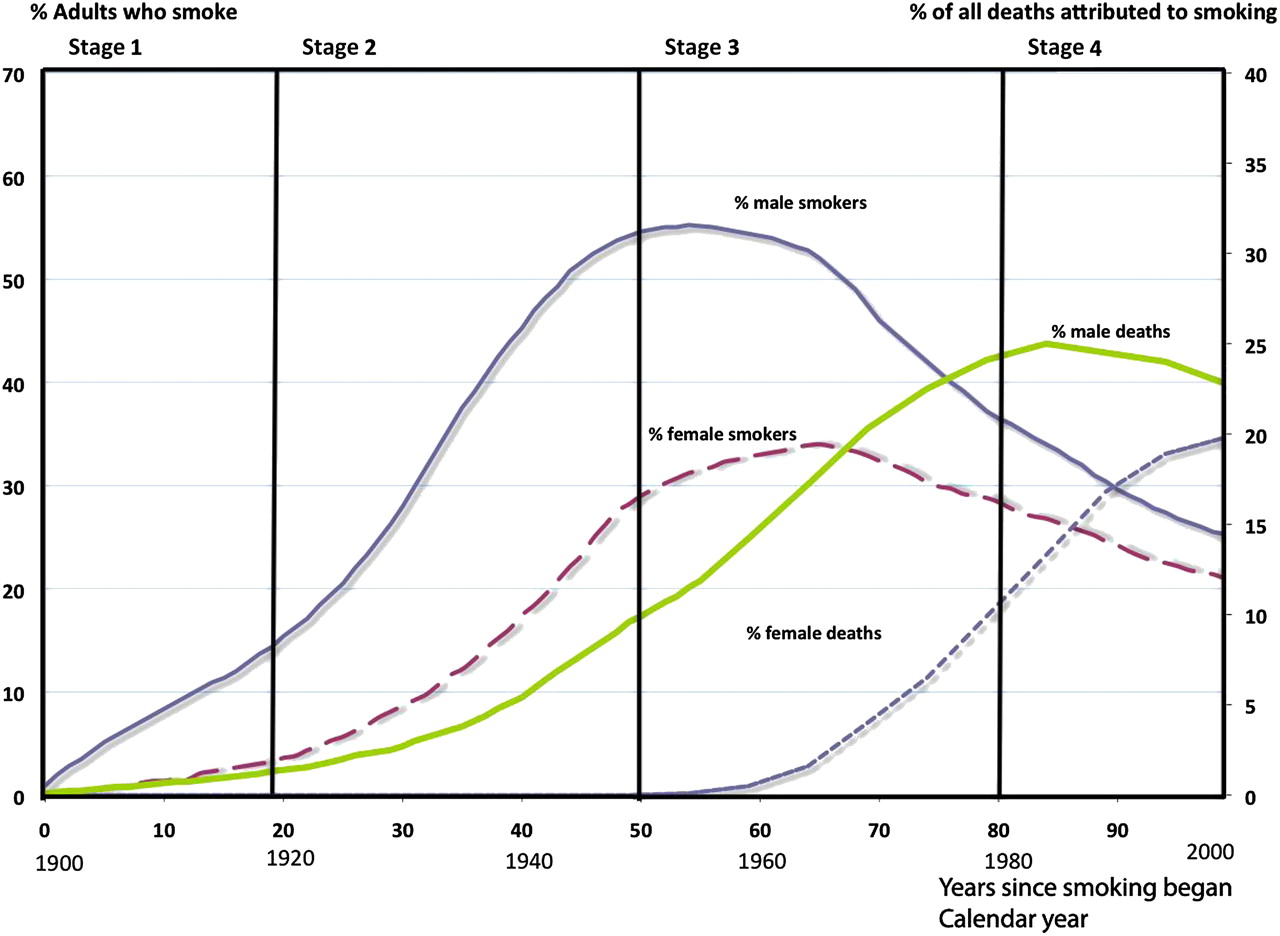


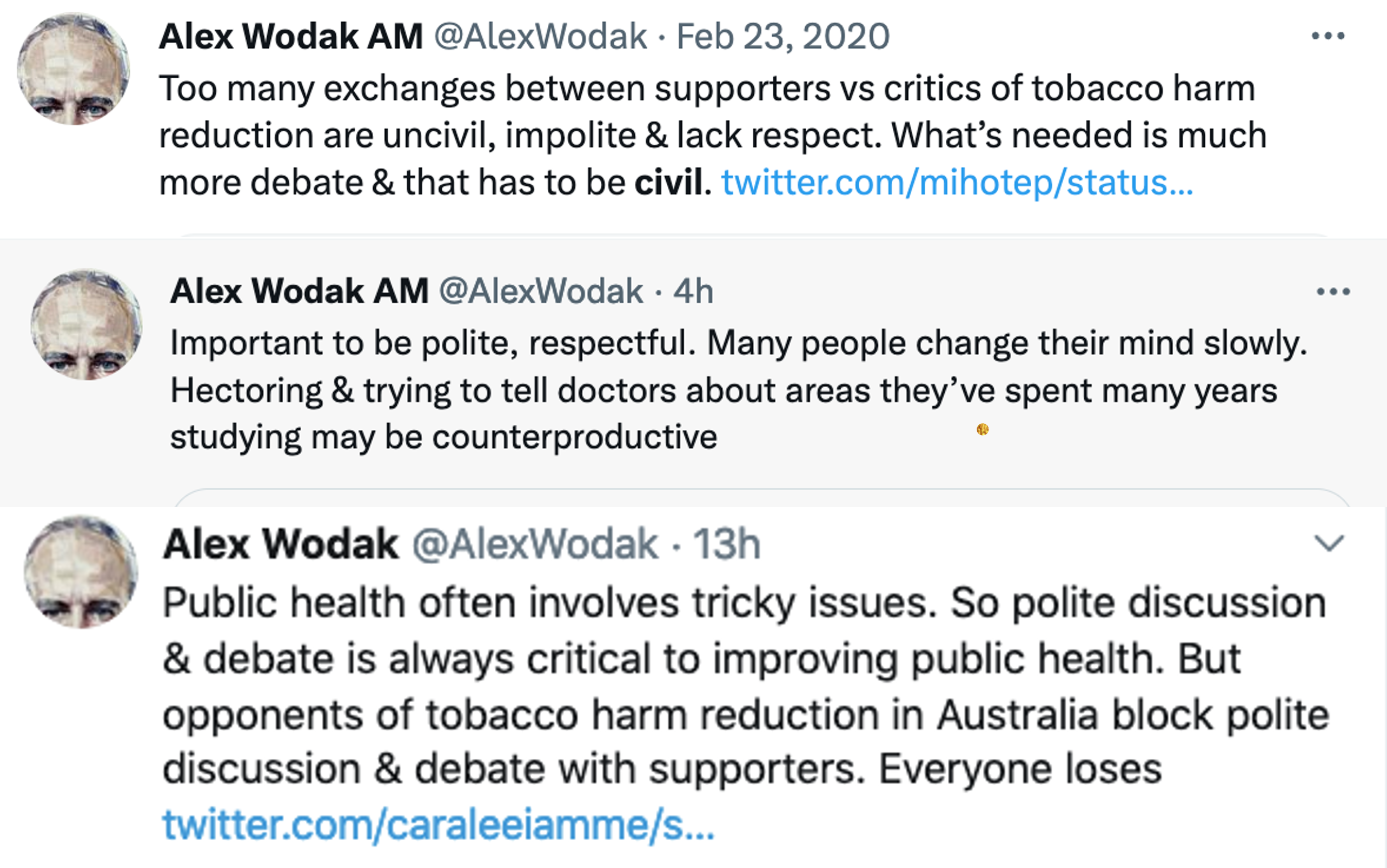

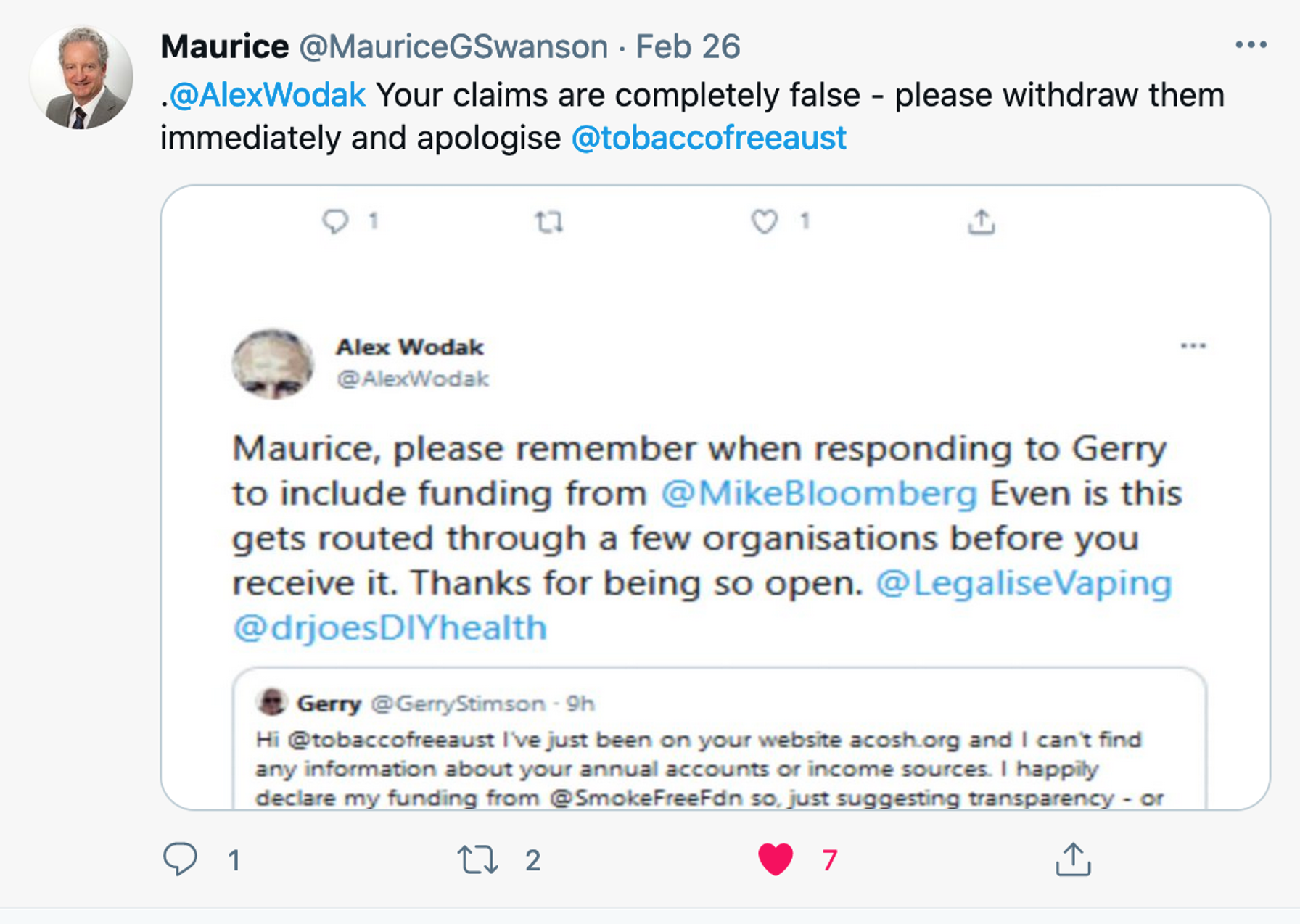


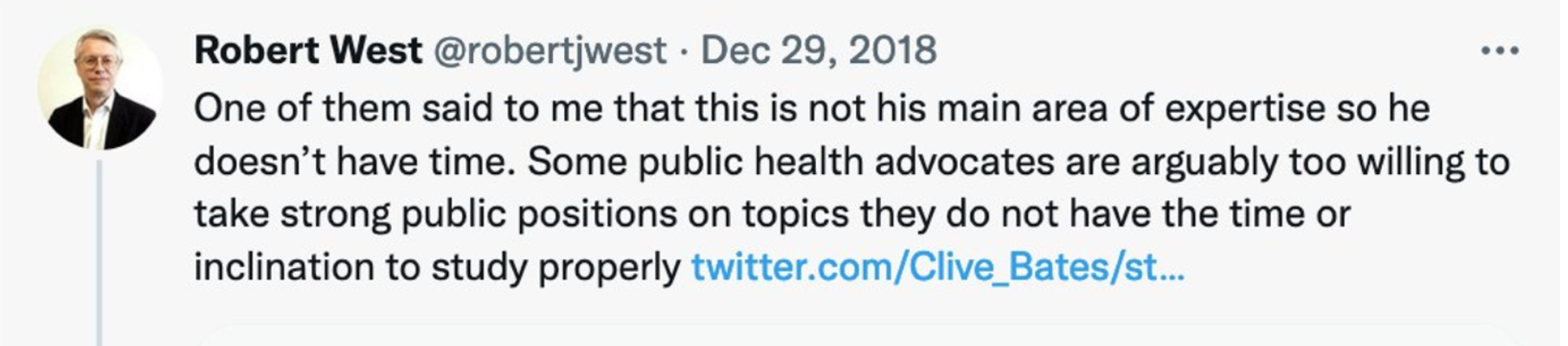
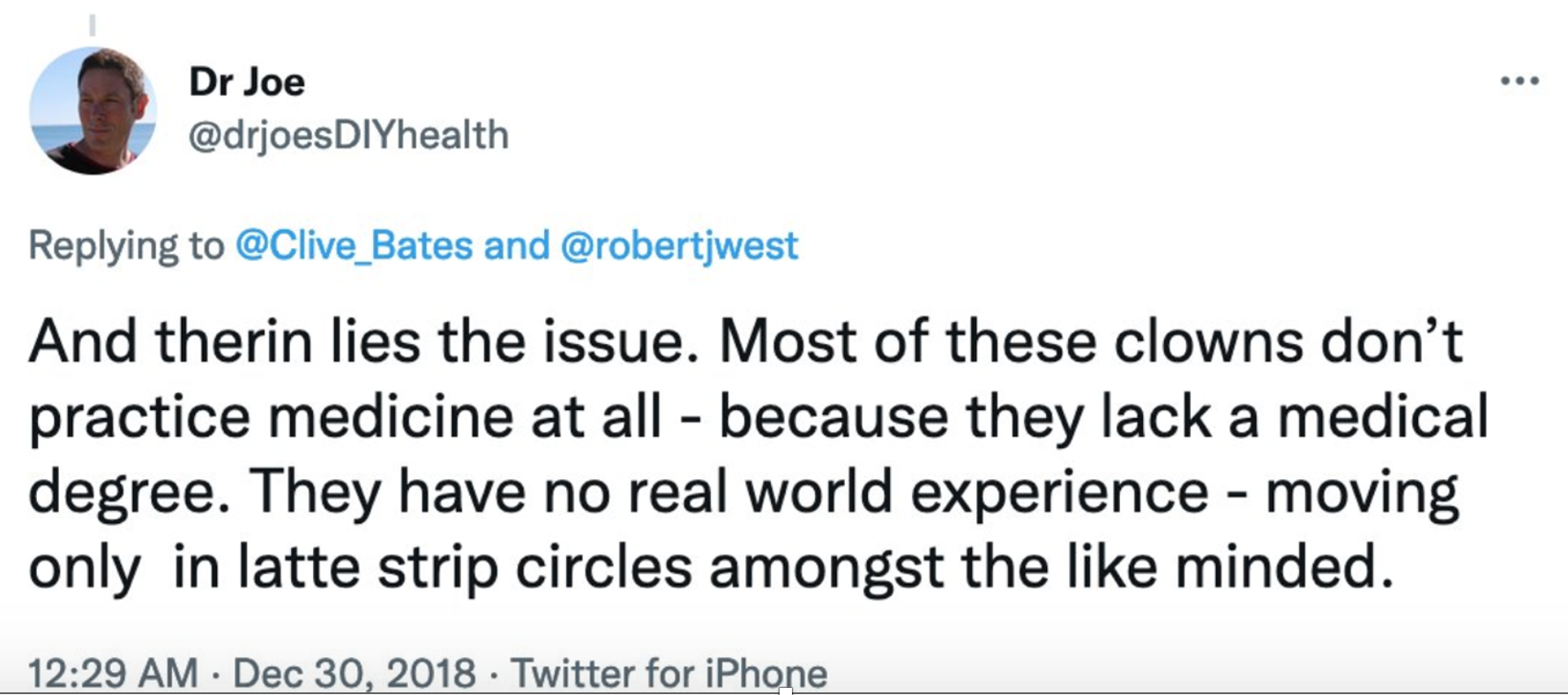
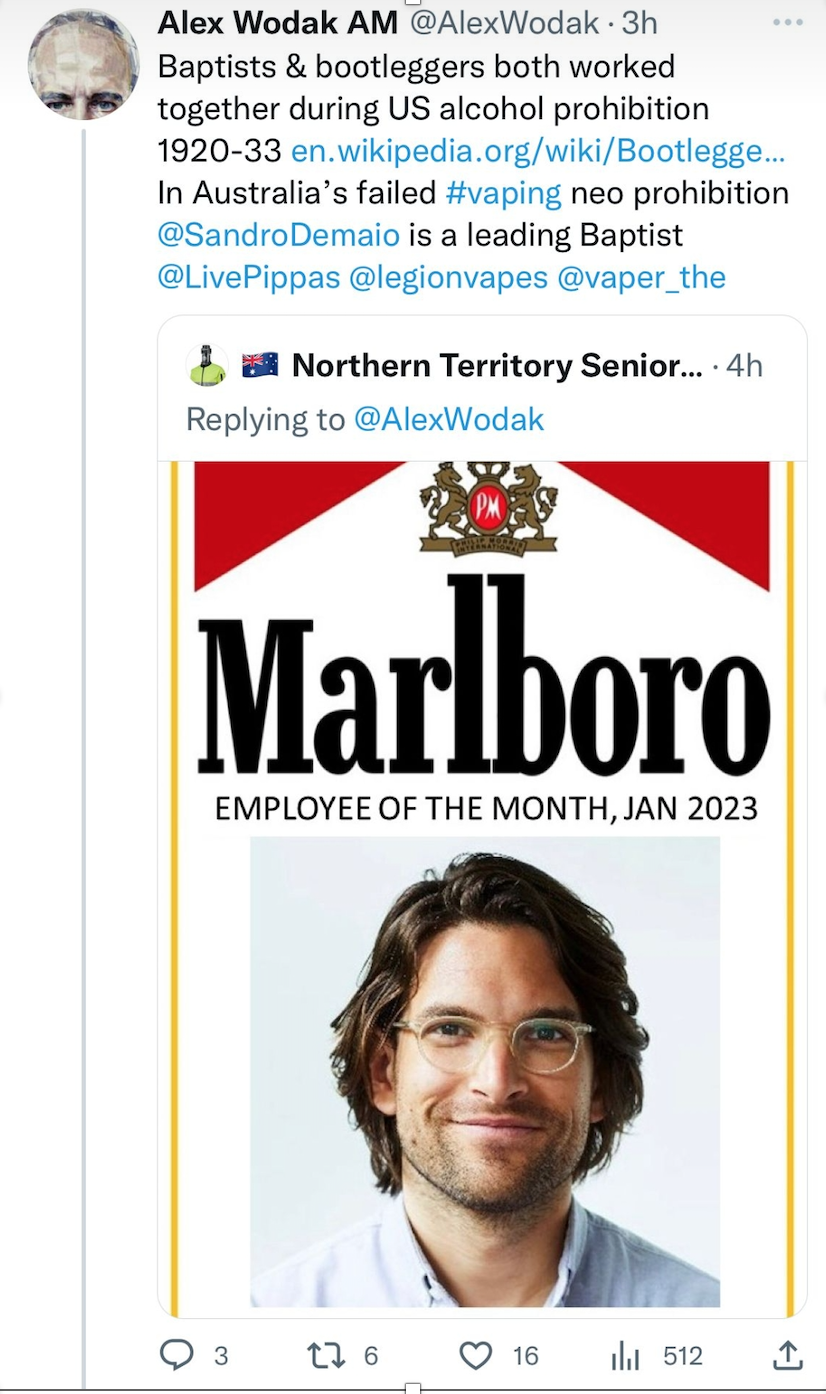
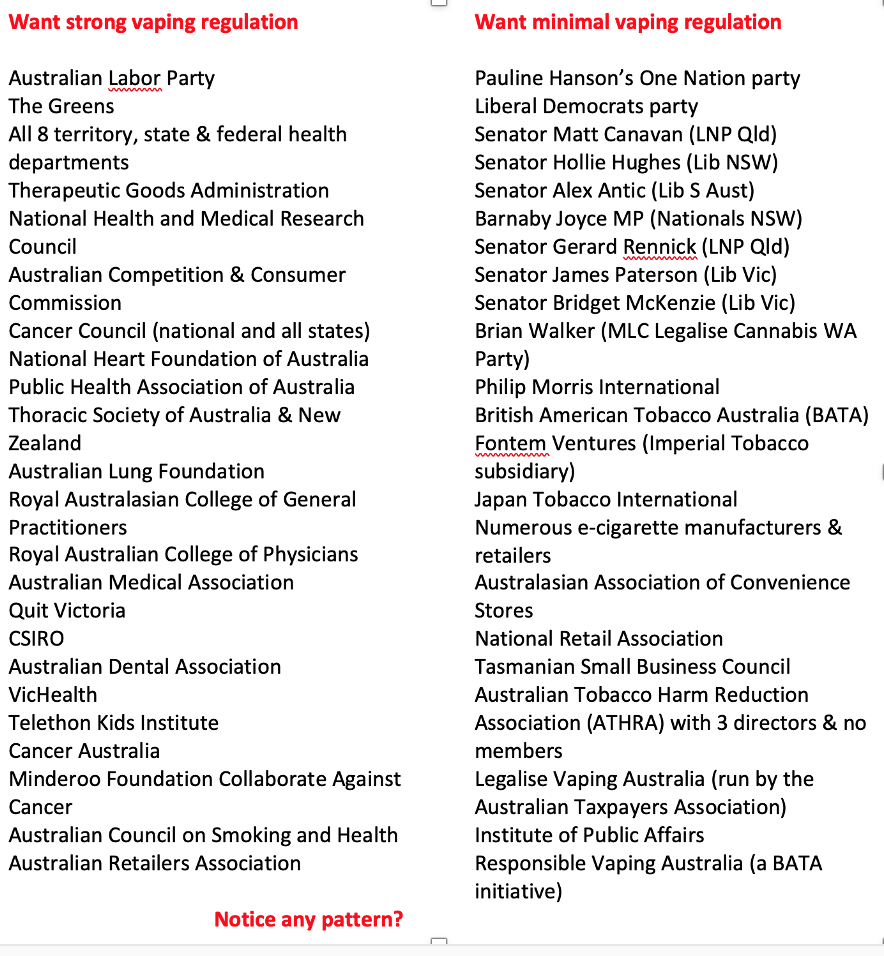


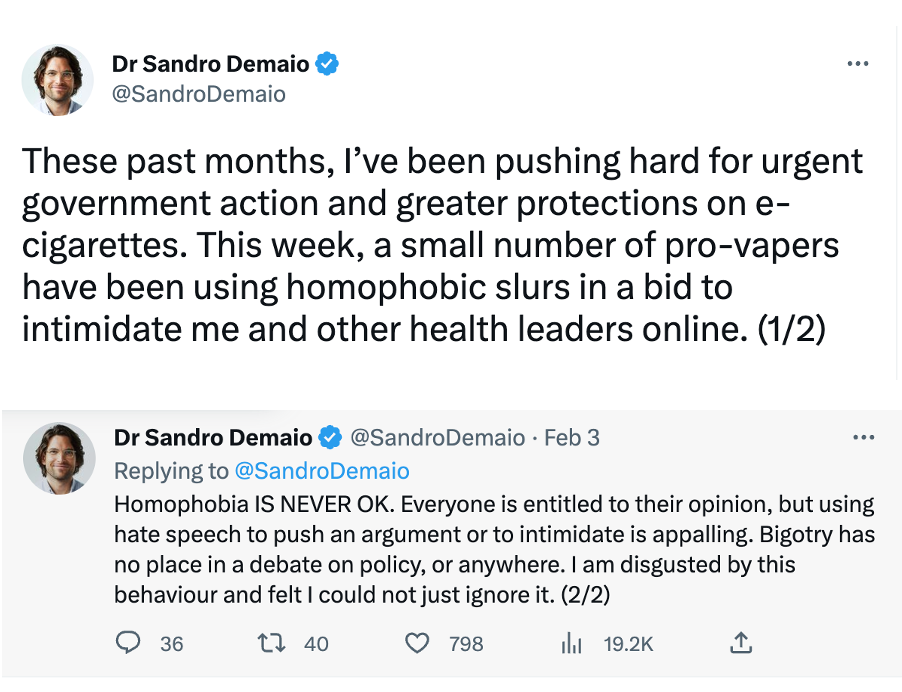



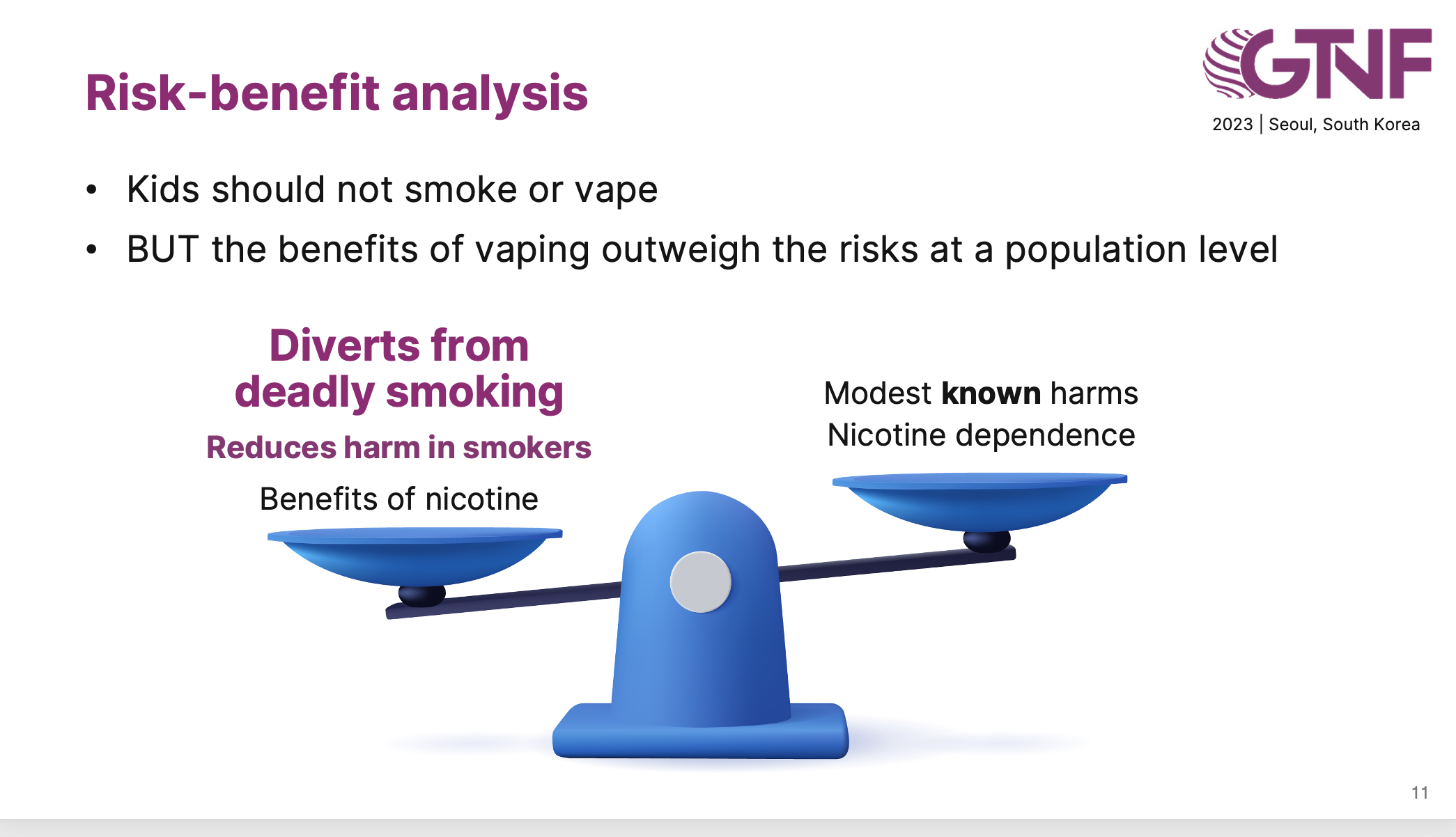

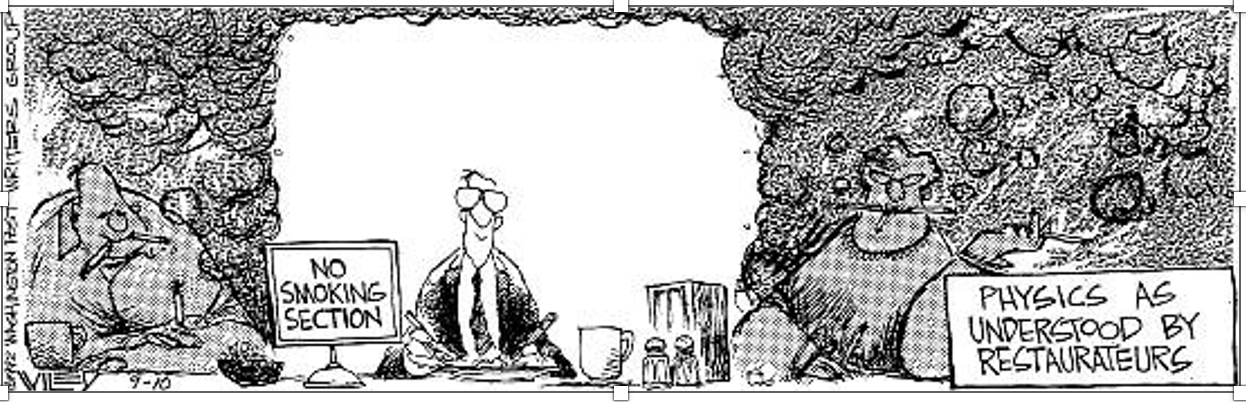




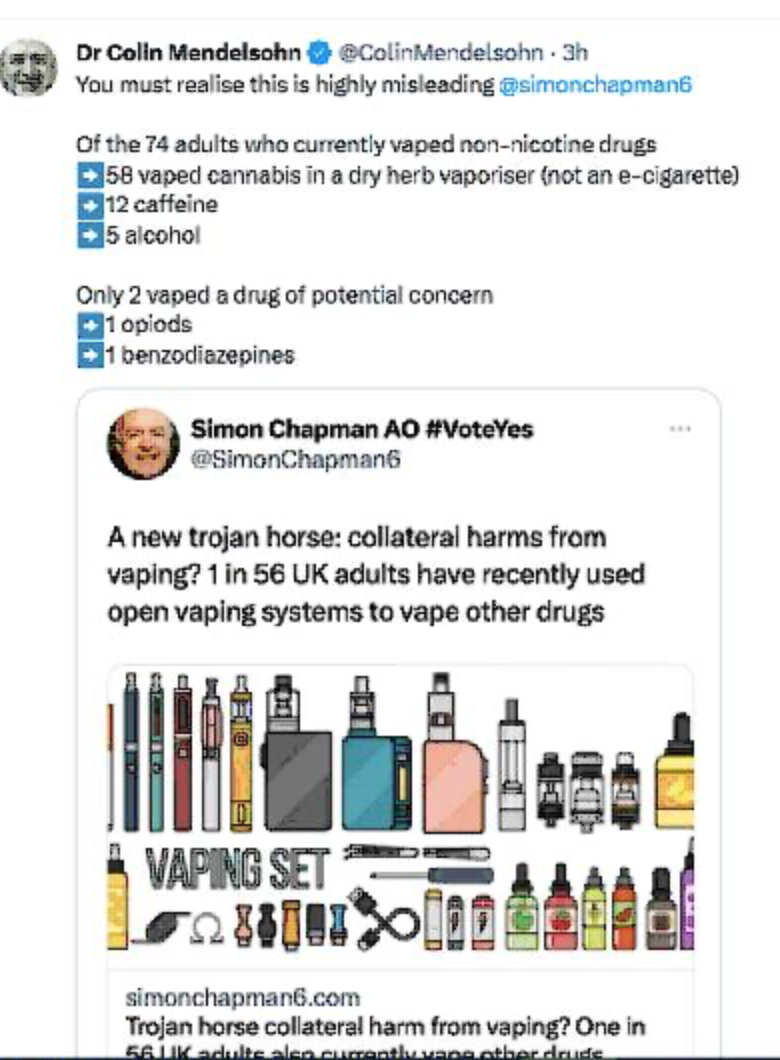

 Simon Chapman AO