This is a lengthy two part podcast on vaping hype, published on 6 Feb 2024 on Karl’s Shirtloads of Science podcast. In it, I discuss the factoid that vaping is “95% safer than smoking”; critically look at claims that vaping is the most effective way of quitting smoking; at what vapers inhale deep into their lungs when they vape; and discuss Australia’s historic policy of requiring vapes to be sold only to those with a doctor’s prescription.
I’ve done 1000s of interviews over my 45 year career. This I think is one of the best.
Part 1 (20m 26s) 15,744,301 downloads by 25 Jan, 2025
I have a dear friend who has lived with strong pain every day and night for over a decade. Following extensive damage to her spine from osteoporosis, she was advised to have a spinal fusion operation, on threat of needing a wheelchair for the rest of her life. She has a metal “cage” supporting her lower spine but pain fills her life. More often than not, she wakes several times a night and gets some relief from hot showers. Pain relieving drugs are a daily part of her life. Globally, millions of people live with unremitting pain. If you are in pain, it dominates your life.
I originally published this piece (below) in the Sydney Morning Herald, 18 September, 1999. It was republished in a collection of 71 of my writings on health Smoke Signals, in 2016.
In 1809, 47 year old Jane Crawford risked scalping and the tomahawk to ride her horse 60 miles in four days to the practice of Dr Ephraim McDowell in Danville, Kentucky. Mrs Crawford’s ovarian tumour was giving her unremitting, labour like pain. While several men held her arms and legs, and she recited psalms, McDowell took 25 minutes to cut a 14cm incision in her lower belly, remove a 1.2kg tumour and then sew her up with interrupted sutures. Outside the house, an angry and incredulous mob not unlike those who would today seek to close heroin injecting rooms that minister to a different sort of pain, waited ready to lynch McDowell should his patient die. Five days later she was out of bed and lived for another thirty years.
McDowell’s pioneering operation and his patient’s courage are historical landmarks in the annals of surgery.
While opium and cocaine have been used since antiquity for pain relief, it was not until 1846 when Thomas Morton first used ether to anaesthetise a patient for a tooth extraction that lengthy and detailed surgery more subtle than crude hacking could be performed under general anaesthesia. The next year, chloroform was used for the first time to relieve pain in childbirth and went on to become the anaesthetic of choice for more than a century. Today, pain management specialists estimate that more than 90% of postsurgical, post-trauma and cancer pain can be fully relieved, and 75% in chronic, non-cancer pain such as arthritis. Thirty years ago, these figures hovered around 10%. Worldwide though, only half those suffering from these conditions have access to services and drugs which can provide this relief.
Proust wrote that “Illness is the doctor to whom we pay most heed: to kindness, to knowledge we make promises only; pain we obey.” People in pain are preoccupied by the experience. Pain bulldozes all emotions aside, including hope. Yet pain produces a bewildering range of ambivalence. While aspirin and paracetamol are the most commonly used drugs, and around one in five experience pain that has lasted longer than three months, so often we conspire to deny the reality of pain. We feel obliged to cheer the injured footballer who returns to the fray after losing teeth or being knocked unconscious. Many couples make a virtue out of refusing pain relief in childbirth. While a woman begs for an epidural, her husband gently counsels “remember we agreed … no drugs”. Many who have lived with pain tell of the scepticism of others (“You don’t look like you’re in pain”) but also of the subtle imperatives to stop their misery infecting those around them. Anglo and Asian women tend to be stoic in childbirth, while southern European and Arabic women are uninhibited in their expression. Moralists, including many in medicine, have often denied the dying sufficient morphine, fretting that they might become addicted.
Recently, television allowed us to consider the abandoned Serbian torture chamber, where unspeakable degradations were wrought on its Kosovar captives. Torture is the active infliction of pain on its unwilling victims. Professor Michael Cousins, head of the Pain Management Research Centre at Sydney’s Royal North Shore Hospital, describes unrelieved pain as “torture by omission”. The United Nations Declaration of Human Rights codifies civilised society’s most basic standards and aspirations for its citizens.
Yet as Cousins points out, the Declaration says nothing about the most elemental concern of all: the right to be relieved from pain.
This remarkable omission is a testimony to our ambivalence about pain. Its consequence is that pain management as a medical speciality lives a Cinderella existence, shining occasionally as islands of enlightenment in a sea of misery. The most recent and exciting developments involve discoveries about the way that damaged nerve endings sprout pain fibres, the growth of which can be inhibited and so the pain controlled through drugs administered through surgically implanted mini pumps. People who have lived for years in desperate pain are now being assisted to live largely pain-free lives again through such developments. Yet there are only seven pain management training centres in Australia, and for all the pious political talk of the need for palliative care after the overturning of the Northern Territory euthanasia legislation, cruelly token budgets have found their way into health expenditure in the period since.
As historically unprecedented falls in fecundity, better living standards and the successes of public health combine to cause the age distribution of the world’s populations to balloon increasingly to the right of the graph, more people will live with the pain of chronic degenerative conditions and cancer. Despite this, the disabling and all-absorbing nature of pain often militates against its victims becoming potent advocates for pain relief to be declared a basic human right, and all that would flow from this. If Cousins’ and his colleagues’ mission were to succeed, what a gift to the world this would be.
I write to draw attention to the pernicious creep of “preventative” instead of “preventive” in what the ABC broadcasts. Your pronunciation standards guide, ABC Pronounce, formally notes that “preventive”, not preventative be used. This ruling has been in place since 1989.
Tonight on the Sydney 7pm news bulletin, the words “preventative medicine” bannered an item on vaping. I’ve noticed it several times recently.
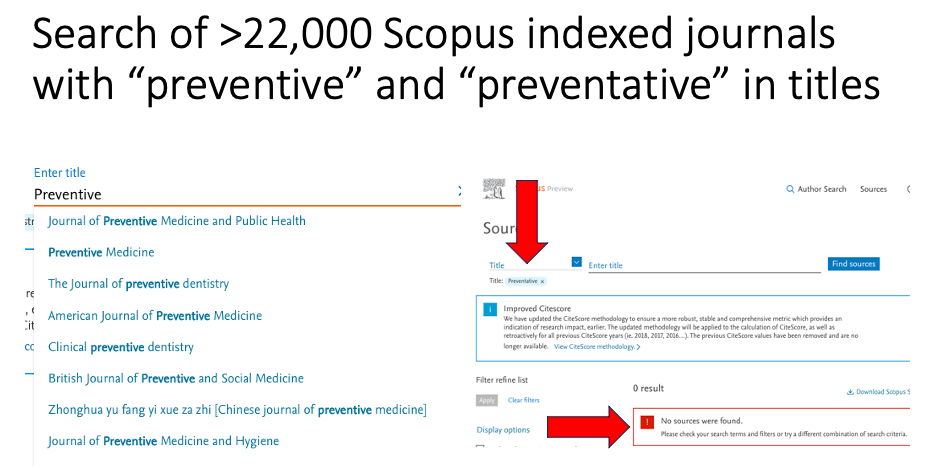
Scopus, the scientific world’s largest and most respected scholarly reference service indexes over 22,000 journals. Not one of these has the word “preventative” in its title, but there are 10 with “preventive” (see https://www.scopus.com/sources.uri)
The School of Public Health at the University of Sydney was the first school of public health in Australia and the first to offer a Masters in Public Health (in 1978). At the time it had a Department of Preventive and Social Medicine. I was on the staff from the first intake of students and today have an emeritus appointment in the School.
Across 45 years, there have been countless times when staff in the School have rolled their eyes and corrected students’ essays and treatises by changing “preventative” to “preventive”. “Preventative” is an infectious Americanism which has attained its currency by brute force of repetition. It grates in the ears of anyone working in this field . I’d put it in the same league as the American pronunciation of “defence” (“dee-fence”). I’ve never heard an American official refer to the US Department of Dee-Fence, yet the dee-word is endemic in sports commentators.
Sorry, but anyone who pairs “preventative” with “medicine” immediately marks themselves as someone who has never actually worked in preventive medicine.
The knock-out argument here is this: there is no verb to “preventate”. We simply prevent things and in public health, preventive medicine is a major division in the discipline of public health.
When the definitive history of tobacco control is written, it will record a most peculiar phenomenon. British tobacco control experts cannot help themselves from schooling Australian colonial numbskulls about where we are going so very wrong with vaping. Britain really has better vaping policy than Australia, they keep telling us.
This is quite amusing because as we’ll see below, some 10 years after the major boom in vaping commenced, vaping prevalence is higher in Britain than in Australia and you could put a cigarette paper between the smoking prevalences of the two countries. And in the last 30 years, Australia has always had the gall to implement nearly every major policy change ahead of Britain. So that’s quite a herd of elephants in the room.
Pro-vaping English researchers and advocates have often written submissions to government enquiries in Australia where they tried to explain England’s superior track record. It’s all a bit like the equivalent of Britain’s fanatical one-eyed Barmy Army cricket supporters who insist that England – not Australia – really won the 2023 Ashes series; that England’s Jonny Bairstow should not have been given out stumped in the 2023 second test at Lords; that England really were the best team at the 2023 One Day World Cup, despite coming seventh below even the Afghanistan minnows while Australia humiliated an apparently invincible India in the final.
This has been going on for some time, Australia and England have met in 361 test matches since 1877. Australia has won 152 and England 112, with 97 ending in draws.
So what about smoking and vaping? With tobacco control, there is almost nothing in recent decades that the Poms had the initiative or mettle to introduce before Australia showed them the way. They have always been the bridesmaids. Here are a few examples:
Graphic health warnings: Australia followed the 2000 lead of Canada in introducing graphic picture health warnings on packs in 2006. Britain implemented them in Oct 2008.
Pub smoking bans: Australian states and territories began banning smoking in pubs from 1998, Britain did it in July 2007
Plain packaging: Australia implemented it Dec 1 2012, the world’s first. Britain: in May 2017.
Smokeless tobacco ban: Australia June 1991; Britain in 1992 (following a EU Tobacco Products Directive)
Price of cigarettes: Australia #1 in the world ($US25.88 a pack); UK #2 ($US15.83 – 39% less)
Retail display bans:NSW got the ball rolling in July 2008, with all states subsequently following. England and Wales: from 26 May 2015.
English apoplexy over Australia’s prescription access to vapes
“[F]irst, rigorous enforcement of the ban on vapes and snus sales to children and young people under 18, with punitive measures for non-compliance; second, ban the sale of snus and vapes to adults except when prescribed for smoking cessation, as, in our experience, wider availability enables them to fall into children’s hands; and third, introduce a total ban on disposable vapes.”
All three measures are central to Australia’s recently announced policy on vaping.
So how did England’s leading tobacco control advocacy group react to this call? Deborah Arnott, chief executive of health charity Action on Smoking and Health (ASH) was quoted in a press report on the paediatricans’ letter as saying: “ASH wants action to curb youth vaping, but making vapes only available on prescription won’t help, after they tried this in Australia underage smoking and vaping both went up … Australia’s aggressive anti-vaping policy opened the door to illegal vapes, conflated the harms of vaping with smoking and left tobacco cigarettes, which are far more harmful, on sale everywhere. ASH supports evidence-based measures to curb youth vaping, by prohibiting branding and marketing appealing to children. The disposable vapes that have surged in popularity in recent years are available for pocket money prices on every street corner and they’re currently packaged more like a sweet or a toy than a smoking cessation device. This is unacceptable and must change.”
So let’s take a look at Arnott’s ignorance of what has actually happened in Australia, and her formidable abilities to walk on both sides of the street at once.
She says Australia “tried this” (ie prescription access to vapes) and then “underage smoking and vaping both went up”.
Predictably, this saw the surviving prescription access component fail to be taken up by nearly all Australian doctors and vapers. Why would smokers bother to go to a doctor to get a script for vapes when they – plus legions of non-smokers including kids who were “recreationally vaping” — could buy vapes easily right across the country?
This failure had nothing to do with the prescription access component, but everything to do with the useful idiots in the far right of politics and their urgers in vaping advocacy who held the national door open for unrestrained illicit trade.
Notably too, all this happened during the COVID pandemic, when state and federal governments seconded thousands of health department hands to be on deck for COVID-related duties. As a result, the requirement that vapes could only be sold to those with a prescription was almost totally ignored by retailers, knowing that its policing was being accorded all but zero priority by health departments. You could buy vapes almost anywhere. Just like you have always been able to do in Britain. Imagine what would have happened if pharmacies decided to ignore the law and sold prescribed drugs to anyone wanting them. Pharmacists would have been struck off, or even jailed.
Arnott appears to have dined out on the huge propaganda campaign designed to discredit the politically gutted prescription policy internationally, straight from the industry’s playbook it tried (and badly failed) to use in stopping the spread of plain packaging legislation
And then she says that Australia shockingly “left cigarettes on sale everywhere” while it attempted to implement prescription access. Ermmm … just like Britain and every other nation in the world has left them on sale everywhere! This is the same old populist knee-jerk reaction we have seen about every significant piece of tobacco control policy “this is window-dressing! If you’re really serious about stopping smoking, why don’t you just ban cigarettes”.
I dealt with the wittering myopia of this argument in an earlier blog. The argument that you cannot seriously regulate vapes (as Australia is now doing) for as long as cigarettes are sold to anyone over 18 would have to be among the most cringeworthy, forelock tugging pieces of defeatism in contemporary public health.
I have often heard public health leaders say “If cigarettes were invented today, and we knew all we know about their dangers that we know now, not a country in the world would allow them to be sold.” Well, Trump’s America might. It took more than half a century of smoking for us to understand the full risks of smoking. Those who run this argument are effectively saying “let’s learn nothing from the history of smoking-caused disease and its control, let’s just let vaping rip like we did with cigarettes and cross our fingers about any down-the-track consequences”.
Restricting access to vapes through prescription allows smokers with serious intent to quit smoking another option. Importantly, a homeopathically small number of doctors would issue children or non-smokers with scripts for vapes, whereas they can access them with ease under Arnott’s preferred policy.
Opponents of prescription access – especially those interests centred on selling vapes to as many people as possible – have megaphoned the alleged “failure” of Australia’s prescription policy. It speaks volumes about the arrogance of English tobacco control, that the head of its oldest advocacy agency is apparently so clueless about what actually happened in Australia.
ASH England supports “adults only” targeted vaping marketing
She continues: “ASH supports evidence-based measures to curb youth vaping, by prohibiting branding and marketing appealing to children.”
This is truly gob-smacking stuff. When I started in tobacco control in the late 1970s, the main challenge was getting rid of tobacco advertising and promotions. The tobacco industry ran the argument on repeat for over a decade that there was such a thing as tobacco advertising that appealed to adults but not to children. We should let that bloom, they argued, but jump on not ads that beguiled kids. Some never-specified, surely magic barrier prevented “adult” advertising messages from ever penetrating the orbits of children. No one in the advertising industry had ever heard of such barriers.
UK legislation on permitted vaping advertising is classic, absurd “half pregnant” policy: ads are banned on radio, television and magazines, but not in cinemas, posters, leaflets or bus sides. The UK Government has been advised that British kids apparently never go to the movies, see billboards or see buses when they pass.
In 2024 Deborah Arnott has climbed in her tardis, inviting us to believe in the same tooth fairy “evidence-based” controls when it comes to neutering vape marketing to kids.
And then we need to ask why, if vaping is as benign to health as its advocates claim it is, do they nonetheless feel bound to say that they want to “curb youth vaping”. Why not treat vaping like yo-yos, hula hoops, fidget spinners and other harmless childhood fads, as a leading pro-vaping Australian advocate once suggested. Seriously.
In Australia in 2022, one in ten (10.6%) adults were current daily smokers. This rate has steadily declined from 22.4% in 2001. This report did not provide data on less than daily current smoking prevalence. However an earlier (different) national survey showed that another 1-2% smoke not daily but less than monthly. So the two countries are about the same.
Vaping In Britain 8.7% of adults currently vape daily or occasionally, an increase from 2021 where 7.7% of people reported daily or occasional e-cigarette use. Vaping is highest among those aged 16 to 24 years in Great Britain; the percentage of people in this age group who were daily or occasional vapers in 2022 has increased to 15.5%, up from 11.1% in 2021.
In Britain in 2023, 20.5% of children 11-17 had tried vaping, up from 15% in 2022 with 7.6% currently vaping, up from 6.9%.
In Australia, there has been a far more dramatic increase between 2017 and 2022/23 in both “ever” vaping and current (past month) vaping in school children aged 12-17. Just under 30% of Australian school students have now tried vaping. The figure below shows a significant fall in exclusive smoking that is in line with the historic trend downward. In 2017 9.7% of students were either exclusively vaping or vaping and smoking (dual using) while in 2022-23 this had shot up to an alarming 16%, more than 1 in 6.
Given that only 7.3% of students were exclusively smoking and/or dual using in 2017, it follows that the lion’s share of the increase in vaping has occurred in children who had never smoked: they had taken up vaping not as a substitute for smoking, with some undoubtedly also then also taking up smoking (longitudinal studies show that children who take up vaping have a three-fold greater probability of later taking up smoking).
As we saw above, Britain has played catch-up with Australia on almost every tobacco control policy. Like Australia, it has seen rapid growth in vaping by children, many of whom have never smoked. And like Australia, it has seen historic falls in smoking by children which long preceded the advent of vapes. Our adult smoking rates are about the same, while Australia’s adult vaping prevalence is half that of Britain’s.
This all raises serious questions about which population groups are being most affected by vaping. Vaping prevalence is rising far more than smoking prevalence is falling. So claims that vaping is a population-wide game changer in smoking cessation are clearly hype. But there is unequivocal evidence that the present arrangements for vaping access are seeing massive rises in kids being exposed to the addictive highly drug nicotine. This is no accident but as central to the vaping industry’s business plan as securing smoking in successive cohorts of teenagers was to the tobacco industry (where today, every company is heavily invested in vapes).
These data underscore the importance of the Australian government’s policies to get vapes out of the reach of kids by making them prescription access only.
Other blogs in this series
Vaping theology: 1 The Cancer Council Australia takes huge donations from cigarette retailers. WordPress 30 Jul, 2020
Vaping theology: 2 Tobacco control advocates help Big Tobacco. WordPress 12 Aug, 2020
Vaping theology: 3 Australia’s prescribed vaping model “privileges” Big Tobacco WordPress Feb 15, 2020
Vaping theology: 4 Many in tobacco control do not support open access to vapes because they are just protecting their jobs. WordPress 27 Feb 2021
Vaping theology: 5 I take money from China and Bloomberg to conduct bogus studies. WordPress 6 Mar, 2021
Vaping theology: 6 There’s nicotine in potatoes and tomatoes so should we restrict or ban them too? WordPress 9 Mar, 2021
Vaping theology: 7 Vaping prohibitionists have been punished, hurt, suffered and damaged by Big Tobacco WordPress 2 Jun, 2021
Vaping theology: 9 “Won’t somebody please think of the children”. WordPress 6 Sep, 2021
Vaping theology: 10: Almost all young people who vape regularly are already smokers before they tried vaping. WordPress 10 Sep, 2021
Vaping theology: 11 The sky is about to fall in as nicotine vaping starts to require a prescription in Australia. WordPress 28 Sep, 2021
Vaping theology: 12 Nicotine is not very addictive WordPress 3 Jan 2022
Vaping theology 13: Kids who try vaping and then start smoking,would have started smoking regardless. WordPress 20 Jan, 2023
Vaping theology 14: Policies that strictly regulate vaping will drive huge numbers of vapers back to smoking, causing many deaths. WordPress 13 Feb, 2023
Vaping theology 15: The government’s prescription vape access scheme has failed, so let’s regulate and reward illegal sellers for what they’ve been doing. WordPress 27 Mar 2023
Vaping theology 16: “Humans are not rats, so everybody calm down about nicotine being harmful to teenage brains”. WordPress 13 Jul, 2023
Vaping theology 17: “Vaping advocates need to be civil, polite and respectful” … oh wait. WordPress 3 Oct, 2023
Vaping theology 18: Vaping is a fatally disruptive “Kodak moment” for smoking. WordPress Oct 30, 2023
Vaping theology 19: Vaping explosions are rare and those who mention them are hypocrites. WordPress 17 Nov, 2023
Vaping theology 20 : Today’s smokers are hard core nicotine dependent who’ve tried everything and failed – so they need vapes. WordPress 14 Dec, 2023
Vaping theology 21: Australia’s prescription vapes policy failed and saw rises in underage vaping and smoking. WordPress 10 Jan, 2024
Vaping theology 22: “Prohibition has never worked at any point for any other illicit substance”. WordPress 17 Mar 2024
Vaping theology 23: “84% of the Australian public are opposed to the way the government will regulate vapes” WordPress 2 Apr, 2024
Vaping Theology 24: “Tobacco control advocates are responsible for vape retail store fire bombings and murders. WordPress 27 May, 2024
Smokers have been trying to quit since smoking started, and there have always been opportunists trying to cash in on those hopes. A 1923 book published in Melbourne, Secret Recipes,described an “anti-smoking mixture” where 36 grains of silver nitrate were mixed with 475ml of water for use as an aversive mouthwash after meals. A medical advice column in the Detroit News from 1949 also recommended the same path, “One trying to quit smoking should exclude from his diet meat soups, broths or extracts, highly seasoned sauces or dishes. He or she should eat freely of apples, baked with meals or raw the first thing for breakfast and the last thing at night.”
Such folksy hokum persisted for decades in leaflets and tip sheets often provided by health departments. For example, this Ugandan advice from 2004 counselled: “Nature has the remedy. Stretch out your arm and pick up a carrot. Chew it and smile. Within a few hours, all your distress will be gone. This orange root has large amounts of charm that is appropriate for those who wish to give up smoking.”
Enter NRT
The advent of prescription-only nicotine replacement therapy (NRT) from the late 1980s and its more than 30 years of subsequent widespread use, marked the first time that large-scale efforts promoted medication to assist quitting. Prior to NRT, those who ‘took something’ to help them quit used preparations that made money for the patent medicine spruikers selling them, but none of the snake oils touted by their commercial and moral evangelists ever saw them in widespread use.
However, very large numbers of smokers began quitting when news reports of the first serious case-control studies started being published from the early 1950s. In 1955, just five years wide news publicity was given to Wynder and Graham’s historic study in JAMA of smokers and lung cancer in the same year as the BMJ Doll and Hill paper on smoking and lung cancer, 7.7 million Americans aged 13 and over (6.4% of the population) were former smokers. Ten years later in 1965, following further widespread publicity surrounding the 1964 US Surgeon General’s Report, the number of ex-smokers had ballooned to 19.2 million (13.5% of the population aged 13 and over were ex-smokers). At the Second World Conference on Smoking and Health held in London in 1971, Daniel Horn, the director of the US National Clearinghouse on Smoking and Health, presented results of a cohort of 2,000 US smokers interviewed in 1966 and again in 1970. Twenty six per cent of men and 17% of women had stopped smoking for a year or more across this time. Horn noted that 99% had done so without any formal help: “The level of change in smoking habits in the United States has become quite massive and I regard it as a change in health behaviour that is largely dependent on individual decision.”
By 1975, 32.6 million Americans (19.4%) had stopped smoking. Quitting smoking had become a major phenomenon. In 1979, the then director of the US Office on Smoking and Health noted in a National Institute of Drug Abuse Monograph “In the past 15 years, 30 million smokers have quit the habit, almost all of them on their own.” Many of these quitters had been very heavy smokers.
The only tobacco control policy in place for around a decade from the mid 1960s in a tiny handful of vanguard nations were tepid, general and very small health warnings on cigarette packs and low-key and poorly funded education via posters and pamphlets. The main drivers of all the quitting described above had been news publicity about the dangers of smoking. This gave millions a why to quit. They figured out the how for themselves and nearly all of it was unassisted.
Reportage of the 1986 US national Adult Use of Tobacco Survey was set against the dramatic fall in smoking prevalence from 40% in 1965 to 29% in 1987. Yet again, the central finding was that smokers who quit overwhelmingly did so unaided:
“About 90% of successful quitters and 80% of unsuccessful quitters used individual methods of smoking cessation rather than organized programs. Most of these smokers who quit on their own used a ‘cold turkey’ approach.”
“Double your chances of quitting”
I worked in tobacco control in the years when NRT first appeared in the 1980s. The big pitch repeated endlessly in pharmaceutical company publicity for decades was that smokers could “double their chances” of quitting if they used NRT, then the only potentially mass-reach method of quitting. But what this beguiling soundbite concealed was that this “doubling” was the relative increase compared with placebo or those in trials who used no aids. The absolute increase was utterly dismal: at 6 to 12 months follow-up, those using NRT and other pharmaceutical aids typically did only marginally better than those smokers not using them, with the bottom line being that there were few drugs in the whole of medicine which had such an abject “success” rate.
As I wrote in an earlier blog summarising a Cochrane meta-analysis of vaping vs NRT randomised controlled trials “if we take 100 smokers participating in an RCT, 90 would still be smoking six months later if they used e-cigarettes, compared with 94 who used NRT, and 96 who just tried to quit alone or got some “behavioural support”… If you went along to your doctor for a health problem and were told ‘here, take this. It has a 90% failure rate. But I’m describing it as successful.’ …what would you think?”
My (free, open-access) 2022 book Quit Smoking Weapons of Mass Distraction explores at length the history and determinants of the cessation dogma that smokers are foolish to try to quit unaided, despite the paradox that this is exactly how two-thirds to three quarters of all long term ex-smokers have finally succeeded in stopping.
Enter the “hardened” smoker
In the first decade of this century, debate began about whether, after four decades of widespread publicity on the dire risks of smoking, and burgeoning tobacco control policies designed to reduce smoking, those who still smoked should now be best described “hardened”. The “hardening hypothesis” proposed that as the prevalence of smoking in a population declines, those still smoking will be hardened: average number of cigarettes smoked daily will be rising, fewer smokers will be making successful quit attempts and measures of nicotine dependence will be heading north.
Since that time many studies have tested this hypothesis. Two recent reviews of these have concluded that the hypothesis is now well and truly dead and buried.
A 2020 review by smoking cessation maven John Hughes of published studies on hardening found that in none of the 26 studies he examined was there any evidence for a reduction in conversion (or transition) from current to former smoking, in the number of quit attempts, or success on a given quit attempt, with several studies finding that these measures increased over time. These results appeared to be similar across survey dates, duration of time examined, number of data points, data source, outcome definitions and nationality. Hughes concluded “These results convincingly indicate hardening is not occurring in the general population of smokers” in nations where smoking prevalence is falling.
A 2022 systematic review of three reviews and ten repeat cross-sectional studies found all but one concluded a lack of hardening. Most found softening within the smoking population, consistent across hardening indicators, definitions, countries (and tobacco control environments), and time periods examined.
The authors concluded: “Based on the weight of the available evidence, the “hardening hypothesis” should be rejected and the reality of softening accepted.” So as smoking falls in a population, we see the exact opposite of hardening: the remaining smokers smoke less than in eras when smoking was more prevalent, make more successful quit attempts.
Enter vaping
Those promoting vaping have been ignorant of or undeterred by the death of the hardening hypothesis. They have dug up its grave, put lipstick on the corpse and announced ad infinitum that today’s smokers simply “can’t” quit smoking either on their own or with any other available method. Their evidence is always anecdotal in the form of passionate testimonies from those who read from the hardening script.
It is undoubtedly true that there are some – even quite a lot – of highly nicotine dependent smokers whose failed quitting history and wish to quit is difficult to dispute. In Australia, these smokers are able to access nicotine vapes via prescription, with the same ease that 315 million prescriptions for all drugs were dispensed in a population of 25 million.
But importantly, when we look at the young adult age groups which vapes the most, we find a huge number of Australians who currently vape (i.e. in the last month) who have never smoked. Then there are dual users (smokers who also vape), many of whom dual use for many years showing no sign of this being a transitory phase in an eventual switch to vaping. I’ll be covering this in a forthcoming blog. Health minister Mark Butler calls these “recreational users”: vapers who either have never smoked or who vape and continue smoking across several years, showing no obvious resolve to quit (they are “won’t quits”, not “can’t quits”).
What’s obvious here is that while a much greater proportion of young smokers vape than do non-smokers, because there are so many more non-smokers, even their lower vaping rates translate into there being more numbers of non-smokers who currently vape than smokers who currently vape (53% v 47%).
More recent data (2022) for those aged 18+ are also available for Victoria. In that study, a quarter of all current e-cigarette users were never smokers (25.0%), 28.7% were former smokers, and almost half (46.3%) were also current smokers (ie dual users).
The proportion of never smokers who currently use e-cigarettes increased 4.5- fold from 0.6% in 2018-19 to 2.7% in 2022. This represents approximately 77,200 never smokers who reported currently vaping, of which 44,534 (more than half – 57.7%) were under the age of 25 years. These data would bring great delight to vaping manufacturers, particularly those tobacco transnationals which sell both cigarettes and vapes. Here was a product that not only had little impact on helping smokers quit in the population, but one that caused many smokers to now purchase both cigarettes and vapes. As if this was not huge enough, it also – without precedent – was demonstrably drawing more non-smokers into nicotine addiction, than it was keeping smokers in theirs.
Other blogs in this series
Vaping theology: 1 The Cancer Council Australia takes huge donations from cigarette retailers. WordPress 30 Jul, 2020
Vaping theology: 2 Tobacco control advocates help Big Tobacco. WordPress 12 Aug, 2020
Vaping theology: 3 Australia’s prescribed vaping model “privileges” Big Tobacco WordPress Feb 15, 2020
Vaping theology: 4 Many in tobacco control do not support open access to vapes because they are just protecting their jobs. WordPress 27 Feb 2021
Vaping theology: 5 I take money from China and Bloomberg to conduct bogus studies. WordPress 6 Mar, 2021
Vaping theology: 6 There’s nicotine in potatoes and tomatoes so should we restrict or ban them too? WordPress 9 Mar, 2021
Vaping theology: 7 Vaping prohibitionists have been punished, hurt, suffered and damaged by Big Tobacco WordPress 2 Jun, 2021
Vaping theology: 9 “Won’t somebody please think of the children”. WordPress 6 Sep, 2021
Vaping theology: 10: Almost all young people who vape regularly are already smokers before they tried vaping. WordPress 10 Sep, 2021
Vaping theology: 11 The sky is about to fall in as nicotine vaping starts to require a prescription in Australia. WordPress 28 Sep, 2021
Vaping theology: 12 Nicotine is not very addictive WordPress 3 Jan 2022
Vaping theology 13: Kids who try vaping and then start smoking,would have started smoking regardless. WordPress 20 Jan, 2023
Vaping theology 14: Policies that strictly regulate vaping will drive huge numbers of vapers back to smoking, causing many deaths. WordPress 13 Feb, 2023
Vaping theology 15: The government’s prescription vape access scheme has failed, so let’s regulate and reward illegal sellers for what they’ve been doing. WordPress 27 Mar 2023
Vaping theology 16: “Humans are not rats, so everybody calm down about nicotine being harmful to teenage brains”. WordPress 13 Jul, 2023
Vaping theology 17: “Vaping advocates need to be civil, polite and respectful” … oh wait. WordPress 3 Oct, 2023
Vaping theology 18: Vaping is a fatally disruptive “Kodak moment” for smoking. WordPress Oct 30, 2023
Vaping theology 19: Vaping explosions are rare and those who mention them are hypocrites. WordPress 17 Nov, 2023
Vaping theology 20 : Today’s smokers are hard core nicotine dependent who’ve tried everything and failed – so they need vapes. WordPress 14 Dec, 2023
Vaping theology 21: Australia’s prescription vapes policy failed and saw rises in underage vaping and smoking. WordPress 10 Jan, 2024
Vaping theology 22: “Prohibition has never worked at any point for any other illicit substance”. WordPress 17 Mar 2024
Vaping theology 23: “84% of the Australian public are opposed to the way the government will regulate vapes” WordPress 2 Apr, 2024
Vaping Theology 24: “Tobacco control advocates are responsible for vape retail store fire bombings and murders. WordPress 27 May, 2024
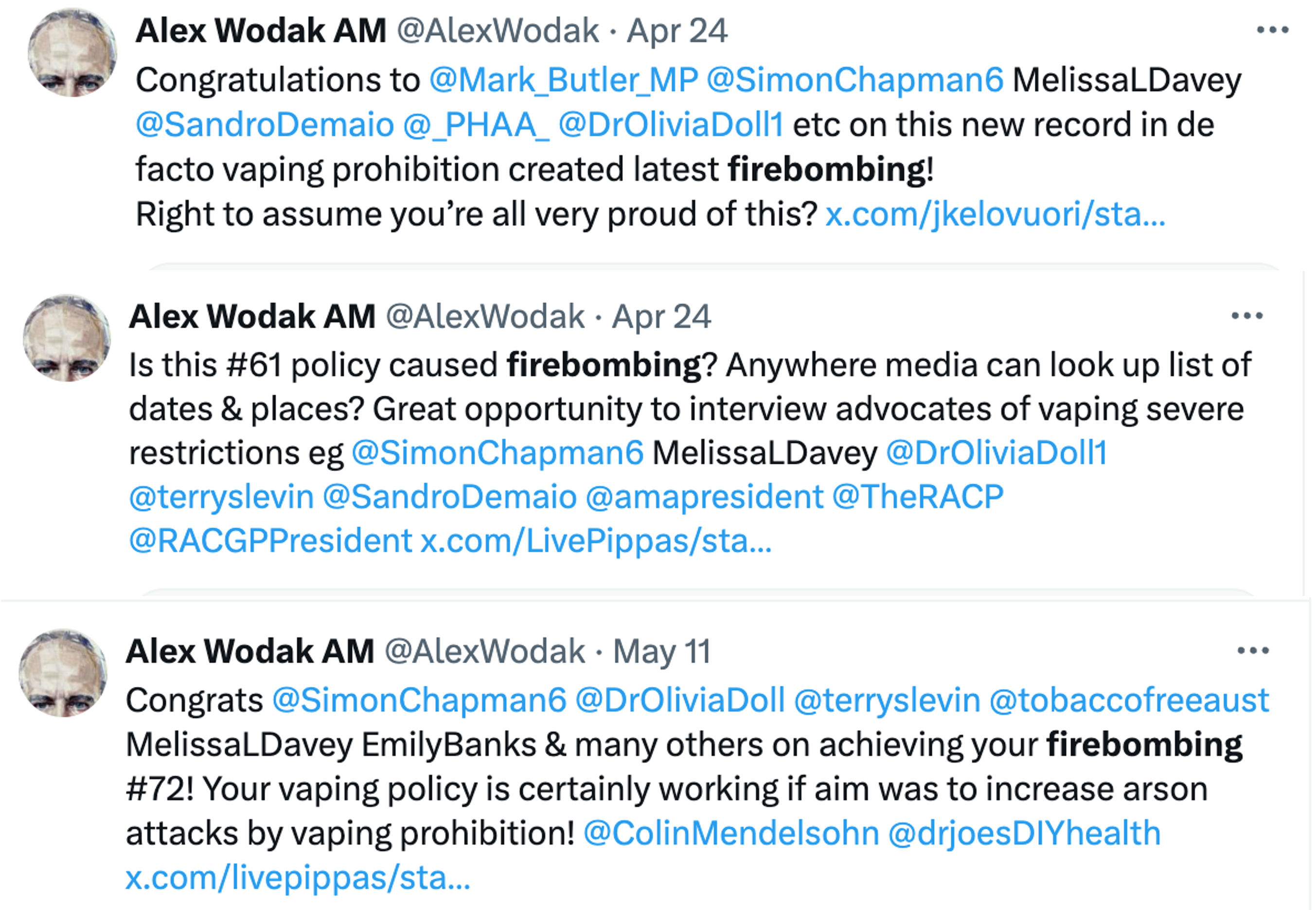
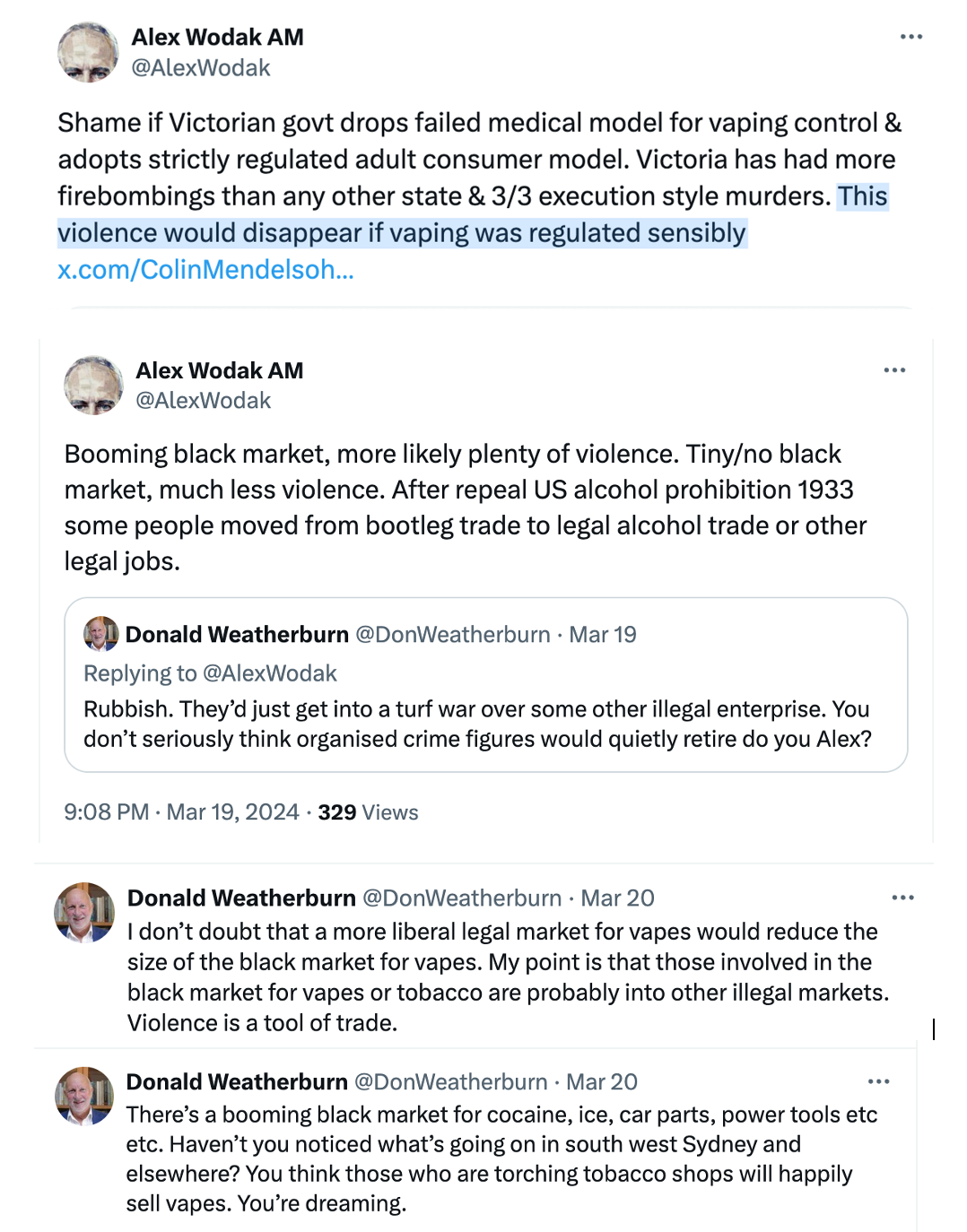
This was also a week where Mendelsohn, with “the greatest humility” let us know that he was gonged with a coveted award from the UK Vaping Industry Association (UKVIA) as their new public health golden boy.
In his blog, he helpfully explained UKVIA’s impact on smoking:
Col also updated his website FAQs (see under ‘fires and explosions’) with a generally sensible series of tips on how to prevent your vape exploding. But he just couldn’t resist adding a photo of me and my electric vehicle.
His tag-team partner in sophistry, someone who goes on and on and on about the need for civility, politeness and respect, helped out by making the relevance of the photo explicit in a subsequent tweet.
Exploding vapes have grabbed headlines for good reason, as this show-reel of incidents illustrates. Here’s a 2018 review of 164 cases on e-cigarette explosion injuries. 35% resulted in second degree burns and 20% in third degree burns (the worst), with many necessitating skin grafts. The most common sites were thighs, hands, face and genitals.
But when it comes to catastrophic risk, it’s explosions on aircraft that are most concerning. The US Federal Aviation Administration (FAA) advises that any device using lithium batteries should be stored in carry-on luggage. But its regulations only prohibit a small range of devices from stowed luggage and these include … you guessed it … electronic cigarettes and vapes. Now why would that be? Because as they explain:
“Electronic smoking devices, like vapes and e-cigarettes, contain lithium batteries and are considered dangerous goods due to their risk of smoke, fire and extreme heat. As such, they are restricted to on how they can be packed when preparing for travel on an aircraft. These devices were the leading cause of lithium battery incidents on aircraft in 2022.”
The potential consequence of an intense heat vape battery fire deep in the hold of a crowded airliner is dire.
But hey, what would the world’s largest airline regulator know, when Col and Alex think it’s all just “exploiting fear” to mention explosions as a concern?
Yes, I drive an electric vehicle. And undoubtedly just like both Mendelsohn’s and Wodak’s, my house is also full of appliances that use lithium batteries: laptops, tablets, mobile phones, power banks, torches, remote controls, fitness monitors, and power tools. When these products very rarely catch on fire, we typically see highly publicised global recalls like this laptop, these power tool batteries and the infamous Samsung Galaxy Note 7.
But Google couldn’t show me any examples of recalls for exploding vapes. This almost certainly reflects the cowboy nature of vast segments of the vaping manufacturing industry and the thousands of equally dodgy retailers willing to stock them.
Electric vehicles have much lower probability of catching fire than internal combustion engine (ICE) vehicles. From 2010-2023 EV FireSafe has verified 393 EV battery fires globally. To put this in context, there are some 30 million EVs on the world’s roads. This Conversation review points to fires in ICE vehicles being some 80 times more common than in EVs. Tesla’s 2020 impact report argued that there was one Tesla fire for every 330 million kilometres their vehicles have travelled. Tesla automatically collects full kilometer and incident data for every car it has ever sold, across all owners.
After reading about the explosion risks of vapes and EVs, I’m very pleased to warm my nether regions in winter driving on the Tesla’s battery powered seat warmers rather than risk molten lithium trickling around my testicles if I vaped. Goodness, gracious great balls of fire!
Wodak’s apparent understanding of the comparative risks and consequences of vape explosions with those occurring in EVs seems about as informed as his unforgettable comparison of nicotine in tobacco with that in vegetables like eggplants and potatoes, the most opened of all blogs in this series.
Hypocrisy? Not guilty m’lud.
Other blogs in this series
Vaping theology: 1 The Cancer Council Australia takes huge donations from cigarette retailers. WordPress 30 Jul, 2020
Vaping theology: 2 Tobacco control advocates help Big Tobacco. WordPress 12 Aug, 2020
Vaping theology: 3 Australia’s prescribed vaping model “privileges” Big Tobacco WordPress Feb 15, 2020
Vaping theology: 4 Many in tobacco control do not support open access to vapes because they are just protecting their jobs. WordPress 27 Feb 2021
Vaping theology: 5 I take money from China and Bloomberg to conduct bogus studies. WordPress 6 Mar, 2021
Vaping theology: 6 There’s nicotine in potatoes and tomatoes so should we restrict or ban them too? WordPress 9 Mar, 2021
Vaping theology: 7 Vaping prohibitionists have been punished, hurt, suffered and damaged by Big Tobacco WordPress 2 Jun, 2021
Vaping theology: 9 “Won’t somebody please think of the children”. WordPress 6 Sep, 2021
Vaping theology: 10: Almost all young people who vape regularly are already smokers before they tried vaping. WordPress 10 Sep, 2021
Vaping theology: 11 The sky is about to fall in as nicotine vaping starts to require a prescription in Australia. WordPress 28 Sep, 2021
Vaping theology: 12 Nicotine is not very addictive WordPress 3 Jan 2022
Vaping theology 13: Kids who try vaping and then start smoking,would have started smoking regardless. WordPress 20 Jan, 2023
Vaping theology 14: Policies that strictly regulate vaping will drive huge numbers of vapers back to smoking, causing many deaths. WordPress 13 Feb, 2023
Vaping theology 15: The government’s prescription vape access scheme has failed, so let’s regulate and reward illegal sellers for what they’ve been doing. WordPress 27 Mar 2023
Vaping theology 16: “Humans are not rats, so everybody calm down about nicotine being harmful to teenage brains”. WordPress 13 Jul, 2023
Vaping theology 17: “Vaping advocates need to be civil, polite and respectful” … oh wait. WordPress 3 Oct, 2023
Vaping theology 18: Vaping is a fatally disruptive “Kodak moment” for smoking. WordPress Oct 30, 2023
Vaping theology 19: Vaping explosions are rare and those who mention them are hypocrites. WordPress 17 Nov, 2023
Vaping theology 20 : Today’s smokers are hard core nicotine dependent who’ve tried everything and failed – so they need vapes. WordPress 14 Dec, 2023
Vaping theology 21: Australia’s prescription vapes policy failed and saw rises in underage vaping and smoking. WordPress 10 Jan, 2024
Vaping theology 22: “Prohibition has never worked at any point for any other illicit substance”. WordPress 17 Mar 2024
Vaping theology 23: “84% of the Australian public are opposed to the way the government will regulate vapes” WordPress 2 Apr, 2024
Vaping Theology 24: “Tobacco control advocates are responsible for vape retail store fire bombings and murders. WordPress 27 May, 2024
Australia will soon fully implement its new vaping regulations. The twin pillars of these are :
(1) that nicotine vaping products will only be legally available to those with a doctor’s prescription. As prescribed substances can only be sold by registered pharmacists, all other retailing will be illegal. Flavoured, disposable vapes will be banned. The Therapeutic Goods Administration and state and territory governments are empowered to penalise anyone unauthorised who sells or advertises vapes. Very recently, the Federal Court ordered a vaping company to pay a penalty of $4.9 million plus the legal costs of the Commonwealth for advertising vapes. Such penalties are likely to have a major deterrent effect on illegal retailing.
(2) vapes (both with nicotine and without) will be illegal to manufacture or import into Australia unless these products are intended for sale to pharmacists who will dispense them to those with prescriptions. Seizures weighing 32 tonnes and valued at $11 million have recently been made as police and customs surveillance increases.
The TGA recently invited responses to its proposed regulations. Below is my brief submission. It recommends three amendments that I believe would sharpen the Government’s regulatory intent.
Responses to Proposed Reforms to the Regulation of Vapes
Thank you for the opportunity to respond to the proposed reforms to the regulation of vapes. Overall, the proposed reforms are quite outstanding. They are likely to attract international attention as a template for international Nicotine Vaping Products (NVP) regulation. I am in strong support of all proposals with the exception of those set out below.
Tank systems
On page 6, the document specifies that refillable tank systems are included in the definition of permitted vapes.
This is concerning as it will circumvent the regulatory intent to greatly limit the use of flavours in prescription-accessible vaping products. While only two permissible flavours are prescribed (tobacco and mint), many tank system users will undoubtedly add flavours not intended for vaping (aromatics, essential oils etc) to their tanks. It will be impossible to regulate the availability of such flavours as they are widely used in cooking, air freshening and perfumery. Vaping chat rooms have long had extensive discussions about flavouring ingredients which participants have been using. This may well greatly accelerate with the proscriptions on all but two flavours.
The document also states early that:
“Vaping devices are currently excluded from regulation under the TG Act unless they are intended exclusively for the vaporisation and administration by inhalation of a medicine. It is proposed that the exclusion is revisited in the context of these reforms to ensure that proper controls and oversight are applied to device components of vapes moving forward.”
This looks like the door could be closed on legal sale of mods and tanks, with all that goes along with user adjustable coil temperature settings and adding non prescribed liquid flavours.
The exclusion of tank systems seems ripe to foment a whole new rise in tank use and the commerce that supports it. I would urge the TGA to revisit the exclusion of vaping devices from the TG Act and advise the government that only closed pod system NVPs should be legal in Australia and that for ex-prescription sales of mod and tank vaping devices to remain legal would threaten the integrity of the proposed NVP regulations.
Collateral uses of vaping devices
An outstanding concern here is also that mod/tank vaping apparatus can be used to vapourise other drugs which according to this San Diego drug treatment centre can include cannabis. LSD, GHB (gamma hydroxybutyrate) and ketamine. This is far from rare. A 2022 Kings College London survey found that 14.7% of people aged 18+ in the UK had ever vaped a non-nicotine drug, with nearly 1 in 56 (1.8%) currently doing it. In 2019, 3.9% of 19-24 Americans (1 in 26) had vaped cannabis in the last 30 days. I’ve found no data on other drug vaping by under 18s, which of course does not mean it is not happening.
82% reported using THC-containing products; 33% reported exclusive use of THC-containing products.
57% reported using nicotine-containing products; 14% reported exclusive use of nicotine-containing products.
No data appear to be available on the incidence of health incidents following vaping other drugs, but the World Drug Survey included questions on it in a recent survey..
Mod/tank systems were invented and marketed to facilitate nicotine vaping. But like a Trojan horse, they have also enabled widespread vaping of non-nicotine drugs which have killed and seriously harmed thousands in the US alone.
Collateral damage (negative externalities) from intended use is routinely considered in all formal risk assessments in health and community safety. For example, gun control policy considers gun misuse, not just approved uses in hunting and target shooting; DDT was widely used in Australia in agriculture and termite control where it was extremely effective, but banned in 1987 because of its collateral residual health risks to humans.
There are many mods and tanks now in the community. If the Act disallows nicotine e-juice intended to be decanted into tanks, these mods and tanks will sit in drawers as useless without the legal availability of nicotine e-juice essential to nicotine vaping. I strongly urge you to reconsider allowing prescription supply of nicotine e-juice for tanks and also to prohibit the sale of mods and tanks vaping apparatus for the reasons I have outlined.
Section 3.1 Mint and tobacco flavours
Comment: No inhalable therapeutic goods contain flavouring chemicals for the very important reason that it is inadvisable to inhale chemical agents which have not been thoroughly assessed as being generally regarded as safe (GRAS) for inhalation. Asthma inhalants like salbutamol are a perfect example of this. This is particularly important with the regulation of NVPs because daily vapers typically inhale vapes some 500 times daily. The long term health consequences of this remain unknown.
I therefore strongly agree with the critical importance of strictly limiting the range of flavours in prescription accessible NVPs. I also accept that it is important that the taste of NVPs should not be so unpleasant and unpalatable to those using them for smoking cessation so as to cause many intending NVP users to rapidly abandon them.
As far as I am aware, there are no GRAS data available for the proposed mint flavour when being inhaled. However, in the trade-off between this concern about possible long term consequences of deeply inhaling vapourised mint some 500 times a day by daily vapers, and the concern to make NVPs not taste or smell repulsive, I believe allowing mint flavour would be a reasonable compromise.
However, I do not support the proposal to allow a flavour named “tobacco” flavour. If it is proposed that there be a specific, standard, fully prescribed (defined) flavour known as “tobacco” this will presumably taste and smell like the taste and smell of tobacco. This is likely to strongly remind smokers who are vaping of the taste and smell of the tobacco they had been (and for dual users) still are smoking. If we reasonably assume that for many smokers this smell and taste will evoke strong positive associations, then the availability of a tobacco vape flavour may act as “pull” factor back toward smoking which would not be sensible.
It would be far preferable to permit a flavour with an anodyne name that neither denoted or connoted any appealing associations. Examples of such names might include “standard”, “classic”, “basic” or “regular”. Here is an example of advertising for Nicorette NRT gum using “classic”. I do not believe any NRT products are flavoured with “tobacco”.
The flavour and smell sensations delivered by such anodyne descriptors would be such that users would not instantly associate the taste or flavour with any fruit, confectionary, beverage or food. Taste panels could be used to rate taste acceptability and to ensure that candidate flavours did not evoke any proscribed associated tastes or smells.
Section 3.1.3 Lowering maximum nicotine concentration in e-liquids to 20 mg/mL in base form (or base equivalent), to align with the limits in the EU, UK and Canada.
It is critically important to note that, unlike Australia, the EU, EK and Canada do not yet have a prescription-access only NVP policy like Australia. They have set the 20 mg/mL nicotine limit to try and reduce the likelihood of nicotine naïve children becoming addicted.
Australia’s limit is not being set for prevention of regular use by children (who will rarely be prescribed NVPs) but for already addicted smokers trying to quit. This is a very important difference against which the wisdom of reducing the current limit of 100 mg/mL to 20 mg/mL needs to be considered. I believe such a large reduction is misguided.
Medicinal cannabis which has been legally prescribable in Australia for several years is not seeing diversion from prescription access to those without prescriptions. This would seem relevant to concerns about limiting prescription vapes to 20mg/mL. If there is indeed concern that major diversion might occur and therefore a low limit justified for safety reasons, the unlikelihood of diversion occurring is a strong counterpoint to this.
NRT nicotine limits produce dismal cessation rates
For decades, it has been widely acknowledged that nicotine replacement therapy’s dismal effectiveness in smoking cessation under conditions of real-world use is in large part due to its poor ability to successfully satisfy nicotine cravings developed by smokers. Even under the highly artificial conditions in which RCTs are conducted, some 95% of smokers using NRT in RCTs are smoking at post six months follow-up. In this 2021 systematic review, 61% of smokers allocated to NRT in RCTs adhered to the recommended use throughout trials, compared to only 26% in longitudinal population (real world) studies.
The research literature on NRT contains many recommendations about contemporaneous multiple modes of NRT use and lifetime use. This points further to recognition that NRT in the limited very low nicotine doses that have been approved performs very poorly in cessation under conditions of real world use.
It is fundamental to the understanding of vaping behaviour that those with nicotine dependence change their puff parameters (puff frequency, puff volume, between puff intervals) to obtain the nicotine dose that satisfies their cravings. When there is a low maximum nicotine level in a vape, more dependent users will typically puff more and in larger volumes to reduce their cravings. If the nicotine level was higher, across a 24 hour period they would take less puffs from a higher yielding vape than from a much lower yielding one.
The growing research literature on airways inflammation is too immature to be certain about which components of vape emissions are likely to be of most concern. But it seems very unlikely that the normal dose-response relationship would be somehow different with vaping than it is for any other cause of lung damage, including smoking. The higher the exposure, the more likely the risk. A higher puff frequency and volume when using a low nicotine vape means users will be exposing their lungs to higher doses of excipients (propylene glycol/vegetable glycerine) than they would if they were using a higher nicotine yielding vape.
This study notes that “in experimental animal studies, unheated PG or VG have minimal lung toxicity (14). However, when delivered from e-cigs, there are measurable increases in lung inflammatory infiltrates, cytokines, infections, reactive oxygen species, and gene expression (9, 15, 16).
By maximisng NVP nicotine concentration at 20 mg/mL, it is highly probable that, as has long occurred with NRT, many heavily nicotine addicted users will similarly quickly desist from using prescribed vapes after finding that their cravings remain. This is obviously not the outcome being sought via prescription access to NVPs for those who are already nicotine addicted.
I would recommend a compromise here by lowering the maximum limit by half from 100 mg/mL to 50 mg/mL.
Competing interests
In July 2023 I was engaged as a temporary advisor by the World Health Organisation for a three day meeting on NVPs held in Geneva.
Ranked 16,808 for citations among 9,749,150 authors worldwide with 5 or more publications (in any field) from 1996-2022 (see here) and 132 among 59,062 public health authors
Career highlights
• Deputy editor (1992-97), Editor (1998-2008), Emeritus Editor since 2009, BMJ’s Tobacco Control
• World Health Organization World No Tobacco Day Medal for tobacco control, 1997
• National Heart Foundation (Australia), President’s Gold Medal, 1999
• American Cancer Society’s Luther Terry Medal for Outstanding Individual Leadership. 13th World Conference on Tobacco or Health, Helsinki, August 2003
• Distinguished Professorial Achievement Award, Faculty of Medicine, University of Sydney $10,000. November 2012
• Elected Honorary Fellow, Faculty of Public Health of Royal Colleges of Physicians of the United Kingdom March 2013
• Officer in the Order of Australia (AO) Jun 10, 2013 “for distinguished service to medical research as an academic and author, particularly in the area of public health policy, and to the community.”
In the matter of vaping in Australia, state governments’ main responsibilities and powers lie in ensuring that the only supply of vaping products (VPs) occurs via prescribed access through pharmacies; in cooperating with the Therapeutic Goods Administration and the Commonwealth Government to ensure that VPs are not advertised or promoted in any way defined in the Bill soon to be tabled in the Federal Parliament; and in regulating where VPs can be consumed.
In this submission, I will focus only on those matters where the NSW Government has responsibilities. I have previously made a public submission to the TGA’s call in late 2022 for comment on issues such as the safety and effectiveness of vaping in assisting smoking cessation. I append that submission to this present submission.
A thought experiment
First, let me begin with a thought experiment.
Imagine the consequences if a huge, national pharmacy chain, in intense competition with its rivals for the multi-billion dollar prescription drug market was to say “We have decided to ignore the need for a prescription and supply prescription-only medicines to anyone asking for any prescribed drug.” Anyone wanting antibiotics, codeine, statins, steroids, anti-hypertensive drugs … you name it … could walk in, hand over their money and walk out with whatever drugs they wanted.
The reaction to this would be swift and iron-fisted, as shown here and here in cases where pharmacists were investigated and disciplined over unaccounted-for scheduled drugs.
Yet this is in effect what has been happening on a national scale in Australia since Oct 1, 2021, the date when the only legal access to nicotine vaping products became via a prescription legally needing to be dispensed at pharmacies and nowhere else. But as is now blindingly obvious, only a tiny proportion of people who vape – estimates put this at below 4% — are today getting their vapes in this way. The rest are still buying them openly online, from shops brazenly signed with “Vapes sold here” or from many hundreds of suburban and town market stalls. Corner shops, petrol stations and an army of on-line sellers are openly defying the law.
There has been widespread, wholesale ignoring of the law across the country. Retailers have openly displayed, advertised and sold vaping products containing nicotine, often including those falsely labelled as not containing nicotine. (This recent study of VPs confiscated from 598 Sydney school student found that nearly all nearly all had av 40mg/ML nicotine, high levels of WS-23 coolant chemical and unapproved for inhalation flavour chemicals.)
This has occurred because of a perfect storm of the following factors:
There has been strong, rising demand for VPs, particularly by school children and persons aged under 35. Many of these vapers have never smoked. Many others continue to smoke for years after they also take up vaping
Those importing and retailing these products can earn extraordinary profit margins (see below)
The number of seizures and prosecutions for illegal selling have been tiny, relative the number of outlets selling these products and the number of illegal (by definition) black market transactions that occur across all of these outlets
The maximum fines for selling VPs in NSW are paltry, sending a signal to illegal retailers that the government does not take this illegal trade seriously
Retailers illegally selling VPs reason that the probability of being apprehended, stock seized, charges laid, prosecutions proceeding and maximum fines given by courts is exceedingly small: simply an unlikely irritant-level potential cost to be balanced against the massive profits to be made by breaking the law
Below is a screenshot I took on 31 Oct at 4.25pm of the results of searching on Facebook Marketplace for the innocuous word “fruit”. But these advertisements are not for actual fruit. “Fruit” is instead being used as a code word for fruit flavoured vapes. The screen shot shows just a small sample of many such ads on Facebook Marketplace. I’m told that similar commerce is occurring on other social media platforms. They have been appearing unabated for several years.
Arguments that the illegal sale of VPs is now so widespread as to make it “impossible” to meaningfully mitigate its extent – that the genie is now so far out of the bottle that it cannot be returned — are VERY ignorant about the history tobacco control.
When I commenced my work in tobacco control the late 1970s, over 40% of men and 30% of women smoked, Today, some 10.7% of Australians smoke daily. If the attitude was taken in the 1970s that it was an impossible task to radically reduce smoking prevalence to and beyond the levels we have today, many thousands more than would have died than still occur each year despite Australia being internationally acknowledged as being in the forefront of tobacco control.
Highly profitable
This website provides pricing for importers of many Chinese made VPs. Prices vary according to different models including the number of puffs available. In the examples below (1) shows a 600 puff model that costs US$0.99 when purchased in lots of 1000; and (2) US3.50 -$3.80 for an 8000 puff model
(1)
(2)
An importer with control of retailing in Australia who invested $US50,000 (AUD$79,000) in example (1) — the 600 puff JOMOTECH above — and retailed each for AUD$15 would stand to make an AUD $1.106 million profit, 14 times their investment. If they invested the same US$50,000 (AUD$79,000) in the 8,000 puff EGO at a unit price of US$3.50 (this buying 22,571 EGO vapes) and retailed them for AUD$25 each (see Facebook Marketplace prices above for indicative retail prices) they would make $564,275 less their $79,000 investment, leaving $485,275 profit – over 6 times their investment.
Cheap disposable flavoured vapes thus promise enormous returns to those seeking to make fast money. The market segments most attracted to cheap vapes are those on low incomes, which importantly includes school children.
Critical importance of seriously deterrent fines
In NSW, the current maximum penalty for selling VPs is $1,650, six months in prison or both, in addition to the loss incurred by confiscation and destruction of illegal stock without compensation. This maximum penalty contrasts dramatically with those being handed out by the TGA for advertising vapes.
In Singapore, any person convicted of selling VPs is liable to a fine of up to $10,000 (AUD$12,000) or imprisonment of up to 6 months or both for the first offence, and a fine of up to $20,000 (AUD$23,000) or imprisonment of up to 12 months or both for the second or subsequent offence.
Unless NSW lifts its penalties to seriously deterrent levels, most retailers who have long been knowingly breaking the law, will continue to do so. They will understandably reason that in the unlikely event that they are prosecuted, that the maximum fines they face are frankly petty cash inconveniences, with next to zero risk to their rivers of money from continuing to sell vapes.
NSW Health has released data in August on the number of successful prosecutions for selling NVPs between Jan 2020-Jun 2023. There have been just 27 of these, with 441,645 NVPs seized.
I’m advised that several factors have inhibited far wider prosecutions and seizures.
At present only VPs containing nicotine are prohibited from sale in Australia other than to those with a prescription. This will change with the passage of Commonwealth legislation in the coming months when all VPs, regardless of whether they contain nicotine, will be proscribed from sale in any other retailer than licensed pharmacies to those with a doctor’s prescription. Until that time, successful prosecutions have required enforcement officers to determine whether a VP contains nicotine. This involves laboratory testing which is time-consuming and expensive. This has clearly greatly inhibited far more widespread efforts at prosecution
During the COVID pandemic, many Health Department staff were reassigned to COVID-related duties. It is possible that raiding vaping retailers was given low priority across this time.
While there is a link on NSW Health’s website to report retailers selling or advertising VPs, it has been given scant publicity compared with, for example, Crime Stoppers. You have to go looking hard for it. I have personally reported several retailers but have never received any follow-up advice on any of these reports. This silence would discourage the public from reporting more than once.
The Cancer Council NSW has an army of active volunteers around the state who participate in fund raising, education and support for cancer control. I would encourage the government to consider partnering with the Cancer Council to have its volunteers systematically attempt to purchase VPs across the state on a regular basis, providing statutory declarations and photographic evidence of their efforts.
This may greatly increase the number of reports that NSW Health would receive and with significantly increased penalties, would greatly facilitate more prosecutions and compliance with the law.
Unless all Australian state and territory governments seriously address the rampant vape sales law-breaking in each jurisdiction, the Federal Government’s prescription access policy will fail because many vapers will continue to purchase illegal VPs.
“Prohibition?”
To those who argue that the prescription access model is “prohibition”, it only needs to be pointed out that by this definition of prohibition all prescribed drugs are equally “prohibited”: all antibiotics, statins, hypertension control drugs, cholesterol drugs, oral contraceptives, strong pain killers, anti malarials etc. In 2020=21, in a population of 25 million, 314.8 million prescriptions were dispensed under the PBS and RPBS. Added to that were many more non-subsidised prescriptions.
It is clearly absurd to argue that such widespread access to restricted drugs via prescription is remotely akin to true prohibition of the sort that applies to illicit drugs.
Public vaping
With vapes not being banned under the proposed Federal legislation but allowed only to be sold to those with a doctors’ prescription, vaping, like smoking, of course should not be illegal. However vaping causes significant indoor air pollution, particularly when large numbers of vapers vape in confined settings.
Here, it is significant that there is no airline in the world which allows vaping on board aircraft.
This study measured suspended particulate matter at an indoor vaping meeting.During 6 time points when the event was ongoing, between 59 and 86 active vapers were present in the event room (room volume=4023 m3 ). While the event was ongoing, median PM2.5 concentrations in the event room increased from a baseline of 1.92–3.20 μg/m3 to concentrations that ranged from 311.68 μg/m3 (IQR 253.44–411.84 μg/m3 ) to 818.88 μg/m3 (IQR 760.64–975.04 μg/m3 ).
Importantly, PM2.5 concentrations observed at the vaping event were higher than concentrations reported previously in hookah cafés and bars that allowed cigarette smoking. This study indicates that indoor vaping can expose non-users to significant secondhand vape aerosol. Governments should prohibit vaping anywhere smoking is prohibited.
I would be pleased to answer any questions in person at the Inquiry.
Vaping advocates love to frame vaping as Big Tobacco having its very own, huge “Kodak moment” – a sweeping, game-changing point in an industry’s history when a revolutionary change saw an old way rapidly swept away by a technological breakthrough. Kodak made cameras and film, with hundreds of millions of snappers buying and fiddling with the film spools we needed to take photos. The arrival of digital cameras and then mobile phones with cameras relegated film cameras to niche enclaves of collectors and specialised photographers. Kodak infamously failed to appreciate the epoch-ending arrival and growth of digital photography and nose-dived into oblivion.
There are many, many other examples of such disruptive technology transforming industries: refrigeration replacing ice boxes and community cooling houses; vinyl records being replaced by cassette tapes which were then superseded by CDs which were then overtaken by MP3s and music streaming; the horse and buggy industry by the internal combustion engine, now being inexorably hammered by the rise of electric vehicles; telephone landlines by digital phones; fax machines by digital file transfers; and city street directories by GPS navigation. Cash and ATMs may soon be a thing of the past with tap card and phone payments.
So the Kodak moment/disruptive technology analogy pulls many powerful historic rhetorical levers. With each example that is likened to vaping, we reflect on the cumbersome and inefficient rituals that dragged on our time with the old ways. Who remembers using pencil to re-spool a favourite cassette tape that had become entangled in a Walkman? Or taking your film cannister to the local chemist and waiting days for your photos to come back. As an EV driver, it’s been two and a half years since I queued to fill a petrol tank.
We think of the obvious benefits of the new compared to the old. Why would anyone today bother with a home landline telephone unless they lived remotely and away from mobile reception? The multitude of advantages of cell phones are why their use is nearly universal today.
Those who cling to old technology are seen as quaint, doddery types needing to move with the times but who are rusted on to a decrepit past. They have no sense of history or perspective, unlike serial hyperbolist Prof David Nutt.
But the vaping replacing cigarettes “Kodak” progress analogy fails very badly when compared with the truly disrupting examples like those I mentioned above. In each of the examples above, the new technology rapidly caused redundancy and all but completely saw the old technology confined to collectors. The new technology was rapidly embraced because it was affordable and had clear benefits over the old.
But this is proving to be anything but the case with cigarettes. The two big pitches constantly made for vaping are that it is far less dangerous than smoking and far superior to any other way of quitting. But when you peer beneath these sales pitch slogans, it’s once again the story of empty vessels making the most sound.
Are vapes obviously less dangerous than cigarettes?
It’s clear that head-to-head, nicotine vaping products (NVPs) emit significantly less of most toxins than do cigarettes, the Mount Everests of risk. From this, many assume that it therefore follows that the reduced risks to health will simply be as proportionately less dangerous as the magnitude of the differences in toxin emissions. If there are twice as many of toxins X, Y and Z in cigarettes than in vapes, then hey, vapes are 100% less dangerous than cigarettes, right? Surely it’s then a no-brainer that vapes are all but “safe” compared to cigarettes?
The LD50s (median lethal dose of a toxin that will kill 50% of those exposed) for arsenic, cyanide, sarin and strychnine are all levels of magnitude different too. But no one proceeds from that to argue that any of them are relatively benign compared to the most lethal.
The argument assumes that any health impacts of vaping will be the same as those from smoking, but far less in magnitude. But vaping and cigarettes are very different products. This 2021 Johns Hopkins University study found fingerprints of nearly 2000 different chemicals in four popular vape brands by undertaking a full non-targeted analysis to determine the full range of chemicals in both vaping liquids and aerosols. Many of the chemicals were uncharacterised.
And daily vapers inhale much more than do daily smokers. In a recent (2023) study, observers found vapers took an average of 71.9 puffs across 90 minutes – 47.3 puffs an hour.
So across 24 hours, if we (conservatively?) assume 8 hours of sleep and four waking hours with no vaping, then a person vaping across the remaining 12 hours a day at this 47.3 puffs per hour rate, would pull 568 puffs deep into their lungs, 207,462 times in a year and 2.075 million times across 10 years.
By comparison, the average number of cigarettes smoked per day by Australian daily smokers today is 10.7. Unobtrusive observations of smokers smoking in outdoor leisure settings like beer gardens and parks show the average smoker inhales 8.7 times per cigarette. This suggests the average smoker inhales 93 times a day, about 34,000 times a year and 340,000 times across a decade.
Daily vapers thus inhale on average at just over 5 times the rate that daily smokers inhale. This is an almost frantic rate.
But you don’t just inhale nicotine when you vape. Vapers learn to titrate their puffing to obtain the desired level of blood nicotine. Importantly, the nicotine is mixed with an excipient – a substance that serves as the vehicle or medium for a drug to be consumed. Propylene glycol (PG) is the most common excipient used in vapes. Dow Chemical is a leading manufacturer of PG. Here’s what it has to say about breathing it in.
“Therefore breathing spray mists of these materials should be avoided … Dow does not support or recommend glycols in applications where breathing … is likely”
So with ~568 puffs a day by daily vapers, that’s 568 point blank deep lungfuls of vapourised PG – not just nicotine – that that vapers are getting.
Put simply, there has never been any precedent for the mass exposure of hundreds of millions of people – dominated by 15-30 year olds – to the humungous frequency of point-blank lung bastings of the chemical cocktail that includes vapourised nicotine, thousands of unregulated flavouring chemicals (none approved as “generally regarded as safe (GRAS) for inhalation), propylene glycol and metal particles sloughed from heated metal coils in vapes.
Thank goodness there is no shortage of vaping advocates around –often industry supported — to assure us that there is really just nothing at all to worry about here.
Long disease latency periods
Chronic diseases caused by smoking like cancer, respiratory and cardiovascular disease take decades to manifest clinically, and widespread vaping has only been around for 10-15 years in nations where it is now widespread. The famous 1994 graph (see below) known by every public health student on the lag time between smoking uptake and its death rates, showed that several decades pass between the uptake of smoking and deaths from the diseases it causes.
Another example of such a lagged effect is the always-fatal asbestos caused respiratory cancer mesothelioma which has a median age of diagnosis of 75, when many workers have been first exposed to it from their late teens onward.
No one but the epidemiologically ignorant or wilfully deceptive could seriously claim that the evidence jury was now in on how risky vaping will prove to be across the decades to come. John Britton, a senior British physician who has been a supporter of vaping nonetheless said in 2017 “Inhaling vapour many times a day for decades is unlikely to come without some sort of adverse effect. And time will tell what that will be.”
And, as 15 former presidents of the Society for Research in Nicotine and Tobacco emphasised in 2021 “there are no data on long term health effects, reflecting the relative novelty of vaping and the rapid evolution of vaping products. Determining even short term health effects is difficult because most adult vapers are former or current smokers”
So just how exceptional are vapes in helping smokers quit?
The other big claim for NVPs being the Kodak moment for cigarettes is the idea that they are driving unprecedented numbers of smokers to quit, far more than any previous way of stopping smoking.
Australian vaping advocates repeatedly argue out of one side of their mouth that Australia’s comparatively restrictive vaping policies are preventing teeming thousands of smokers from quitting and that Australia’s recent record of driving smoking down is an embarrassing failure. But out of the other side, they claim that there some 600,000 Australians who vape.
So how compatible are both statements if vaping is such a fast lane into quitting smoking? If so many are vaping and vaping is so good at driving down smoking, why then is smoking in the population not falling dramatically as these statements would imply? Surely we would be seeing turbo-charged smoking cessation?
The obvious answers here are (1) that many who are vaping are not vaping to quit – this includes those who have never smoked but now vape, and dual users (vaping and smoking) who we know have comparable quit rates to smokers who don’t vape and (2) that in the real world, vaping is not very good at helping smokers quit. Here are 16 reviews published since 2017 summarising this evidence.
In chapter 6 of my 2022 book Quit Smoking Weapons of Mass Distraction, I looked at length at the evidence from England that vaping was driving down smoking across that population. The evidence is desultory rather than strong on vaping having being a decisively Kodak moment force.
The Cochrane Collaboration’s systematic reviews show vaping performs marginally better than nicotine replacement therapy (NRT) under the entirely artificial conditions of randomised trials. But RCTs differ radically from real world conditions of use. Chapter 2 of my book summarises the main reasons for this. For example:
Some 70% of smokers are illegible for RCT enrolment because factors like of mental health history, health problems or pregnancy
There are many “cohort retention” strategies routinely used in RCTs which greatly enhance adherence to recommended dose and duration of use compared with unsupervised real world use where drop out rates are often large.
RCT participants get free drugs and are sometimes paid, both factors that never happen with real world use.
Many smokers allocated to the placebo (no nicotine) arm of a smoking cessation trial will guess very quickly that they are not getting nicotine because for years they have had strong bio-feedback from their brains that they need re-dosing with nicotine. They will then have little confidence that what they are using will be effective
Vaping theology: 9 “Won’t somebody please think of the children”. WordPress 6 Sep, 2021
Vaping theology: 10: Almost all young people who vape regularly are already smokers before they tried vaping. WordPress 10 Sep, 2021
Vaping theology: 11 The sky is about to fall in as nicotine vaping starts to require a prescription in Australia. WordPress 28 Sep, 2021
Vaping theology: 12 Nicotine is not very addictive WordPress 3 Jan 2022
Vaping theology 13: Kids who try vaping and then start smoking,would have started smoking regardless. WordPress 20 Jan, 2023
Vaping theology 14: Policies that strictly regulate vaping will drive huge numbers of vapers back to smoking, causing many deaths. WordPress 13 Feb, 2023
Vaping theology 15: The government’s prescription vape access scheme has failed, so let’s regulate and reward illegal sellers for what they’ve been doing. WordPress 27 Mar 2023
Vaping theology 16: “Humans are not rats, so everybody calm down about nicotine being harmful to teenage brains”. WordPress 13 Jul, 2023
Vaping theology 17: “Vaping advocates need to be civil, polite and respectful” … oh wait. WordPress 3 Oct, 2023
Vaping theology 18: Vaping is a fatally disruptive “Kodak moment” for smoking. WordPress Oct 30, 2023
Vaping theology 19: Vaping explosions are rare and those who mention them are hypocrites. WordPress 17 Nov, 2023
Vaping theology 20 : Today’s smokers are hard core nicotine dependent who’ve tried everything and failed – so they need vapes. WordPress 14 Dec, 2023
Vaping theology 21: Australia’s prescription vapes policy failed and saw rises in underage vaping and smoking. WordPress 10 Jan, 2024
Vaping theology 22: “Prohibition has never worked at any point for any other illicit substance”. WordPress 17 Mar 2024
Vaping theology 23: “84% of the Australian public are opposed to the way the government will regulate vapes” WordPress 2 Apr, 2024
Vaping Theology 24: “Tobacco control advocates are responsible for vape retail store fire bombings and murders. WordPress 27 May, 2024
As happens with all new and emerging science, things are moving fast in the research evidence base that informs vaping policy. When there are huge vested interests (commercial, personal/doctrinal) involved in generating, interpreting and critically appraising research evidence, things can get heated. Here, vaping research and advocacy has fast moved to the very front of the grid when it comes to relentless nastiness.
Across my 45 year career in public health, I’ve come under sustained attacks from the gun lobby, mandatory backyard swimming pool fence and bicycle helmet opponents; anti windfarm, mobile phone and WiFi radiation phobic fruitcakes; climate change deniers; far right and extreme libertarian opponents of state regulation and the dreaded nanny state; and of course the tobacco industry. One of my favourites was an anti-vax queen bee from the Blue Mountains who once challenged me to bare my backside on national television to be jabbed with multiple vaccines. As it turned out, I’d then recently been vaccinated for typhoid, cholera, hepatitis A, tetanus and even plague because of planned travel to central Africa, Pakistan and India.
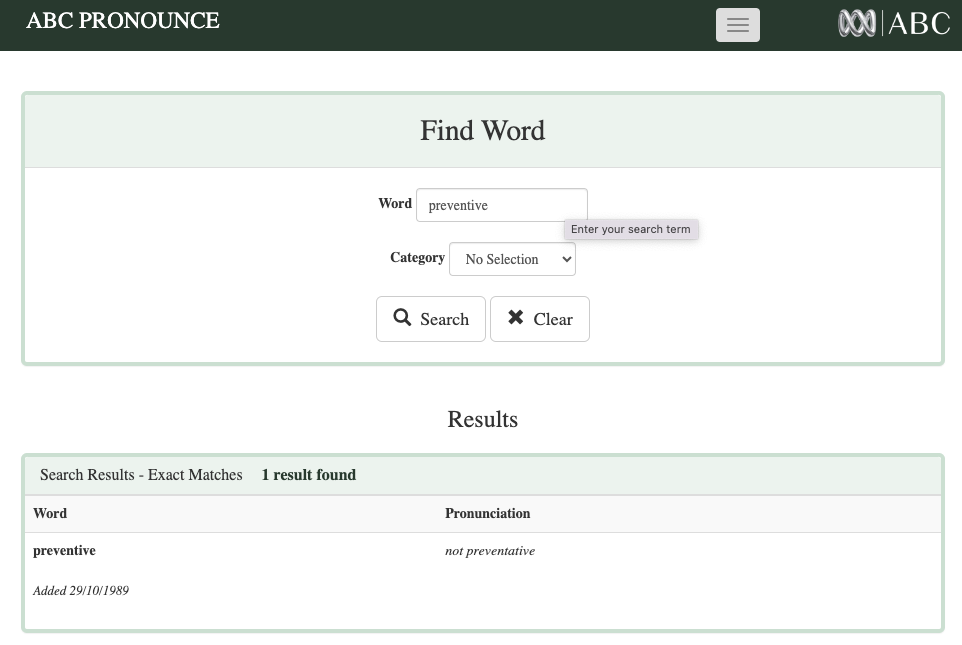
Dr Alex Wodak, who has an entry in that list, is a veteran advocate for harm reduction in the drug field. In recent years, he’s become a prominent advocate for vaping.
He’s also a prodigious, almost incontinent user of Twitter.
If you go to Wodak’s twitter feed and search for “polite”, “civil” or “respectful” you will find many tweets like those below. He unctuously bangs on about this with great regularity.
But like many vaping theologians, Wodak has a deep penchant for rushing into abuse and sheer nastiness. Here are a few examples.
He has repeatedly and falsely accused the Cancer Council of taking money from Australia’s biggest tobacco retailers (supermarkets) and never apologised. (the truth is that supermarkets pass to the Cancer Council money collected in their stores from customers and staff making donations and buying Daffodil Day pins).
He’s played the Nazi card, implying those supporting the serious regulation of vapes are group-speak Nazis, like those in the photo he selected below. Another strike for Godwin’s Law which states “As an online discussion grows longer, the probability of a comparison involving Nazis or Hitler approaches one”. Wodak should read the brilliant essay by Stanford University’s historian Robert Proctor on Playing the Nazi card in tobacco control which I published in 2008 when editing Tobacco Control. Proctor is the author of the seminal The Nazi War on Cancer.
Note above the gratuitous slur that anyone not in complete agreement with his take on vaping is “a Big Tobacco Little Helper.” I’ve explored this galactic nonsense here.
He’s accused the Australian Council on Smoking and Health in Perth (formerly directed by Maurice Swanson) of being quietly funded via Michael Bloomberg money apparently routed through “a few [of course nameless] organisations”. Very odd indeed, that neither Swanson, ACOSH nor Bloomberg know anything about this. It must be like one of those effusive letters we sometimes get from Nigerian correspondents saying that untold, unexpected riches are waiting unclaimed to be delivered to us.
He retweeted a tweet claiming my university (and therefore me presumably) also took money from Bloomberg and a Chinese Research Centre to critique vaping, when neither was in any way true.
He tweeted in agreement with someone who said I hid behind a fake Twitter account. I have never done this. He offered no evidence and never apologised.
He retweeted some miscreant’s twitter push poll inviting people to vote that tobacco control researchers’ highest priority was to “murder smokers & vapers” (below).
Wodak is not averse to arrogant Jurassic “Dr knows best” rhetoric either.
Does he imagine that Quitlines across the country which talk with many 1000s of smokers a year are staffed by clinicians?
His co-director Joe Kosterich at ATHRA, the vaping lobbying group that today has three directors and no members and which hasn’t put out a press release on its website for 42 months, went one better with this little cracker below, when interacting with a post from England’s Prof Robert West who (whoops!) has no medical qualifications.
This one is pants-wettingly funny because a large number of the pro-vaping leadership are not medical clinicians either. What must have Scott Balin, Clive Bates, Linda Bauld, Ron Borland, Jamie Brown, Paddy Costal, Cliff Douglas, J-F Etter, Wayne Hall, Peter Hajek, Martin Jarvis, Lyn Kozlowski, Ann McNeill, Ethan Nadelman, Ray Niaura, Lion Shahab, Gerry Stimson, David Sweanor, Ken Warner and Robert West –all “clowns” with no medical degree and no “real world experience” all made of their fellow vaping enthusiast’s excoriating criticism?
Wodak goes full offensive
On 29 January 2023, thirsty for polite, respectful debate, Wodak published the tweet below, responding to a tweet posted by the Northern Territory Seniors for Tobacco Harm Reduction (yes, there really is such an account).
Wodak used a tortured analogy to declare that Dr Sandro Demaio, the CEO of VicHealth, was a “leading Baptist”. During alcohol prohibition in the USA, both Baptists and liquor bootleggers campaigned for restrictions on alcohol for different motives. But they should both be thought of as similarly misguided, the argument runs.
VicHealth and Sandro Demaio, along with all the groups shown on the left of the table below, support the provision of nicotine vapes via prescription, and therefore only through pharmacies. To call this “prohibition” as vaping theology decrees, makes as much sense as calling prohibition the regulated supply of statins, blood pressure drugs, antibiotics, oral contraceptives and indeed, all prescription drugs. The most recent available data show 315m prescriptions were filled in a year in Australia in a population of 25 million. Pharmaceutical “prohibition” is clearly getting lots of drugs to lots who need them.
Wodak wants to see vapes made as equally available as cigarettes, as if he had been in a tobacco control cave all his life and learned nothing about the unmitigated historical disaster that followed making cheap cigarettes available almost everywhere, promoted by massive advertising.
The Northern Territory Seniors tweet proposed that Demaio ought to be thought of as a valued Marlboro (a Philip Morris brand) employee because, presumably, they would just love his efforts to support the prescription-only access to vapes. Philip Morris International sells its IQOS NVPs internationally and wants nothing to do with prescription access.
A few days later, Wodak doubled down and retweeted the picture again (below).
Vile US troll retweeted by Wodak
Another who responded to the Northern Territory Seniors tweet was @vapelawguy from the USA, a brave anonymous keyboard vape warrior with all of 535 followers. Wodak republished it in a retweet (see below)
So let’s parse the message in Mr Vapelawguy’s tweet that Wodak passed on to his 11,000-some followers. The illustration shows a vape with the acronym PENIS for Personal Electronic Nicotine Inhalation System. Sandro Domaio does not vape, so it’s clear that he’s not being called out as a hypocrite by claiming he not only vapes, but puts two or three vapes in his mouth at once. Instead, it is obvious what they are plainly suggesting that Demaio “often” has in his mouth.
Tweeted and retweeted in response to the context of the purposefully insulting “Marlboro Employee of the month” tweet, the penis tweet was intended to add an extra dimension to that insult.
Sandro Demaio was clearly playing deep inside Wodak’s head. Demaio is an articulate, evidence-based advocate with vast experience in advocacy. Wodak did not seem to realise that Philip Morris (Marlboro) is implacably opposed to NVPs being available only through prescription access. Philip Morris have never submitted an application to sell their NVPs via TGA authority. They and all Big Tobacco companies are fully committed to the “consumer model”, in lockstep with Wodak and those shown in the right hand column of the table above.
So why then, would Philip Morris make Demaio — a potent advocate for the very policy they virulently oppose — their employee of the month with the imminence of what they then faced under Australian government vaping reforms?
A huge proportion of those who vape are also smokers (dual users). So this group would not be “driven back” to smoking: they already smoke.
In the latest national data available (2020-21), by far the largest group of people who have vaped in Australia are those who “formerly” tried vaping (1.428m) compared to those who currently vape (442,800 – which includes a majority who also still smoke). The overwhelming number of these lapsed vapers are not smokers who vaped then quit for good, but smokers who tried vaping but then quit vaping and continued smoking. And guess what? All this happened before prescription access policy was introduced.
Sandro Demaio replied to this vileness:
Wodak’s retweet was utterly shameless. He should delete the tweet, and prominently apologise to Demaio and to the public.
His righteous tweets about polite, civil and respectful dialogue need to be seen against the foreground of his regular unapologetic offensiveness.
Update: 31 Jan 2024
The doyen of decency, civility and respectful debate was at it again in late January 2024 tweeting the nasty and frankly unhinged little contribution below
His reasoning seems to go like this:
Criminal gangs are extorting Victorian tobacconists to stock their illegal tobacco and vapes
Refusal can result in their shops being firebombed and even death, presumably hoping news of this will persuade others to comply with their demands
If duty-not-paid tobacco and vapes could instead be sold freely everywhere, there would be no black market
Those named in the tweet are among many who have advocated for prescription access to vapes and for increased tobacco tax as a critical component of potent tobacco control. They are therefore culpable in causing the current spate of criminal extortion and standover violence
There are just a few small problems with this analysis. Criminals have long and often stood over a wide variety of enterprises throughout the last century (eg illicit drugs, firearms, liquor, prostitution, land development, car rebirthing) using bribery, corruption, extortion, violence and blackmail. Moreover, open supply is no barrier to black markets developing, usually via tax avoidance where smuggled goods can be sold at much lower prices than those where duty and sales taxes are paid. We have seen this for years with cigarettes, freely sold everywhere all around the world.
The view that criminality would disappear from the nicotine addiction industry if strong taxes were reduced or eliminated and vapes sold “responsibly” by the very retailers who have been openly ignoring the law for several years is beyond naive and would see smoking skyrocket commensurate with the fall in prices that would occur.
So this is all very inconvenient to his simplistic and childish narrative.
See this extended blog on this issue
Also in this series
Vaping theology: 1 The Cancer Council Australia takes huge donations from cigarette retailers. WordPress 30 Jul, 2020
Vaping theology: 2 Tobacco control advocates help Big Tobacco. WordPress 12 Aug, 2020
Vaping theology: 3 Australia’s prescribed vaping model “privileges” Big Tobacco WordPress Feb 15, 2020
Vaping theology: 4 Many in tobacco control do not support open access to vapes because they are just protecting their jobs. WordPress 27 Feb 2021
Vaping theology: 5 I take money from China and Bloomberg to conduct bogus studies. WordPress 6 Mar, 2021
Vaping theology: 6 There’s nicotine in potatoes and tomatoes so should we restrict or ban them too? WordPress 9 Mar, 2021
Vaping theology: 7 Vaping prohibitionists have been punished, hurt, suffered and damaged by Big Tobacco WordPress 2 Jun, 2021
Vaping theology: 9 “Won’t somebody please think of the children”. WordPress 6 Sep, 2021
Vaping theology: 10: Almost all young people who vape regularly are already smokers before they tried vaping. WordPress 10 Sep, 2021
Vaping theology: 11 The sky is about to fall in as nicotine vaping starts to require a prescription in Australia. WordPress 28 Sep, 2021
Vaping theology: 12 Nicotine is not very addictive WordPress 3 Jan 2022
Vaping theology 13: Kids who try vaping and then start smoking,would have started smoking regardless. WordPress 20 Jan, 2023
Vaping theology 14: Policies that strictly regulate vaping will drive huge numbers of vapers back to smoking, causing many deaths. WordPress 13 Feb, 2023
Vaping theology 15: The government’s prescription vape access scheme has failed, so let’s regulate and reward illegal sellers for what they’ve been doing. WordPress 27 Mar 2023
Vaping theology 16: “Humans are not rats, so everybody calm down about nicotine being harmful to teenage brains”. WordPress 13 Jul, 2023
Vaping theology 17: “Vaping advocates need to be civil, polite and respectful” … oh wait. WordPress 3 Oct, 2023
Vaping theology 18: Vaping is a fatally disruptive “Kodak moment” for smoking. WordPress Oct 30, 2023
Vaping theology 19: Vaping explosions are rare and those who mention them are hypocrites. WordPress 17 Nov, 2023
Vaping theology 20 : Today’s smokers are hard core nicotine dependent who’ve tried everything and failed – so they need vapes. WordPress 14 Dec, 2023
Vaping theology 21: Australia’s prescription vapes policy failed and saw rises in underage vaping and smoking. WordPress 10 Jan, 2024
Vaping theology 22: “Prohibition has never worked at any point for any other illicit substance”. WordPress 17 Mar 2024
Vaping theology 23: “84% of the Australian public are opposed to the way the government will regulate vapes” WordPress 2 Apr, 2024
Vaping Theology 24: “Tobacco control advocates are responsible for vape retail store fire bombings and murders. WordPress 27 May, 2024