• Home
  • About/CV
  • Blog
  • Vaping Research Alerts
  • Blog archive list
  • My books
  • Memoirs
  • Music, bands, films
  • Contact

Simon Chapman AO

~ Public health, memoirs, music

Simon Chapman AO

Tag Archives: e-cigarettes

Should we believe Fiona Patten on vapes? Here are just a few problems

25 Friday Jul 2025

Posted by Simon Chapman AO in Blog

≈ Leave a comment

Tags

australia, e-cigarettes, health, smoking, vaping

Fiona Patten (left) shares the stage with Moira Gilchrist, Philip Morris International, (right) in 2023, Warsaw

The former Victorian state politician Fiona Patten who failed to be re-elected in 2022 and again in the 2024 federal election for a Senate seat, is a dedicated advocate for vaping. She’s been a regular attender at the Global Forum on Nicotine (GFN), held annually mostly in Warsaw. In 2025 she was awarded the top gong at what is typically a modestly attended conference of the vaping faithful including those from Big Tobacco.

In the Sydney Morning Herald yesterday, she wrote an opinion piece calmly titled Australia has become the global village idiot on quitting smoking.

I spent 17 years editing the world’s first dedicated research journal on Tobacco Control. I handled 1000s of research manuscripts across that time. I also spent over 20 years teaching and marking Master of Public Health student course assignments at the University of Sydney for a unit I taught, Tobacco Control in the 21st Century.

So let’s imagine Fiona had submitted her piece for review and assessment. Here are my restrained comments on 13 issues. Read her piece in full here.

  1. “When it comes to reducing harms from smoking, Australia finds itself cast as the global village idiot … we are now the cautionary tale.”

Comment: Smoking prevalence is the leading indicator of reducing the harms of smoking. This report shows the worst performing nations. Australia is not mentioned.  In fact this map from the report shows Australia colour coded at the best level. So who’s really a village idiot?
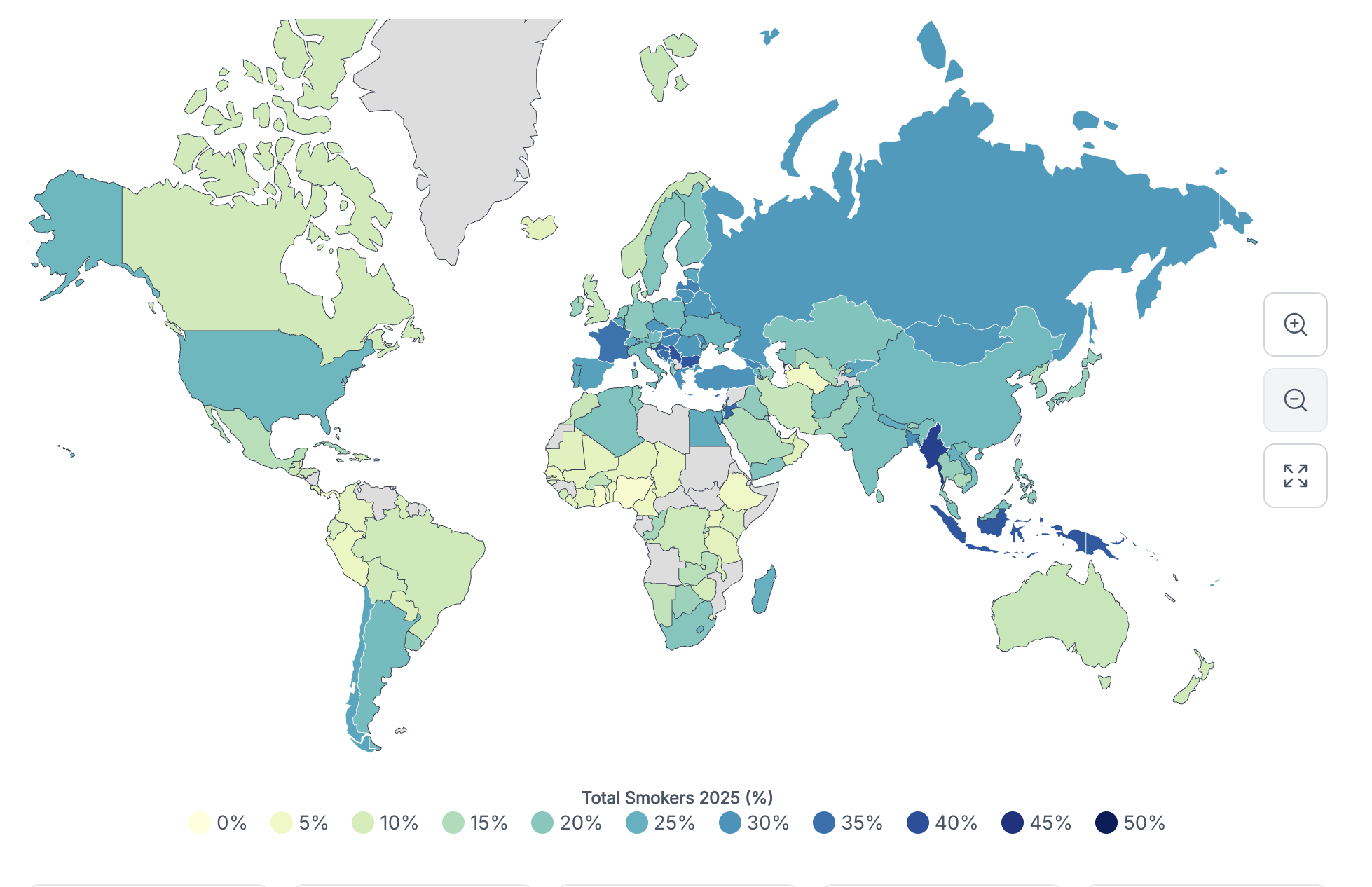
2. “At present, 66 Australians die every day from the effects of smoking – not from an addiction to nicotine, but from the toxic delivery mechanism of cigarettes.”

Comment: If cigarettes did not contain nicotine, few if any people would smoke. Nicotine in itself is far from benign as these papers show, but it is the essential highly addictive cheese that baits the deadly mousetrap. Nicotine is the sina qua non of smoking. And we are steadily becoming aware of an increasing number of health problems from vaping (see reviews here).

3. “Legal cigarettes are taxed at rates so punitive that they have become virtually inaccessible to many, while vaping devices … are rendered unobtainable through deliberately restrictive access avenues.”

Comment: The corollary of the argument that cigarette tax is “punitive” is that making them less expensive would be somehow … compassionate? Tobacco companies engage in price discounting and have always fought tobacco tax rises because they are acutely aware that high price depresses demand. I’m aware of no government which has ever reduced tax on cigarettes to make them more affordable, a truly perverse step that would encourage uptake and depress quitting. It would be literally killing with  kindness. And vapes being “unobtainable”? Any of Australia’s 5800+ pharmacies not already selling them can order them in.

4. In Australia only a “handful of well-intentioned but misguided health groups” support the government’s policies on vapes. “Nearly everyone else” opposes them.

Comment : Below are two columns. The one on the left shows the “handful” of “misguided health groups”. The other, “nearly everyone else”. Notice any pattern here, Ms Patten?

The graph below from the latest AIHW National Drug Household Survey shows support for action on vaping in the Australian community. There are few hot button issues in Australia that attract higher public support than vaping control (see here for comparisons and the lame efforts of vape lobbyists to demonstrate that night is actually day).

5. “Around the world, doctors, scientists and governments have embraced harm reduction and acknowledged that prohibition does not and cannot ever work”

Comment: Here is a VERY long list of doctors and scientists around the world who have major concerns about the safety and effectiveness of vapes. And here in great detail is information about the many nations which either ban vapes completely  (33) or regulate them in ways that many vaping advocates oppose. 

Predictably and very tediously, the boo-word “prohibition” makes an  appearance. If vapes are “prohibited” but available in pharmacies, then by the same reasoning, Australia “prohibits” the 1000s of prescription drugs also only obtainable via pharmacies. Tell that to the millions of Australians who used some 335.8million scripts which were filled in a recent year in a population of 26 million people (and that’s not even counting the number who go to pharmacies for non-prescription items  … including vapes with <20mg/mL nicotine which are OTC).

In any event, the idea that “prohibition” never works is contradicted by considerable evidence (see here). Most governments, including Australia, have prohibitions on goods and substances for a plethora of reasons including biosecurity, public safety (eg fireworks, laser pointers, flick knives, explosives, asbestos, DDT, leaded petrol and paint) and intellectual property. In 1996 Australia prohibited semi-automatic rifles and pump action shotguns and saw a sustained halt to mass shootings.   The death of a friend’s son from adding caffeine powder to a drink, saw it banned. While “everyone knows” alcohol prohibition failed, Australian drug and alcohol expert, Wayne Hall, has documented in detail the considerable benefits that  flowed from the US alcohol prohibition (1920-1933).

6. “And in countries where these products are promoted, smoking rates have plummeted.” Britain has seen smoking “drop steeply in the past five years, from 18 per cent to 11.6 per cent.”

Comment: In England, e-cigarette use rose sharply from 2021, but this increase was not accompanied by a faster decline in smoking rates between 2016 and 2023 among 18–24 and 25–44 year-olds. Even worse, among those aged 45 and over, the decline in smoking actually slowed._

Australia which has tighter regulation of vapes than Britain, the UK, Canada and New Zealand, has also seen smoking prevalence fall in recent years. Here are the most recent official statistics on smoking prevalence for several comparable countries.

Australia (2022-23 14+) 10.5% current and 8.3% daily  — all combustible tobacco products

Canada (2022 15+) 10.9% current in last 30 days, 8.2% daily, cigarettes only

Europe (all EU members 2019 15+) 18.4% daily, cigarettes only

New Zealand (2022-23 15+) 8.3% current and 6.8% daily –all combustible tobacco products.

UK (2023 16+) 10.5% current cigarettes only

USA (2021 18+) 14.5% any combustible product, 11.5% cigarettes

Clearly, free-for-all vaping policy is not necessary in getting smoking down.

7. “in the short and medium term, vaping poses a small fraction of the risks of smoking”

Comment: In the “short and medium term” are very carefully chosen words here. Smoking, like asbestos, doesn’t typically kill or even manifest in symptoms in the short term — in days, weeks, month or years but in decades. As 15 presidents of the Society for Research into Nicotine and  Tobacco wrote in 2021 “There are no data on long-term health effects, reflecting the relative novelty of vaping and the rapid evolution of vaping products. Determining even short-term health effects in adults is difficult because most adult vapers are former or current smokers.” 

8. Because of the uptake of  so-called harm reduced products “Japan, too, has reduced its smoking rate by more than 30 per cent in seven years”

Comment: For cultural reasons, there have long been huge differences in smoking between Japanese men, (currently 24.8%) and women (6.2%). Australia has not seen male smoking rates as high as 24.8% since 2001 – nearly a quarter of a century ago.  Japan might well look to Australia to learn a thing or two about how to really get smoking down, not the other way round.

9. “New Zealand’s progressive policies on vaping and nicotine have it poised to join Sweden as a smoke-free nation.”

Comment: New Zealand has Patten-approved vaping policies (it also has the least affordable cigarettes in the world (see graph below) which almost certainly explains some of the country’s declining smoking rates).  But New Zealand’s youth vaping rates are of great concern. 

The only study to compare adolescent smoking trends before and after e-cigarettes became available in New Zealand found that progress in reducing adolescent smoking significantly slowed following the emergence and rise of vaping. The most recent data show that NZ had the first increase in a decade in daily smoking among adults (age 15+ in NZ health survey) from 6.8% in 2023 to 6.9% in 2024, despite daily vaping continuing to rise rapidly from 9.7% to 11.1% over the same period.

10. “The message is clear: when governments allow and encourage safer alternatives, lives are saved and deadly smoking rates decline. They are also not experiencing illicit tobacco wars.”

Comment:This is a sweeping generalisation. Where are the data on changing death rates (“lives are saved”) since vaping commenced? Why is it that smoking rates are also declining in Australia despite laws not being like Fiona wants them?

Sorry, it is patently untrue to say that there is no criminal involvement in illegal tobacco and vapes in nations like the UK and USA which have liberal vape access policies. See details here.

11. “Vaping, the most successful smoking cessation tool on record, is met with the harshest prohibitions.”

Comment: “Prohibitions” again ….zzzzz. Claims that vapes are the most successful way of quitting smoking disguise the fact that this “success” is pretty dismal. If any doctor tried to tell me any “successful” drug she was prescribing me had a 90% failure rate, I’d look for another doctor. But this is the language of success favoured by vaping advocates. Unequivocally, the most successful way of quitting, if your key criterion here is the sheer numbers of successes year in and year out, is unassisted quitting –cold turkey. But quitting has become dominated by commodified solutions pushed by vested interests. If you can’t sell it, don’t mention it.

12. “Australians are increasingly turning to black market tobacco and vapes; overall smoking rates are stagnating, even increasing in some disadvantaged communities and preventable deaths continue to mount.”

Comment: Smoking rates are not stagnating in Australia. The latest data point (2022-23) shows that compared with the previous survey data year (2019) the absolute falls in the prevalence of daily smoking (-2.7%), of current smoking (-3.5%) and the growth in quit proportions (+7.7%) were all at record levels. These are hard measures of smoking declining in the population and of quitting increasing.

12. “The mere possession of a vape in many states attracts thousands of dollars in fines, and even prison terms. In the ACT, the possession of a nicotine vape means you can be jailed for two years and fined $32,000.”

Comment: Correct, Both the ACT and Vic do not provide exemptions for possession of non-therapeutic vapes for personal use. Unless state legislation specifically says something else, these provisions just follow whatever arrangements were in place with regard to all S4 medicines in the jurisdiction.

In ACT, the penalty is 200 penalty units ($32k for an individual or $162k for a corporation), imprisonment for 2 years, or both.

In Victoria, the penalty is 10 penalty units ($2,035.10).

But significantly, what Patten doesn’t tell us here is that in order for these penalties to arise, the person would have to be charged by police and convicted by a court. Neither police in Victoria or the ACT are charging individuals for possession of non-therapeutic vapes. Searches of case law indicate that no jurisdictions appear to be charging for individual possession. So this is just bluster.

Are smoking and vaping now endangered public sights?

30 Wednesday Oct 2024

Posted by Simon Chapman AO in Blog

≈ Leave a comment

Tags

e-cigarettes, smoking, sydney, vaping

Only 8.4% (and falling) of Australians over 18 years now smoke daily. Just three percent (also falling) of senior high school students at least smoke weekly, a similar situation that exists in the USA, the UK  and Canada. A recent editorial in the American Journal of Public Health stated “By any measure, youth smoking [in the USA] has nearly ceased to exist”.

Smoking has long been banned in Australia on all public transport, in indoor workplaces including bars, clubs and restaurants, many stadiums and an increasing number of outdoor café dining and coffee areas do not allow smoking. The map below shows a tiny percentages of Australian homes allow smoking inside.

Proportion of non-smokers who report living in a household where: a smoker smokes inside the home; a smoker smokes outside the home; or there is no smoker in the household, 2019, by state/territory. Source

Some local governments have banned smoking in outdoor shopping malls. Smoke-free stadiums are now commonplace. I went to an open-air night time Paul Kelly concert 10 years ago at Taronga Park Zoo where stage announcements directed smokers to go to a section way up the back and away from the crowd. I took a look and it was empty.

In 2008, I co-authored a highly accessed and cited paper on markers of the denormalisation of smoking and the tobacco industry. In it we catalogued a wide range of ways that the identity of smokers has been spoiled from the days when smoking was considered convivial, sophisticated and dripping with the multitude of positive semiotic signification purposefully bestowed upon it by marketing, advertising and smart packaging. In 1992, the single most common feature sought by those advertising for housemates was being a non-smoker. In 2004, only 2% of people using Australia’s largest dating site declared they were smokers.

Denormalisation works ‘‘to change the broad social norms around using tobacco—to push tobacco use out of the charmed circle of normal, desirable practice to being an abnormal practice’’. When smoking loses its public and political charm, when most people don’t smoke, when 90% of remaining smokers regret ever having started and when parents who hope their kids will grow up to smoke are as rare as rocking horse shit, governments know they have a huge mandate to introduce policies that will drive it down, as has been happening since the 1970s.

Rise and fall of vaping?

Over the last few years, I’ve often heard people remark that they seldom see people smoking these days. In recent years vaping seemed to be something we saw much more often, mostly because of the ostentatious look-at-me clouding plumes and the frantic rapid hand-to-mouth frequency of puffing. But after October 1, 2024 when the Commonwealth government outlawed vaping sales from anywhere but pharmacies, vape prices skyrocketed and many small illegal retailers have likely been understandably fearful of the large fines. Many “recreational” vapers may have reduced or stopped smoking. I pass 22 tobacconists and “convenience stores” on my daily walk. Last week I saw not a single customer in any of them on four walks.

No airline allows vaping on board, and train stations make regular announcements warning about platform vaping being banned. Most Australian governments have banned the use of vapes in all areas where smoking is not allowed by law.

So the last bastions of public smoking and vaping today remain some open air spaces like streets, parks, beaches.  But how often now do we even see smoking and vaping these days? Curious about this, for three consecutive mornings this week I set out to count how many people I saw smoking or vaping while I walked through two inner west suburbs.

On each of the three walks, I walked around 12,000 steps from around 7.45am -10am.  I wanted to quantify a strong impression that we don’t often see people smoking or vaping in public these days.

In each hand I carried a thumb-click mechanical digital counter. One for people smoking or vaping and the other for people not doing so (see photo below).

My route took me through the hipsterville shop, restaurant and café high streets of Enmore and Newtown at a time when many were on their way to work, waiting at bus stops, entering Newtown railway  precinct, having their morning coffee or like me, walking for exercise. Those with nicotine dependence can often be seen dosing before getting on trains and buses and lighting up immediately on alighting. So I spent 30 minutes counting commuters entering and leaving Newtown station, wanting to include what I predicted might be a visibly higher rate of smoking or vaping there.

It’s easy to see someone smoking. They are either actively drawing on a cigarette or holding one in their hand or lips. Vaping is similarly easy to spot, although if someone is hiding a vape in a closed hand or keeping it in a pocket between pulls, this would cause underestimates of its prevalence.

But I was not trying to estimate smoking or vaping prevalence. My objective was to try and count the prevalence of actual smoking and vaping in an outdoor setting in the way that an ordinary person might observe people around them as they moved normally on their passage through streets. I was not in any way trying to count smokers and vapers (so including those who might have vapes in their pockets), but rather active smoking and vaping.  Where I came to a situation where a group of people were gathered such as at pedestrian crossing or a bus stop, I stopped too, to carefully check each person I could see. I did not count children in school uniform on the way to school, or infants with parents.

In total I saw 3529 people over the three days observations. Of these, just 38 (1.1%) were smoking.  I saw just 3 (0.09%) people vaping. Only one was smoking at a table outside a café. Those smoking or vaping were so scarce that some small patterns could be discerned. With few exceptions, those smoking looked 70+. There were two spots on my route where I saw at least one smoker on each day. Some at those spots were also begging for change.  Of the very few younger people (teens, 20s) who were smoking, nearly all had “attitude” (goths, punks). Several were south and east Asian men.

These data are only a street epidemiological snapshot of what was happening in two Sydney suburbs on three (sunny) mornings across two hours. But the daily percentages were very similar. My thumb clicking the “not smoking” counter risked giving me repetitive strain injury, while my thumb recording smoking and vaping nearly went to sleep. Smoking and vaping have not vanished from public sight, but they both look decidedly endangered.   

I’m planning to gather the same data across different locations and at different times to see if there is a range.

The imminent death of teenage smoking

15 Tuesday Oct 2024

Posted by Simon Chapman AO in Blog

≈ Leave a comment

Tags

e-cigarettes, health, smoking, vaping

[extra material added 17 Oct 2024 — see Dai et al below]

By any measure, Ken Warner, Avedis Donabedian Distinguished University Professor Emeritus of Public Health at the University of Michigan, is one of the giants in the history of tobacco control. I have known Ken since the  early 1990s, after he editorialised one of my earliest papers. We were both 2003 recipients of the American Cancer Society’s global Luther Terry Medal and have had decades of mutual respect.

He has written a glowing endorsement for one of my books and references for promotions and awards.  When I retired from the University of Sydney in 2015, my head of school invited me to select a global figure who could be the main speaker at my festschrift. I didn’t hesitate to name Ken, who gave this lecture after which we spent a few great days on the NSW north coast.

Ken Warner 21 May 2015, Sydney University

At that time Ken was showing early enthusiasm for the promise of e-cigarettes as a major new weapon in reducing smoking and the diseases it causes. I was far more circumspect, having provided one side of a debate in the BMJ in 2013 and a crystal-balling piece on the promises and threats  in 2014.

In the years since, I’ve seen him rapidly firm in his positive views about the public health importance of vaping,  In 2018, an internal document  from the vapes manufacturer Juul Labs included Ken’s name on a list of ratings of 18 “collaborators” ranking him 7 out of a maximum 10  and noting that he was “positive on all scenarios” about vaping.  I was listed as one of 10 “current opponents”.

We have rarely exchanged views on the issues in the nine years since his trip to Sydney, although I have received comments from friends of him eye-rolling when my name has come up. He’s a true believer in vaping, while I’m a sceptical apostate in circles he frequents.

Warner has just published a piece in the American Journal of Public Health titled  Kids are no longer smoking cigarettes: why aren’t we celebrating. It’s generally excellent, celebrating the near-to-zero high school smoking rates in the US, and principally attributing the declines to the unabating massive cultural denormalisation of smoking (“The principal answer is a major change in social norms”) This was set in motion by the application of evidence-based policies about what would drive youth smoking down across whole populations.  He’s incredulous – as am I – that not more prominence and celebration has been made of youth smoking all but having disappeared.

He declares, and I again agree, that “By any measure, youth smoking has nearly ceased to exist.” The nearing extinction of youth smoking has confirmed tobacco control as the poster-child of chronic disease control. The achievement is precious silverware that has been hard fought for and needs vigilance against both predators and complacency to ensure that it will never rise again.

Warner wonders whether the tobacco industry “may be giving up their age-old pursuit of ‘replacement smokers’”, its coded euphemism for recruiting new teenage smokers. Is there anyone who believes that they would find these developments a bitter, force-fed pill that they would dearly love to reverse?

Here are the US data on 8-12th graders’ 30 day smoking.

Source

We have a very similar situation in Australia (see chart below), with smoking in the last week falling between 1999 and 2022-23, the latest data year available. The US has seen senior high school prevalence drop like a stone from 36.5% in 1997 to 1.9% in 2023. Australia has seen the same age group’s weekly smoking rate fall from 30% in 1999 to 3% in 2022-23 (monthly smoking is 3.4% (12-15y) and 5.2% (16-17y). The US is thus a little ahead of Australia with teenage smoking, with both nations seeing smoking spiralling toward tiny proportions.

Source

However, there are several points in Warner’s paper which require comment when it comes to some of his assertions about vaping.

Warner’s presentation of the US data frames teenage vaping as predominantly a phenomenon of kids who smoke also vaping. He writes that:

“In 2022, 9% of never-smoking high school students had vaped in the past 30 days, 3% frequently (≥ 20 days). In contrast, 54% of ever-smoking students had vaped in the past 30 days, 34% frequently. Still, that 3% of never-smoking students vape frequently is a legitimate source of concern.”

Here, highlighting the much larger proportions of smokers who vape gives the impression that it’s overwhelmingly school students who have smoked who dominate teenage vaping in the US, with those who’ve never smoked, being comparatively less likely to be vaping.

But looking at the numbers  behind these proportionspaints a very different picture. 

With never-smoking youth being (by far) in the majority, even small vaping participation rates among them could translate to greater numbers of vapers than among the much smaller proportions of youth who smoke. So here’s how the numbers fall.

The table below constructed from the dataset here  by colleague Sam Egger shows that of 15884 students, 1265 vaped in the past 30 days who had never smoked, compared to 931 who had ever smoked. In other words, in terms of sheer numbers, the problem of vaping is worse for the never-smoker group compared to ever-smoker group.  So if you saw random student vaping in the US, there would be a 58% (=1265/(1265+931)) probability that this vaper would be someone who had never smoked compared to a  42% probability that it would be someone who had ever smoked.

When it comes to more frequent vaping, this situation is reversed with 58% of those who vaped on ≥20 of past 30 days being ever-smokers (=583/(583+425)) compared with 42% who were never-smokers.

This way of looking at it presents the situation in quite a different light. Focusing on column percentages in the table below frames the situation as very much it being a case of smokers doing the vaping. But  focussing on row numbers  demonstrates that vaping is very much a more comparable phenomenon between ever- and never-smokers when it comes to actual numbers of youth who are vaping.

In Australia (see Figure 16), more than two-thirds (69%)  of 12-17yo school children who vaped  “reported having never smoked a tobacco cigarette before their first vape. One in five (20%) students who had never smoked prior to trying an e-cigarette reported subsequent smoking of tobacco cigarettes (i.e., at least a few puffs).”

Vaping by US high school students, 2022 in National Youth Tobacco Survey

 Never-smokeEver-smoke
 (n=14164)(n=1720)
Vaped in past 30 days
No12899 (91.1%)789 (45.9%)
Yes1265 (8.9%)931 (54.1%)
Vaped on ≥20 of past 30 days
No13739 (97.0%)1137 (66.1%)
Yes425 (3.0%)583 (33.9%)

Frequencies are weighted by weights provided by NYTS to account for the complex survey design and to produce nationally representative estimates. Excludes n=234 with missing data on vape or smoke variables

Is vaping by kids all but benign?

Warner’s paper emphasises that vaping is far less dangerous than smoking, and that nicotine in itself in the doses obtained through smoking or vaping is likely to cause inconsequential health problems, apart from the non-trivial economic costs of nicotine dependence.  I have several caveats about his summary.

There is no shortage of evidence that vapes deliver often far less of key carcinogens and toxicants than do cigarettes. This evidence includes biomarker research showing that vapers have less of these nasties in their bodies. Warner summarises this as: “In fact, smokeless tobacco products sold in the United States create substantially less risk than does smoking”

But vapes and cigarettes are very different beasts: cigarettes are the Mt Everest of risk but vapes contain chemicals that cigarettes don’t contain, and the puff parameters for vaping are very different from those for smoking.

“the contention that nicotine can damage developing adolescent brains or harm health in other ways”.

Here Warner argues “Most research regarding brain effects is based on animal models but with potential relevance for humans.” Prominent vaping advocates have often ridiculed the relevancy of animal studies for humans, elevating this to meme status in true believers about vaping.  But “potential relevance” is surely a huge understatement. Of the 114  Nobel Prize winners in  medicine and physiology between  1901 and 2023, 101 (88.6%) used animals in their research.  Now what would such eminent researchers know that vape advocates seek to dismiss?

Warner continues: “the lack of evidence of brain damage in previous generations of people who smoked mitigates this concern.”

This is quite a sweeping statement, unreferenced.

It’s been frequently noted that smokers are increasingly concentrated in less educated, economically disadvantaged  sub-populations.  Low education and low IQ are clearly correlated, so it’s unsurprising that cognitive concerns may be more prevalent in smokers. But there is also significant evidence that smoking may also be causative for cognitive and psychiatric problems.

For example, in this cohort study of over 20,000 Israeli military recruits, analysis of brothers discordant for smoking found that smoking brothers had lower cognitive scores than non-smoking brothers.

This prospective cohort study examined the association between early to midlife smoking trajectories and midlife cognition in 3364 adults  (1638 ever smokers and 1726 never smokers) using smoking measures every 2–5 years from baseline (age 18– 30 in 1985–1986) through year 25 (2010–2011). Five smoking trajectories emerged over 25 years: quitters (19%), and minimal stable (40%), moderate stable (20%), heavy stable (15%), and heavy declining smokers (5%). Heavy stable smokers showed poor cognition on all 3 measures compared to never smoking. Compared to never smoking, both heavy declining and moderate stable smokers exhibited slower processing speed, and heavy declining smokers additionally had poor executive function.

In this Finnish longitudinal cohort twin study data (n=4761) from four time points (for ages 12, 14, 17, and 19-27 years) “were used to estimate bivariate cross-lagged path models for substance use and educational achievement, adjusting for sex, parental covariates, and adolescent externalizing behaviour.”

Smoking at ages 12 and 14 “predicted lower educational achievement at later time points even after previous achievement and confounding factors were taken into account. Lower school achievement in adolescence predicted a higher likelihood of engaging in smoking behaviours … smoking both predicts and is predicted by lower achievement.”

In a cohort study of 11 729 children with a mean age of 9.9 years at year 1 Dai et al used structural magnetic resonance imaging measures of brain structure and region of interest analysis for the cortex, 116 children reported ever use of tobacco products.  Here’s an edited version of the results and conclusions.

“Controlling for confounders, tobacco ever-users vs nonusers exhibited lower scores in the Picture Vocabulary Tests at wave 1 and 2-year follow-up. The crystalized cognition composite score was lower significantly lower among tobacco ever-users than nonusers both at wave 1 and 2-year follow-up. In structural magnetic resonance imaging, the whole-brain measures in cortical area and volume were significantly lower among tobacco users than nonusers. Further region of interest analysis revealed smaller cortical area and volume in multiple regions across frontal, parietal, and temporal lobes at both waves. In summary, initiating tobacco use in late childhood was associated with inferior cognitive performance and reduced brain structure with sustained effects at 2-year follow-up.”

Nicotine not a culprit?

Warner states that “nicotine per se is not the direct cause of the diseases associated with tobacco. Rather, it causes persistent use of the products that expose users to the actual toxins.”  This proposes that nicotine is not a health problem, only a benign vector for health problems.  

In 2019 I compiled this selection of research about concerns with nicotine  published in notable journals including Nature Reviews Cancer, Lancet Psychiatry, American Journal of Psychiatry, Mol Cancer Res, Critical Reviews in Toxicology, Carcinogenesis, Mutation Research, Int J Cancer, Apoptosis and  Biomedical Reports. These concerns are seldom mentioned by those who recite Michael Russell’s dictum that “People smoke for the nicotine but they die from the tar” as a talisman against any expressed concerns about nicotine.

I’ve also listed numerous recent reviews of the emerging evidence about vaping and precursors of respiratory and cardiovascular disease. This evidence hardly describes an assessment of vaping as a benign practice akin to inhaling steam in a shower or having a couple of cups of coffee a day,  analogies I’ve  heard used by vaping advocates.

Importantly too, there is no mention in Warner’s paper about two key ways in which vapes importantly differ from smoking.

A: Flavouring chemicals in vapes

Flavours are a leading factor that attract and keep people vaping: the beguiling cheese in the nicotine addiction mousetrap. But as has often been pointed out, none of the many thousands of flavours available in vapes have ever been assessed as safe for inhalation. Many of the chemical flavouring compounds in vapes have GRAS (Generally Regarded As Safe) ratings as food and beverage additives for ingestion. But it is elementary in toxicology that different routes of consumption (skin, inhalation, ingestion, rectal insertion) have different risk profiles.

Tellingly, no flavoured inhaled asthma or COPD medicines (used by hundreds of millions globally) have ever been approved by therapeutics regulators anywhere in the world, yet vaping advocates typically shrug dismissively about possible risks in the intensive inhalation of flavours in vapes.

Dow Chemical, a major manufacture of propylene glycol (the most common excipient in vape liquid) in 2019 explicitly named PG in vaping devices and accessories as a “non-supported application”.  With the vast earnings potential for Dow in embracing PG in vapes, clearly the risk exposure to the company in doing so must have been assessed as massive.

Warner cites several examples of the public and health professionals holding clearly incorrect views about particular dangers of vaping, as if the jury is already in on the net effects of harm into the future – the whole point with chronic disease control. Yet he sensibly agrees that it is too early to know if there will be any long-term health problems that might arise from vaping.  The median age for diagnosis of asbestos-caused mesothelioma is between 75-79. For lung cancer, it’s 71. If putative health problems from vaping have similar latency periods from first exposure to diagnosis, we may have a long wait before this issue is settled.

B: Inhalation frequency

The average daily smoker in Australia in 2022-23 smoked  15.9 cigarettes day and a typical puff frequency per cigarette in leisurely situations is 8.7, giving 138 puffs per day. Observational studies of vapers show that average daily puff frequency on vapes is likely to be north of 550 times. In one study (2016), researchers observed vapers using their normal vaping equipment ad libitum for 90 minutes. The median number of puffs taken over 90 mins was 71 (i.e. 0.78 puffs per minute or 47.3 per hour). Another (from 2023) found those using pod vapes took an average of 71.9 puffs across 90 minutes, almost identical to the 2016 study number.

But of course vapers do not vape across only one continuous 90 minute period each day. No studies appear to have calculated average 24 hour vape puff counts. But if we (conservatively?) assume 8 hours of sleep and 4 waking hours of no vaping, then a person vaping for 12 hours a day at this 47.3 puffs per hour rate, would pull 568 puffs across a 12 hour day deep into their lungs, 207,462 times in a year and 2.075 million times across 10 years.

This compares to daily smokers taking 138 puffs a day, 50,405 times a year and  504,050  times in 10 years: 4.12 times less. Cigarettes and vapes are very different products, but the almost frenzied puff frequency we see with daily vapers where each puff sees excipient chemicals like unapproved flavourants and PG pulled deep into the lungs throughout the day should raise red flags.

Australia’s approach to vaping regulation which I have strongly supported has landed at access by adults only via pharmacies, a ban on the importation of vaping products other than those destined for the pharmacy channel, and truly weapons-grade deterrent penalties for any person or corporation breaching these laws.

This has been the approach governments have long used to regulate access to methadone and other narcotics used in pain control, medicinal cannabis and every prescription pharmaceutical. Despite the demand for these products, no government is planning a free-for-all for these products in corner shops. It is very early days, with major busts of flagrant selling likely imminent. Australia has pioneered several tobacco control policies which have dominoed globally.  I expect to see the same happen with our vaping regulations.

Blog Stats

  • 166,011 hits

Top Posts & Pages

  • Why I’m not quitting Spotify because its owner has hugely invested in weaponry
  • About/CV
  • Vaping theology: 6 There’s nicotine in potatoes and tomatoes, so should we restrict or ban them too?
  • Regrets … I’ve had a few. Paul Hogan and his Winfield role.
  • China bans vape flavours, requires its exporters to "comply with the regulations of the destination country"
  • At Philip Morris International, it's business. As usual.
  • African music for beginners 1: Senegal
  • Sydney University awards Nick Greiner, former tobacco company chair, an honorary doctorate
  • The life you (don't) choose
  • Agnotology: the study of the willful production of ignorance

Comment Policy: No anonymous or pseudonymous posts will be published

Recent Posts

  • “Decent law abiding shooters” pose no public risk. Oh wait …
  • Brushes with fame
  • Australia takes off the gloves on illegal tobacco while ‘lower the tax’ fantasists plumb new absurdities
  • Egg on some faces: statisticians at 10 paces on the impact of New Zealand’s vape laws on youth smoking
  • Lowering tobacco tax to make illegal tobacco sales “disappear overnight”: at last we have a proposed figure and it’s an absolute doozie

Recent Comments

LAM Tai-Hing's avatarLAM Tai-Hing on The relentless commodification…
Terry Pechacek's avatarTerry Pechacek on The relentless commodification…
wmaziak's avatarwmaziak on Pssst … doctors can still pres…
tahirturk1's avatartahirturk1 on Precious objects
thelegalcoop's avatarthelegalcoop on Vaping theology 14: Policies t…

Archives

  • January 2026
  • December 2025
  • August 2025
  • July 2025
  • June 2025
  • May 2025
  • March 2025
  • January 2025
  • November 2024
  • October 2024
  • September 2024
  • July 2024
  • May 2024
  • April 2024
  • March 2024
  • February 2024
  • January 2024
  • December 2023
  • November 2023
  • October 2023
  • September 2023
  • August 2023
  • July 2023
  • June 2023
  • May 2023
  • March 2023
  • February 2023
  • January 2023
  • December 2022
  • November 2022
  • October 2022
  • August 2022
  • June 2022
  • April 2022
  • March 2022
  • February 2022
  • January 2022
  • December 2021
  • October 2021
  • September 2021
  • August 2021
  • June 2021
  • May 2021
  • April 2021
  • March 2021
  • February 2021
  • January 2021
  • December 2020
  • November 2020
  • October 2020
  • September 2020
  • August 2020
  • July 2020
  • June 2020
  • May 2020
  • April 2020
  • March 2020
  • February 2020
  • January 2020
  • December 2019
  • November 2019
  • October 2019
  • September 2019
  • August 2019
  • July 2019
  • June 2019
  • May 2019
  • April 2019
  • March 2019
  • February 2019
  • January 2019
  • December 2018
  • November 2018
  • October 2018
  • September 2018
  • August 2018

Categories

  • Blog

Meta

  • Create account
  • Log in
  • Entries feed
  • Comments feed
  • WordPress.com

Blog at WordPress.com.

  • Subscribe Subscribed
    • Simon Chapman AO
    • Join 196 other subscribers
    • Already have a WordPress.com account? Log in now.
    • Simon Chapman AO
    • Subscribe Subscribed
    • Sign up
    • Log in
    • Report this content
    • View site in Reader
    • Manage subscriptions
    • Collapse this bar
 

Loading Comments...