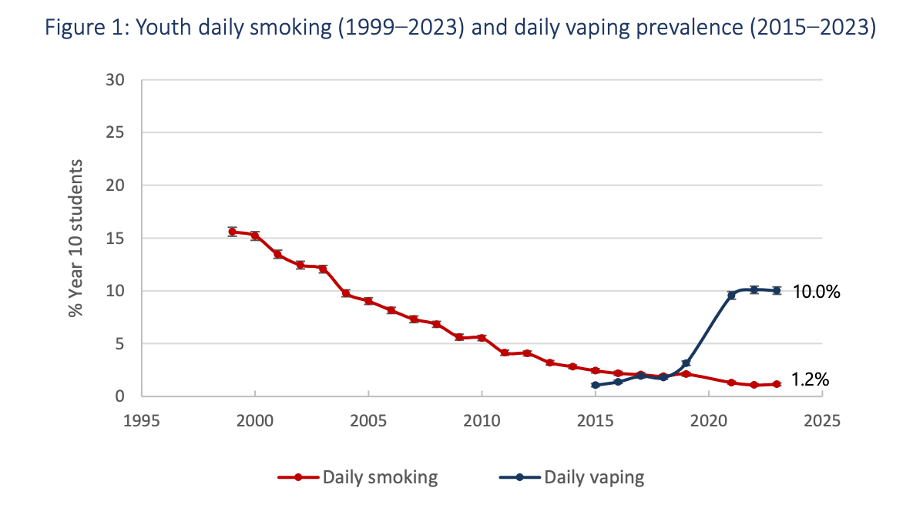
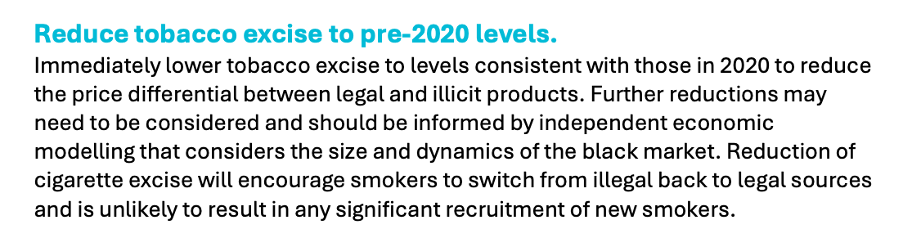
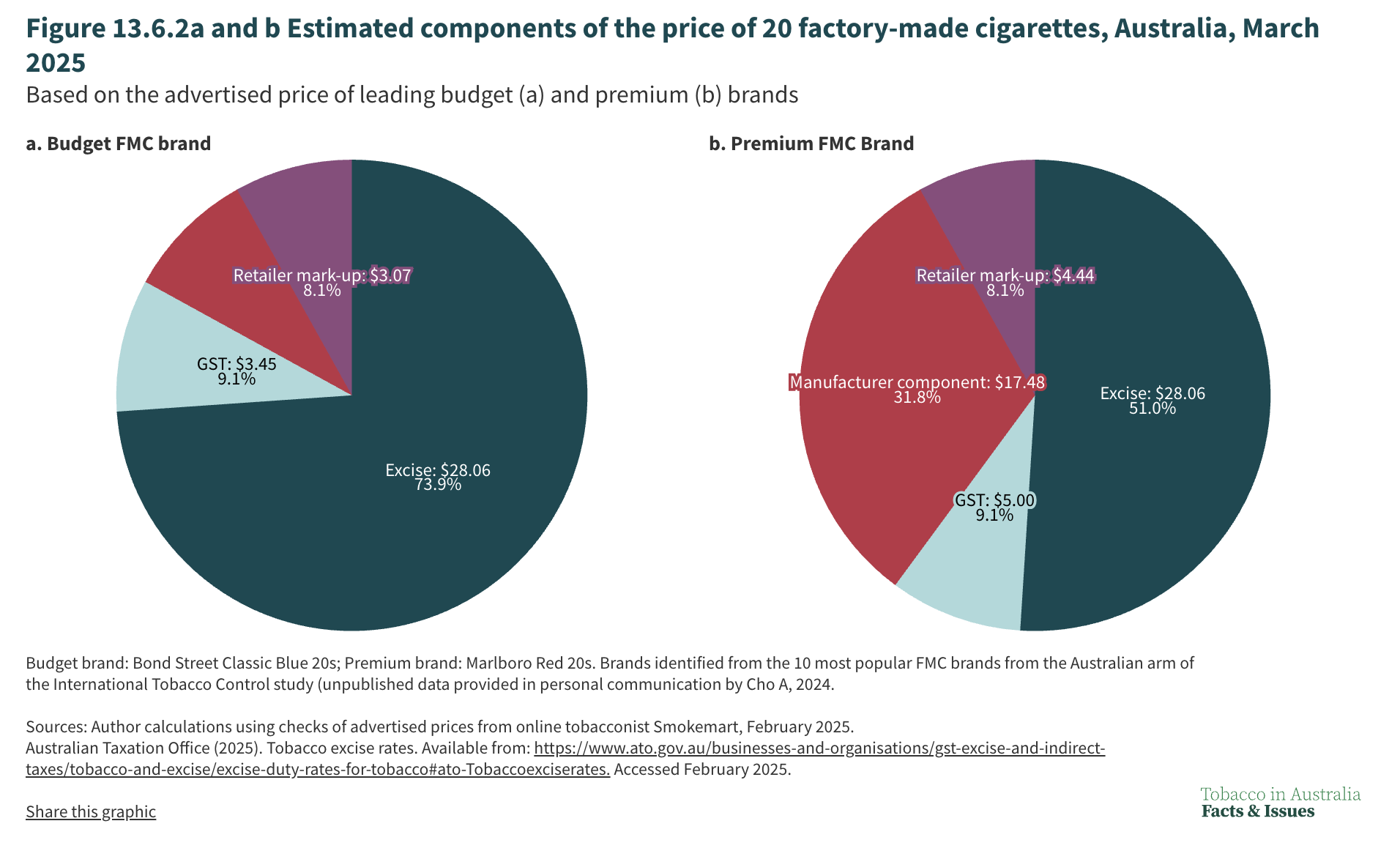
Many Australians will tell you that smoking rates here are going up. It’s so obvious, right? Just look at all the illegal tobacco shops that have sprouted across the country selling cigarettes at prices that haven’t been seen here since the late 1990s. Those who smoke the most (low income groups) no longer have the disincentive of high prices to check their smoking. Few kids can afford a $50 pack of legal cigarettes, but many can easily afford $10-$15.
So “everyone knows” that the wheels have therefore fallen off Australia’s historic record of reducing smoking. We are no longer on the front row of the grid of nations who are making smoking history by sending it to record lows. There’s no shortage of ignorant or innocent down-in-the-last shower experts ready to repeat this truth.
Well, hold the press …
The latest national survey of more than 17,500 people aged 14 and over across Australia took part in the National Drug Strategy Household Survey (NDSHS) with data collected from June to December 2025 has been published today by the Australian Institute of Health and Welfare (AIHW).
In 2025, just 5.6% of people aged 14 and over smoked daily, the lowest rate ever recorded since the AIHW began conducting NDSHS surveys in 2001 when the rate was 19.5% (3.5x more than now). In 2022-23 – the last time the national survey was undertaken, the daily smoking rate at 8.3% — an absolute unprecedented fall of 2.7% (and a whopping percentage fall of 32.5%).
Current smoking (at least once per month) is now 7.8% in those aged 14 plus.
Vaping down too
In 2024, the Australian government restricted legal access to vapes to pharmacies, although illegal sales remain widespread. Daily vaping in those aged 14+ (3.6%) has plateaued since from 2022–2023, whereas it was previously increasing.
But current vaping (including less than monthly use) in 18-24 year olds was 14% in 2025, down from an alarming 20.6% in 2022-23, with no increase in smoking as those who opposed pharmacy access often confidently predicted would happen. The same pattern was seen among 14–17-year-olds: current vaping fell from 9.7% in 2022–23 to 6.4% in 2025. Overall, 6% of people aged 14+ vaped at least monthly.
These figures place Australia ahead of other comparable nations with established tobacco control programs on both current smoking and vaping, including the much-vaunted New Zealand rates, which are often held up as the gold standard (see table below). The latest (2024/2025) New Zealand data show 8.3% current smoking (compared with 7.8% in Australia) and 13.8% current vaping, more than double Australia’s rate. (See New Zealand data sources here and here).
| Country/region | Current smoking prevalence | Current vaping prevalence | Primary source |
| % (age, years) | % (age, years) | ||
| Australia | 7.8% (14+) | 6.0% (14+) | 2025 NDSHS |
| USA | 9.9% (18+) | 7.6% (18+) | 2024 NHIS; 2022 BRFSS |
| England | 10.4% (18+) | — | 2024 APS |
| England | 14.6% (16+) | 11.8% (16+) | 2023 Smoking Toolkit Study |
| Great Britain | 9.1% (16+) | 10.0% (16+) | 2024 ONS OPN |
| Canada | 10.9% (15+) | 5.8% (15+) | 2022 CTNS |
| New Zealand | 8.3% (15+) | 13.8% (15+) | 2024/25 NZ Health Survey |
| Europe | 24.1% (15+) | 3.0% (15+) | WHO Europe 2024; Eurobarometer 2023 |
^ Figures are from Tobacco in Australia (TIA) (9,10) except Europe figures, which are from WHO Europe/Eurobarometer, (11,12) and STS vaping, which is from STS analyses.(13) ^^ Two England rows are shown because APS and STS report substantially different estimates. * TIA labels GB ONS OPN smoking as 18+, but ONS reports it as 16+; the ONS age base is used here. Great Britain refers to England, Scotland and Wales, and excludes Northern Ireland. Source for bracketed references shown here
Findings are consistent with other recent surveys
The 2025 NDSHS results are icing on the cake of recent usage surveys conducted in NSW, Queensland, South Australia and with Roy Morgan data from 2022 to 2024. The precise rates of decline vary between studies, but all show that fewer people are smoking.
But … but ….
This news will cause acute dyspepsia in the handful of peripheral commentators who have attracted news spotlights by telling us all that tobacco control is failing in Australia because of high tax and restrictions on the sales of vapes (a bizarre claim because illegal vapes remain highly accessible).
Here are my predictions on how they will try to discredit the new data.
- Wastewater analysis shows total nicotine use is up
In June this year the Australian Bureau of Statistics (ABS) published a report on nicotine metabolites in Australian wastewater. The headline finding was that “The quantity of nicotine consumed in Australia increased by almost 40% from 2017 to 2025, with most of the increase occurring since 2021. Population growth over the period 2017-25 was 14%.”
So now that NDSHS data show both smoking and vaping were down in 2025, how can we reconcile this with the ABS nicotine wastewater data?
The ABS report emphasised that “While wastewater data provide reliable estimates of total nicotine consumption, they do not identify which products the nicotine came from.” Importantly, it also states that “It is not possible to discern whether the rise in per capita consumption reflects a rise in the number of people consuming tobacco and/or existing smokers consuming more.”
The NDSHS reports on smoking prevalence, not on nicotine consumption. But the possibility that existing smokers are consuming more nicotine is highly plausible.
Globally, vaping products are undergoing rapid and radical changes. Perhaps chief among these have been the rapid rise in availability and use of nicotine salts. These lower the pH balance of inhaled vapour, producing smoother “throat hit”. Lower pH allows vapers to comfortably inhale much higher nicotine concentrations. AS this has been happening, we have also been seeing the promotion and use of disposable vapes delivering enormous puff counts.
A US analysis found that monthly milligrams of nicotine sold in e-cigarettes increased by 249.2% between February 2020 and June 2024.
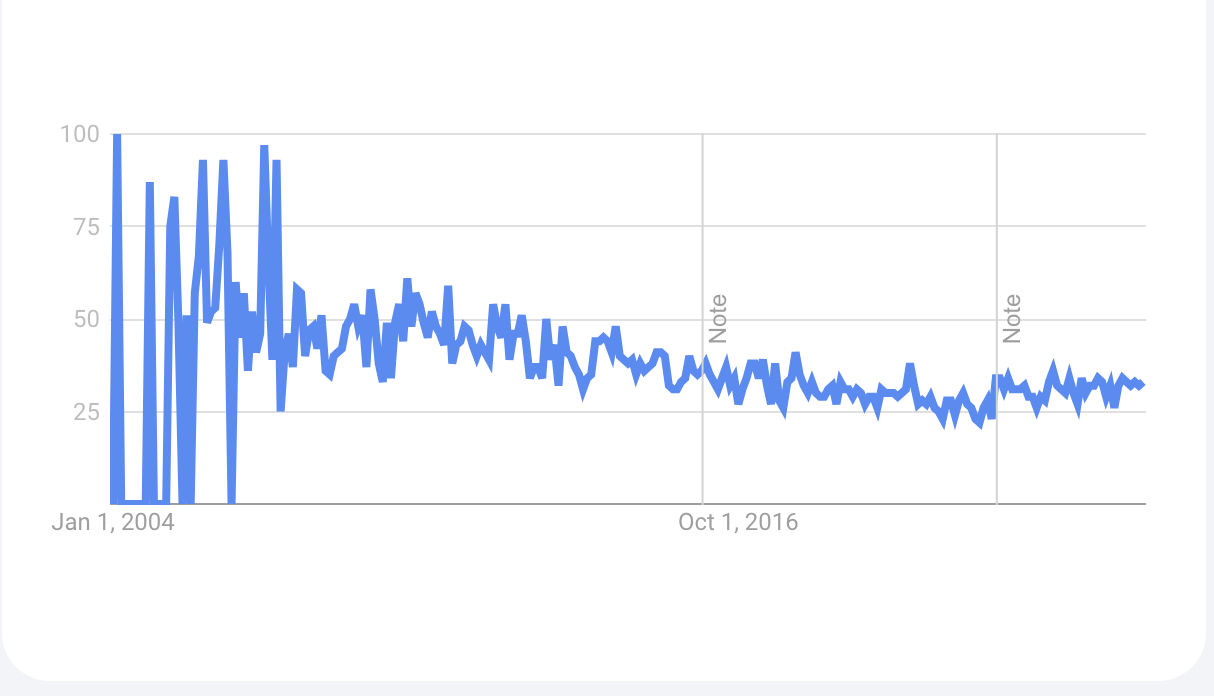
Here are examples from a Google search on “50,000 puff vapes”. It’s highly likely that these nicotine geysers are making a substantial contribution to wastewater even among a diminishing number of people who vape.

There’s also evidence of a recent uptick in nicotine replacement therapy, which would add to the volume of nicotine metabolites in wastewater.

- Many smokers and vapers questioned for the NDSHS will have lied
These critics will also say scornfully that it’s surely obvious that since a large volume of smokers and vapers are buying illegal products, many will fear trouble if they admit to breaking the law in a questionnaire. This is quite a puerile argument.
The small problem here is that no one has been prosecuted or fined for possessing illegal cigarettes or vapes, unless in commercial quantities. Those buying illegal nicotine products do it openly. The same NDSHS survey asks about illicit drug use where individuals have often been prosecuted and has published data since 2001.
If the AIHW contracted survey team were forwarding information to police gained from their surveys, they would be shut down tomorrow and their directors prosecuted for gross breaches of privacy and misleading conduct.
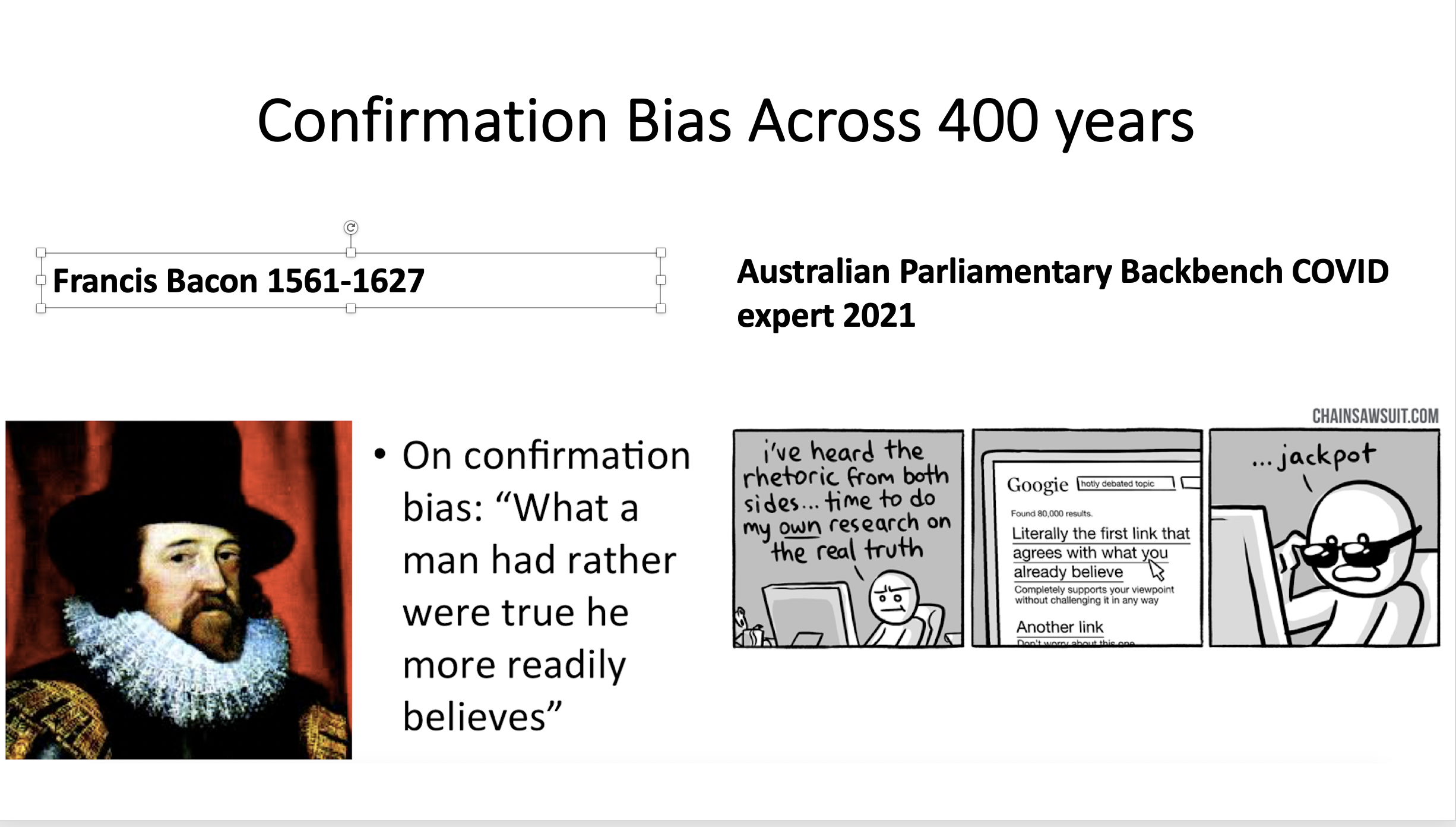
And had the 2025 findings shown that smoking had risen, it would have been impossible to find any of these critics who would not have fully backed its findings.
Why has smoking kept falling?
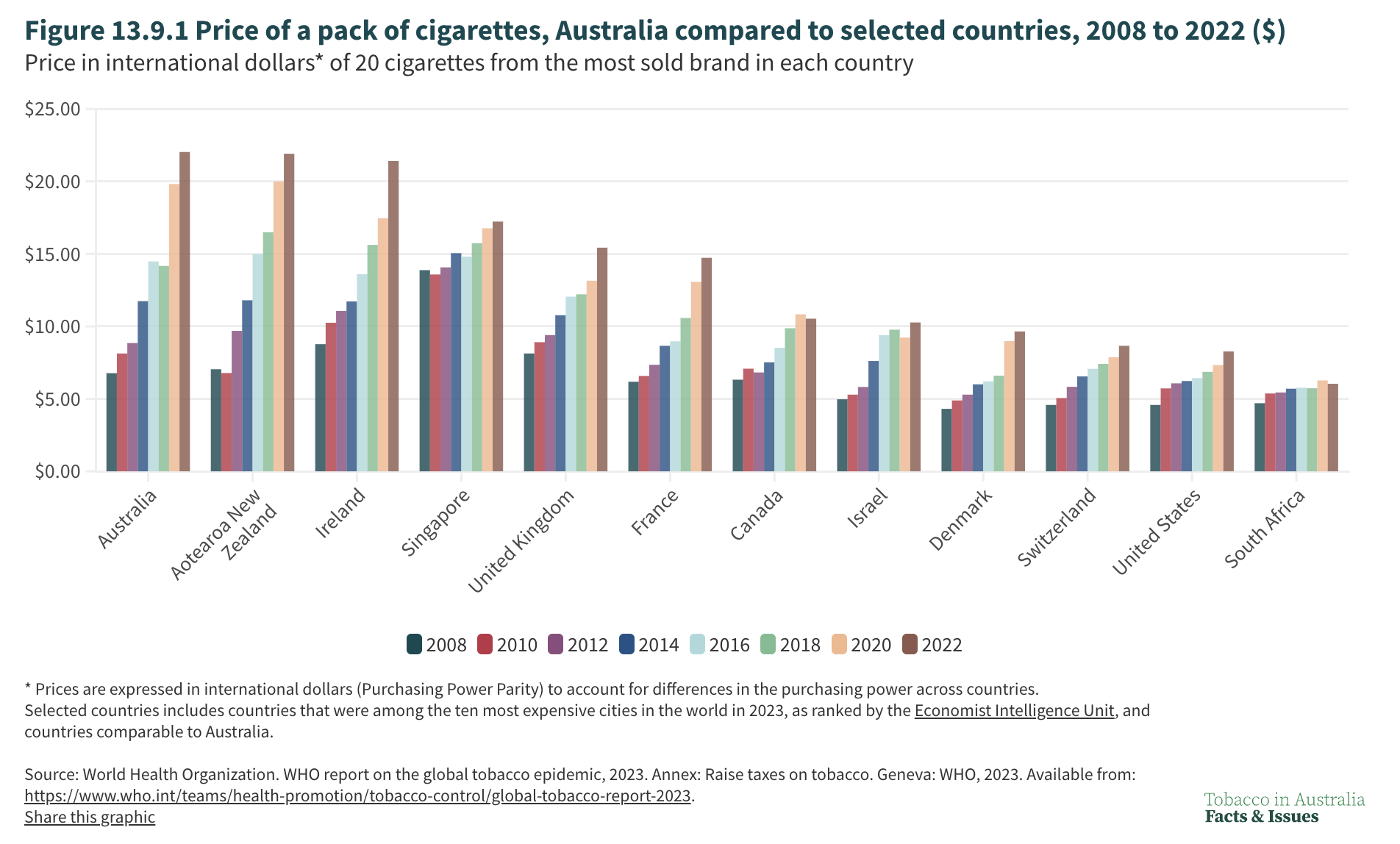
Price has always been a major factor explaining both smoking uptake and cessation. Many were therefore concerned that the widespread availability of dirt-cheap cigarettes would put the brakes on the continuing decline in smoking that Australia has enjoyed.
But the task of explaining why smoking has been falling for decades is far more than a simple adding of the sum of the impacts of the all the policies and campaigns we have used to reduce smoking. Trying to disentangle the precise impact of all of them is simplistic reductionist fantasy. In 2017, I wrote this column in The Conversation on the “policy termites” that were slowly eating out the foundations of smoking in Australia and elsewhere. In this review I wrote nearly 20 years ago with Becky Freeman on markers of the denormalisation of smoking, we catalogued a vast range of examples of the ways that the meaning of smoking has changed from something enticing and desirable to something regretted, resented and reviled.
In 2004 some 90% of smokers regretted ever taking it up. This proportion would be much higher today. I’ve never met a smoker who wanted their kids to take it up. The tobacco industry has been repeatedly ranked as ethical bottom feeders in polls on business ethics and trust. It struggles to attract high calibre staff. Most politicians would rather be photographed with the Grim Reaper than enjoying hospitality in a tobacco corporate sporting box.
In the 53 years since Australia introduced its first tobacco control policy (pack warnings), there rarely been a policy advocated to reduce smoking that has failed to be adopted by governments. The tobacco industry and its useful idiot acolytes have lost every policy battle they fought. There is no tobacco manufacturing or legal tobacco farming in Australia, all tobacco advertising and sponsorship has long gone. All indoor workplaces are smokefree. Tobacco packaging is the only consumer product where every square millimetre is regulated. Shops cannot display tobacco.
Today’s wonderful data reflect those successes and the political leadership that made it all happen. Lowering tobacco use and the diseases it causes is the whole point of tobacco control. Australia is well on track to get smoking to down 5% by 2030, and to see the end of smoking by kids. These are simply huge public health achievements.
My colleagues rate Health Minister Mark Butler in the highest pantheon of smart and effective federal health ministers, alongside Nicola Roxon. Australia leads the world in tobacco control. Thank you Mark and your parliamentary colleagues. Stay the course and let’s make smoking history.
Tailpiece 8.50am 17 Jul 2026
Well, we didn’t have to wait long for confirmation of my prediction above that “had the 2025 findings shown that smoking had risen, it would have been impossible to find any of these critics who would not have fully backed its findings.”
Here’s the inimitable vaping fanatic Pippa Starr on X
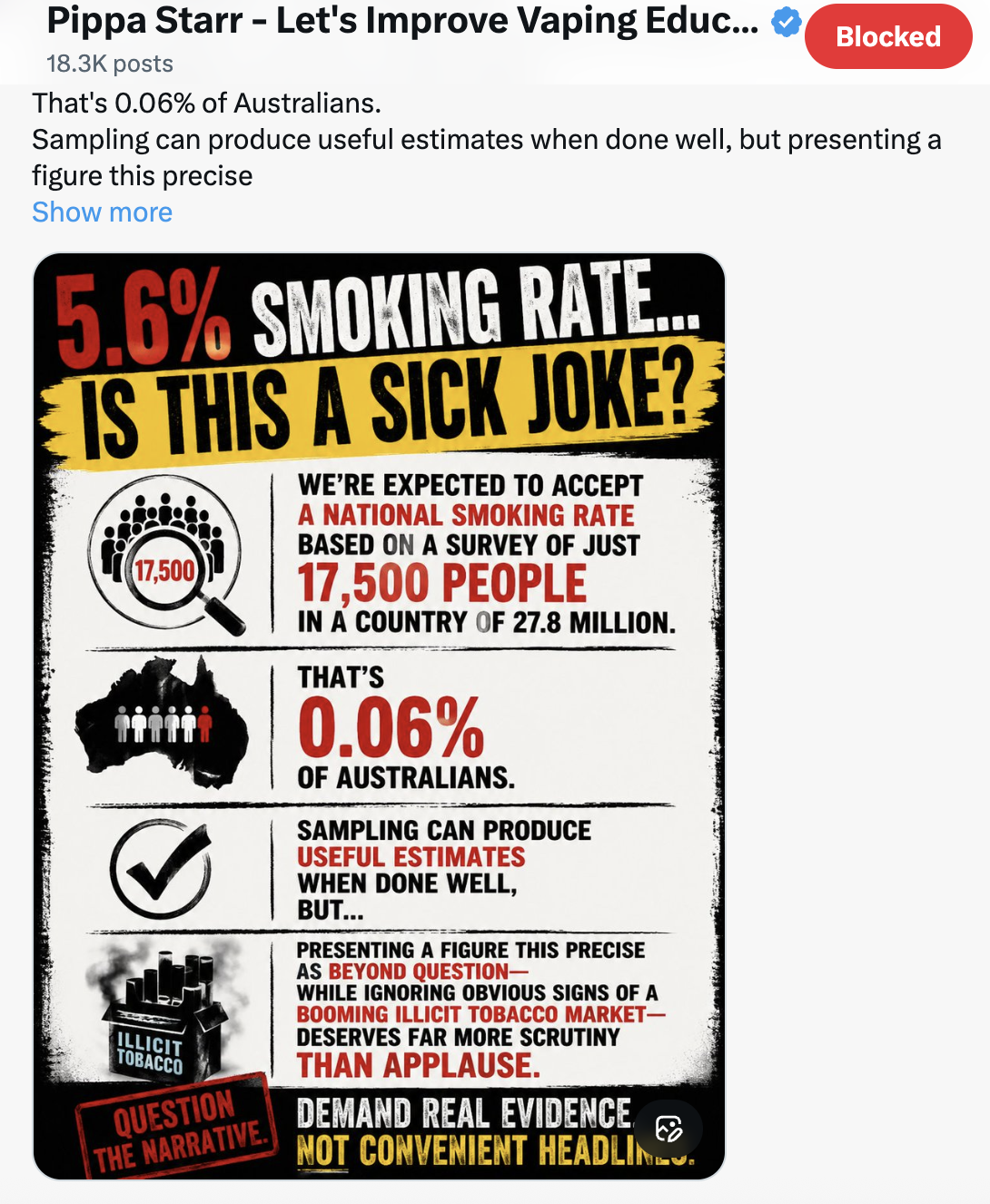
And here is a small selection of her past citing of earlier NDSHS data to argue her case. Their data was just fine then apparently, but not now that the findings are inconvenient.