
Tags
health, illicit-trade, politics, public-health, smoking, vaping
Labor’s stunning election victory and the relegation of the conservative opposition to likely years of political eunuch status opens up many opportunities across all areas of government. With health minister Mark Butler playing a powerful wingman role to the Prime Minister, he is in the driver’s seat to finish the historic job he started back in 2022 with regulating vaping. In the three years, Australian streets have been deluged by blatant law-breaking cheap tobacco and convenience shops selling smuggled cigarettes and vapes, since 2024 permitted to be sold only in pharmacies.
Butler’s deeply impressive leadership on vaping and tobacco reforms saw him carry forward a Labor heritage which started in 1973 when Gough Whitlam took the first step to ban tobacco advertising. Butler was Minister for Ageing and Australia’s first Minister for Mental Health in the Gillard Government when Nicola Roxon was the senior health minister and introduced the world’s first plain tobacco packaging bill, now adopted by 25 nations and under active consideration in another 14.
Like plain packs, the regulation of access to vapes to pharmacy sales is another world first. But Butler must be understandably frustrated by what has become an epidemic of political duck-shoving where some states have talked the supportive talk, but not walked the implementation and enforcement walk.
As a result, illicit vapes remain readily available mostly via the plague of “cheap cigarette” shops which lead their trade with lucrative totally illegal duty-not-paid smuggled cigarettes which also break Australia’s plain packaging laws.
So how has this got to the in-your-face blatant law-breaking it has, and what should happen to fix it?
Enforcement of the law
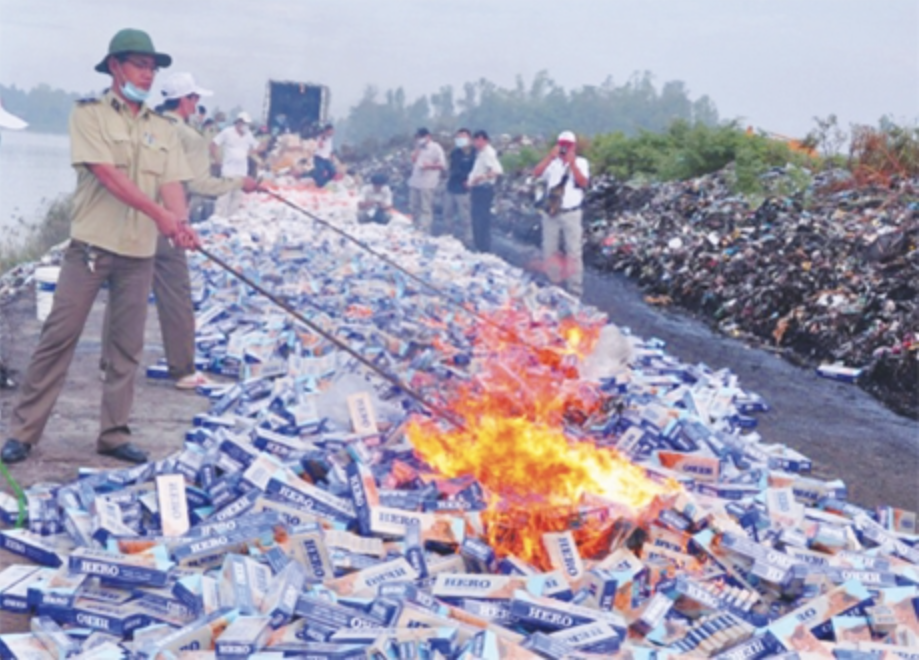
All states and the Commonwealth government now have in place laws that make selling vapes anywhere but in a pharmacy unambiguously illegal. Importing, wholesaling and retailing tobacco products which have evaded excise tax are all illegal under Commonwealth law, attracting eye-watering major maximum fines for large scale offenders and routine confiscation and destruction of stock.
But illegal sales of both vapes and tobacco are rampant with the Sydney Morning Herald noting that there are currently 60 “cheap smokes” shops in Sydney for every one McDonalds outlet. 824 have opened in recent years in the Inner West council region alone. This situation is most pronounced in NSW and Victoria, the two states yet to implement mandatory tobacco retail licensing, despite calls for years from public health experts for this to happen. Licensing provides a database enabling authorities to routinely check whether licensees are compliant with the law and the threat of removal of a license and close-down orders for those not.
However clearly, many now selling illegally will reason from several years of experience that no authorities have ever raided their shops, so why would things be any different if they bothered to not get a tobacco retailing license?
And that has been the elephant in the room sized problem that few will talk about. Most state health authorities seem purposefully blind to what everyone else can see: that there is a burgeoning forest of “cheap smokes” and convenience stores selling illegally which open every day with zero consequence.
How have they justified this wholesale neglect?
I recently had dinner with the head of a NSW state public health unit. I asked him what his unit was doing about enforcement of the laws on selling illegal tobacco and vapes. He confirmed very little was being done with the major reason being concern about staff safety. His staff were well aware and concerned that violent criminals are involved in the tobacco and vape trade, and of the screaming headlines of multiple arson attacks on tobacco outlets by rival tobacco supply gangs, particularly in Victoria. All illegal tobacco outlets have CCTV cameras and staff were anxious they would be identified and threatened. Several public heath chiefs understandably took these concerns seriously and believed that police needed to be involved far more in enforcement of the laws.
Imagine if criminal syndicates decided that there were vast amounts of money to be made by selling prescribed drugs in high street shops and online to anyone who wanted them without a prescription. Or that the law on selling alcohol only through premises with liquor licences could just as easily be ignored with every town and suburb opening up multiple shops selling duty-not-paid booze. Public and licensed liquor outrage would be immense and police action swift.
Pharmacies are rarely prosecuted for supplying drugs to those without prescriptions, and pubs, clubs and bars known to routinely sell liquor to kids are jumped on fast, with their goldmine liquor licences under threat.
One mystery here is why the supermarket sector, which has always had an exemplary record of rarely selling tobacco to kids, has not used its massive power and united to demand strong action against illegal tobacco retailing. If this trade diminished in a major way, supermarkets would be major beneficiaries of returning smoking customers.
NSW
The Herald reported that some 2000 inspections of these dodgy retailers in metropolitan illegal trade had been undertaken by NSW health inspectors who had seized illegal stock worth $24m. These are far from trivial numbers, but there’s an obvious mystery here. Conspicuously absent in the Herald’s report was any mention of completed or in-process prosecutions of those from whom these products were seized.
Let’s assume that nearly all those inspected were selling. The customers who come and go into these premises each day know that. So why wasn’t stock seized from all of them, and why is there no apparent data on how many are facing prosecutions when since November 2024, NSW has had maximum penalties of $154,000 and up to $22,000 for selling to children, with higher for corporations?
Last Friday, one Sydney tobacco retailer with a business turnover of $3.3m was hit with a $5,560 fine plus $6,850 in costs. The cynical Herald commented “That’ll show him, or it would if the financial gains made from running tobacconists weren’t so generous … [the] fine and the prosecution’s costs put a 0.37 per cent dent in last year’s bottom line.”
NSW Health staff are known to be immensely frustrated by the Department’s legal branch refusing to proceed with cases. This must be a major focus of the current NSW parliamentary enquiry into illegal tobacco trade.
Police in some states seem reluctant to see illegal tobacco retailing as serious crime unless violence or arson is involved. The Sydney Morning Herald reported a senior officer as saying “Our involvement is primarily about the acts of violence that was used by these people to take the tobacco. I think our system and our response is adequate, and we’ll keep maintaining that.”
South Australia, and to a lesser extent Queensland seem to have sorted out any problems that NSW seems to have with lack of police interest In enforcing the law. There, the police apparently don’t pick and choose which law breaking they will investigate.
South Australia
Under A media release dated 6 May 2025 from South Australia’s Consumer and Business Services stated:
“More than $23 million in illicit tobacco and vapes have been seized across South Australia since the start of Consumer and Business Services’ crackdown.
Since 1 July, our illicit tobacco taskforce within CBS, in partnership with SAPOL’s [South Australian Police] Operation Eclipse and other agencies, has seized millions of dollars’ worth of illicit cigarettes, vapes and loose tobacco.
This includes:
- 17.2 million cigarettes valued at $13.7 million. (860,000 packs of 20)
- 105,100 vapes valued at $4.5 million.
- 6 tonnes of loose tobacco valued at $3.1 million.
- 2.3 million cigarette tubes valued at $1.4 million.
- 834 nicotine pouches valued at $25,000.
More than 500 inspections have been conducted around the state with 20 per cent of these taking place in regional South Australia representing $4 million of the illicit products seized.
The Minister has also issued 33 short-term closure orders and successfully had two long term closure orders approved by the Magistrates Court for illicit tobacco stores in Salisbury North and Hackham West.
The state government has been relentless in its fight against the illicit tobacco trade investing $16 million in a new taskforce within CBS from 1 July last year.
The state government has also introduced among the toughest penalties of any state or territory in the nation against the sale of illegal vapes and tobacco, with fines of up to $1.5 million for those caught selling.
The government has also recently passed legislation to increase fines to up to $6.6 million for the supply and possession of commercial quantities of illicit tobacco and vapes.”
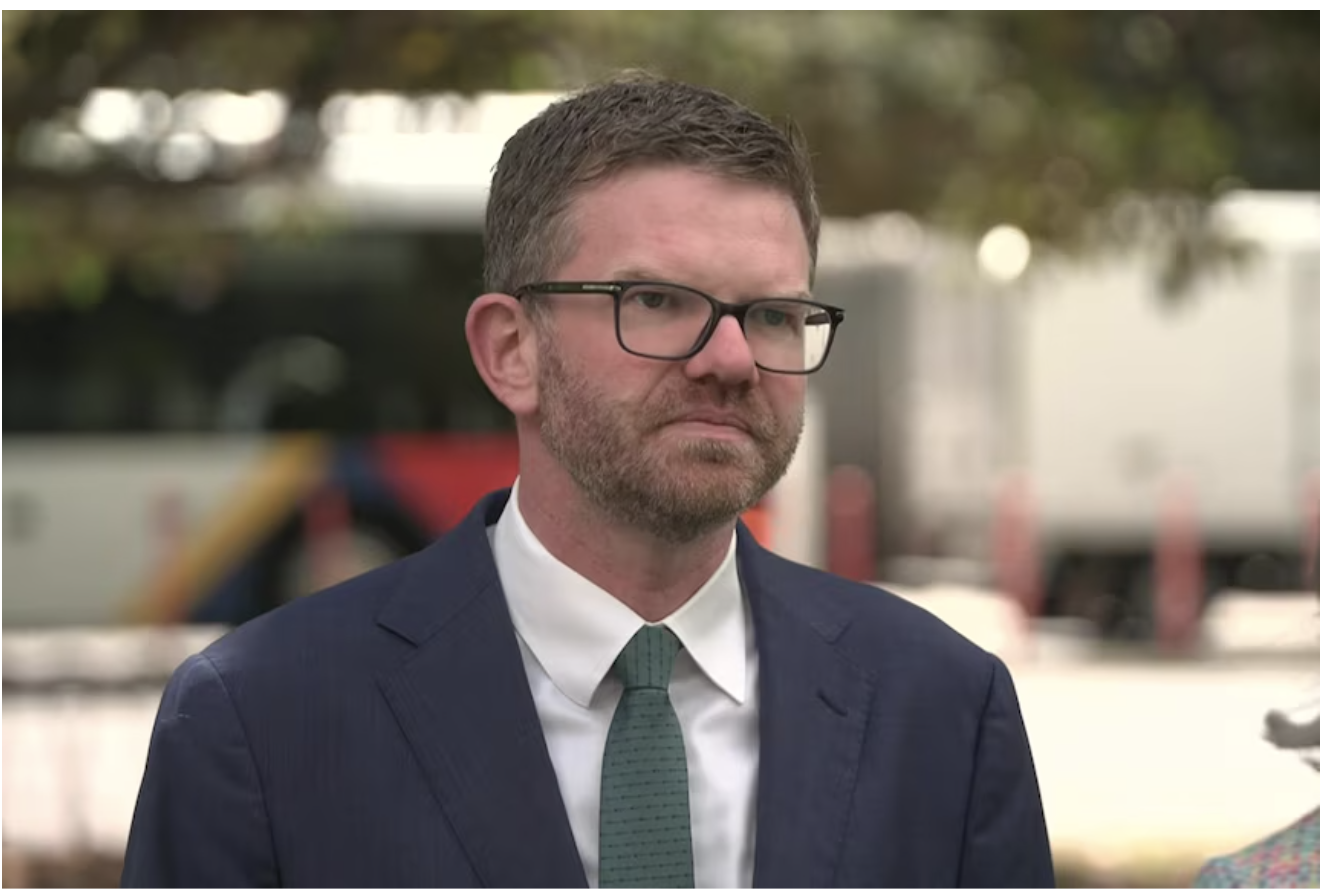
South Australian Health Minister Chris Picton who is driving enforcement in the state. Picture ABC News
Queensland
In early May, Queensland conducted raids in 30 locations across the state in one week. Products worth $20.8m were seized including 76,000 vapes, 19m illicit cigarettes and3.6 tonnes of loose tobacco. This is a good start, but there are clearly far more than 30 locations across Queensland selling illegal vapes and tobacco. Why isn’t Queensland doing this regularly?
In the 2023/24 financial year, the Australian Border Force made over 51,600 detections of illicit tobacco, including over 1.8 billion cigarettes and more than 436 tonnes of loose leaf tobacco. The May budget allocated $157m to further enforcement of laws against illegal vape and tobacco importing and trade.
Lowering tobacco tax: a fools’ errand
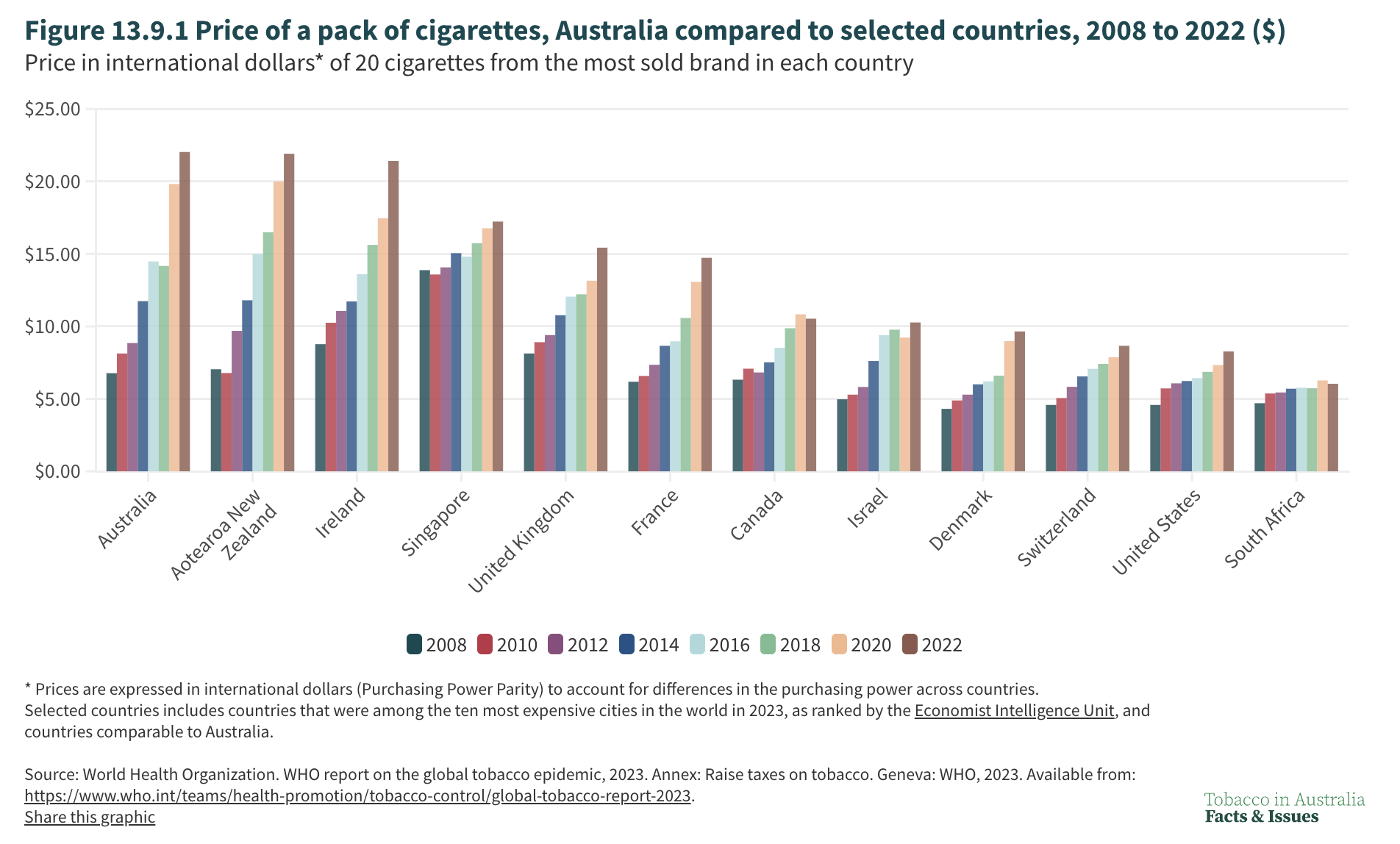
Simplistic solutions calling for tobacco excise tax to be reduced to make illegal cigarettes less competitive instantly fail the most rudimentary question: how much would the tax need to be lowered to make legal (tax paid) cigarettes competitive with illegal cigarettes? I answered this in a recent blog. Spoiler, government would need to scrap all tobacco tax. Pigs flying in formation across Sydney Harbour is far more likely.

I wrote:
“It’s easy to call for ‘lower’ tobacco tax, but how much lower would it need to be to see budget-conscious smokers switch back to buying taxed cigarettes? A common price for the most popular illegal brand of cigarettes in Australia is $15. The current excise rate on cigarettes in Australia is $1.40313 per stick. So the tax alone on a pack of 20 cigarettes is now $28.06.
A common retail price for popular brands of legal duty paid cigarettes is around $40, with the extra component costs (after ~$12 tax is deducted) being those going to cigarette manufacturers and retailers. Given that tobacco manufacturing and retailing interests are not talking at all about radically dropping their margins to compete with $15 illegal pack prices, are the “cut the excise” voices then suggesting that the government should therefore “take one for the convenience stores” and give up perhaps all of its tobacco excise ($40-$28 = $12), a price that would certainly blow illegal retail trade out of the water?
We don’t know how low illegal cigarette retail pricing could fall to still remain very profitable to those running it. But by now, simplistic calls to “cut excess” lead us very quickly into this truly absurd territory, when the obvious solution is instead for governments to crack down hard on the illegal retailers. Small cuts would make no significant difference to the large gap between legal and illegal cigarettes. Only massive or even entire scrapping of tobacco excise would bridge that gap.”
Enforcement, enforcement, enforcement
Now fully equipped with legislation and weapons-grade penalties for illegal selling and advertising (now $6.6 million in South Australia), the Albanese government now needs to seriously address some states’ unwillingness to implement the law. If they are looking for a role model, South Australia is the clear front runner.
Every shop advertising “cheap smokes” effectively has a neon sign saying “Here I am, selling illegal tobacco and vapes. Step inside, bust me, seize all my stock, fine me heavily and close me down”. There’s no detective work involved here. It’s blatant, walk-in crime busting.
Similarly, every social media ad offering “fruit” has long been offering illegal flavoured disposable vapes. You text a number that regularly disappears, but the Achilles heel is when the illegal vapes are handed over to the buyer via a delivery courier. A suburban street corner is arranged. Police could easily order a delivery, interrogate the delivery riders or follow them back to where they pick up their stock to bust the suppliers.

Screenshot from Facebook Marketplace
The apparent police culture in some states that they are the ones who will decide which laws they will and won’t enforce needs to be called out by governments, which control police. Imagine where we would be if police decreed they would not investigate white collar or cyber crime, or domestic violence, three areas where in the past they were often reluctant to act.
“But you’ll never wipe it out”
I routinely am finger-jabbed on social media that it doesn’t matter how illegal you make any drug, including illicit tobacco and vapes: there will always be a market willing to buy and enrich the criminals keen to supply No nation has ever eliminated illicit drug use, just as no nation has ever eliminated all crime, tax avoidance or drink driving. From that, it obviously doesn’t follow that any constraints on any of these activities should be abandoned as “not working”. While crime elimination may well be an aspiration, crime reduction is plainly the year-on-year reality against which the success of police and border force efforts are assessed.
Drug decriminalisation is being wound back in Oregon as problems accelerate. No nation I’m aware of is seeking ways to liberalise access to tobacco or vapes. All news from around the world about regulation describes tightening access, raising tax, ending retail display, making packaging evermore gruesome and licensing retailers. Nations like Britain, New Zealand and Canada which have had sell anywhere policies on vapes are now back peddaling furiously especially with bans on disposables. Meanwhile, Big Tobacco — major donors to Trump — are likely to be running their hands together with the axing of the US FDA’s tobacco control section.
But the convenience store industry’s cracked record here is to call for vapes to be deregulated and sold by licensed law-abiding convenience store operators. You know, those very same law-abiding store owners who have been ignoring the law all these years and selling cigarettes and vapes to kids.
Smoking is now at record lows among adults and teenagers. The entire illegal trade issue is not seeing smoking prevalence rise: it is a story of mostly price-sensitive low income smokers buying smokes where they can save thousands of dollars a year. Treasury is losing big money from reduced tobacco excise. But, we all need to understand that people who don’t smoke do not somehow shirk their ‘duty’ as provident tax contributors – a point made by Professor Ken Warner from the University of Michigan, who summed all this up in a heavily cited paper in 2000.
“when resources are no longer devoted (at all or as much) to a given economic activity, they do not simply disappear into thin air—the implication of the industry’s argument. Rather, they are redirected to other economic functions. If a person ceases to smoke, for example, the money that individual would have spent on cigarettes does not evaporate. Rather, the person spends it on something else. The new spending will generate employment in other industries, just as the spending on cigarettes generated employment in the tobacco industry. Studies by non-industry economists in several countries have confirmed that reallocation of spending by consumers quitting smoking would not reduce employment or otherwise significantly damage the countries’ economies.”




 Simon Chapman AO