• Home
  • About/CV
  • Blog
  • Vaping Research Alerts
  • Blog archive list
  • My books
  • Memoirs
  • Music, bands, films
  • Contact

Simon Chapman AO

~ Public health, memoirs, music

Simon Chapman AO

Tag Archives: vaping

Smoking is fast becoming extinct in Australia but spare us from hare-brained extremist policies

10 Friday Jan 2025

Posted by Simon Chapman AO in Blog

≈ Leave a comment

Tags

health, movies, smoking, tobacco, vaping

Population-focussed tobacco control in Australia has seen smoking prevalence fall to its lowest ever levels for both adults and teenagers. Teenage smoking is all but extinct – an amazing achievement. This has been driven by 50 years of successful public health advocacy for policies, legislation and campaigns increasing public and political awareness intended to foment declines in smoking. Since the 1970s in Australia, there has been no advocated tobacco control policy that has failed to be taken up by governments. The tobacco industry has lost every battle it fought. All cigarette factories have closed and you seldom see anyone smoking in the street. Smoking is a pale shadow of what it was 40 years ago.

Sitting astride all of this has been the continual and progressive denormalization of both smoking and the tobacco industry. Ninety percent of smokers regret ever starting. There’s no product whose users are so disloyal. All political parties except the hillbilly Nationals refuse to accept tobacco industry donations and would rather be photographed with the Grim Reaper than be seen enjoying  tobacco industry hospitality.

But over the 45 years I’ve worked in tobacco control, I’ve lost count of the number of times people have assumed I would want to give my support to some truly loopy and sometimes unethical policies. Four leap out. I’ll briefly outline the first three, then go to town on the why the fourth – censorship of films showing people smoking – is the mothership of muddled thinking, indeed stupidity.

1: Got some new way to quit? Sign me up!

Many assumed that I would want to rush to embrace and recommend almost any agent or process intended to help smokers quit. Rarely did a month pass when I was not contacted by a breathless enthusiast for some new purported breakthrough. These included any new way of consuming nicotine other than smoking (I’m still waiting for nicotine suppositories, but surely it can’t be long); any new drug; any complementary procedure maximally accompanied by soothing, holistic placebo-enhancing mumbo-jumbo and eye-watering costs for consumers; any “professional” intervention featuring the nostrums of doctors, nurses, pharmacists, psychologists and counsellors in clinical, group, on-line or app settings.

A  piece I wrote 40 years ago in the Lancet (“Stop smoking clinics: a case for their abandonment” see pp154 here)  set out why well-intended dedicated quit smoking centres were distractions from the main goal of reducing smoking across whole populations. They were never going to make any serious contribution to reducing smoking nationally because smoking was so widespread and interest in attending such clinics so low, that impossibly massive numbers of clinics would need to open for them to make a difference.

In 2009, again in the Lancet,  I proposed the “inverse impact law of smoking cessation” which states “the volume of research and effort devoted to professionally and pharmacologically mediated cessation is in inverse proportion to that examining how ex-smokers actually quit. Research on cessation is dominated by ever-finely tuned accounts of how smokers can be encouraged to do anything but go it alone when trying to quit―exactly opposite of how a very large majority of ex-smokers succeeded.”

I then quantified this with a look at how research on quitting had become overwhelmingly focussed on assisted quitting, with research into unassisted quitting far less common. This was truly bizarre given that no one disputes that the most common way of quitting used in final successful quit attempts has always been to do it cold turkey.  So why not learn more about that and shout it from the rooftops?

My contributions caused apoplexy and multi-signatured condemnations from those who had tethered their career sails to assisting smokers. My 2022 book Quit smoking weapons of mass distraction looked in depth at why professional smoking cessation was dominated by the tiny “tail” of treatments, while the large “dog” of real world unassisted quitting was often denigrated by tobacco treatment professionals and the pharmaceutical industry, for obvious self-interested reasons.

2. The smoker-free workplace

A second perennial bad idea proposed that employers should be allowed to reject applicants (for any job) who smoked, even if they were completely agreeable with smokefree workplace policy and did not want to take divisive “smoking breaks” not available to non-smokers. Henry Ford pioneered early workplace smoking bans in his car factories  (see photo below) But a century on, some were now arguing that even  if workers smoked entirely in the privacy of their own life, employers could threaten them with unemployment because they smoked.

I made a case against this nonsense in 2005.

Two arguments were typically used by advocates for this policy

1: employers’ rights to optimise their selection of staff (smokers are likely to take more sick leave and breaks)

2: enlightened paternalism (‘‘tough love’’).

The first argument fails because while it is true that smokers as a class are less productive through their absences, many smokers do not take extra sick leave or smoking breaks. By the same probabilistic logic, employers might just as well refuse to hire younger women because they might get pregnant and take maternity leave, and later take more time off than men to look after sick children. Good luck with that argument!

But what about paternalism? There are some acts where governments decide that the exercise of freewill is so dangerous that individuals should be protected from their poor risk judgements. Mandatory seat belt and motorcycle crash helmets are good examples.

It was argued that the threat of ‘‘quit or reduce your chances of employment’’ was founded on similar paternalism. I think the comparison is questionable.

Seat belt and helmet laws represent relatively trivial intrusions on liberty and cannot be compared with demands to stop smoking, something that some smokers would wish to continue doing. By the same paternalist precepts, employers might consult insurance company premiums on all dangerous leisure activity, draw up a check list and interrogate employees as to whether they engaged in dangerous sports, rode motorcycles, or even voted conservative!

Many would find this an odious development that diminished tolerance. There is not much of a step from arguing that smokers should not be employed (in anything but tobacco companies where perhaps it should  be mandatory?), to arguing that they should be prosecuted for their own good.

3. Finish the job … ban smoking in all outdoor public areas

When the evidence mounted in the early 1980s that breathing other people’s smoke was not just unpleasant to many but could cause deadly diseases like lung cancer, bans on smoking followed in enclosed areas like public transport, workplaces and eventually the “last bastions” of ignoring occupational health: in  bars, pubs and clubs.

Some in tobacco control then excitedly began to argue “why stop now? Let’s extend bans to even wide-open spaces like parks, beaches and streets.” The teensy-weensy problem here was that all the evidence on breathing other people’s smoke being harmful came from studies of long-term exposure in homes and workplaces. There was almost no evidence that fleeting exposures of the sort you get when a smoker passes you in the street is measurably harmful.

So banning smoking in wide-open outdoor spaces was not a policy anchored in evidence about health risks to others.

Accordingly, I advocated for smoking prisoners to be allowed to smoke in outdoor areas, for ambulatory patients and their visitors to be able to smoke in hospital grounds if they chose to and for smoking to be allowed in streets.  When I was a staff elected fellow of my university’s governing Senate, I voted against a (failed proposal) for a total campus ban on smoking in favour of having small dedicated outdoor smoking areas (see photo).  I set out my concerns in these papers, here, here and here.

This marked me as a heretic for some. But as I argued in one of these “I have had heated discussions with some colleagues about this who are triumphant that the proposed ban [on smoking in prisons] will help many smoking prisoners quit. I agree that it will, and that is a good thing. But so would incarcerating non-criminal smokers on an island and depriving them of cigarettes. We don’t do that not just because we can’t, but because it would be wrong. The ethical test of a policy is not just that it will “work”. In societies which value freedom, we only rarely agree to paternalistic policies which have the sole purpose of saving people from harming themselves if they are not harming others.”

4. Ban smoking in movies, or slap them with box-office killing R-ratings

But true peak silliness in tobacco control advocacy  arrived when a small number of people began arguing for all movies which depicted smoking to be either banned, or more commonly, slapped with R (18 and over) classifications, known to severely  reduce box office receipts. This threat would see most film producers order their directors to impose on-screen smoking bans.

I first flashed bright amber lights on this idea in 2008. With a US co-author, I followed up with four arguments  against this proposal in this PLoS Medicine paper and this response to criticism that followed. Much of our paper was hypercritical of research that purports to show that there is a strong association between kids seeing smoking in movies and their subsequent smoking. Some – including even the World Health Organization – even tried to extrapolate attributable fraction estimates of the number of deaths down the track that this exposure would cause down the track in what was an uncritical orgy of highly confounded leaping from simple associations to causal statements. The huge number of assumptions and uninhibited reductionist reasoning in this exercise was quite extraordinary.

The main problem here was that when characters smoke in films, they do not just smoke: they bring to their roles a constellation of other attributes that are likely to be deeply attractive to youth at-risk of smoking.

As we wrote: “Teenagers select movies because of a wide range of anticipated attractions gleaned from friends, trailers, and publicity about the cast, genre (action, sci-fi, teen romance, teen gross-out/black humour, survival, sports, super hero, fantasy, and so on), action sequences, special effects, and soundtrack. It is likely that youth at risk for current or future smoking self-select to watch certain kinds of movies. These movies may well contain more scenes of smoking than the genres of movies they avoid (say, parental-approved “family friendly,” wholesome fare like the Narnia Chronicles or Shrek).

Teenagers at risk of smoking are also at higher risk for other risky behaviors and comorbidities. They thus are likely to be attracted to movies promising content that would concern their parents: rebelliousness, drinking, sexual activity, or petty crime. … Movie selection by those at risk of smoking is thus highly relevant to understanding what it might be that characterizes the association between young smokers having seen many such movies and their subsequent smoking. Movie smoking may be largely artifactual to the wider attraction that those at risk of smoking have to certain genres of films. These studies rarely consider this rather obvious possibility, being preoccupied with counting only smoking in the films.

By assuming that seeing smoking in movies is causal, rather than simply a marker of movie preferences that have more smoking in them than the movie preferences of those less at risk, authors fail to consider problems of specificity in the independent variable (movies with “smoking”). It may be just as valid to argue that preferences for certain kinds of movies are predictive of smoking. The putative “dose response” relationships reported may be nothing more than reporting that youth who go on to smoke are those who see a lot of movies where smoking occurs, among many other unaccounted things.”

All this was silly enough, but where the silliness became weapons-grade in its over-reach was the way in which some in public health didn’t hesitate to decide  they had every right to start urging that governments should censor movies (and presumably theatre, books, art, smoking musical performers) which showed smoking.

We wrote:

“most fundamentally, we are concerned about the assumption that advocates for any cause should feel it reasonable that the state should regulate cultural products like movies, books, art, and theatre in the service of their issue. We believe that many citizens and politicians who would otherwise give unequivocal support to important tobacco control policies would not wish to be associated with efforts to effectively censor movies other than to prevent commercial product placement by the tobacco industry.

The role of film in open societies involves far more than being simply a means to mass communicate healthy role models. Many movies depict social problems and people behaving badly and smoking in movies mirrors the prevalence of smoking in populations. Except in authoritarian nations with state-controlled media, the role of cinema and literature is not only to promote overtly prosocial or health “oughts” but to have people also reflect on what “is” in society. This includes many disturbing, antisocial, dangerous, and unhealthy realities and possibilities. Filmmakers often depict highly socially undesirable activities such as racial hatred, injustice and vilification, violence and crime. It would be ridiculously simplistic to assume that by showing something most would regard as undesirable, a filmmaker’s purpose was always to endorse such activity. Children’s moral development and health decision-making occurs in ways far more complex than being fed a continuous diet of wholesome role models. Many would deeply resent a view of movies that assumed they were nothing more than the equivalent of religious or moral instruction, to be controlled by those inhabiting the same values.

The reductio ad absurdum of arguments to prevent children ever seeing smoking in movies would be to stop children seeing smoking anywhere.”

Despotic and fundamentalist religious governments have huge appetites for censorship (think North Korea and Afghanistan under the Taliban). But in the west, there is a long and often disturbing queue of single-issue advocates who would wish to see greater state intervention in cultural expression. Precedents for such doors to be opened should be treated with great caution. If scenes of smoking should be kept from childrens’ eyes, why stop there?

The slippery slope is today well-oiled in the USA where in a growing number of Republican states a large range of books are being removed from school libraries at the behest of Christian family-values activists.

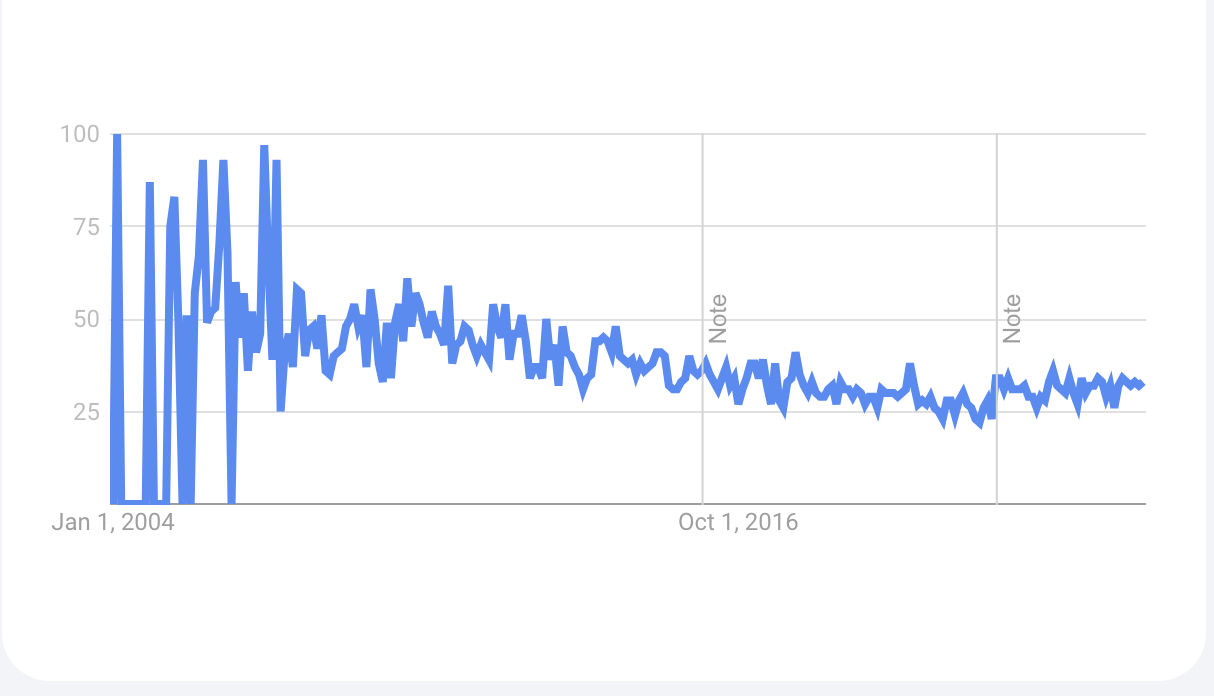
The Google Trends graph below shows that globally the debate about R-rating smoking in movies had a massive rush-of-blood from 2004-2009, with attention waning in the years since.  Advocates for censorship and R-rating have succeeded in several national and global agencies endorsing their calls. But significantly, no nation has legislated to R-rate smoking films.

Even if they did, as far back as 2004,  81% of under 18s were allowed by their parents to view R-rated movies in the USA occasionally, some or all of the time. With all the myriad ways available today to view movies on-line, via downloads, movie swapping and piracy, any thoughts that R-rating would achieve anything look increasingly absurd.

The Tobacco In Australia website has a very thorough section on all the debating points relevant to the whole issue.

Google Trends “smoking in movies” 10 Jan, 2023: 2004-present, worldwide

“Why did you get into this work?” 40 years in tobacco control

27 Wednesday Nov 2024

Posted by Simon Chapman AO in Blog

≈ Leave a comment

Tags

bigtobacco, health, smoking, tobacco, vaping

Across my career, I’ve often been asked by media interviewers “What got you involved in the sort of work you do? What drives you to keep at it?” Depending on who’s asking, there’s an occasional edge to the questions presaging that a little probing will lift the lid on a deep moralistic busybody, driven by a barely disguised missionary zeal to lead sinful smokers off the pernicious path of self-destruction and into a wholesome life of glistening health.

In the 1970s, when I first started working in health, I’d sometimes sense the same assumptions in people I talked to at parties. When they asked “what do you do?” and I answered that I worked in tobacco control, I’d often sense the hesitancy: he probably doesn’t drink. Never smoked dope. No chance of any fun or sex with this guy. He probably thinks the music’s too loud. Steer well clear.

Early anti-smoking efforts in the years before strong evidence rolled out in the early1950s that smoking was deadly were deeply mired in puritanism and ideas that the body was a temple from which the devil and his work had to be driven out. The evils of drink, smoking, masturbation, temptresses and reading novels travelled together in a morals crusade that extoled abstention from fun and pleasure. Purse-lipped temperance groups picketing pubs, jokes about Methodists who eschewed dancing and the rest, and the way that smoking and under-age drinking were pretty reliable markers of kids who were often more edgy and interesting than their heads-down classmates all coalesced in those early days to make any mention of tobacco control a tad suspect.

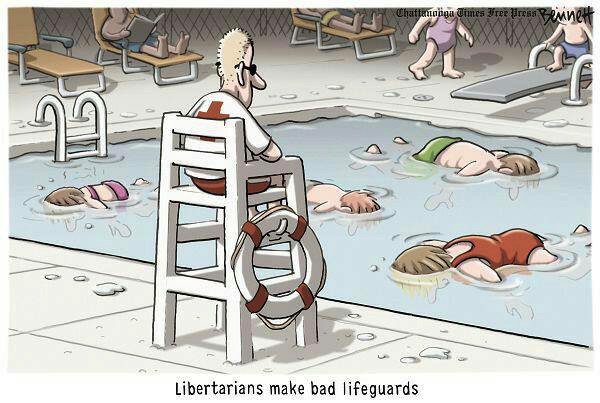
When the Niagara of evidence became undeniable that smoking was out on its own as a cause of disease affecting almost every part of the body, the moralists’ chorus was joined by doctors and health authorities who had long also brought us warnings about other dangers that we were thankful to receive. Just as no-one thinks of a lifesaver at the beach warning about sharks or dangerous rips as a moralist or killjoy, the overwhelming evidence that smoking was harmful radically changed the complexion of anti-smoking efforts. This became ethically turbo-charged when strong evidence emerged that chronic exposure to other people’s tobacco smoke was also deadly.

Seventy four years along from these early studies, research has repeatedly confirmed that around 90% of smokers regret ever starting. While some die-hard smokers still want to trot out their favourite talismanic self-exempting beliefs (“plenty of people smoke all their lives and don’t die early”, “everything’s bad for you these days”, “what about all the air pollution we breathe on every day?”, “I keep fit, so get the nasty stuff out of my system”), and some insist that smoking is pleasurable, most smokers today are reluctant, embarrassed and apologetic. A huge majority have tried to quit and I’ve never met a smoker who hoped their children would take it up. There are few — if any — products with such a near-universal disloyalty and resentment among their consumers.

Most occupations and professions don’t attract the sort of questioning I described earlier. I can’t imagine ever saying to an accountant “so what was it that got you interested in accounting when you started?” or asking a dry cleaner “you’ve been doing this for 35 years … can I ask what the fascination is?” We mainly assume that it’s the money, the security and comfortable routine, inertia and the quality of working environments that keeps people in their jobs or attracts them into something else.

We don’t think to ask surgeons or oncologists why they do what they do. It’s obvious that people likely to die from cancer often desperately want to try and avoid that happening, or give themselves some extra time. But it’s also obvious that most people need little convincing that prevention is as, or more important than curing or treating. Yet while the thought of people railing against the work of lung cancer surgeons is unthinkable, all across my career I’ve seen bizarre and sad little pro-smoking and more recently pro-vaping groups form, flutter and fade and heard smokers calling radio programs to whine about feeling under siege.

The “explain yourself” imperative is generally reserved for those who choose to do odd, anti-social, demanding, revolting, seamy or dangerous work: undertakers, midnight to dawn radio hosts, sex workers, plumbers who wade in raw sewage, skyscraper window cleaners. With daily smoking prevalence in Australia down to 8.4%, and 90% of smokers regretting ever having started and often highly supportive of polices that might help them smoke less or quit, we are looking at a mere 0.8% of the adult population who are contented  and committed smokers, with even a smaller proportion of these actively railing against tobacco control. Fringe political parties in Australia which have sometimes run candidates have received derisory public support.

So when I’m occasionally asked the “why?” question these days, that perspective on the likely attitudes of those listening to the interview (it’s usually on radio) guides my response. I’m never tempted to try and repudiate the time-warped, neo-puritanical framing of the question as if it’s a serious, widespread critique. Instead, I steer the conversation over to considering the importance of and challenges in hobbling and discrediting the upstream well-heeled forces that keep promoting smoking and doing all they can to defeat, dilute and delay effective tobacco control policies capable of reducing smoking on a wide scale.

I’ve worked in public health since late 1974. I’ve focussed on a range of issues that extend from tobacco control, gun control, helping people better understand the risks and benefits of adopting (or avoiding) certain medical procedures such as having prostate specific antigen test or getting immunised) or avoiding (or not) exposure to allegedly “dangerous” technology like mobile phones and transmission towers and wind turbines.

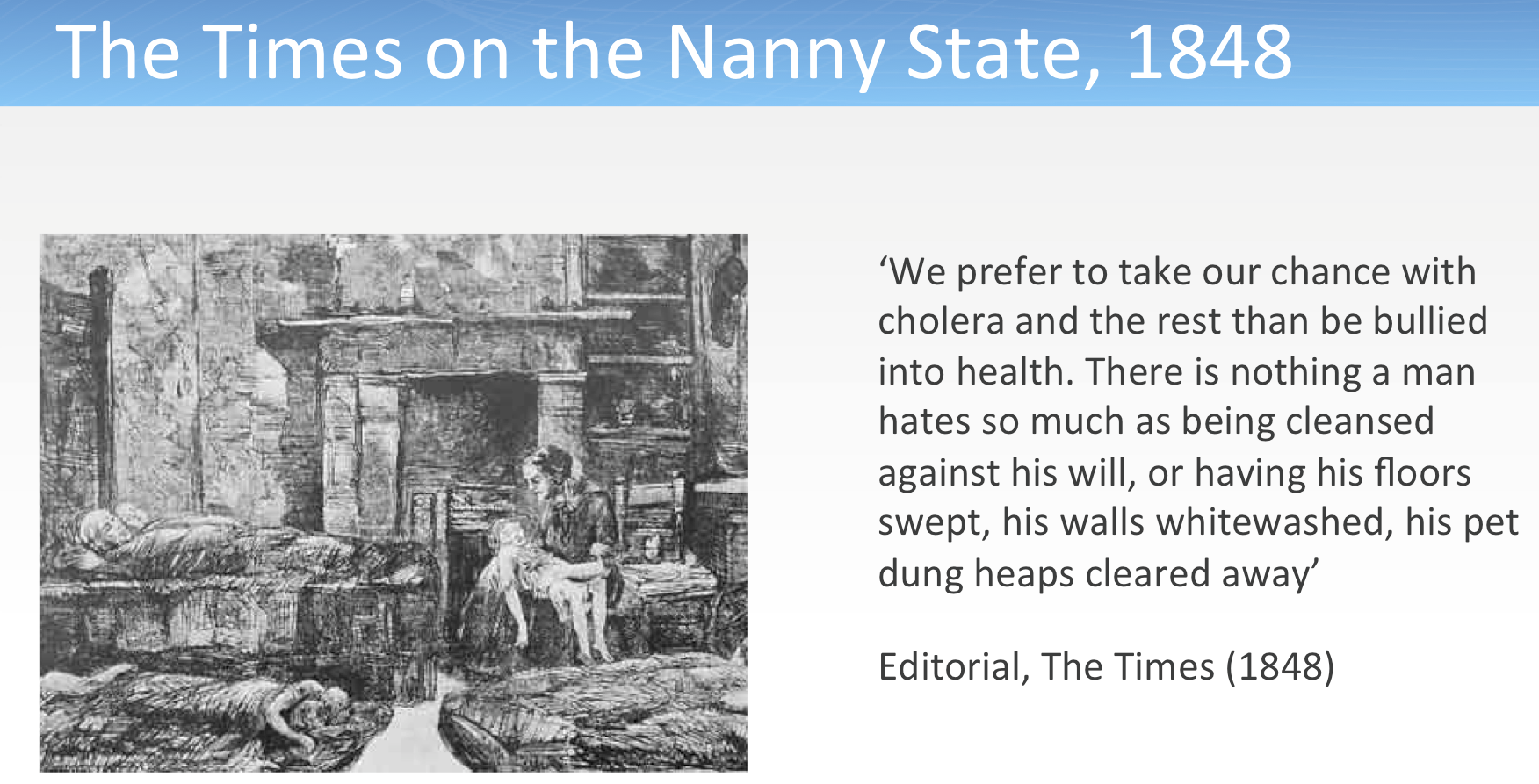
The common thread in most of these issues are the efforts of industries, lobby groups and determined, often obsessed individuals to thwart evidence-based public health policy and practice which threatens these industries or the cult-like belief systems of people who eat, live and breathe hatred of a public health strategy. This hatred has a very long history (see below).

A classic analytical matrix in public health (Haddon’s matrix) is the epidemiological triad that was first applied to the effort to understand and then better control road injury and later infectious and vector-borne diseases like cholera and malaria: the agent, host, environment and vector matrix.

In the control of malaria, we put a lot of effort into understanding the agent that causes the disease, the five types of plasmodium parasite that multiply in human red blood cells of humans and in the mosquito intestine. Agent control involves efforts to develop a vaccine which would prevent a person being bitten by a mosquito carrying the parasite from developing malaria. One such vaccine first passed human trials in 2017, possibly indicating a revolution in efforts to control this terrible disease.

Those who are infected with the plasmodium parasite are known as “hosts”. Here, control efforts are concerned with educating those who live in areas where malaria is endemic to take efforts to protect themselves from being bitten by covering-up at times when they are most likely to be bitten, wearing repellent, using insecticides and being diligent about destroying or spraying mosquito breeding water like that which collects inside old tyres, cans, and water storage. These breeding areas are known as the “environments” that need to be mapped, inspected and controlled. A wider definition of environments would embrace considerations of the cultural, economic and political environments in endemic malaria areas. If local health authorities had no funds to support malaria control, this would be importantly identified in a malaria control analysis and efforts taken to raise such funding and support.

Finally, the female anopheles mosquito is known as the “vector” responsible for the plasmodium parasite agent entering the bloodstream of hosts. Vector control starts with studying the life-course and behaviour of these insects in attempts to wreck their efforts to bite people.

Big Tobacco: the global vector for lung cancer

In tobacco control, the vector whose every waking moment is concerned with maximising the number of smokers (hosts) who consume tobacco (the agent) is the tobacco industry. So a large part of my work across 40 years has been involved in exposing and shaming the industry, its acolytes and those in politics who take its donations and hospitality, oppose or water down potent legislation and collude with its ambitions to keep as many people smoking as possible.

The “what has kept you going in this issue all these years” question is easily answered in two ways. First, smoking rates in both adults and kids are at all-time lows, and showing no signs of not falling even further. Lung cancer, a rare disease at the beginning of the twentieth century, rose to become the leading cause of cancer death by the 1960s. But in Australia, male lung cancer rates stopped rising in the early 1980s and have continued to fall, some 30 years after we first saw large-scale quitting happening about the huge publicity was given to the bad news about health. Female lung cancer rates look to have plateaued at a level that makes their peak just a few years ago reach only half the peak rates that men reached over 30 years ago.

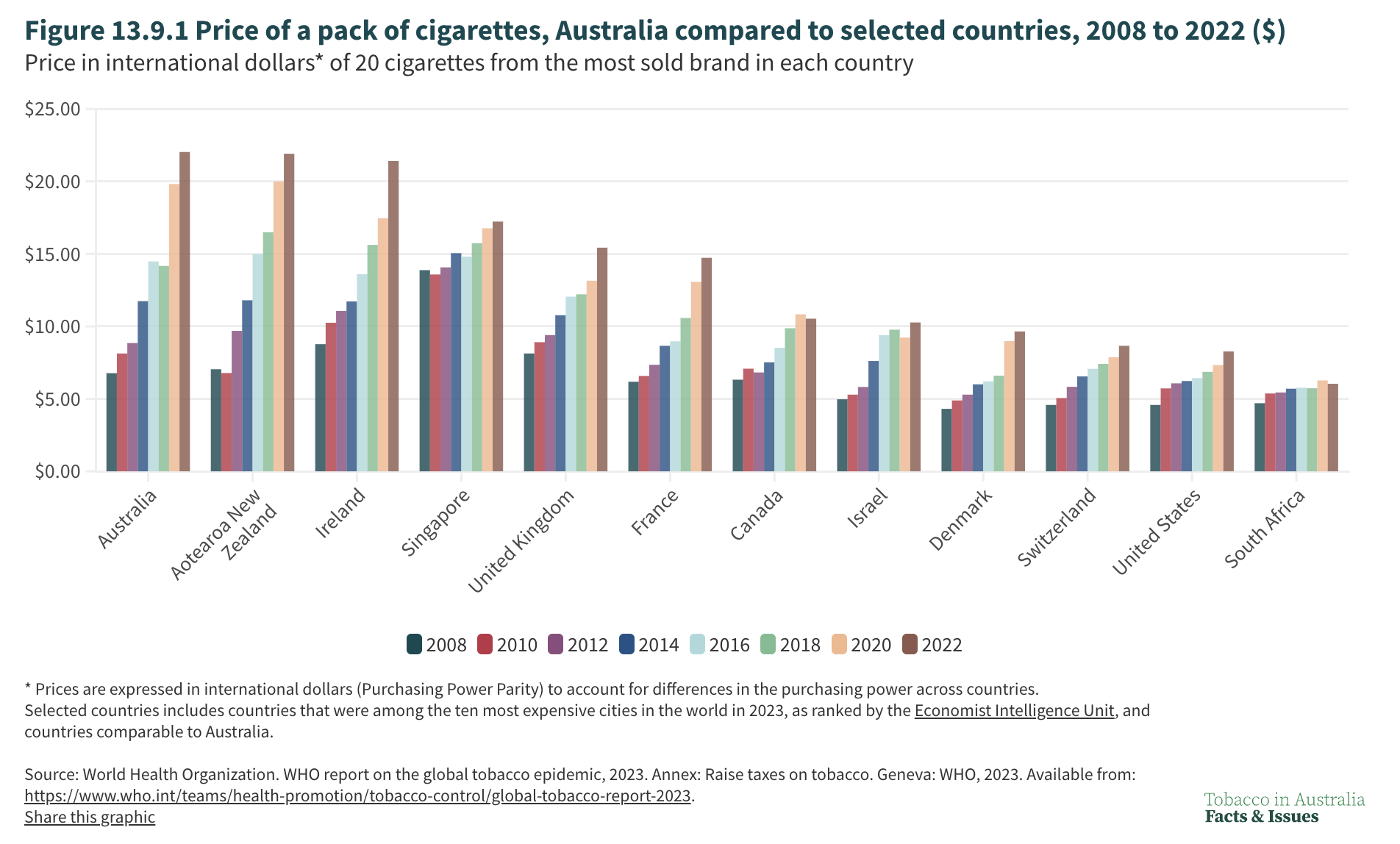
Continually falling disease and death rates from tobacco caused diseases have made tobacco control the poster child of chronic disease control, envied by people working today in areas like obesity and diabetes control. It’s been such a privilege to have contributed to many of the major policy developments that have happened since the 1970s: advertising bans, the highest priced cigarettes in the world, large scale quit campaigns, smoke free legislation in workplaces, bars and restaurants, plain packaging, graphic health warnings on packs, bans on retail displays of tobacco products, and a duty free limit of just one pack.

Second, the mendacity of those working in the tobacco industry throughout my career has strongly motivated me to keep hard at it. In the decades before the evidence on tobacco’s harms were established, anyone working for the tobacco industry might have as easily been working for any industry. They were selling a product with strong demand and surrounded by convivial social rituals. The companies employed many people and contributed to communities via sponsorships and benefaction. What was not to like?

But with the advent of the bad news, the industry rapidly descended into decades of the very worst of corporate malfeasance. Those who stayed with the industry or came into it did so with their eyes wide open about what they were being rewarded to do every day and so were open game to account for their actions and the consequences. In the face of all they now knew, the industry doubled down. It conspired with other companies to deny the harms, it lied that nicotine was not addictive, shredded oceans of incriminatory internal documents, corrupted science through tame consultants and scientists, bribed politicians, promoted pro-smoking doctors to the media, donated to political parties likely to support its goals, bought up community support via vast sponsorship of national and international sport and culture, chemically manipulated cigarettes to make then more addictive, researched and targeted children in its advertising and promotions, relentlessly attacked any tobacco control proposal that threatened in any way to harm its bottom-line, cynically supported limp tobacco control policies that it knew were useless but made it look good, and supplied products to agents known to be involved in illicit, black market trade while unctuously railing against that trade in public, posturing as good corporate citizens.

The industry has long been peerless in occupying the tawdry throne of corporate ethical bottom feeders. This popular and political understanding is now so pervasive that its conduct has become an almost universal comparator for corporate pariah status. Big Tobacco is the index case here.  If you google “just like the tobacco industry” you will be deluged by a rogues’ gallery of other industries that have lost public trust. The industry acknowledges that it today has serious trouble attracting quality staff.

Shining 10,000 watt arc lights on that conduct has been of immense importance to tobacco control. It is rare today to find a politician is who happy share a photo opportunity with any tobacco company. When I interviewed Australia’s former health minister and attorney general, Nicola Roxon, for my book (with Becky Freeman) about Australia’s historic adoption of plain packaging, she emphasised that “everyone hates the tobacco industry” and that this understanding had steeled the government to proceed and  brace against the industry’s best efforts to defeat the legislation. That public revulsion did not develop out of nowhere – it was an important enabling objective for many of us in tobacco control in our advocacy for policy change.

All companies today are engaged in high profile rebirthing displays where they openly acknowledge that smoking is deadly and argue that they want to do all they can to encourage smokers and future smokers to switch to electronic vapourised nicotine products like e-cigarettes. After around 12 years of widespread use, they have declared that consensus already exists that these products are all but totally benign. More and more authoritative reviews of the evidence on this show this consensus is very far from the case and that they are far from magic bullets or “Kodak moment” game changers in helping smokers quit.

While spokespeople working down one corridor of tobacco companies extol the virtues of these new products and megaphone the transformational role they will play in the tobacco industry, those working elsewhere in the building continue to do all they can to attack proposals for effective tobacco control policies and legislation wherever they can. In recent years all the major companies have mounted huge efforts to try and stop plain packaging, graphic health warnings, increased tobacco taxation, retail display bans, and flavour bans. If they really wanted to see an end to smoking, they would aggressively advocate for all these policies. So go figure.

This blatant duplicity is stomach-churning. The industry’s clear goal is to not have its customers abandon cigarettes and use e-cigarettes instead. It is to have these customers use both products (known as dual use), to tempt former smokers back into nicotine addiction and to reassure teenagers that these allegedly safe as you can get products hold none of the threats that smoking holds. They cannot believe their luck.

The evidence is mounting that this scenario is exactly the way things are playing out. E-cigarette users are in fact less likely to quit than smokers not using them. And dual use is the most common pattern of use, often lasting years.

Every single policy in tobacco control that has ever been advocated by those of us working in this field around the world has been adopted in many nations. In Australia, the tobacco industry has lost every policy battle it ever fought. As a result, we have been able to get where we have in dramatically reducing smoking to the lowest levels ever recorded. Teenage smoking is almost extinct in Australia and several other nations. These are fantastic outcomes.

Are smoking and vaping now endangered public sights?

30 Wednesday Oct 2024

Posted by Simon Chapman AO in Blog

≈ Leave a comment

Tags

e-cigarettes, smoking, sydney, vaping

Only 8.4% (and falling) of Australians over 18 years now smoke daily. Just three percent (also falling) of senior high school students at least smoke weekly, a similar situation that exists in the USA, the UK  and Canada. A recent editorial in the American Journal of Public Health stated “By any measure, youth smoking [in the USA] has nearly ceased to exist”.

Smoking has long been banned in Australia on all public transport, in indoor workplaces including bars, clubs and restaurants, many stadiums and an increasing number of outdoor café dining and coffee areas do not allow smoking. The map below shows a tiny percentages of Australian homes allow smoking inside.

Proportion of non-smokers who report living in a household where: a smoker smokes inside the home; a smoker smokes outside the home; or there is no smoker in the household, 2019, by state/territory. Source

Some local governments have banned smoking in outdoor shopping malls. Smoke-free stadiums are now commonplace. I went to an open-air night time Paul Kelly concert 10 years ago at Taronga Park Zoo where stage announcements directed smokers to go to a section way up the back and away from the crowd. I took a look and it was empty.

In 2008, I co-authored a highly accessed and cited paper on markers of the denormalisation of smoking and the tobacco industry. In it we catalogued a wide range of ways that the identity of smokers has been spoiled from the days when smoking was considered convivial, sophisticated and dripping with the multitude of positive semiotic signification purposefully bestowed upon it by marketing, advertising and smart packaging. In 1992, the single most common feature sought by those advertising for housemates was being a non-smoker. In 2004, only 2% of people using Australia’s largest dating site declared they were smokers.

Denormalisation works ‘‘to change the broad social norms around using tobacco—to push tobacco use out of the charmed circle of normal, desirable practice to being an abnormal practice’’. When smoking loses its public and political charm, when most people don’t smoke, when 90% of remaining smokers regret ever having started and when parents who hope their kids will grow up to smoke are as rare as rocking horse shit, governments know they have a huge mandate to introduce policies that will drive it down, as has been happening since the 1970s.

Rise and fall of vaping?

Over the last few years, I’ve often heard people remark that they seldom see people smoking these days. In recent years vaping seemed to be something we saw much more often, mostly because of the ostentatious look-at-me clouding plumes and the frantic rapid hand-to-mouth frequency of puffing. But after October 1, 2024 when the Commonwealth government outlawed vaping sales from anywhere but pharmacies, vape prices skyrocketed and many small illegal retailers have likely been understandably fearful of the large fines. Many “recreational” vapers may have reduced or stopped smoking. I pass 22 tobacconists and “convenience stores” on my daily walk. Last week I saw not a single customer in any of them on four walks.

No airline allows vaping on board, and train stations make regular announcements warning about platform vaping being banned. Most Australian governments have banned the use of vapes in all areas where smoking is not allowed by law.

So the last bastions of public smoking and vaping today remain some open air spaces like streets, parks, beaches.  But how often now do we even see smoking and vaping these days? Curious about this, for three consecutive mornings this week I set out to count how many people I saw smoking or vaping while I walked through two inner west suburbs.

On each of the three walks, I walked around 12,000 steps from around 7.45am -10am.  I wanted to quantify a strong impression that we don’t often see people smoking or vaping in public these days.

In each hand I carried a thumb-click mechanical digital counter. One for people smoking or vaping and the other for people not doing so (see photo below).

My route took me through the hipsterville shop, restaurant and café high streets of Enmore and Newtown at a time when many were on their way to work, waiting at bus stops, entering Newtown railway  precinct, having their morning coffee or like me, walking for exercise. Those with nicotine dependence can often be seen dosing before getting on trains and buses and lighting up immediately on alighting. So I spent 30 minutes counting commuters entering and leaving Newtown station, wanting to include what I predicted might be a visibly higher rate of smoking or vaping there.

It’s easy to see someone smoking. They are either actively drawing on a cigarette or holding one in their hand or lips. Vaping is similarly easy to spot, although if someone is hiding a vape in a closed hand or keeping it in a pocket between pulls, this would cause underestimates of its prevalence.

But I was not trying to estimate smoking or vaping prevalence. My objective was to try and count the prevalence of actual smoking and vaping in an outdoor setting in the way that an ordinary person might observe people around them as they moved normally on their passage through streets. I was not in any way trying to count smokers and vapers (so including those who might have vapes in their pockets), but rather active smoking and vaping.  Where I came to a situation where a group of people were gathered such as at pedestrian crossing or a bus stop, I stopped too, to carefully check each person I could see. I did not count children in school uniform on the way to school, or infants with parents.

In total I saw 3529 people over the three days observations. Of these, just 38 (1.1%) were smoking.  I saw just 3 (0.09%) people vaping. Only one was smoking at a table outside a café. Those smoking or vaping were so scarce that some small patterns could be discerned. With few exceptions, those smoking looked 70+. There were two spots on my route where I saw at least one smoker on each day. Some at those spots were also begging for change.  Of the very few younger people (teens, 20s) who were smoking, nearly all had “attitude” (goths, punks). Several were south and east Asian men.

These data are only a street epidemiological snapshot of what was happening in two Sydney suburbs on three (sunny) mornings across two hours. But the daily percentages were very similar. My thumb clicking the “not smoking” counter risked giving me repetitive strain injury, while my thumb recording smoking and vaping nearly went to sleep. Smoking and vaping have not vanished from public sight, but they both look decidedly endangered.   

I’m planning to gather the same data across different locations and at different times to see if there is a range.

The imminent death of teenage smoking

15 Tuesday Oct 2024

Posted by Simon Chapman AO in Blog

≈ Leave a comment

Tags

e-cigarettes, health, smoking, vaping

[extra material added 17 Oct 2024 — see Dai et al below]

By any measure, Ken Warner, Avedis Donabedian Distinguished University Professor Emeritus of Public Health at the University of Michigan, is one of the giants in the history of tobacco control. I have known Ken since the  early 1990s, after he editorialised one of my earliest papers. We were both 2003 recipients of the American Cancer Society’s global Luther Terry Medal and have had decades of mutual respect.

He has written a glowing endorsement for one of my books and references for promotions and awards.  When I retired from the University of Sydney in 2015, my head of school invited me to select a global figure who could be the main speaker at my festschrift. I didn’t hesitate to name Ken, who gave this lecture after which we spent a few great days on the NSW north coast.

Ken Warner 21 May 2015, Sydney University

At that time Ken was showing early enthusiasm for the promise of e-cigarettes as a major new weapon in reducing smoking and the diseases it causes. I was far more circumspect, having provided one side of a debate in the BMJ in 2013 and a crystal-balling piece on the promises and threats  in 2014.

In the years since, I’ve seen him rapidly firm in his positive views about the public health importance of vaping,  In 2018, an internal document  from the vapes manufacturer Juul Labs included Ken’s name on a list of ratings of 18 “collaborators” ranking him 7 out of a maximum 10  and noting that he was “positive on all scenarios” about vaping.  I was listed as one of 10 “current opponents”.

We have rarely exchanged views on the issues in the nine years since his trip to Sydney, although I have received comments from friends of him eye-rolling when my name has come up. He’s a true believer in vaping, while I’m a sceptical apostate in circles he frequents.

Warner has just published a piece in the American Journal of Public Health titled  Kids are no longer smoking cigarettes: why aren’t we celebrating. It’s generally excellent, celebrating the near-to-zero high school smoking rates in the US, and principally attributing the declines to the unabating massive cultural denormalisation of smoking (“The principal answer is a major change in social norms”) This was set in motion by the application of evidence-based policies about what would drive youth smoking down across whole populations.  He’s incredulous – as am I – that not more prominence and celebration has been made of youth smoking all but having disappeared.

He declares, and I again agree, that “By any measure, youth smoking has nearly ceased to exist.” The nearing extinction of youth smoking has confirmed tobacco control as the poster-child of chronic disease control. The achievement is precious silverware that has been hard fought for and needs vigilance against both predators and complacency to ensure that it will never rise again.

Warner wonders whether the tobacco industry “may be giving up their age-old pursuit of ‘replacement smokers’”, its coded euphemism for recruiting new teenage smokers. Is there anyone who believes that they would find these developments a bitter, force-fed pill that they would dearly love to reverse?

Here are the US data on 8-12th graders’ 30 day smoking.

Source

We have a very similar situation in Australia (see chart below), with smoking in the last week falling between 1999 and 2022-23, the latest data year available. The US has seen senior high school prevalence drop like a stone from 36.5% in 1997 to 1.9% in 2023. Australia has seen the same age group’s weekly smoking rate fall from 30% in 1999 to 3% in 2022-23 (monthly smoking is 3.4% (12-15y) and 5.2% (16-17y). The US is thus a little ahead of Australia with teenage smoking, with both nations seeing smoking spiralling toward tiny proportions.

Source

However, there are several points in Warner’s paper which require comment when it comes to some of his assertions about vaping.

Warner’s presentation of the US data frames teenage vaping as predominantly a phenomenon of kids who smoke also vaping. He writes that:

“In 2022, 9% of never-smoking high school students had vaped in the past 30 days, 3% frequently (≥ 20 days). In contrast, 54% of ever-smoking students had vaped in the past 30 days, 34% frequently. Still, that 3% of never-smoking students vape frequently is a legitimate source of concern.”

Here, highlighting the much larger proportions of smokers who vape gives the impression that it’s overwhelmingly school students who have smoked who dominate teenage vaping in the US, with those who’ve never smoked, being comparatively less likely to be vaping.

But looking at the numbers  behind these proportionspaints a very different picture. 

With never-smoking youth being (by far) in the majority, even small vaping participation rates among them could translate to greater numbers of vapers than among the much smaller proportions of youth who smoke. So here’s how the numbers fall.

The table below constructed from the dataset here  by colleague Sam Egger shows that of 15884 students, 1265 vaped in the past 30 days who had never smoked, compared to 931 who had ever smoked. In other words, in terms of sheer numbers, the problem of vaping is worse for the never-smoker group compared to ever-smoker group.  So if you saw random student vaping in the US, there would be a 58% (=1265/(1265+931)) probability that this vaper would be someone who had never smoked compared to a  42% probability that it would be someone who had ever smoked.

When it comes to more frequent vaping, this situation is reversed with 58% of those who vaped on ≥20 of past 30 days being ever-smokers (=583/(583+425)) compared with 42% who were never-smokers.

This way of looking at it presents the situation in quite a different light. Focusing on column percentages in the table below frames the situation as very much it being a case of smokers doing the vaping. But  focussing on row numbers  demonstrates that vaping is very much a more comparable phenomenon between ever- and never-smokers when it comes to actual numbers of youth who are vaping.

In Australia (see Figure 16), more than two-thirds (69%)  of 12-17yo school children who vaped  “reported having never smoked a tobacco cigarette before their first vape. One in five (20%) students who had never smoked prior to trying an e-cigarette reported subsequent smoking of tobacco cigarettes (i.e., at least a few puffs).”

Vaping by US high school students, 2022 in National Youth Tobacco Survey

 Never-smokeEver-smoke
 (n=14164)(n=1720)
Vaped in past 30 days
No12899 (91.1%)789 (45.9%)
Yes1265 (8.9%)931 (54.1%)
Vaped on ≥20 of past 30 days
No13739 (97.0%)1137 (66.1%)
Yes425 (3.0%)583 (33.9%)

Frequencies are weighted by weights provided by NYTS to account for the complex survey design and to produce nationally representative estimates. Excludes n=234 with missing data on vape or smoke variables

Is vaping by kids all but benign?

Warner’s paper emphasises that vaping is far less dangerous than smoking, and that nicotine in itself in the doses obtained through smoking or vaping is likely to cause inconsequential health problems, apart from the non-trivial economic costs of nicotine dependence.  I have several caveats about his summary.

There is no shortage of evidence that vapes deliver often far less of key carcinogens and toxicants than do cigarettes. This evidence includes biomarker research showing that vapers have less of these nasties in their bodies. Warner summarises this as: “In fact, smokeless tobacco products sold in the United States create substantially less risk than does smoking”

But vapes and cigarettes are very different beasts: cigarettes are the Mt Everest of risk but vapes contain chemicals that cigarettes don’t contain, and the puff parameters for vaping are very different from those for smoking.

“the contention that nicotine can damage developing adolescent brains or harm health in other ways”.

Here Warner argues “Most research regarding brain effects is based on animal models but with potential relevance for humans.” Prominent vaping advocates have often ridiculed the relevancy of animal studies for humans, elevating this to meme status in true believers about vaping.  But “potential relevance” is surely a huge understatement. Of the 114  Nobel Prize winners in  medicine and physiology between  1901 and 2023, 101 (88.6%) used animals in their research.  Now what would such eminent researchers know that vape advocates seek to dismiss?

Warner continues: “the lack of evidence of brain damage in previous generations of people who smoked mitigates this concern.”

This is quite a sweeping statement, unreferenced.

It’s been frequently noted that smokers are increasingly concentrated in less educated, economically disadvantaged  sub-populations.  Low education and low IQ are clearly correlated, so it’s unsurprising that cognitive concerns may be more prevalent in smokers. But there is also significant evidence that smoking may also be causative for cognitive and psychiatric problems.

For example, in this cohort study of over 20,000 Israeli military recruits, analysis of brothers discordant for smoking found that smoking brothers had lower cognitive scores than non-smoking brothers.

This prospective cohort study examined the association between early to midlife smoking trajectories and midlife cognition in 3364 adults  (1638 ever smokers and 1726 never smokers) using smoking measures every 2–5 years from baseline (age 18– 30 in 1985–1986) through year 25 (2010–2011). Five smoking trajectories emerged over 25 years: quitters (19%), and minimal stable (40%), moderate stable (20%), heavy stable (15%), and heavy declining smokers (5%). Heavy stable smokers showed poor cognition on all 3 measures compared to never smoking. Compared to never smoking, both heavy declining and moderate stable smokers exhibited slower processing speed, and heavy declining smokers additionally had poor executive function.

In this Finnish longitudinal cohort twin study data (n=4761) from four time points (for ages 12, 14, 17, and 19-27 years) “were used to estimate bivariate cross-lagged path models for substance use and educational achievement, adjusting for sex, parental covariates, and adolescent externalizing behaviour.”

Smoking at ages 12 and 14 “predicted lower educational achievement at later time points even after previous achievement and confounding factors were taken into account. Lower school achievement in adolescence predicted a higher likelihood of engaging in smoking behaviours … smoking both predicts and is predicted by lower achievement.”

In a cohort study of 11 729 children with a mean age of 9.9 years at year 1 Dai et al used structural magnetic resonance imaging measures of brain structure and region of interest analysis for the cortex, 116 children reported ever use of tobacco products.  Here’s an edited version of the results and conclusions.

“Controlling for confounders, tobacco ever-users vs nonusers exhibited lower scores in the Picture Vocabulary Tests at wave 1 and 2-year follow-up. The crystalized cognition composite score was lower significantly lower among tobacco ever-users than nonusers both at wave 1 and 2-year follow-up. In structural magnetic resonance imaging, the whole-brain measures in cortical area and volume were significantly lower among tobacco users than nonusers. Further region of interest analysis revealed smaller cortical area and volume in multiple regions across frontal, parietal, and temporal lobes at both waves. In summary, initiating tobacco use in late childhood was associated with inferior cognitive performance and reduced brain structure with sustained effects at 2-year follow-up.”

Nicotine not a culprit?

Warner states that “nicotine per se is not the direct cause of the diseases associated with tobacco. Rather, it causes persistent use of the products that expose users to the actual toxins.”  This proposes that nicotine is not a health problem, only a benign vector for health problems.  

In 2019 I compiled this selection of research about concerns with nicotine  published in notable journals including Nature Reviews Cancer, Lancet Psychiatry, American Journal of Psychiatry, Mol Cancer Res, Critical Reviews in Toxicology, Carcinogenesis, Mutation Research, Int J Cancer, Apoptosis and  Biomedical Reports. These concerns are seldom mentioned by those who recite Michael Russell’s dictum that “People smoke for the nicotine but they die from the tar” as a talisman against any expressed concerns about nicotine.

I’ve also listed numerous recent reviews of the emerging evidence about vaping and precursors of respiratory and cardiovascular disease. This evidence hardly describes an assessment of vaping as a benign practice akin to inhaling steam in a shower or having a couple of cups of coffee a day,  analogies I’ve  heard used by vaping advocates.

Importantly too, there is no mention in Warner’s paper about two key ways in which vapes importantly differ from smoking.

A: Flavouring chemicals in vapes

Flavours are a leading factor that attract and keep people vaping: the beguiling cheese in the nicotine addiction mousetrap. But as has often been pointed out, none of the many thousands of flavours available in vapes have ever been assessed as safe for inhalation. Many of the chemical flavouring compounds in vapes have GRAS (Generally Regarded As Safe) ratings as food and beverage additives for ingestion. But it is elementary in toxicology that different routes of consumption (skin, inhalation, ingestion, rectal insertion) have different risk profiles.

Tellingly, no flavoured inhaled asthma or COPD medicines (used by hundreds of millions globally) have ever been approved by therapeutics regulators anywhere in the world, yet vaping advocates typically shrug dismissively about possible risks in the intensive inhalation of flavours in vapes.

Dow Chemical, a major manufacture of propylene glycol (the most common excipient in vape liquid) in 2019 explicitly named PG in vaping devices and accessories as a “non-supported application”.  With the vast earnings potential for Dow in embracing PG in vapes, clearly the risk exposure to the company in doing so must have been assessed as massive.

Warner cites several examples of the public and health professionals holding clearly incorrect views about particular dangers of vaping, as if the jury is already in on the net effects of harm into the future – the whole point with chronic disease control. Yet he sensibly agrees that it is too early to know if there will be any long-term health problems that might arise from vaping.  The median age for diagnosis of asbestos-caused mesothelioma is between 75-79. For lung cancer, it’s 71. If putative health problems from vaping have similar latency periods from first exposure to diagnosis, we may have a long wait before this issue is settled.

B: Inhalation frequency

The average daily smoker in Australia in 2022-23 smoked  15.9 cigarettes day and a typical puff frequency per cigarette in leisurely situations is 8.7, giving 138 puffs per day. Observational studies of vapers show that average daily puff frequency on vapes is likely to be north of 550 times. In one study (2016), researchers observed vapers using their normal vaping equipment ad libitum for 90 minutes. The median number of puffs taken over 90 mins was 71 (i.e. 0.78 puffs per minute or 47.3 per hour). Another (from 2023) found those using pod vapes took an average of 71.9 puffs across 90 minutes, almost identical to the 2016 study number.

But of course vapers do not vape across only one continuous 90 minute period each day. No studies appear to have calculated average 24 hour vape puff counts. But if we (conservatively?) assume 8 hours of sleep and 4 waking hours of no vaping, then a person vaping for 12 hours a day at this 47.3 puffs per hour rate, would pull 568 puffs across a 12 hour day deep into their lungs, 207,462 times in a year and 2.075 million times across 10 years.

This compares to daily smokers taking 138 puffs a day, 50,405 times a year and  504,050  times in 10 years: 4.12 times less. Cigarettes and vapes are very different products, but the almost frenzied puff frequency we see with daily vapers where each puff sees excipient chemicals like unapproved flavourants and PG pulled deep into the lungs throughout the day should raise red flags.

Australia’s approach to vaping regulation which I have strongly supported has landed at access by adults only via pharmacies, a ban on the importation of vaping products other than those destined for the pharmacy channel, and truly weapons-grade deterrent penalties for any person or corporation breaching these laws.

This has been the approach governments have long used to regulate access to methadone and other narcotics used in pain control, medicinal cannabis and every prescription pharmaceutical. Despite the demand for these products, no government is planning a free-for-all for these products in corner shops. It is very early days, with major busts of flagrant selling likely imminent. Australia has pioneered several tobacco control policies which have dominoed globally.  I expect to see the same happen with our vaping regulations.

The relentless commodification of quitting

09 Wednesday Oct 2024

Posted by Simon Chapman AO in Blog

≈ 2 Comments

Tags

health, smoking, tobacco, vaping

What is the #1 most common method used by those who successfully quit smoking that the US Centers for Disease Control refuses to name?

In July 2024, a brief report titled Methods US Adults Used to Stop Smoking, 2021–2022 was published on the research portal Medrxiv (pronounced Med Archive) a preprint site where authors publish research which has not yet been peer reviewed. This is typically a procedure designed to get researchers’ data and ideas out there in public much earlier than almost always occurs with the often glacial pace of having papers pass through peer reviewed to publication in journals. Publication often follows as authors move down the research journal food chain till one finally publishes it with a “peer reviewed” pedigree.

The Medrxiv report used “Nationally representative Centers for Disease Control and Prevention (CDC) survey data … to identify which subpopulations of US adults had stopped smoking cigarettes for 6 months or longer in the last year and the methods they used” for the years 2021-22” when the data showed 2.9 million Americans stopped smoking.

The authors reported that “Among those who stopped smoking for 6 months or longer, the most commonly reported methods used were nicotine products (53.9%, 1.5 million US adults), primarily e-cigarettes used alone or in combination with other methods (40.8%, 1.2 million US adults). The least commonly reported methods were non-nicotine, non-prescription drug methods (including a quit line, counseling or clinic, class, or group) (6.3%, 0.2 million US adults). Of the listed methods, the most commonly reported exclusive method selected was e-cigarettes; 26.0% (0.7 million US adults) of adults who stopped smoking from 2021 through 2022 for 6 months or longer selected e-cigarettes as their only listed method.”

So, of 2.9 million who quit, 1.5 million used nicotine products and 200,000 used non-nicotine or non-prescription methods. That leaves a mere 1.2 million (41%) unaccounted for who stopped smoking but were deemed not to have used CDC anointed “surveyed evidence-based methods to stop smoking. Methods containing nicotine, primarily e-cigarettes, were the most commonly-reported methods that were explicitly surveyed.”

A table in the report lists all the methods used by nation’s quitters in descending order. Triumphant in floodlights at the top of the league are those who exclusively used e-cigarettes (40.8%) while skulking right down the end of the list we find the desolate and cryptic “none of the above” with 42.5%, which the numerate among you might have noticed is higher than the quit proportion who exclusively used vapes.

So how on earth did the people who successfully quit smoking for six months or more possibly manage to quit when they weren’t sensible enough to use the “evidence-based methods” explicitly asked about and listed by the CDC and ignored by the report’s authors?  

It’s possible that tiny proportions may have attributed their success to a wide range of weird and wonderful procedures not given as options to respondents by the CDC (a range of placebo complementary medicine and consumer cons like “laser therapy” and even  prayer).  But such options have never been shown to score more than an asterisk (designating homeopathically small numbers) in any study of quit methods I’ve ever seen.

The ignored elephant in the room of this “none of the above” massive army of successful quitters is unassisted, mostly cold turkey quitting: smokers who for a variety of motivations decide to finally stop smoking, and do so without using any pharmaceutical product or vape or being guided or supervised by specialist professionals or clinicians.

Before the availability of nicotine replacement therapy, prescribed drugs or vaping untold millions of smokers stopped permanently around the world. This was seldom documented or researched, but in the US  way back in1979, the then director of the US Office on Smoking and Health noted in a National Institute of Drug Abuse Monograph “In the past 15 years, 30 million smokers have quit the habit, almost all of them on their own.”

The US National Center for Health Statistics routinely included a question on “cold turkey” cessation in its surveys between 1983 and 2000, but this option stopped being even asked in 2005. This was not because quitting unassisted had  somehow become uncommon or irrelevant to the main ways that smokers quit. It was rather a revealing index of the success of efforts by those with vested interests in discrediting unassisted quitting.  Let’s not even ask ex-smokers about it.

The commodification of smoking cessation

In his seminal 1975 paper,  On the structural constraints to state intervention in health Marc Renaud wrote of the fundamental tendency of capitalism to “transform health needs into commodities … When the state intervenes to cope with some health-related problems, it is bound to act so as to further commodify health needs.” (Renaud 1975) The pharmaceutical industry creed is that wherever possible, problems coming before physicians need to be pathologized as biomedical problems that need to be treated with medication. This message is also megaphoned to the public.

My highly-cited 2010 PLoS Med paper  The global research neglect of  unassisted smoking cessation: causes and consequences and my 2022 Sydney University Press open-access book, Quit Smoking Weapons of Mass Distraction document  the on-going 45 year efforts by commercial interests (pharmaceuticals and today’s vaping industry) and professional helping professions to convince smokers wanting quit that they’d need their heads examined if they were foolish enough to try and quit unaided, ironically the very way that most ex-smokers stop.

My 2009 Lancet paper The inverse impact law of smoking cessation  posited  that  “the volume of research and effort devoted to professionally and pharmacologically mediated cessation is in inverse proportion to that examining how most ex-smokers actually quit. Research on cessation is dominated by ever-finely tuned accounts of how smokers can be encouraged to do anything but go it alone when trying to quit—exactly opposite of how a very large majority of ex-smokers succeeded.”

The financial clout of the pharmaceutical, vaping and tobacco industries with their ability to spend billions on PR, across the decades and have legions of researchers “follow the money” continues to see the inverse law being heavily corroborated.

The CDC’s willing or unwitting collusion with these interests by continuing to cold-shoulder unassisted smoking cessation as being even unworthy of mention is truly appalling. An investigation into the politics of and influences on how this happened and continues would make compelling reading.

The continuing  denigration of unassisted cessation as bizarrely not being “evidence-based” when there are oceans of evidence that quitting unaided has contributed more ex-smokers across the decades than all other methods combined is frankly Orwellian.

High 5s for Floe and Ray!

The two authors of the Medrxiv paper both have connections with the vape manufacturers Juul Labs Inc,  First author Floe Foxon works for Pinney Associates  a consultancy company servicing the nicotine industry.  Foxon declared “F.F. provides consulting services through Pinney Associates on tobacco harm reduction on an exclusive basis to Juul Labs Inc, which had no involvement in this article.”  

Most reassuring.

Ray Naiura declared that he “communicated with Juul Labs personnel, for which there was no compensation”. Internal documents from Juul show the company named Niaura in a 2018 list of “current allies” and rated him as one of five “collaborators” with a maximum rank of 10 out of 10 in the same year.

These backgrounds may explain why their paper gave zero emphasis to unassisted quitting, leaving readers to deduce its major impact from a row at the end of a table.   With such a dogs balls obvious omission in the abstract, results and discussion  sections of the paper it is hard to believe that such a report could ever pass peer review in a serious research journal.  The “uninvolved” Juul would surely be just delighted with their research spin here.

Below are five papers on unassisted cessation by a research group I led 2013-2015.

Smith A, Chapman S, Dunlop S. What do we know about unassisted smoking cessation in Australia? A systematic review 2005–2012. Tobacco Control 2013

Smith A, Carter SM, Chapman S, Dunlop S, Freeman B. Why do smokers try to quit without medication or counselling? A qualitative study with ex-smokers. BMJ Open 2014

Smith A, Chapman S, Carter SM, Dunlop S, Freeman B. The views and experiences of smokers who quit unassisted. A systematic review of the qualitative evidence. PLoS One May 26, 2015

Smith A, Carter SM, Dunlop S, Freeman B, Chapman S. Revealing the complexity of quitting smoking: a qualitative grounded theory study of the natural history of quitting in Australian ex-smokers. Tobacco Control 2017

Smith A, Carter SM, Dunlop S, Freeman B, Chapman S. Measured, opportunistic, unexpected and naïve quitting: a qualitative grounded theory study of the process of quitting from the ex-smokers’ perspective. BMC Public Health 2017

Newer posts →

Blog Stats

  • 175,012 hits

Top Posts & Pages

  • Why I’m not quitting Spotify because its owner has hugely invested in weaponry
  • Vaping theology: 6 There’s nicotine in potatoes and tomatoes, so should we restrict or ban them too?
  • The very worst example of Big Tobacco mendacity I recall
  • Regrets … I’ve had a few. Paul Hogan and his Winfield role.
  • My books
  • Thinking of keeping koi? Advice for beginners in NSW
  • Why vapable nicotine juice via prescription is sensible public health policy
  • What are your consumer rights if you buy an undrinkable (corked) wine?
  • Why the “lower tobacco tax” emperor has no clothes
  • Vaping theology: 9 “Won't someone please think of the children!”

Comment Policy: No anonymous or pseudonymous posts will be published

Recent Posts

  • “An abominable moral calculation”: how Australia punishes poor smokers and the tragically misunderstood tobacco industry
  • Vaping theology 26: “If Australia allowed vapes to be sold openly, this would lower smoking prevalence and kill illegal tobacco stone dead”
  • Why the “lower tobacco tax” emperor has no clothes
  • Rare as rocking horse shit: orphaned tracks not on Spotify
  • Many remain terrified of COVID, but widespread immunity has greatly reduced its severity

Recent Comments

howfarlongami's avatarhowfarlongami on Farcical half-pregnant Austral…
Simon Chapman AO's avatarSimon Chapman AO on Oil crisis sees emergence of n…
hdeastburn's avatarhdeastburn on Oil crisis sees emergence of n…
Terry Pechacek's avatarTerry Pechacek on Vaping theology 25: Vaping is…
Katina Kardamanidis's avatarKatina Kardamanidis on “Decent law abiding shoo…

Archives

  • June 2026
  • May 2026
  • April 2026
  • March 2026
  • February 2026
  • January 2026
  • December 2025
  • August 2025
  • July 2025
  • June 2025
  • May 2025
  • March 2025
  • January 2025
  • November 2024
  • October 2024
  • September 2024
  • July 2024
  • May 2024
  • April 2024
  • March 2024
  • February 2024
  • January 2024
  • December 2023
  • November 2023
  • October 2023
  • September 2023
  • August 2023
  • July 2023
  • June 2023
  • May 2023
  • March 2023
  • February 2023
  • January 2023
  • December 2022
  • November 2022
  • October 2022
  • August 2022
  • June 2022
  • April 2022
  • March 2022
  • February 2022
  • January 2022
  • December 2021
  • October 2021
  • September 2021
  • August 2021
  • June 2021
  • May 2021
  • April 2021
  • March 2021
  • February 2021
  • January 2021
  • December 2020
  • November 2020
  • October 2020
  • September 2020
  • August 2020
  • July 2020
  • June 2020
  • May 2020
  • April 2020
  • March 2020
  • February 2020
  • January 2020
  • December 2019
  • November 2019
  • October 2019
  • September 2019
  • August 2019
  • July 2019
  • June 2019
  • May 2019
  • April 2019
  • March 2019
  • February 2019
  • January 2019
  • December 2018
  • November 2018
  • October 2018
  • September 2018
  • August 2018

Categories

  • Blog

Meta

  • Create account
  • Log in
  • Entries feed
  • Comments feed
  • WordPress.com

Blog at WordPress.com.

  • Subscribe Subscribed
    • Simon Chapman AO
    • Join 191 other subscribers
    • Already have a WordPress.com account? Log in now.
    • Simon Chapman AO
    • Subscribe Subscribed
    • Sign up
    • Log in
    • Report this content
    • View site in Reader
    • Manage subscriptions
    • Collapse this bar

Loading Comments...