Human taxonomists have announced the emergence in Australia of a new sub-species of homo sapiens, Insufferabilis EVmobilus. While the species has been sighted since 2010 here and is far more prevalent in Europe and China, what has excited observers is its recent explosion in local numbers and its changing public demeanour in the weeks since the Straits of Hormuz oil crisis began.
In a forthcoming documentary expected from veteran wildlife film maker David Attenborough, wholesale changes have been observed in both the sub-species and in the still dominant general population.
“For years we’ve seen EV drivers huddled together for solidarity and mutual support in our on-line chatrooms. We’ve been painted as chronic sufferers of the non-disease of range anxiety, cruel jibes about EVs being pretend, characterless cars, and exposing the community to mobile incendiary devices threatening to start diabolical fires that are the devil to put out” said an EV driver speaking in confidence. “But since the current oil crisis where we see petrol and diesel prices requiring prior clearance from your bank manager, nightly news vision of “no fuel” signs outside servos, queues, and petrol station drive-off theft and siphoning, everything has changed.”
Many EV drivers are today reporting humble approaches from ICE diehards, gently enquiring about our experiences, cost savings, recommendations. It’s a wholly different vibe.
But others are reporting the rapid growth in smug, self-satisfied, insufferable “I told you so” pomposity from the sub-species. “This is often amplified in home battery owners who regale all around them with stories of having turned their homes into all-electric cost savers, homeopathically small power bills, never having to buy petrol and rare and low servicing costs. If you think golf, wine, stock market and vape bores are odious, wait till you get bailed up by a newly evangelical Insufferabilis EVmobilus” another said.
The species is expected to greatly multiply over the next few years, with many ICE car owners seeing their cars drop like stones in resale value with some suffering the indignity of having to sell them for scrap.
See also:
Are Tesla owners simply “supporting the finance arm of the Nazi Party”? WordPress 26 Jan, 2025
Romancing the Tesla 3 and a home battery WordPress 5 Feb, 2022
At yesterday’s Illicit Tobacco and E-Cigarette national symposium in Canberra, veteran illicit trade expert Ted Leggett from the UN’s Office of Drugs and Crime told the room in the final session that those at the peak of the global illicit tobacco trade can buy cigarette packs from manufacturers for just US42 cents. Many of these are sourced from Big Tobacco companies which export in bulk to customers and then wash their hands of any knowledge or responsibility when these products end up in illicit trade.
In Australia, the retail carton price of an illegal untaxed pack is as low as $7 – over 1500% more than they were first bought for by those at the apex of the trade. Of course, $7 provides cuts for the retailers, transportation from overseas, warehousing costs and distribution to the retailers. So a single pack price of $10-$15 is common as all get their heads in the trough.
For the last few years, several Australian commentators on the dynamics of Australia’s in-your-face illicit tobacco retailing have been on repeat telling anyone commercially illiterate enough to listen that the way out of the problem needs to be led by a government volte face on tobacco tax. Deakin University criminologist James Martin has been a go-to person for those seduced by how obvious a solution lowering the tax must surely be.
In an earlier blog I listed some of Martin’s public statements on just how low tax would need to fall. Last November he even suggested to the Singapore Straits Timesthat tobacco tax might need to be “even eliminated to discourage criminals from operating a black market”. No country in the world has zero tobacco tax, so that’s quite an out there suggestion, to say the least.
Australia’s current tobacco tax since March 3 2026 has been $1.52829 per stick, or $30.57 per pack of 20. Martin has suggested lowering the tax to the “sweet spot” which applied in 2020, around the time that sales of illicit cigarettes really began booming. In March 2020, excise was $0.94964 or $18.99 a pack.
So if the government was to heed Martin’s “eliminate” tax nostrum tomorrow, a typical budget brand costing $42 would cost $11.43 and if instead they dropped the tax to 2020 levels, the pack cost would be $23.
Given that current price competition for taxed budget band cigarettes is within a $2-3 range (check the price board in any supermarket), the price difference between Martin’s eliminated tax packs and the $7 for illicits you can pay if you buy by the carton, is already way over that, at $4.43. And the reduction to the 2020 sweet spot? A whopping $12 more than $7, a difference that of course would not make a blind bit of difference to the price attractiveness of illicits.
What started all this?
Under the Morrison government (Aug 2018 – May 2022) Health Minister Greg Hunt introduced a bill with two pillars: to make vapes available only through pharmacies, and to outlaw personal and commercial importation of vapes unless these were for the pharmacy trade. In June 2022, 28 Liberal/National backbenchers led by Matt Canavan signed a letter to Prime Minister Morrison which set in train the deliberate gutting of Hunt’s bill. Pharmacy access remained but the import ban lapsed after Morrison presumably caved. This rendered the pharmacy access component a dead duck: why go to a chemist when you could get vapes anywhere?
Vape shops then began mushrooming in plague proportions across the country, with state health authorities rarely raising a finger. With the COVID pandemic declared on March 11, 2020 COVID dominated public health priorities for several years. Understandably, the last thing state governments were going to do amid this crisis was to direct any serious action at illegal vape shops.
Across several years, flagrant illegal retailing with bold signs advertising availability consolidated across Australia. Criminals (by definition) who were supplying this illegal trade collectively thought “no one has done anything to stop us with vapes … so what are we waiting for? Let’s expand and sell illegal, untaxed cigarettes openly too.”
This was compounded by state governments having unfit for purpose legislation that prevented them issuing on-the-spot fines, seizing stock and closing illegal traders instead having to go through long drawn out and expensive legal action. Most states did not require tobacconists to be licensed, so there were no databases on retailers either.
All this has now changed radically as I detailed here. Queensland and South Australia led the way with weapons-grade legislation, with NSW late to the party in 2025 with on-the-spot seizures, closures and eye-watering maximum fines for both individuals and corporations caught selling. Victoria and Western Australia have still to embed their legislation.
Immensely effective regulatory models have long existed in the pharmaceutical, alcohol and firearms retailing areas. Any enterprising criminal who set up high street shops selling prescribed drugs to walk-ins with no prescription, alcohol without a liquor license or firearms to unlicensed shooters would be hit with the proverbial tonne of legal and jail time bricks.
We are a way off emulating those best practices with tobacco sales. There was important discussion at the symposium about the bizarre anomaly that there are some 40,000 tobacco retailers serving less than 10% of the population who now smoke; while there are 7,000 petrol stations for 19 million licensed drivers and 6,000 pharmacies serving well over 90% of the population want prescribed and other medicines.
Supermarkets have easily the most responsible tobacco sales record when it comes to not selling to kids. The idea that cigarette sales might only occur there may well be in the wind.
When you ask vapers why they vape, different answers are typically given by new experimental vapers and those who have been doing it for longer. Curiosity, the attraction of flavours and lower price are often top of mind in novices. But optimistic harm reduction beliefs are often given by committed vapers.
The twin pillars of vaping advocacy are that vapes have a risk profile that is as near as you can get to being utterly benign, and that they are peerless as a way of quitting smoking. I’ve looked at the latter argument here.
In this blog I’ll revisit 10 articles of faith about the safety issue.
“Vaping is 95% less dangerous than smoking”
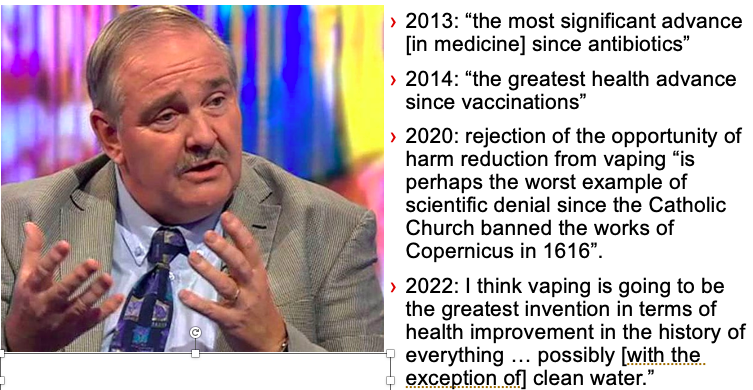
This trite factoid enjoyed massive sunlight for a few years after a 2014 meeting in which it was conjured. I took a close look at its discredited origins in this 2019 blog on the dirty dozen myths about vaping and again with others in this review in the American Journal of Public Health in 2020. Today it is richly deserved future museum piece alongside the greatest hits of the hyperbole king of vaping impact, Britain’s David Nutt.
2.Significant levels of vaping have been around now in Australia for some 10 years. If it was dangerous, where are all the bodies?
Daily vaping rates in Australiaincreased sevenfold between 2016-2023 from0.5% (100,000) in 2016 to 3.5% (700,000 people) in 2022–2023. So there are big numbers out there. Should we therefore be seeing evidence of declining deaths from smoking if so many are vaping these “extraordinarily successful” quit smoking aids? No. So when might that start being seen?
Smoking-caused chronic diseases like lung and cardiovascular disease and cancer have latency periods between first exposure and onset of symptoms and formal diagnosis of these diseases. This can vary with age of smoking commencement, duration of smoking and sex. These periods are uncommonly as soon as 15 years but much more likely to be 45+ years.
Current smokers are often diagnosed at a younger age (median ~63y) compared to former smokers (median ~69y). The overall average age for all lung cancer patients (including non-smokers) is typically around 70–72ys. So if smoking commences at ~15, latency periods range from 48-57 years (reference).
If chronic vaping also proves to cause chronic disease, we would not expect to see clear population level evidence of this until around 2050-60.
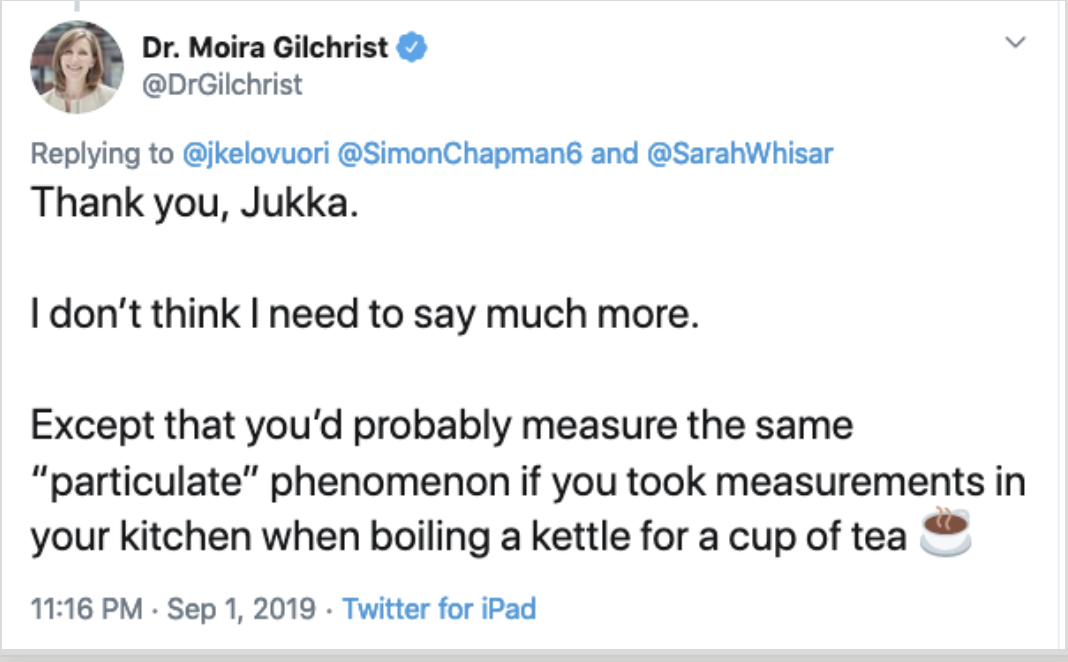
3. Vaping exposes you to particulates comparable to breathing steam from a kettle in your kitchen
The tobacco industry has decades-long form in trying to trivialise the harms of smoking. This priceless industry document from 1984 was a 20 page aide memoir for industry spokespeople being interviewed by the media about the harms of smoking. It’s not hard to imagine its genesis: “ok team, I want you to find as many things that can cause any sort of health problem that we can rattle off to interviewers who say smoking is harmful. Long hair, hot soup, hobbies. Find us more!
Thirty five years later, Moira Gilchrist, today Chief Global Communications Officer at Philip Morris International, echoed the same thinking when ridiculing silly people who worry about particulate matter exposure from vapes.
4.Flavour chemicals in vapes are just “food grade” chemicals – so nothing to worry about, folks!
Any toxicology undergraduate understands that the route of exposure or administration of a drug or chemical is fundamental in understanding its risks and benefits.Science journalist Dr Heather Goldstone put it beautifully like this (at 11m10to 24m50)
“It doesn’t take someone with an advanced degree in toxicology to understand that drinking water is different than breathing water”.
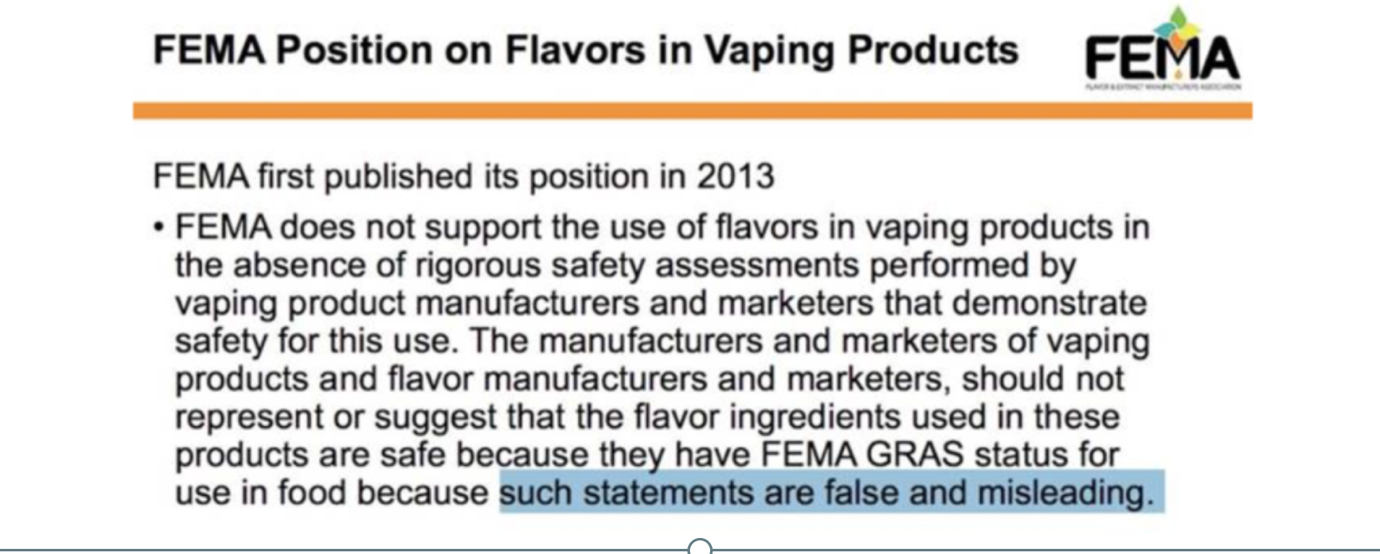
So swallowing a chemical may present a whole different risk profile to injecting, inhaling or having skin contact with the same chemical. In this blog, I looked at what the peak flavouring and extracts manufacturing association (FEMA)) in the US had to say about inhaling vapourised flavourants.
Here was an industry which earns its fortune from food, beverage and perfume smells and flavours which stood to earn gazillions more if toxicology gave the green light to adding flavourants to vapes. But twice (in 2013 and again in 2020) FEMA red-lighted the entire idea:
This has made zero impression with vaping advocates who cannot see beyond flavours being a major attractant for vaping. That’s the only myopic question they ask in their evangelical zeal.
In this 2020 blog, I examined the obvious question of why there is no inhalable pharmaceutical product anywhere in the world registered with a government drug regulatory authority which is flavoured. There’s no such thing as flavoured Ventolin (salbutamol) because flavours are totally unnecessary to the therapeutic action of salbutamol. People with asthma do not sign petitions demanding mango or watermelon flavours in their puffers. But vaping advocates will tell you again and again “nothing to worry about” – go ahead and try any one of these beguiling thousands of flavour chemicals, you suckers. Vaping is sooo important, it’s beyond being tied up in the regulations that all therapeutic goods have to meet.
5. “The liquid excipient propylene glycol used in vape liquid is harmless to breathe”
Nicotine in vapes is mostly infused in liquid propylene glycol (PG), along with nicotine, flavourings and temperature control chemicals. When a vape is inhaled, a metal coil in the vape heats this mixuture to 300o Celsius.
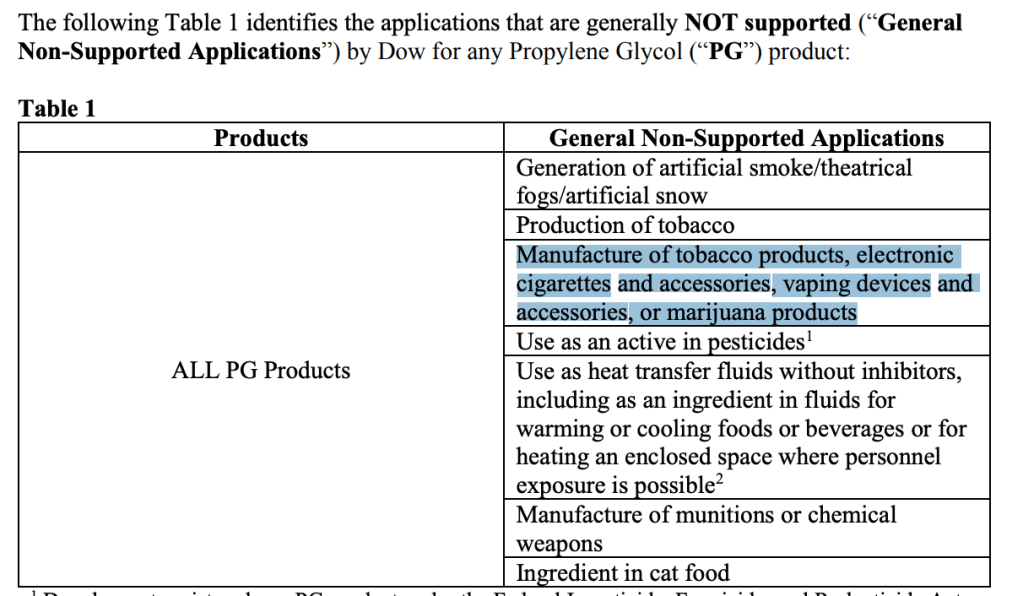
Dow Chemical, a major manufacturer of PG in 2019 explicitly named PG in vaping devices and accessories as a “non-supported application”. With the vast earnings potential for Dow in embracing PG in vapes, clearly the risk exposure to the company in doing so must have been assessed as massive.
6. Vaping liquids have cooling agent chemicals added to them to mask harshness
It’s not just PG, flavouring chemicals and nicotine that is added to the brew in vapes. University of Wollongong researchers detected the synthetic cooling agentWS-23 ((N-ethyl-p-menthane-3-carboxamide) in often high concentrations in all disposable vapes they tested. They noted that cytotoxicity studies have found that concentrations of WS-23 below those observed in e-liquids produced adverse effects in cell viability assays.
7.Heavy metal in your lungs, not just in your ears
Heated metal coils in vapes have been shown to shed micro particicles of heavy metals which are inhaled into the lungs.Korean researchers found e-cigarette users exhibited significantly higher serum concentrations of heavy metals than non-smokers. Lead levels were 10 % higher, mercury levels 13.7 % higher and cadmium levels were 61.4 % higher Cigarette smokers demonstrated elevated levels of these metals compared to non-smokers, but had generally lower levels than e-cigarette users.
8. Nicotine levels in vapes are not very addictive
Alex Wodak the tireless Australian vape promoter, says hand-on-heart that “vaping is not terribly addictive”. So consider this recent ABC video at 2m50s where a vaper says he goes through one 5000 puff disposable vape every four days and vapes “first thing in the morning and last thing at night” That’s 1,250 deep lung bastings every day. He’s vaped for four years. So that’s 1.825 million puffs pulled deep across the pink lungs of his mouth, throat and lungs across that time. Not terribly addictive. Yeah, right.
In this observational study of vapers allowed to vape ad libitum (ie as much or as little as they liked), for 90 minutes using their own vaping equipment, the median number of puffs taken over 90 minutes was 71 (i.e. 0.79 puffs per minute or 47.3 per hour). If a person vaped for 12 hours a day at that rate (generously allowing 12 hours for sleep and periods of non-vaping), this would translate to 568 puffs across a 12 hour day or 207,462 times in a year.
But in the ABC video we have a current vaper probably using a vape with five-fold higher nicotine dose than earlier generations of vape.
9. “Nicotine in the doses people get from vaping is all but benign”
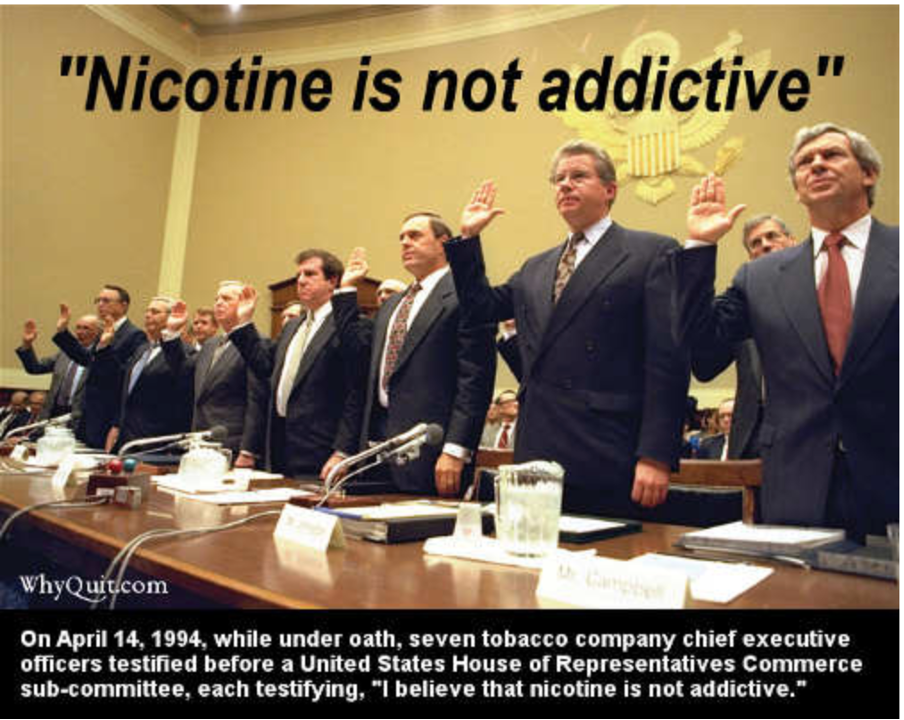
The sine qua non of smoking is nicotine. Marketing flashes in the pan like nicotine free herbal cigarettes have all been total market failures because smokers smoke to re-dose themselves with nicotine. The industry fiercely resists proposals for mandated nicotine-free cigarettes, from similar concerns. The industry and its supporters for decades publicly denied nicotine was addictive. After oceans of its internal documents showed this to be an elaborate collusion to stall regulation and reassure the public, it changed its tune.
The chorus then changed to “well yes, it is addictive but its harms have been demonised and besides, it’s pleasurable!”. In 2019 I compiled this selection of research about concerns with nicotinepublished in notable journals including Nature Reviews Cancer, Lancet Psychiatry, American Journal of Psychiatry, Mol Cancer Res, Critical Reviews in Toxicology, Carcinogenesis, Mutation Research, Int J Cancer, Apoptosis and Biomedical Reports. These concerns are seldom mentioned by those who recite Michael Russell’s dictum that “People smoke for the nicotine but they die from the tar” as a talisman against any expressed concerns about nicotine.
I’ve also listed numerous recent reviews of the emerging evidence about vaping and precursors of respiratory and cardiovascular disease. This evidence hardly describes an assessment of vaping as a benign practice akin to inhaling steam in a shower or having a couple of cups of coffee a day, analogies we hear used by vaping advocates.
Vaping cheer leader psychologist Peter Hajek said in 2013“Nicotine itself is probably safer than caffeine ….The case for regulating e-cigarettes as a pharmaceutical product is on a par with regulating coffee.”
In this piece in The Conversation, I looked at the nature of the pleasure that smokers claim for smoking. Just as we all get pleasure from the end of a terrible movie when we are finally able to escape from the middle of a row in the cinema, or from codeine when it works to quell a bad toothache, I argued that nicotine’s reputation for pleasure is mostly about each puff subtly relieving the onset of nicotine withdrawal sensations:
“Smokers know from the earliest days of their addiction these feelings can disappear within a few seconds as the nicotine is rapidly transported from their lungs to their brains where dopamine is released and experienced as pleasurable.
Smokers often insist the pleasure from this release can somehow be experienced independently of the pleasures of the nicotine withdrawal symptoms rapidly dissipating.
So what is the “pleasure” being experienced here? When you have a toothache and this is relieved by a strong analgesic, your mood can quickly elevate as the codeine begins to work.
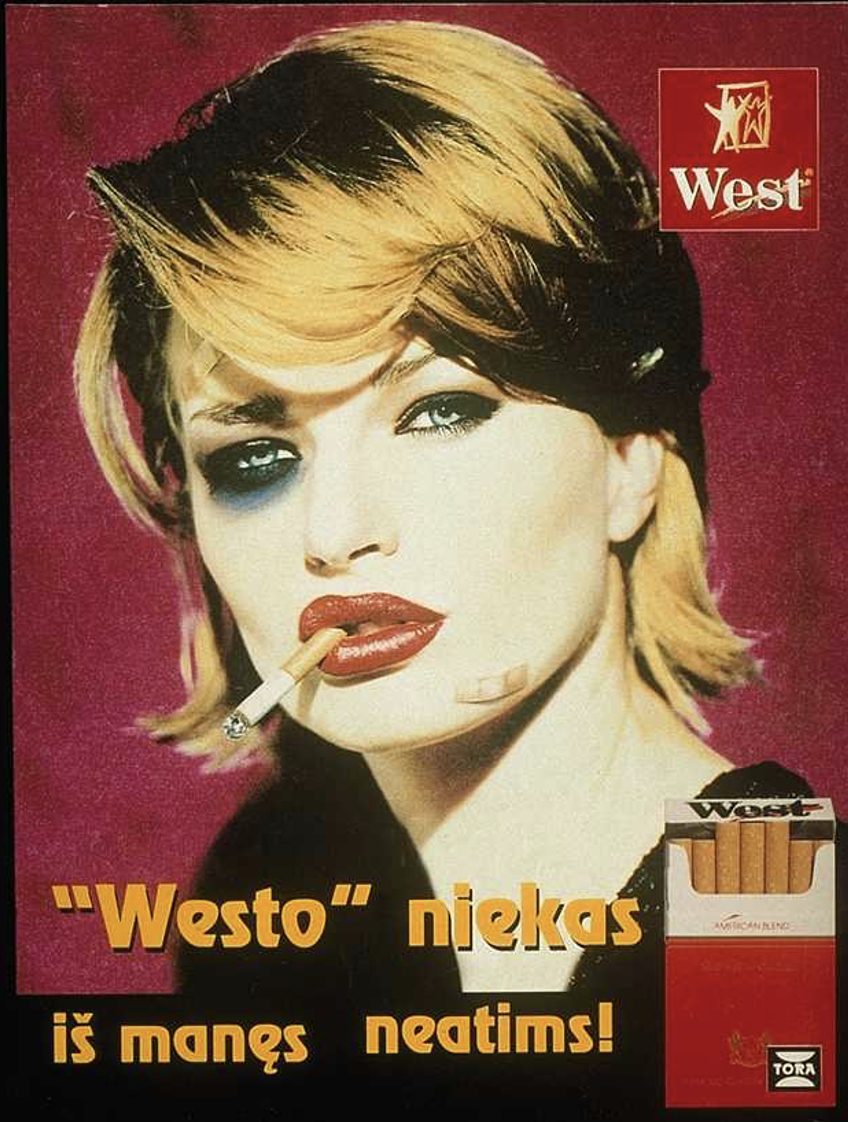
The argument that smoking and inhaling nicotine is “pleasurable” is a bit like saying being beaten up every day is something you want to continue with, because hey, it feels so good when the beating stops for a while.”
Latvian ad for West cigarettes.
Translation: Westo -This shit won’t take it away from me.(ie I’d rather be beaten up than stop smoking West)
Also in this series
Vaping theology: 1 The Cancer Council Australia takes huge donations from cigarette retailers. WordPress 30 Jul, 2020
Vaping theology: 2 Tobacco control advocates help Big Tobacco. WordPress 12 Aug, 2020
Vaping theology: 3 Australia’s prescribed vaping model “privileges” Big Tobacco WordPress Feb 15, 2020
Vaping theology: 4 Many in tobacco control do not support open access to vapes because they are just protecting their jobs. WordPress 27 Feb 2021
Vaping theology: 5 I take money from China and Bloomberg to conduct bogus studies. WordPress 6 Mar, 2021
Vaping theology: 6 There’s nicotine in potatoes and tomatoes so should we restrict or ban them too? WordPress 9 Mar, 2021
Vaping theology: 7 Vaping prohibitionists have been punished, hurt, suffered and damaged by Big Tobacco WordPress 2 Jun, 2021
Vaping theology: 9 “Won’t somebody please think of the children”. WordPress 6 Sep, 2021
Vaping theology: 10: Almost all young people who vape regularly are already smokers before they tried vaping. WordPress 10 Sep, 2021
Vaping theology: 11 The sky is about to fall in as nicotine vaping starts to require a prescription in Australia. WordPress 28 Sep, 2021
Vaping theology: 12 Nicotine is not very addictive WordPress 3 Jan 2022
Vaping theology 13: Kids who try vaping and then start smoking,would have started smoking regardless. WordPress 20 Jan, 2023
Vaping theology 14: Policies that strictly regulate vaping will drive huge numbers of vapers back to smoking, causing many deaths. WordPress 13 Feb, 2023
Vaping theology 15: The government’s prescription vape access scheme has failed, so let’s regulate and reward illegal sellers for what they’ve been doing. WordPress 27 Mar 2023
Vaping theology 16: “Humans are not rats, so everybody calm down about nicotine being harmful to teenage brains”. WordPress 13 Jul, 2023
Vaping theology 17: “Vaping advocates need to be civil, polite and respectful” … oh wait. WordPress 3 Oct, 2023
Vaping theology 18: Vaping is a fatally disruptive “Kodak moment” for smoking. WordPress Oct 30, 2023
Vaping theology 19: Vaping explosions are rare and those who mention them are hypocrites. WordPress 17 Nov, 2023
Vaping theology 20 : Today’s smokers are hard core nicotine dependent who’ve tried everything and failed – so they need vapes. WordPress 14 Dec, 2023
Vaping theology 21: Australia’s prescription vapes policy failed and saw rises in underage vaping and smoking. WordPress 10 Jan, 2024
Vaping theology 22: “Prohibition has never worked at any point for any other illicit substance”. WordPress 17 Mar 2024
Vaping theology 23: “84% of the Australian public are opposed to the way the government will regulate vapes” WordPress 2 Apr, 2024
Vaping Theology 24: “Tobacco control advocates are responsible for vape retail store fire bombings and murders. WordPress 27 May, 2024
I’ve written before about the (clears throat) rather modest turnouts that vaping theologians attract to their meetings, events and public protests. (see 2023, 2021 and 2019)
So what sort of stadiums are being filled these days?
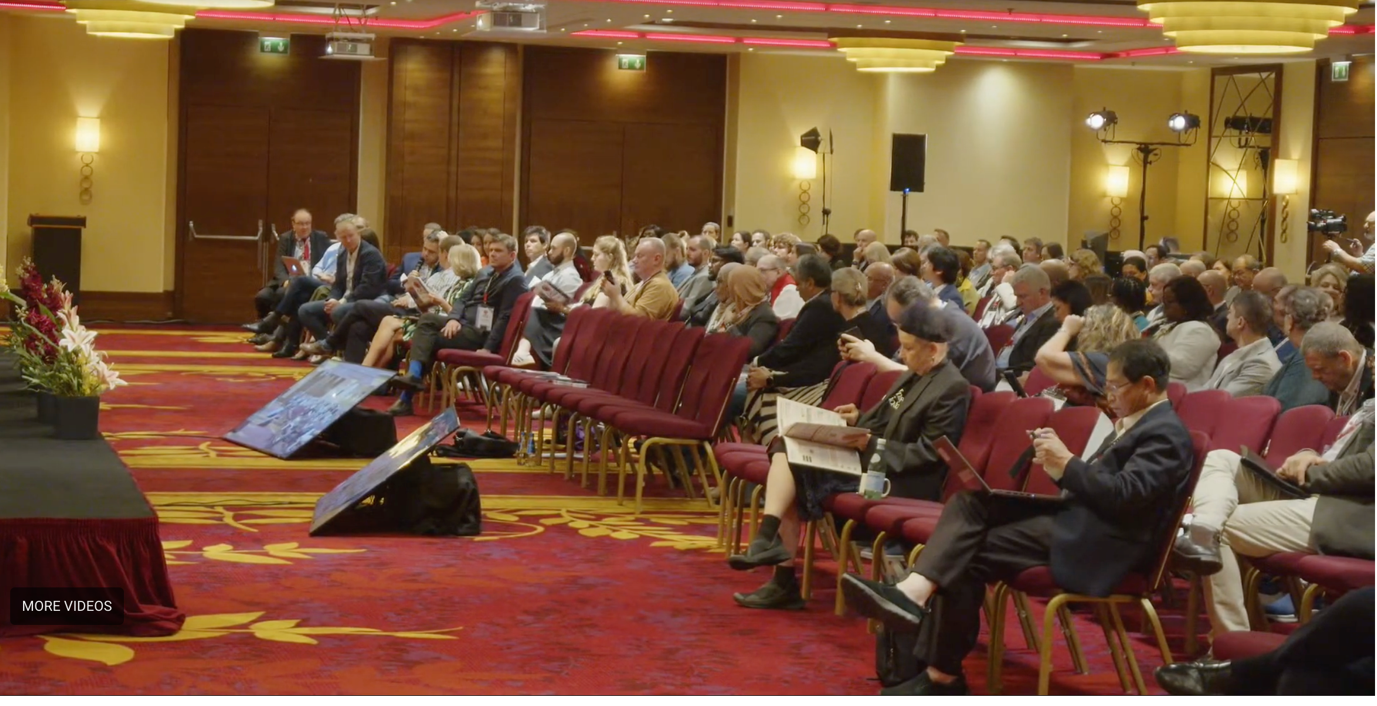
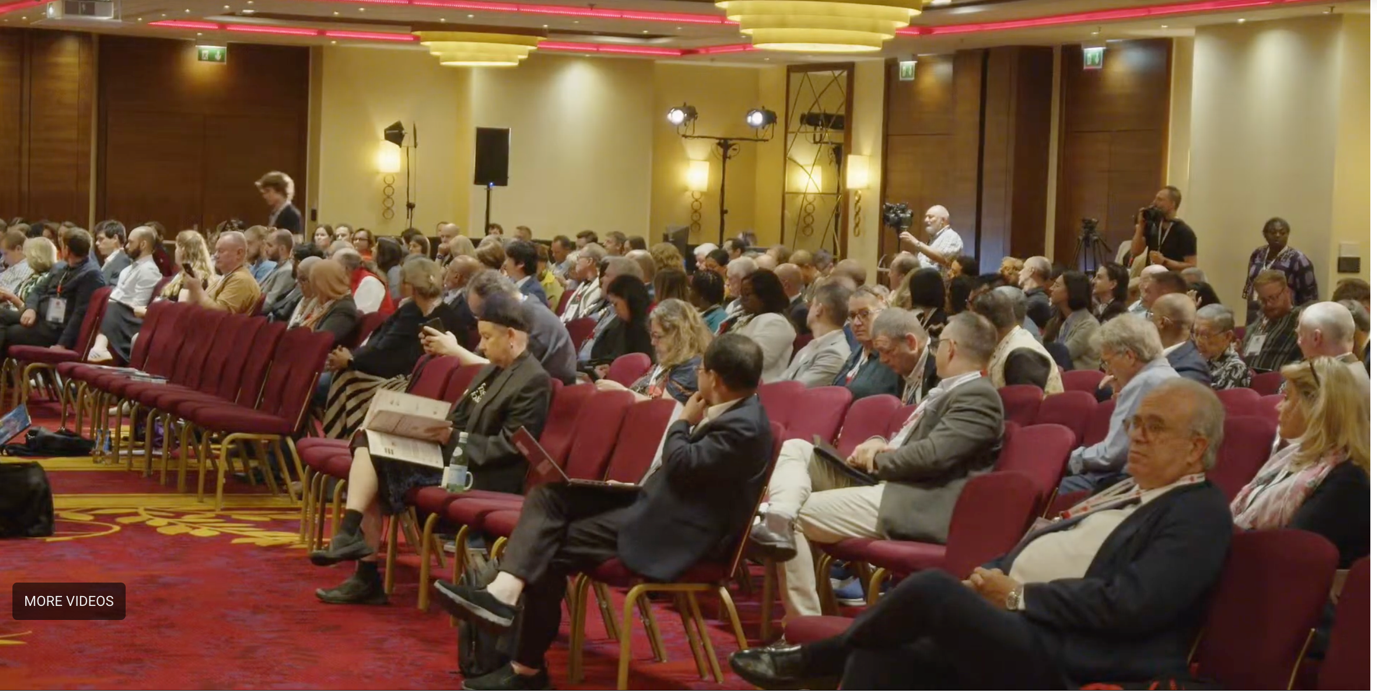
Spoiler warning: just seven rows – with plenty of empty spaces – in a small hotel conference room.
Since 2014, the global vaping shindig, the Global Forum on Nicotine, has been held mainly in Warsaw, Poland in June each year. At the opening session of GFN 2025, Aussie Dr Carolyn Beaumont pondered from the lectern about the “tough gig” health professionals like herself — “doctors, pharmacists, nurses, dentists, social workers, psychologists” have when speaking up for vaping. She asked “I’d like to see a show of hands in the room. Who is a health professional?” Raising her own hand in encouragement, she continued “quite a number. So maybe not quite 20, but more than 10. Let’s aim for double that next year.” (go to 41m49s here). Thinking big!
So how many were in the room for the riveting opening session of this international gathering of the clan? Opening sessions are typically the best attended at conferences, with no parallel sessions running to syphon delegates away. My thumb counter and magnifying glass looking at the two screenshots below suggest all of about 70-80, if that. But how many around the world couldn’t make the gig but watched it live for up to 8 hours a day over three days, or more likely at their leisure later on-line? The youtube of the opening session, 7 months down the track, has pulled all of 337 viewers. Seven-month data on viewers for the three days of the meeting were 799 (day 1). 593 (day 2) and 324 (day 3) with a panel chaired by legend Clive Bates and featuring former WHO tobacco czar Derek Yach who went on to run the Philip Morris-funded Foundation for a Smoke-Free World, pulling 79 viewers in 6 months, surely some sort of record.
This year’s Michael Russell orator at the meeting has so far pulled a streaming audience of 422 over 7 months. But what must Australia’s own 2025 Michael Russell award winner, failed 2025 Senate aspirant Fiona Patten, have made of such a crowd, flying all the way to Poland and back to take it straight to her pool room?
Patten thought she had hit pay-dirt by describing Australia as the “global village idiot” of tobacco control. It’s hard to know where to begin in addressing such ignorance. But try my 2025 critique of an ill-informed opinion piece she wrote in the Sydney Morning Herald.
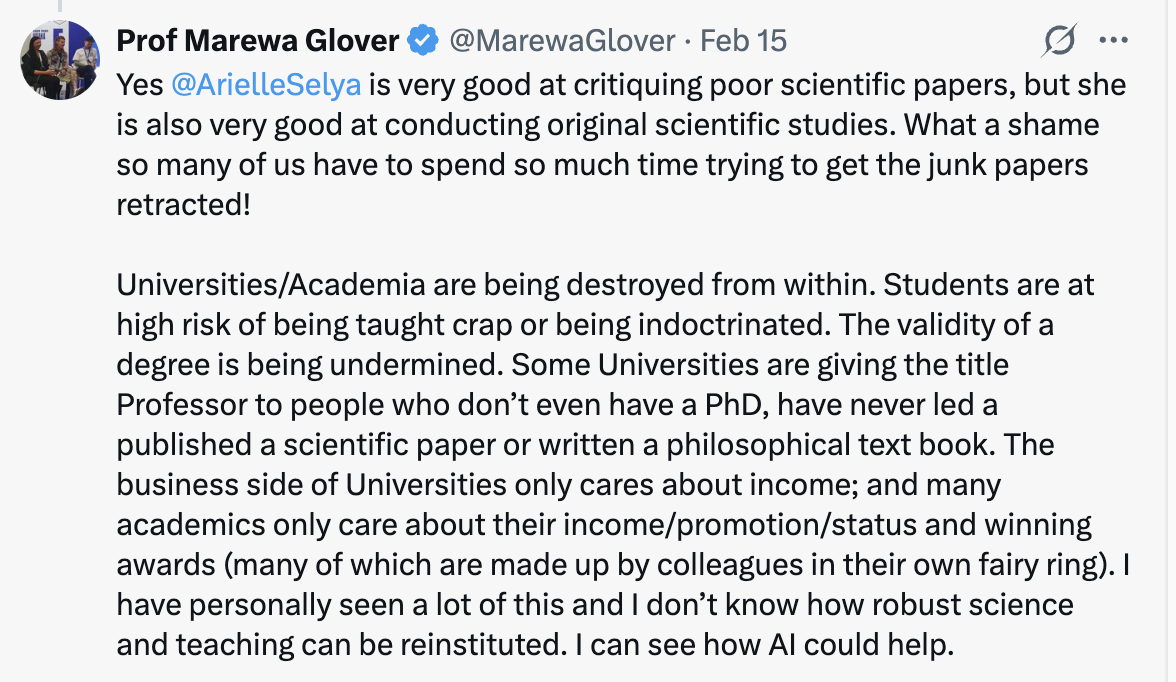
A regular at the Warsaw meetings, New Zealand’s Marewa Glover, on X this week (Feb 15 2026) lampooned academic standards on vaping, writing:
“many academics only care about their income/promotion/status and winning awards (many of which re made up by colleagues in their own fairy ring).”
Nearly eight years after resigning her Massey University position in May 2018 Glover still uses the title “Prof” in her X handle (see below) but has not held an academic appointment since. Her COREISS page says “Marewa was a Professor in Public Health at Massey University” (my emphasis). Most universities confer emeritus professorial titles on retired professors who continue to serve their alma maters in reduced capacities.
The cacophonous opening soundtrack used on GFN youtube videos promises viewers the excitement and crowd of a Brazilian football final. But what you get has the crowd and all the excitement of a VIP room at a suburban pub on a winter’s night on a Tuesday.
My old rock covers band could pull far larger crowds than full plenary sessions at GFN meetings. And that’s saying something.
Mass shootings like Port Arthur, Christchurch and Bondi focus nations’ minds on gun control far more than day-in-day-out shootings where one or two typically die. Mass shootings demand political response: something must be done. Thoughts and prayers are never enough. Parliaments rapidly convene and the usual suspects roll out their talk of knee-jerk reactions and of “decent, law-abiding citizens” whose freedoms to own frighteningly lethal weapons must never be impinged. On cue, Nationals like Bridget McKenzie and One Nation’s new recruit Barnaby Joyce didn’t disappoint in the last week, climbing in their tardis and repeating discredited arguments from 30 years ago.
In their world apparently, there are decent law abiding gun owners and those who should never be let near guns. But in ten mass gun homicides at Hoddle St, Melbourne (1987), Canley Vale NSW (1987), Oenpelli Northern Territory (1988), Strathfield (1990), Terrigal (1992), Hillcrest Queensland (1996), Port Arthur (1996), Osmington, Western Australia (2018), Christchurch (2019) and Bondi (2025) all the perpetrators had neither any history of violence nor any documented history of mental illness.
Two of these attracted post hoc descriptions of the shooters being strange or loners, joining millions who might attract such comments. Until they started shooting, all were McKenzie’s and Joyce’s law abiding citizens.
The new laws will give police greater powers to do background checks on gun licence applicants. One of the Bondi shooters was licensed and had six legal, registered weapons which he shared with his unlicensed son. So will more thorough licence application checks require police to also investigate the backgrounds of all family members too – sons, brothers, fathers, uncles? And what about all associates and friends? Might not someone with an unblemished background easily be a conduit who could pass their legal guns and arsenal of ammunition others? Clearly all such possibilities are way beyond any realistic chance of being investigated.
But we don’t use the same arguments about any form of policing. Every day a random breath testing unit picks up a few over the limit, many more are driving intoxicated without being caught. It’s the same with speeding. So stop both of these practices because they fail to eliminate all dangerous driving? Really?
Port Arthur saw sweeping reform centred on the outlawing of semi-automatic rifles and pump action shot guns from civilian ownership, gun registration and mandatory locked storage in homes. In the 17 years before Port Arthur, there were 13 mass gun homicides where four or more (not including the killers) died. In the 30 years since, there have been two: a six victim familicide in Western Australia and Bondi.
After I published a report 20 years on from the 1996 reforms, opponents of the changes were arguing that a mass shootings are rare events and that the 20 year absence of massacres then might just be a chance occurrence. We calculated the likelihood of this being mere chance was some 200,000 to 1 and that had the trend of mass shootings pre-Port Arthur continued, we would have expected another 16 mass shootings. We had none in 20 years, with just two since.
Bondi revealed that 30 years after the 1996 Port Arthur triggered National Firearms Agreement, a functioning national system of seamless gun registration is still not a reality. The police can get and share instant information on criminal records, vehicle registration and driver licensing. All our medical records are available to any doctor with our consent. The intransigence with gun registration is utterly scandalous.
We can expect the new reforms will reduce the probability of future massacres, but may not eliminate them. Gun control advocates have long asked governments to require all licensed weapons to be stored in high security community armouries, user paid through gun licensing and registration. This has never been taken up. Maybe next time.
My wifeTrish, with George Clooney in Bellagio, 2014
If someone’s had a brush with fame, they tend to want to tell everyone about. I’ve had a few. So OK, let’s get them all out there.
Peter Cook and Sir Alec Guinness
I lived in London in 1973, working in the library at the Natural History Museum in South Kensington (see short story here at p 24). One day I went to browse in a record bar in Mayfair. Behind the counter was an ex-Bathurst boy, Peter Dixon (I’d grown up there). As we chatted, he was full of stories about who came into the shop and their musical tastes. One who did so often, was Barry Humphries.
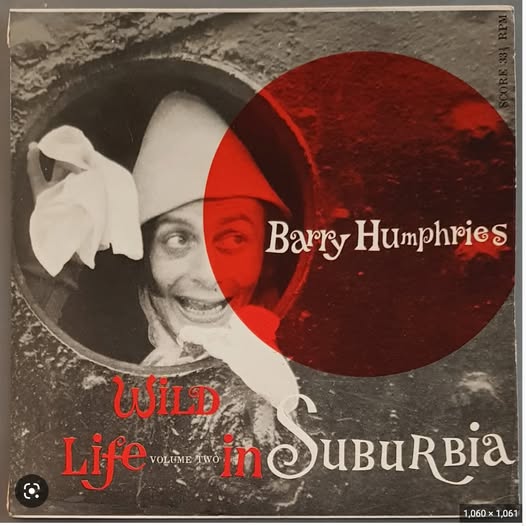
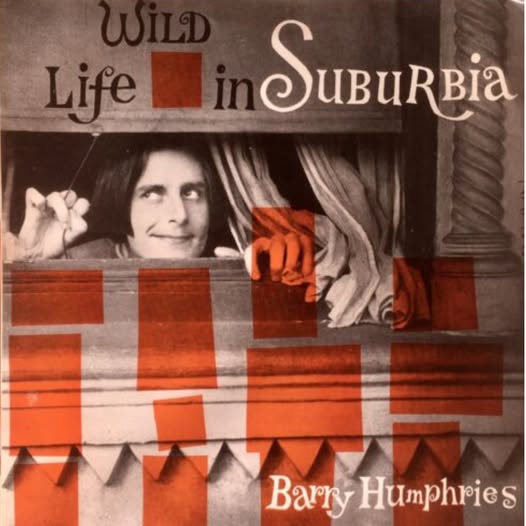
Humphries had been on the wagon for many months with his alcoholism and was soon to perform in an invitation-only comeback show in the small, intimate theatre of the May Fair Hotel. Peter had been given a ticket. I had long had a passion for Humphries’ Sandy Stone character and still own both of the very rare 7 inch 33rpm Wildlife in Suburbia records from 1958-59, that I bought as a boy (pictured below). I can recite lengthy monologues of two of them (Days of the week, Sandy’s Christmas). [both for sale if you’re interested]
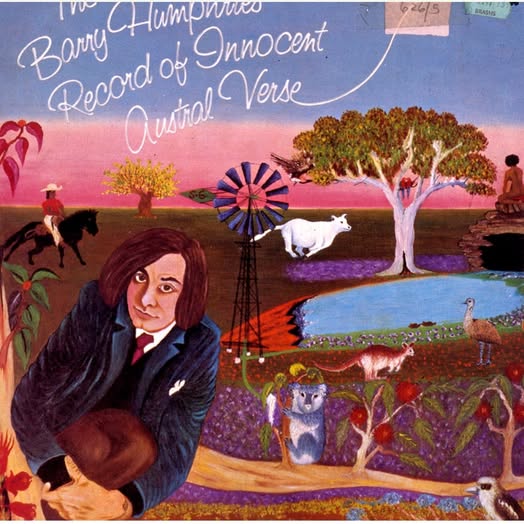
I told Peter all this and he said he’d ask Barry if I could have a couple of tickets (one for my first wife, Annie). I went in next week and was handed the tickets and an autographed copy of his recent LP The Barry Humphries Record of Innocent Austral Verse.
On the big night, we shuffled into our numbered seats. I was right next to Sir Alec Guinness (1914-2000) and Peter Cook (1937-1995) (of Peter Cook and Dudley Moore) was in the seat in front of me. I had to squeeze past Dianna Rigg (1938-2020), star of The Avengers.
What a night.
Mel Gibson
In the 1970s and 80s, I was a regular at the Roma café in Sydney’s Haymarket, just down from the Capitol Theatre. I worked for a time in the McKell Building just behind the Capitol. I’d always have a cappuccino and one of their legendary almond twists. Mad Max had been released in April 1979, starring Mel Gibson. It was huge for him. So one morning I was alone at a table in the Roma, and there he was, on his own, standing and asking me would it be OK if he shared my table. No problem, Mel. No small talk. Just a quiet coffee.
The Rev Fred Nile
I was flying from Amsterdam to Sydney, and in business class in the upper deck of a 747 where you are next to another passenger. It was before the days of the pull up screen that shielded you from the person in the next seat. I had boarded earlier than whoever it was who would be sitting next to me. Then along he came. It was Fred Nile, Australia’s dour morals crusader. The Sodom and Gomorrah cataloguer, stepping out of the Amsterdam cesspool. Oh Jesus. I nodded at him as he took his seat but that was our only interaction on that very long, silent flight.
John Brass, dual-code rugby international
On a flight from Sydney to London, I had the third seat in an economy row with John Brass and his wife. Brass was an Australian dual rugby and rugby league international, playing 12 matches for Australia in rugby (1966-68) and 6 in league (1970, 1975). League match commentator Frank Hyde used to say he had the best pair of hands in rugby league. I’d been a huge Eastern Suburbs Roosters fan in the 1970s and so had lots to talk about. We got through quite a few beers and he loosened up about all his old team mates. The nicest of guys.
Tina Turner
Many years ago, I’d seen Tina Turner perform at St George Leagues Club in Sydney’s suburbs. I went along with some Aboriginal health students who were down from the bush. She was without doubt the most high energy performer I ever saw. The students were hugely excited. I think it must have been around the same time, I was on a flight to Melbourne. She was on board, it was her birthday and she came down the aisle with a trolley with a giant birthday cake, serving every passenger a slice. People loved it!
Luc Longley
On July 20, 1995 I found myself at a table at a black tie dinner at Sydney’s Darling Harbour for the 2000 Sydney Olympics. I’d received an invitation to attend and had no idea why. I’m far from loaded and while we have always donated to various charities over the years, forking out for the Olympics couldn’t have been a lower priority. This was what imagined was the purpose. But no.
I was seated in a pre-arranged seat around a circular table along with about 10 others. Opposite me was a towering figure who was vaguely familiar. I sheepishly asked the man on my right who he was. He didn’t know either, but it was Luc Longley (2.18m) who played for the Chicago Bulls basketball team. So who was my other ignorant informer? Only Allan Moss, the CEO of Macquarie Bank. When he retired in 2008, he walked away with an estimated $100m package.
Oh boy. What could I talk about to him over the next couple of hours? It was well before the time when your bank sent those infernal messages to you “after your experience with his today, how likely are you to recommend us to your friends and family”, but even back then, talking about banking was still about the least interesting topic I could imagine. I knew nothing about investment banking. At the time Macquarie did not have a consumer division with actual customers to allow my to ask all the questions I didn’t have.
I knew his wife was Irene Moss, former head of the NSW Anti Discrimination Board, but figured he would feel my asking about his wife’s important job rather than his was sub-par. I don’t recall him asking me anything about my work or life. So it was a long night. We both had little conversation for each other.
I found out later that the dinner was all about bringing the top end of town on board the Olympics, with hopes of corporate splashes. Each table was assigned two “interesting” people to embellish the event: Longley and me, apparently. I was a fizzer. Moss might have got his $100m but, hey, I still have the souvenir wine glass.
Slim Dusty
In the 1970s, worked with a woman for while whose boyfriend played violin in Slim Dusty’s band. She called me one Saturday morning and said Slim was playing Cronulla League’s Club that night and they were short of a road crew dog’s body. Did I want a night’s work? I jumped at it and went down in the afternoon to help unload the sound gear from a truck. They then asked if I would stay around till the end of the gig that evening and act as door marshal to the band’s backstage room, and then help pack up.
The brief was that after every gig there would be small queue of people who would want to meet up with Slim. My job was to explain nicely that he was very tired after a long day and, sorry, he couldn’t see fans. I hope they understood etc.
About 15 or so came toward the backstage entrance and most were OK with being turned away. But there were a few who were ready with stories to see them past my imposing presence. One pulled out a photo of a small child and said to show it to Slim because he’d been to her christening as a baby in some Queensland backblocks town years ago. “He’ll remember me, for sure”. He stood his ground, so I went in and summarised the situation to Slim. “Oh well, I guess I’d better be Slim Dusty for a while” he said putting in his hat and stepping outside to greet the beaming bloke.
Pat Cummins
In November 2023, I was with my wife and very young grandson at Clovelly beach about 9am. Its sheltered bay is perfect for toddlers to paddle in the water. There were four or so mothers with similarly young kids and a bunch of schoolboys doing some sort of drills on the sand in in the water with a teacher.
Suddenly Trish said “wow, do you see who that is coming out of the water? It’s Pat Cummins!” Nah, couldn’t be I said. He’s in India at the cricket World Cup. They just beat India in the final.
But hang on. He might have just flown home. The final was the day before. He could have flown home overnight. And I’d read somewhere he lived in Clovelly. Maybe went straight to have a swim and freshen up.
But the more I looked, I thought no. He seemed tall enough, but he didn’t seem to be as tanned on the arms and face as you’d expect after weeks in the Indian sun. He was apparently with his wife and child. Trish googled the wife and yes it was her.
But no one, including us, went near them. Just another family having a morning swim. Pat came along to the outdoor shower with his child when we were there with ours. Some light chat about what a great day it was but again, il silencio about the cricket.
Is there any other country where a national sporting hero, one day after winning the World Cup, could be with his family on a beach and be left alone?
Australia’s epidemic of illicit (untaxed) cheap cigarette shops is entering a new phase as Australian Border Force reports record seizures and three states (South Australia, Queensland and New South Wales) have taken off the kid gloves and are now hammering illegal tobacco retailers.
Australian Border force data show “From 1 July 2024 to 30 June 2025, the ABF made 23,097 illicit tobacco detections, seizing 2.53 billion cigarette sticks and 435.46 tonnes of loose-leaf tobacco. This equates to a total of over 2,091 tonnes of illicit tobacco products seized and prevented an estimated $4.36 billion in duty evaded across the financial year.” In the first quarter of the 2025/2026 financial year, a further “586 million cigarettes and over 3 million vapes have already been seized at the Australian border in the first quarter of this financial year (1 July – 30 September)”.
Queensland has recently introduced fines of up to $161,300 or one year jail for a commercial landlord who knowingly allows a tenant to sell illegal cigarettes and vapes. Its store closure powers are now 3 months, up from a mere 72 hours, once commonly referred to as “the tobacconists’ long weekend”. The Health and Ambulance Services Minister Tim Nicholls describes the new laws as “an absolute game changer“.
South Australia has now closed 100 shops for 28 days, with two closed for much longer with another eight before the courts facing long term closure and massive fines; seized 41 million cigarettes (2.05 million packs); and 140,000 vapes.
NSW Health began getting serious when legislation enabling on the spot 90 day closures, stock seizures, landlord fines and serious maximum on-the-spot fines ($1.54m) came into effect from the first week in November. The Department updates its register of busts each Friday, with the current list now at 40 closures.
In early December raids on homes and storage facilities saw arrests and seizures of 10 tonnes of illegal tobacco.
Western Australia and Victoria which have historically been on the national podium for their early adoption of most tobacco control laws and regulations but look certain to get the booby prize on this issue, both still playing catch-up with other states .
For as long as governments have taxed tobacco, tobacco companies have lobbied for the taxes to be frozen or reduced. For over 40 years they have had day-by-day, shop-by-shop, brand-by brand data on the sales impact of every variable know to reduce or increase cigarette sales. Significantly here, tax increases have always been in the industry’s crosshairs because they depress sales.
Sweet spot tax fantasies
It’s been standard for several years now for those in lockstep with Big Tobacco’s calls for lowering tobacco tax to call for a halt to rises and to make allusions to tobacco excise tax actually falling. Deakin University criminologist James Martin has been in the forefront of these calls for Australia’s tobacco tax to be lowered but until quite recently had been too shy to give us all his expert figure on a new “sweet spot” for a tax reduction. This would be the point where many smokers would abandon buying cheap illicits and go back to paying for legal taxed cigarettes.
Today, if you buy a carton illegal cigarettes, you can get them for as low as $7 a pack of 20. A common range for a single pack is $10-$15. Martin and Alex Wodak dodged naming a tax rate in July 2025 in a Crikey piece when vaguely urging “reducing tobacco excise to undercut the illicit trade”. Something called “Harm Reduction Australia” published an unsigned Tobacco Harm Reduction Policy Brief , presumably covered with the fingerprints of its tobacco harm reduction advisors, Wodak and Martin. They suggested that the tax be reduced to the level it was in 2020. In this August 2025 blog, I did the maths, and generously took the hypothetical cuts even further back to 2019 tax levels to see how things tasted.
If this occurred today, the retail price of a reduced tax pack would fall to some $22, still $7 or 47% more than a pack of $15 illegals or $15 more than the $7 a pack when buying by the carton price.
So on what planet would anyone be living on who seriously thought such a tax reduction would see droves of smokers rush back to the newly reduced tax legal cigarettes?
Eliminate tobacco tax … to get more smokers buying taxed tobacco!
This ludicrous penny may well have finally dropped for Martin when in November he was publicly quoted in the Singapore Straits Times that “taxes would need to be significantly lowered and even eliminated to discourage criminals from operating a black market.” [my emphasis]. Eliminated. Now how would this work?
Let’s walk through his brilliance.
So … the government has a problem that it’s losing lots of tax revenue because many smokers are buying illegal untaxed cigarettes. To fix this, Martin suggests that the government should consider dropping all tobacco tax. If it did this, there would of course be no tobacco tax to collect, but, hey, these now (legal) untaxed cigarettes would be competitive with (illegal) untaxed cigarettes and the black market would be “discouraged”. All following this?
But wait… with the newly tax-free legal cigarettes, where would the government get the extra river of gold of tobacco tax revenue from that it desperately needs, since it would have just eliminated it all? Whoops!
Enter the Davidson
The latest player to step forward into this mess is Professor Sinclair Davidson from Victoria’s RMIT. Davidson, an adjunct ‘fellow’ at regulation-scything Institute of Public Affairs has been an anti tobacco control warrior for sometime via his now defunct Catallaxy Files blog and his four time participation in Big Tobacco’s annual invitation-only global shindig, the Global Tobacco and Nicotine Forum.
In a paper for the Centre for Independent Studies, Davidson is also shy of telling us what his tobacco tax cut/illegal tobacco ending magic number is. All he’s willing to say is that it would be “stabilised within an economically defensible range”. And that would be?
Google Scholar shows Davidson has had 320 publications since 1991, 134 (42%) of which are uncited. Six of these are about tobacco, which have attracted all of 26 cites. That’s his form in all this. Still, a 42% never-cited rate is a lot better than the 82% rate reported across the humanities.
Those lobbying hard to get governments to do something sensible to wreck Australia’s illegal tobacco and vapes market are in an unlikley choir that has never sung from the same hymn sheet before. It includes Treasury, the convenience store, tobacco and vaping industries, and public health. All are very keen to see illicit tobacco trade fall dramatically. Treasury wants tobacco tax to grow, and the three industries want their tobacco sales revenue streams back. Public health and government want smoking to fall, and non-smokers (especially kids) to not buy vapes or tobacco, as they increasingly are failing to do.
Wastewater nicotine analysis: total nicotine is falling, not rising
Here, wastewater nicotine analysis offers a potential lever for the industry interests to pull in its lobbying for tax reduction. We have all seen illegal tobacco shops openly trading, and some think this must mean that more people are smoking to make this trade viable. But is it actually true that cheap illegal cigarettes are causing more people to take up smoking and less to quit? Or is it just moving lots of current smokers from legal sales outlets to much cheaper illegal ones?
Here, Davidson quotes from the National Wastewater Drug Monitoring Program’s (NWDMP) latest report for 2023-24 .They have been testing since 2016-17, publishing data on nicotine found in wastewater (sewage) in testing sites serving 57% of the Australian population (14.5m) with both regional and capital city sampling.
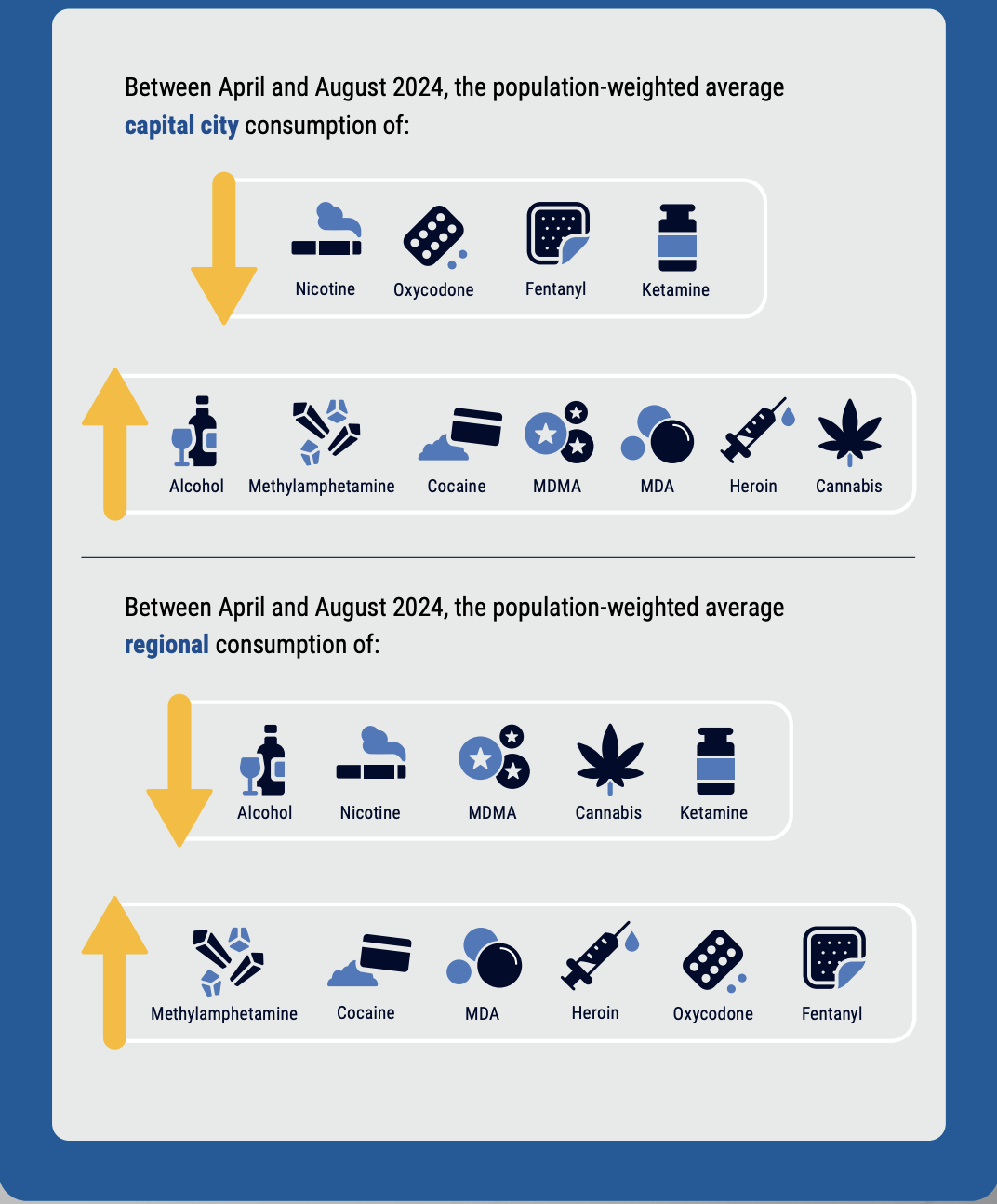
The summary below from its latest report shows that between April and August 2024, population weighted nicotine consumption fell in both regional and capital city Australia. In fact this fall has been going on since August 2023: page 16 of the report states that while illegal tobacco and vape retailing was booming “for nicotine, average consumption [across Australia] decreased between August 2023 and August 2024” Although page 87 notes that “average capital city nicotine consumption then increased from August to October 2024”.
Contrast those words with Davidson’s at p6 of his report “Wastewater analysis reinforces this picture: between August 2023 and August 2024, aggregate consumption of nicotine rose to above long-term averages”. The NWDMP reports on “average consumption decreased” (ie population weighted) while Davidson says “aggregate consumption … rose” (ie total consumption unweighted for population growth).
Sorting different sources of nicotine
The NWDMP’s testing to estimate consumption of nicotine is done by measuring two nicotine metabolites, cotinine and hydroxycotinine. Their report notes on page 32 that this method “cannot distinguish between nicotine from tobacco, e-cigarettes, or nicotine replacement therapies such as patches and gums” and that “consumption of nicotine has increased over the life of the Program” (p59)
This is hardly surprising. Vaping in Australia rose substantially between 2019-2023 and in 2022-23, 233,544 PBS prescriptions were issued for nicotine replacement therapy (NRT), some 43% of the estimated NRT market (a majority of which is over-the- counter sales in pharmacies and supermarkets). So together with nicotine from vapes, this NRT sourced nicotine represents a river of excreted nicotine in the sum of total nicotine in Australian sewage systems, a point acknowledged by Davidson.
Emerging science points to possibilities of testing wastewater to get separate estimates for total nicotine (cigarettes, vapes and NRT combined) including that only from cigarette use.Anabasine and anatabine are minor alkaloids found in tobacco but are absent in NRT. However anabasine is present not just in cigarettes but also in e-liquids and aerosols. So challenges remain to test for estimates of only tobacco use (leaving out NRT and vaping nicotine exposure).
This is an area of science very much in its infancy, with the take-home message being that we all need to remain sceptically alert to crude claims that “wastewater” analysis is showing changes one way or the other in tobacco smoking.
Those in Australia who have collectively decades of experience in monitoring and interpreting different data sets on tobacco use, repeatedly emphasise that longer term data from multiple sources including survey data are essential in getting a true picture of trends. Prof Coral Gartner from the University of Queensland said that “All data, including that from wastewater, has limitations and errors, including seasonal effects. What may look like an increase in one data collection can become just ‘noise’ when further data points are added.”
If you search “wastewater and nicotine” for Australia, stand by for reports on the latest NWDMP data that variously describe nicotine as being up or down. Those catastrophising the possibility that smoking will be certain to rise in the presence of cheap illegal cigarettes can take nothing definitive from the latest wastewater statistics. But with those who collect and interpret it saying that total nicotine is down across the country, those saying it is up need to explain themselves.
Modern vaping theology venerates New Zealand’s “regulated vaping market model” as the way all nations should go if they want to reduce smoking. Its doctrinaire, excitable adherents feverishly point to unparalleled recent declines in smoking prevalence in all adults, in Māori adults (who smoke much more than the general population) and in youth. These declines are said to have followed the advent and rise in vaping and New Zealand’s Nov 2020 regulation of vapes which allowed them to be legally sold from dedicated vape stores and ‘dairies’(small, owner-operated convenience stores selling groceries, milk and other essentials, often outside of regular business hours).
As I noted in an earlier blog, the UK, USA and Canada also have highly liberal vape access policies (regulated market models) but comparable or higher smoking prevalence than Australia, which has far more restricted vape access legislation. Vaping advocates like to cherry pick New Zealand to provide a comparison with Australia compatible with their previous outspoken advocacy for regulated market models.
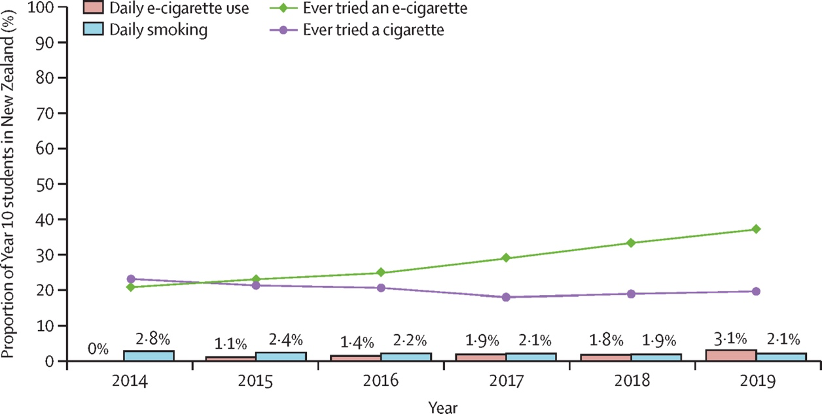
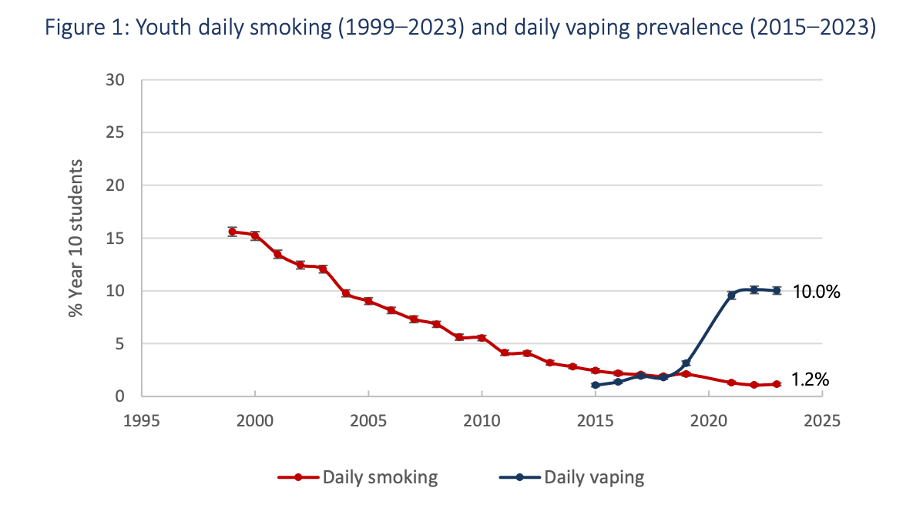
The evidence being used here is cross-sectional (ie: annual school surveys of around half of all New Zealand year 10 –14-15yo students) from 2014-2019.2015 was the first year that the survey asked questions about vaping frequency, enabling reporting on daily vaping. The graph below shows a 0.7% absolute decline and a 25% relative fall in daily smoking between 2014 and 2019, while daily vaping rose between 2015-2019 from 1.1% to 3.1% (2% absolute and 65% relative increases).
Every first semester biostats student has it drilled into them that cross-sectional data cannot be used to draw causal conclusions. When I edited Tobacco Control across 17 years, this criticism was probably that most commonly made by reviewers of papers which used post hoc ergo propter hoc (after therefore because of) reasoning with cross-sectional data. The 2020 paper’s authors were therefore wise to use “suggests …might” when they concluded “…overall decline in smoking over the past 6 years in New Zealand youth suggests that e-cigarettes might be displacing smoking”.
But many vaping advocates aren’t typically bothered by the sublimation of associations into causal language conclusions when it suits their agenda. An analysis of submissions to the New Zealand Parliament’s Health Select Committee considering a 2020 Bill which regulated the sale and marketing of e-cigarettes, found that the 2020 paper was the most frequently cited evidence used to try and influence the Committee, including by British American Tobacco. Those fervidly embracing the paper who are determined to preserve, strengthen and evangelically promote New Zealand’s experience internationally would have hardly complained if associations morphed into causes when the rubber met the road of political, media treatment and public understanding tests.
But , whoa! Hold the horses!
Sensing there were problems with the paper, Sam Egger from Cancer Council NSW led a paper that took a deeper dive into an expanded data set from 1999-2023 noting that the 2020 paper had only looked at 2014-2019 data and that 2014 was “years after vaping had established a notable presence in New Zealand. Importantly, the analysis did not assess whether smoking trends changed before and after shifts in vaping prevalence, an essential requirement for evaluating the population-level impacts of vaping on smoking.”
In other words, the 2020 paper had not considered the question of whether the remarkable decline in youth smoking which started well before the appearance and proliferation of vaping in youth (see chart below), accelerated with the arrival of vapes in about 2010 and then their rapid uptake after 2019 (with the latter, it of course could not have done this, having 2019 data as its endpoint).
This was a very basic omission, and one that amounted to seriously narrowing the evidence goalposts in the exercise of assessing vaping’s possible role in influencing trends in smoking by 14 and 15 year olds. The question about ever vaping was added to the school survey in 2014, with daily vaping added a year later. This start of these questions would not have been a capricious choice but one that almost certainly would have reflected common observational ‘knowledge’ of youth vaping increasing, perhaps over several years prior to 2014 when it was first counted. ASH, which is responsible for the annual surveys since 1999 (see graph below), clearly knew youth smoking had been in freefall since at least 1999 so that factors other than vaping were in play.
In their no stone unturned paper using interrupted time series analysis they concluded “In stark contrast to the conclusion of the previous study, we found that among 14-15 year-olds, the emergence and rapid rise in vaping in New Zealand may have slowed the rates if decline in ever- and regular smoking, while having little or no impact on the rate of decline in daily smoking.”
In a commentary in The Conversation, they noted “the rates of decline in ‘ever smoking’ and ‘smoking regularly’ slowed significantly from 2010 onwards, coinciding with the emergence of vaping in New Zealand. The rate of decline in daily smoking did not change significantly from 2010 onwards.
In 2023, about 12.6% of 14 and 15-year-olds in New Zealand had ‘ever smoked’ (ranging from just a few puffs to smoking daily). However, if the ‘ever smoking’ rate had continued along its pre-2010 trajectory (before vaping emerged) this figure would have been 6.6%.”
So there was now plenty of heat in this particular data analytic kitchen. But then a blowtorch arrived with an apparently blistering critique of what the Egger authors had done. Four authors from the University of Queensland gave the Egger group both barrels with a three point shellacking that essentially went “here’s what you did, and here’s what you should have done … so your conclusions are unsound”. Read it all in the link.
All this will have been read by a small number of people who closely follow these debates. And will have been understood by an even smaller number who are highly trained in analysis of trend data.
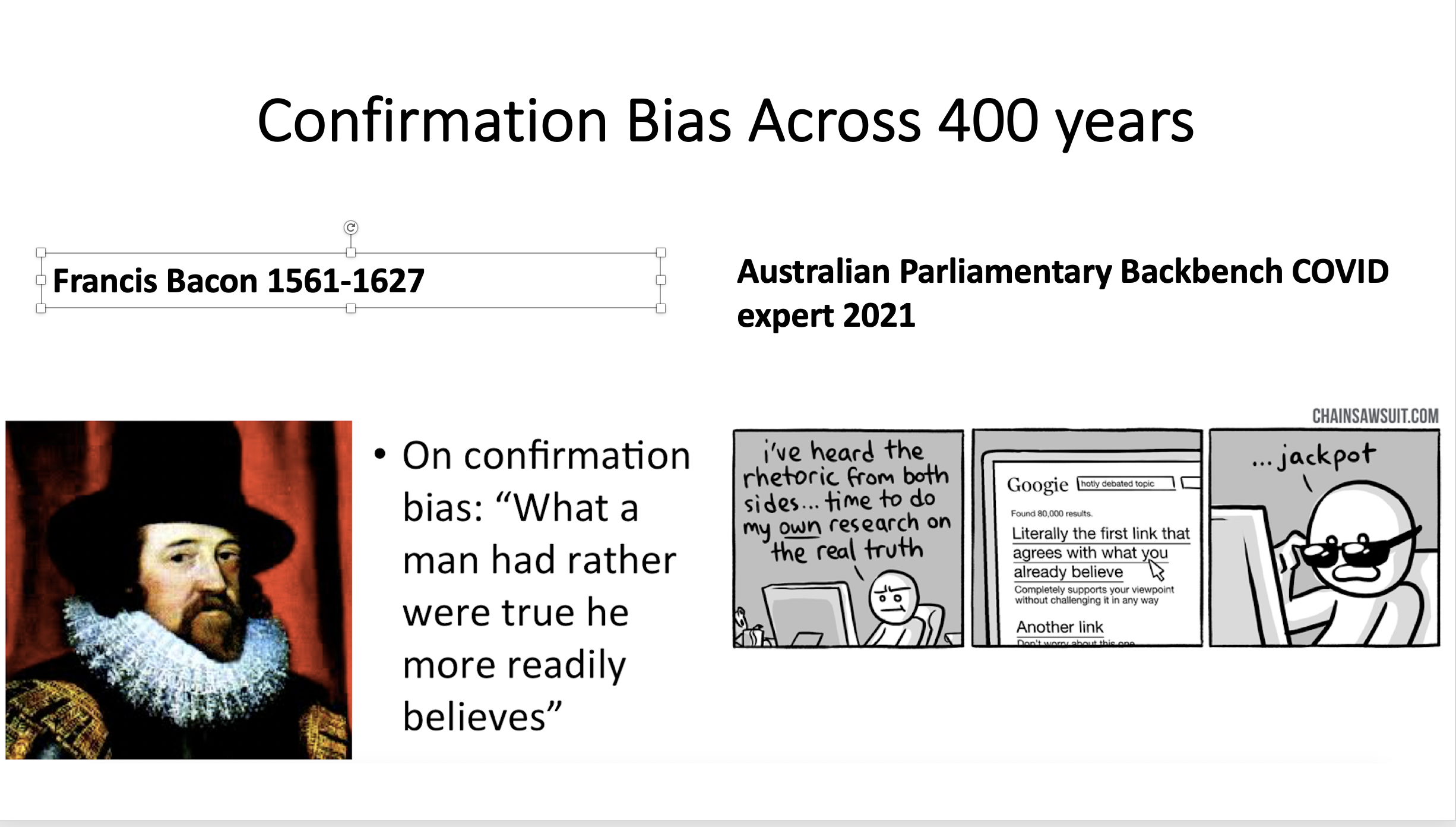
But one thing is absolutely certain, the veteran nag confirmation bias will yet again get a good run around the block. Those who like the conclusions of the 2020 paper will keep megaphoning them without mentioning the Egger group’s very contrasting findings. Criminologists have a term for this: the ‘woozle effect’ where studies with flawed conclusions that have been discredited continue to be referenced, as though those conclusions still offer credible evidence.
I published a paper in 2009 on citation bias, which is the selective citation of published results to support the findings, arguments or interests of authors and those funding their work. Our paper showed that a very old (1982) and small study (n=24) showing extremely high smoking prevalence in people with schizophrenia (88%), had been massively cited in preference to many more recent and larger studies which showed far lower smoking by those with schizophrenia. News media commonly referred to smoking rates in those with schizophrenia as “as high as 90%” when a meta-analysis of 42 studies found average smoking prevalence to be 62%, much higher than the general population but nowhere near 90%.
Australian smoking rates have never been lower in adults, school kids, low socio-economic groups, and First Nations people. That’s a good thing, right? These outcomes represent the results of decades of policy reform and government campaigns. But these bottom lines mean little to fringe critics of Australia’s approach to tobacco control, who are licking their wounds after failing badly to stop the government from regulating vapes to allow then to be sold in as many retail situations as possible.
Then there those who passionately believe that expensive, highly taxed cigarettes are a cruel impost on low income earners. For several years, in pitch perfect unison with Big Tobacco which has lobbied for decades to keep tobacco tax low to sell more cigarettes, they argue that the government should lower tobacco tax to make it easier for them to afford to smoke. Could there be any more truly perverse way to help the poor?
Illicit tobacco has been widely available in Australia for over 25 years, long before the significant rises in tobacco tax began in 2012.These critics also never mention the inconvenient truth that large black markets for tobacco exist in most countries, including those where tobacco tax is much lower than in Australia. So plainly, there is far more to understanding illicit tobacco markets than tax alone.
The widespread, blatant proliferation of duty-not-paid dirt cheap tobacco has excited these critics. Barely a week goes by when they are quoted on what the government needs to do, and “lowering” tobacco tax is always front and centre of the mantra.
But as I’ve noted before, it’s one thing to call for tax to be lowered, and quite another to draw on your expertise to help the Treasury know exactly where the magic sweet spot reduction should fall to make smokers who are now buying cheap illicits go back to duty-paid cigarettes. James Martin and Alex Wodak fudged naming a date or percent reduction in a Crikey piece when urging “reducing tobacco excise to undercut the illicit trade”. So OK gents, how much of a reduction are you talking about?
But all rejoice! The wait is now over!
In recent weeks, critics have put their hands up with several figures. In June, Harm Reduction Australia published an unsigned Tobacco Harm Reduction Policy Brief , presumably with the fingerprints of its tobacco harm reduction advisors, Alex Wodak and James Martin.
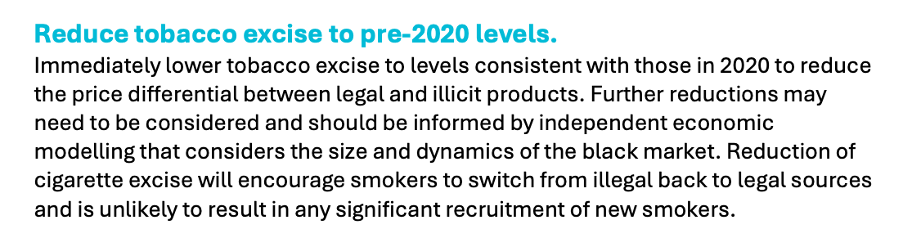
The short document recommended this:
So there’s the level: lower the tax rate back five years to that we had in 2020. That will fix things, right?
Or we could go back another year to 2019 when tobacco tax was still lower. In a very uncharacteristic slip, ABC economics expert Alan Kohler, snuck this final line into an otherwise very sensible commentary on the black market: “The other thing the federal government could do is reduce the tobacco excise back to what it was before 2019, which would lead to a huge increase in revenue.” An increase presumably explained by droves of smokers abandoning illegal cigarettes for the newly competitively reduced-tax legal ones.
Or according to Kingsley Wheaton, Chief Corporate Officer for British American Tobacco, who flew out to Australia in June to talk about the “basic economics” of tobacco tax, this should involve a “reversion to the 2018 (tobacco tax) rate“.
And then we come to the really heavy duty ordinance, this time from Australian economist Steven Hamilton, a professor at George Washington University. Quoted in The Saturday Paper, in April “So my suggestion would be that there is one solution and one solution only, and it is to radically reduce the rate of tax on cigarettes. Take the tax rate on cigarettes back to where it was 10 years ago, make legal channels competitive, and the black market will disappear.” Disappear! It’s that easy! Ten years ago – in 2015 – tobacco tax was $0.53096 and a packet of 20 budget cigarettes cost $24.28 (see table 13.3.3 here)
OK, so let’s take one of these named years – 2019 – and do the simple early high school arithmetic on how dropping tax back seven years would go in demolishing the black market.
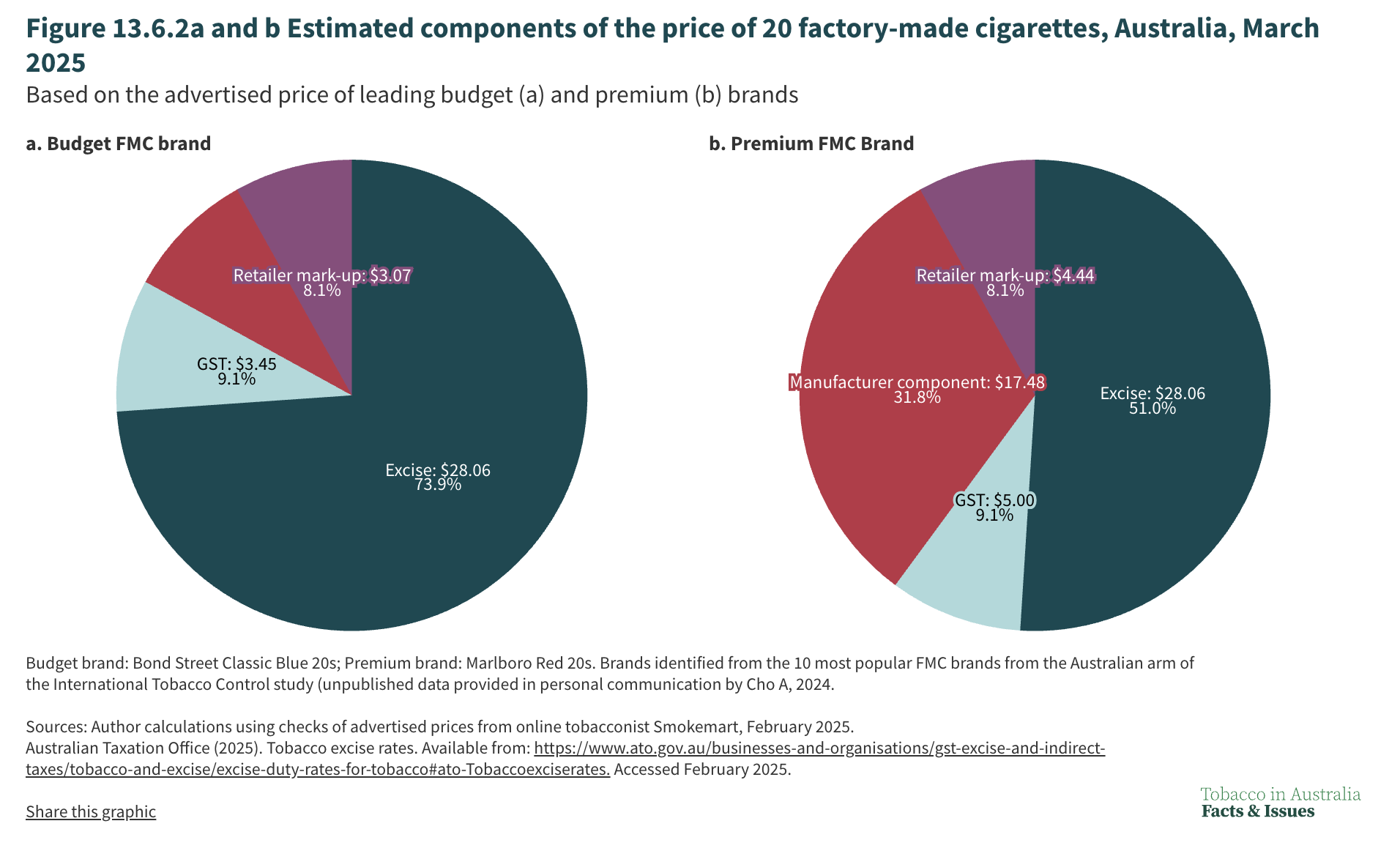
In 2019, excise tax on cigarettes per stick was $0.81775 (in March) and $0.96653 (in September) —see Table 13.6.2 here. This means that the tax component in 2019 of a pack of 20 was either $16.335 or $19.3306. For retail price, we need to add GST and the manufacturers’ and retailers’ margins (see chart below for the current proportions) to see what a legal pack of 20 cigarettes would retail at under the new retro tax regime proposed by our disappearing black market pundits.
So let’s show this for a typical budget brand in the chart.
Excise 73.9% = $16.34
GST 9.1% = $2.01
Retail mark-up 8.1% = $1.79
Manufacturer mark-up 8.9% = $1.97
Total retail price: $22.11
Here’s a conversation between two smokers:
Bill: Hey, the government has dropped tobacco tax big time! You can get a pack of 20 now for Just over $22.
Bob: Really? I can buy my smokes at cheap smokes shop for as low as $10 a pack, sometimes as high as $20 in high income suburbs. So these new reduced tax smokes are still more than double the lowest price of the dodgy ones. Why would I be mad enough to pay out all that extra?
The common $10 smokers can now pay for illegal cigarettes is clearly still highly profitable for those selling them. It is anyone’s guess how much even lower their price could fall and still retain acceptable profitability. After first publishing this blog, I was told of $8 packs of 20 being sold in Muswellbrook in rural NSW, presumably still making a profit for all in the chain. So the above sums are likely conservative about how much tax would need be lowered to get prices on par or cheaper than illicit cigarettes.
So this heroic step would do absolutely nothing to solve the problem.
It is just gobsmacking that people positioning themselves as credible advisors on how to undercut the black market could not have asked this most basic and fundamental of all questions about their magic reductions. And equally, that so many journalists have let them blather on and never questioned it. A Sydney Morning Herald editorial in June stated without blinking “a tax rethink on tobacco excise is self-evident and common sense”.
The tax cut to 2015 levels proposed by Steven Hamilton goes closest to a nominal sweet spot. But If the Government were to put the tax down to 2015 levels then the prices of taxed products would only be competitive with the current illicit prices if Big Tobacco and all retailers also selflessly reverted to what they charged back in 2015. Yeah, that’s really going to happen. Pigs might fly too.
8 Nov 2025 BREAKING! Deakin University criminology academic James Martin publicly stated in the Straits Times that “taxes would need to be significantly lowered and even eliminated to discourage criminals from operating a black market.” [my emphasis]. Now how will this work? Martin suggests even eliminating all tobacco tax so that smokers who have been buying illicit untaxed cigarettes, will switch to legal cigarettes … which will be also untaxed. The government will then reap the tax benefit from these untaxed legal cigarettes. Are we all following this remarkable proposal?
I’m a daily user of Spotify. I have it on daily in the car, the house and at my desk. My tastes are very eclectic with extensive playlists across almost every genre of music with the exceptions of metal and all its variants, rap/hip hop, “musicals” and light orchestral. It has hugely expanded my discovery and appreciation of unimagined music.
The other day a close friend asked me whether I knew that Spotify’s owner Daniel Ek, had recently invested €600 million ($AUD1.074 billion) in military armaments in Hesling, a German based company which he chairs. I didn’t, but was concerned enough to find out more.
My friend sent a link to the best painless ways to move to other music streaming platforms and said he was planning to move in protest.
A Guardian report listed all of three bands, one Australian and two from the US, who were leading a so-called “exodus” from Spotiify. One stated “We just removed our music from the platform. Can we put pressure on these Dr. Evil tech bros to do better?” Another band was taking all its music off “garbage hole violent armageddon portal Spotify”.
Australian musician David Bridie also bought into all this with this Guardian article. He’s removed his work from Spotify, explaining “In recent years, we’ve witnessed the horror of AI drone wars in Ukraine and Gaza – children killed and hospitals destroyed with the press of the space bar. Ek is investing in technology that can cause suffering and death. Spotify used to seem like a necessary evil. By association, it now just seems evil.”
So what does Hesling’s website (Protecting our democracies) tell us? That it’s a military defence company providing “mass and autonomous capabilities to democracies so they can deter and protect”.
Among its products are:
An Electronic Warfare (EW) system using AI to classify radio signals
Underwater drone swarms for surveillance and signal detection
Software for command centers
Strike drones using AI for defeating jamming/spoofing
In February, the company announced it was producing 6,000 strike drones for use by Ukraine against Russian attacks, supplementing an early 4,000 already produced. Its website talks about ethical practices in supplying its products to nations.
Since Russia began pounding Ukraine, killing 46,000 civilians and 120,000 troops plus 180,000 injuries with 7 million having fled the country, the western world has held its breath hoping that NATO members and the US would adequately fund Ukrainian resistance. Nations bordering Russia are all vitally interested in anything that might give Russia pause to invade them.
So Spotify/Daniel Ek/Hesling are not so much as trying to cause suffering and death (except to Russian invading troops), but trying to prevent it as much as possible by shooting down incoming missiles, destroying Russian tanks and troop convoys.
Is all warfare weaponry inherently unethical?
Ethical investment funds typically refuse to invest in “fossil fuels, weapons, gambling, tobacco and other unethical industries”. Weapons are an interesting and challenging inclusion. Costa Rica, Iceland, Mauritius, Panama, and Vanuatu have no military forces. Other minnow nations, like Andorra, Kiribati, Liechtenstein, and the Marshall Islands, rely on other nations or agreements for their defence. But all large nations have military investments. So are they all unethical in investing in military defence?
Advanced technology useful in preventing enemy capability to wreak havoc on nations is morally neutral until we start dividing nations possessing this technology into bad and good actors. If Hesling is indeed only selling its drone and other AI driven defensive technology to nations fearful of Russian or other bad actor aggression, what’s not to like?
As one Reddit contributor put it succinctly “So I should boycott Spotify because their CEO is investing into one of the companies that is trying to beat the Russians in the drone race, support Ukraine, and protect Europe and western democracies and values against tyranny?
I’ll pass on that, thanks.
Boycott Spotify for ripping off musicians?
Then there’s the argument that Spotify is killing the music industry. I’ve friends who are musicians who are scathing about the derisory returns Spotify pays them per play. At the moment it is 0.00318 cents. They argue passionately that these music platforms are all parasitical, making huge profits from the creative talents of musicians while giving little back. Streaming has dramatically reduced musicians’ earnings from LP and CD sales, leaving live performance as the main income source. (I sometimes still buy CDs at gigs, but have long sold about 90% of the large number of CDs and LPs I owned, having rarely played them across many years).
But this simple comparison of differences between platforms is confounded by the different subscriber and audience sizes of these platforms. In April 2025 Spotify had 276 million paying subscribers in their total user base of 696 million monthly active users. Spotify’s royalties are based on total plays, not just those by paying subscribers. In June 2023 Apple Music had over 93 million subscribers, an increase from its 88 million subscribers in 2022. I’ve not found later data.
So a smaller per stream payment on a platform with more users could earn more than a larger payment on a rival platform with far fewer users.
For 10,000 plays, Spotify will pay an artist all of $31.80. David Bridie’s most listened-to track on Spotify is his quite wonderful I’ve got a plan (from his 1994 My Friend the Chocolate Cake collaboration). As of today it’s had 517,792 plays. That’s royalties of $1,647.With 6 in the band, that’s $275 each.
I’m not an Apple music subscriber so don’t know how many plays that track has had over there. But as has been emphatically argued many times before, streaming royalties make only a tiny minority of performers rich, regardless of the platform. And that has always been the case: many musicians don’t make a living, while relatively few make fortunes.
This page on Spotify reports on royalties paid since 2017. $10 billion was paid out in 2024 Under the payouts you can look at growth in nine levels of royalty earnings from $5000 and over (110,500) to $10 million and over (70 acts).









 Simon Chapman AO