When should health researchers collaborate with industry, and when should they not?

[Updated Aug 31,2023]

This week the Lancet published an extended piece by Boston University’s Sandro Galea reflecting on a new bioethics book by Jonathan Marks, The Perils of Partnership: Industry Influence, Institutional Integrity, and Public Health.

Galea commences with a truism: “those of us who make a living in public health, be it in the academic world or in practice, have a near reflexive suspicion of working with the private sector. We come by that suspicion honestly. There is abundant research, evidence, and experience of how some industry practices have harmed the health of the public.”

And abundant research is almost an understatement. In medicine, the debate about the ethics of the cash register arises most often over drug company money. Here, the research evidence is clear: those who take pharmaceutical research money tend to not bite the hand that feeds them.

A 1998 New England Journal of Medicine study reported that 23 of 24 authors (96%) defending the safety of calcium channel antagonists had financial ties with manufacturers of these drugs. This compared with 11 of 30 (37%) who were critical of their use.

The University of Sydney’s Charles Perkins Centre Professor Lisa Bero is perhaps the world’s leading authority on competing interests in science and the way that engagement so often evokes the tale about those paying the (research) piper, calling the tune. Bero and others’ 2012 Cochrane Collaboration review investigated the association between pharmaceutical industry funding and research conclusions favourable to the companies funding the research.

Bero’s paper with Jenny White on corporate manipulation of research across five different industries (tobacco, pharmaceuticals, lead, vinyl chloride and silica) is another classic paper in the field.

Several research journals refuse to consider papers for publication which are authored by anyone with tobacco industry financial ties. Their reasoning? As the editors at PLoS put it in 2010:

“We remain concerned about the industry’s long-standing attempts to distort the science of and deflect attention away from the harmful effects of smoking.

That the tobacco industry has behaved disreputably – denying the harms of its products, campaigning against smoking bans, marketing to young people, and hiring public relations firms, consultants, and front groups to enhance the public credibility of their work – is well documented.

There is no reason to believe that these direct assaults on human health will not continue, and we do not wish to provide a forum for companies’ attempts to manipulate the science on tobacco’s harms.”
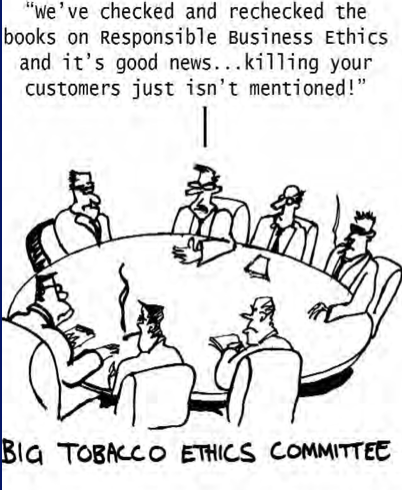
Tobacco Business Ethics

As PLoS journals charge authors a fee to publish, they also did not want to be accepting money obtained from the sale of tobacco and the millions of deaths involved in those sales.

Tobacco-funded research and the conduct of the industry which oversees it has arguably the worst of all reputations. This explains why that industry is unique among all others in being barred from funding research and scholarships at many universities. My own institution – the University of Sydney – was one of the first to do this in 1982.

Bero’s contributions have been supplemented by Nicholas Freudeberg’s Lethal but legal (2014) and a book by the University of Auckland’s Centre for Addiction Research Peter Adams, Moral Jeopardy: Risks of accepting money from the Alcohol, tobacco and gambling industries (Cambridge University Press 2016).

Adams sets out with enormous erudition and many examples, the conduct of the three industries on which he focuses (alcohol, tobacco and gambling). He describes risks to reputations, governance, scientific neutrality, relationships and even to democracy when the corrupting influence of money from industries whose commercial well-being depends on successfully resisting any policies, laws and regulations that threaten their profitability inhibits those developments.

The main focus of his book is the ethical and moral questions which arise for health-care providers, researchers, universities, journals, and communities when such engagement occurs. The book has extensive sections elaborating on inventories of questions that all organisations contemplating accepting funding from these industries should ask themselves.

Manichaean simplicity?

All universities encourage their staff to engage with industry. But academics lamenting the decline of government funding for universities have often been scathing about this development and mocked industry-sponsored chairs. I recall one in “structural clay brickwork” was mercilessly pilloried. But why? What exactly is the ethical problem with assisting in advancing the quality of commercially made bricks? Or of improving steel through the University of Wollongong’s  BHP funded chair?

Bricks and steel have innumerable uses which enhance human life and well-being. Life would be unarguably worse without them.

Sandro Galea’s Lancet piece notes that a central argument of Marks’ book is that

“Given that private-sector actors inevitably have their own commercial interests as one of their priorities, it is …impossible to maintain institutional integrity when one partners with actors whose mission is misaligned with one’s own.”

But Galea, who highly recommends the book, concludes by disagreeing with its main “disengagement” conclusion

“Simply put, I do not think it is possible, nor desirable, for public health to disengage from corporate sector partners; the public–private relationship is here to stay and we should be using Marks’s work to thoughtfully inform such engagements, not as a guide to disengagement”

My own view on industry engagement runs like this.

There are some industries which make and promote products or provide services where the net consequences of consumption are sometimes hugely negative. My personal list here includes fossil fuel industries, the nuclear power industry, tobacco, firearms, gambling, any industry with a track record of exploitative labour practices, irredeemable environmental pollution, or unsustainable pillaging of forests, land or oceans.

Then there is a huge middle group where simple Manichaean (good or evil) categorisations cannot easily withstand even basic scrutiny, and where significant negative and positive consequences of consumption cannot be ignored. Most people who drink alcohol do not harm others because of their drinking, but derive obvious pleasure from it. They may slightly increase their risk of dying from some diseases and shave some months or years off normal life expectancy, but prefer to take that chance. But alcohol causes massive harms across populations.

Here, Cambridge University’s Prof Sir David Spiegelhalter, a statistician, has eloquently written about the very small absolute risks of harm faced by those who drink alcohol moderately. He writes:

“Next look at 2 drinks a day, that’s 20g, or 2.5 units, slightly above the current UK guidelines of 14 units a week for both men and women.

In this case, compared to non-drinkers an extra 63 (977–914) in 100,000 people experience a health problem each year. That means, to experience one extra problem, 1,600 people need to drink 20g alcohol a day for a year, in which case we would expect 16 instead of 15 problems between them. That’s 7.3 kg a year each, equivalent to around 32 bottles of gin per person. So a total of 50,000 bottles of gin among these 1,600 people is associated with one extra health problem. Which still indicates a very low level of harm in drinkers drinking just more than the UK guidelines.”

I am of course not the only person grateful for the pharmaceutical industry as I reflect on drugs and vaccines I have taken to prevent or manage serious health problems, ameliorate pain or induce anaesthesia in surgery.

The cars, motorbikes, buses, trains and aircraft I’ve used, and electricity and gas have all used polluting fossil fuels. Many hope desperately for the rapid uptake of electric transport powered by renewable energy. Unlike the dilettante tobacco industry which refuses to stop making and promoting cigarettes while trying to spread nicotine addiction with ecigs and posturing about its responsible rebirthing, many major vehicle manufacturers are setting targets for complete transition away from petrol and diesel powered options.

My kitchen pantry is filled with grocery items that I select to consume, and not being heavily into hypocrisy, I don’t gag with ethical confusion when I eat them, despite some being produced by heinous transnational food companies . Instead, I am grateful that these companies are able to manufacture food items that I’m pleased to buy and eat. I can exercise my personal ant’s worth of consumer power by selecting product formulations and companies that tick all the important boxes. I can megaphone the availability of powerful apps like Cluckar (for boycotting misleading “free range” egg brands) and the George Institute’s Food Switch (which provides comparative ingredient information tens of thousands of  grocery items) which help immensely with this.

So with all these examples, only the most doctrinaire or extreme will argue that these profit maximising industries are pure evil and have nothing to contribute to global health and well-being. Here, research engagement between the industries and university researchers is therefore common with constantly evolving effort to ensure research integrity is protected in areas like transparency and full declarations of competing interests.  Researchers should engage with their fully-honed sceptical facilities on open display, as should always be the case in any research engagement.

When collaboration is urgent

Then there is a third category of industry where public health and industry are in all but total lockstep.  Obvious examples here are renewable energy, vaccines, condoms, bicycles and with fruit and vegetable growers (and retailers).

When public health researchers working toward ways of reducing reliance on fossil fuels try to produce breakthroughs on renewable energy costs and efficiencies, they want their work to be commercialised so that it proliferates as fast as possible. That is the whole point of what they are working toward. The dire, accelerating existential threat posed by global warming makes the partnerships between the research and commercial sectors extremely urgent.

When communicable disease researchers produce new vaccines for self-evidently potentially catastrophic diseases like ebola, or partner with vaccine manufacturers in the common goal of maximising distribution, cold-chain standards and intelligence sharing, what’s not to like?

The pharmaceutical industry has more than once engaged in despicable price maximisation at times of communicable disease crises. It is reasonable to fear that specialist researchers affiliated in good faith in partnerships with such companies might self-censor concerns to condemn such practices, not wanting to bite the hand that has been feeding them. But to move from evidence of such conduct to a conclusion that there should be no collaboration in common, important purpose seems disproportionate.

When the world urgently needs to see significant uptake in use of commercially manufactured products, a chorus of criticism that inhibits the sharing of effort between researchers, these industries and government can be very myopic.

Banning smoking in wide-open public spaces goes way beyond the evidence and is unethical

North Sydney local Council has voted unanimously to ban smoking in all public areas under Council control. These include parks, streets and plazas and outdoor footpath dining areas of cafes. The move follows similar bans in other local government areas and the receipt of over 600 submissions from local residents and workers, the overwhelming majority of which (80%) urged the Council to adopt the policy.

The Council has no plans to fine smokers, and it is not clear if the policy will also apply to vaping. It believes that community education and signage will be enough to ensure the policy succeeds. Good luck with that. Fines have been necessary to support every other restriction on smoking.

Throughout my 40 years in tobacco control, I’ve advocated with many others for polices and campaigns designed to reduce the uptake of smoking, to encourage quitting and to protect people from the known risks of exposure to secondhand smoke. The triple, inviolate bedrocks of all these policies and campaigns were that there needed to be evidence that each policy would likely achieve its goals, that the measures posed were proportionate to the problem being addressed and that they were ethically justifiable.

Perhaps the most protracted struggle in all of tobacco control was efforts to  reduce exposure to other people’s tobacco smoke. In NSW, these started in 1976 with the ban on smoking on government buses and trains was introduced by transport minister Peter Cox. In the longest ever saga of half-pregnant policy, it took a full 34 years until the Northern Territory, the last bastion of smoking inside pubs, finally joined every other state and territory in introducing that policy.

Pubs were the last setting to go, while they rationally should have been the first if intensity of exposure was the key criterion. Bar staff’s occupational health was relegated to a secondary consideration in industry  campaigns promoting the freedom of smokers to ignore these workers’ health because it was argued it was the birthright of any Aussie to have a smoke, a beer, a meat pie and a bet in a pub and bar staff should just have to suck it up.

Today, it is only high roller rooms in some casinos which still allow smoking. This is because of the little appreciated fact that tobacco smoke from wealthy gamblers’ cigarettes is apparently, unlike that from everyone else’s, not toxic to other people.

While the evidence for the harms of exposure to other people’s smoke has long been voluminous and overwhelming when pooled in reviews, that evidence has been almost totally based on chronic exposures occurring over many years in homes with smokers and to a lesser extent, in smoky workplaces.

This brings us to outdoor smoking and policies like that just adopted by North Sydney Council.

Here, there are some important differentiations to make. Outdoor settings can include the sardine-can like proximities to others we often experience in sporting or concert stadia, where in the past, if you had the misfortune to be sitting or standing next to smokers for many hours across a day’s play in the cricket or at a music festival, you copped a lot of their smoke point-blank.

Similarly, when smoking was banned inside cafes and restaurants in NSW in 2000 (thank you then Premier Bob Carr and health minister Craig Knowles), many smokers simply moved to the outdoor, al fresco tables. There you could find yourself in their haze across an entire meal. It was manifestly unreasonable that smokers should be rewarded with access to prized seats in the outdoor sun, so arguments for amenity carried the day on smokefree outdoor eating and drinking in many jurisdictions.

There was some evidence that acute (ie short term cigarette smoke exposure) can be detrimental to people, especially those with respiratory problems (and there are many such people in any community). For example, acute exposure to ambient smoke in healthy young adults has been shown to be associated with dose related impairment of endothelium dependent dilation, suggesting early arterial damage. However, the transitory and fleeting exposure to others’ smoking in open outdoor settings is not remotely comparable to that experienced in confined indoor settings such as were involved in the study I just cited.

When we reviewed the research literature in 2012 about studies assessing particle concentrations in outdoor smoking settings, there were very few available. And predictably, these mostly showed that the concentrations even in close proximity to the smokers were negligible.

This was always going to be obvious. Smoke particle concentrations in enclosed spaces, often with lots of people smoking, are clearly going to be far higher than in any outdoor setting where the smoke is diluted by the boundless surrounding air and dissipates rapidly in the slightest breeze.

In some Japanese cities, smoking is banned on streets except for designated smoking hubs which can get very crowded. The reason for these street bans is that the density of pedestrians can be so great that burns quite often occur to clothing and flesh from carried lit cigarettes.  Yet, bizarrely, Japan still allows smoking inside restaurants.  Smoking bans in very crowded outdoor shopping precincts like Sydney’s Pitt Street Mall can be justified on similar concerns.

So the key evidence needed to underscore any policy seeking to reduce significant risk to the public in wide open spaces simply  does not exist. Yet this week I have heard North Sydney Council spokespeople saying that passive smoking is harmful to others. Yes it is: but in indoor settings, particularly with long term exposure, not in wide-open spaces like parks, car parks, typical streets and on beaches. Conflating the evidence on passive smoking hazards between indoor and outdoor locations is simply ignorant. All occupational air quality standards for any potentially noxious agent differentiate between indoor and outdoor settings set different standards for both.

Other arguments

The ethical justification for restricting where smoking can occur derives entirely from the Millean principle of preventing harm to others. There are also important collateral benefits of banning smoking in workplaces: smokers reduce their daily consumption by about 21% when they cannot smoke at work and more importantly many quit, welcoming the bans as a form of imposed self-discipline on a behaviour that 90% of smokers regret ever starting. Smoking bans fomented a rapid denormalisation of smoking: venues associated with relaxation, pleasure and conviviality like restaurants, bars, cinemas have no smoking, while smokers excuse themselves to go outside to footpaths in any weather  or sit morosely in the fug of smoke in those desperate airport smoking rooms, wondering  about how much they really enjoy smoking.

Dubai airport smoking lounge. Note smoker with a mask

The proliferation of smoke free areas certainly contributed to reducing both the frequency of smoking and the proportion of people who smoke. But so would forced incarceration,  forfeiting smokers’ rights to health care or other draconian strategies too tame for the Ottoman Sultan Murad IV who had smokers executed in the sixteenth century. Very obviously, the ethical test of any policy is not only its efficiency in achieving outcomes. We don’t try to reduce smoking by any means possible. We interrogate a policy for its ethical considerations and reject those where  the breaches are unjustifiable.

Because outdoor smoking ban proponents cannot point to any robust evidence to support claims that the fleeting exposures we might occasionally get from a passing smoker in a park or street are meaningfully harmful, they often reach beyond that evidence. The momentum to outdoor bans has incorporated three arguments that go well beyond evidence of direct health effects. First, large majorities of the population do not like being exposed to any tobacco smoke. Outdoor bans premised on communities’ amenity preferences are not about public health but akin to ordinances about playing music in parks, bans on public nudity and littering. Outdoor smoking bans based on amenity should not be dressed up in the language of public health.

Second, cigarette butts and packaging constitute a significant proportion of  litter. North Sydney has named litter reduction as a justification for its policy, but it has not banned single use plastics for example, so its selective concern for one litter source might be questioned.  Local governments wanting to abate this relentless litter source should not appropriate public health arguments in justifying their decisions but be upfront about the litter problem and ideally consistent in their concerns across all litter.

Third, some have invoked the virtues of shielding children from the sight of smoking as worthy evidence in this debate. They may concede that smoking in wide open spaces like parks and beaches poses near homeopathic levels of risk to others, but point to indirect negative impact from the mere sight of smoking. Kids see smoking and this can sometimes make it look intriguing and attractive. This line of reasoning is pernicious and redolent of the worst excesses of totalitarian regimes’ penchants for repressing various liberties, communication and cultural expression not sanctioned by the state.  North Koreans are routinely subjected to such fiats, but many would recoil at the advance of such reasoning elsewhere. If it is fine to tell smokers that they cannot smoke anywhere in public view, why not extend the same reasoning to  people wolfing supersized orders in family fast food outlets, to name just one example?

Coercing smokers to stop smoking in settings where their smoking poses negligible risk to others is openly paternalistic. Well-intentioned advocates for such policies argue, as paternalists always do, that such actions are for smokers’ own good, that many will be sooner or later grateful (which is often true). Paternalistic for-you-own-good laws about seats belts and motorcycle helmets involve trivial restrictions on liberty. Telling smokers they cannot smoke in public sight is a restriction of a different, worrying magnitude.

Finally, of all the factors which have been identified in risk perception research as tending to increase public outrage, risks which are imposed rather than voluntary explain much of the variance in public perceptions. Passive smoking represents a quintessential imposed risk and, together with the possibility of dreaded outcomes (like lung cancer), often incites public demand for zero exposure. This explains why many will get incensed about exposure to a mere whiff of tobacco smoke in a park, but will not hesitate to sit around a romantic smoky campfire where they will, by choice, be exposed to a large range and volume of carcinogenic particulates and gases for sometimes hours on end.

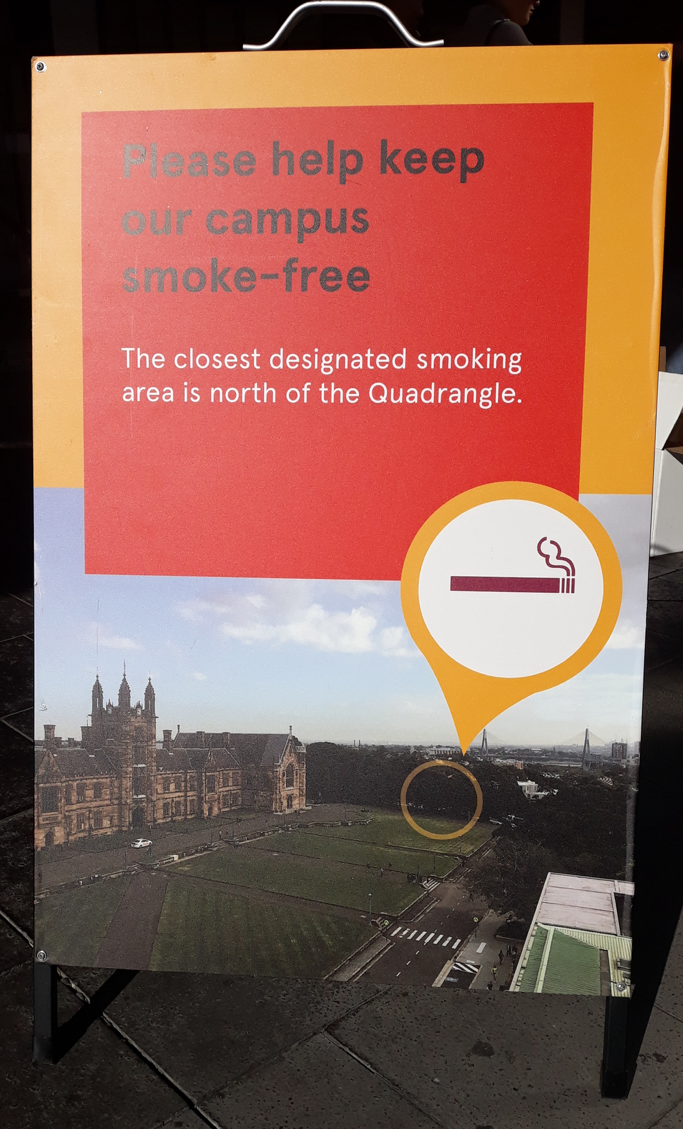
My university, the University of Sydney, has long banned smoking in all indoor areas, and more recently in outdoor areas like those in front of coffee shops and the iconic front lawn. But it provides small designated outdoor smoking areas, well away from buildings and heavy pedestrian areas.  North Sydney council would do well to follow suit.

Screen Shot 2019-07-24 at 2.12.07 pm

African music for beginners 6: Madagascar


I’ve had a passion for contemporary African music since the early 1980s, when I bought my first LPs by South Africa’s (late) Hugh Masekela and Cameroon’s Manu Dibango, went to my first African gig (the Congolese superstar Sam Mangwana and the African Allstars, at London’s Dominion Theatre near Waterloo). In the years since I’ve collected 1000s of LPs, cassettes, CDs and MP3s.

Before traveling to any city, I look up where its African quarter is and try to get out there to see if there are any music shops and bars.  Music shops are very sadly becoming a thing of the past as people move to digital access. I spent many lunch hours listening to music at Stern’s African Record Centre in Whitfield St just behind Tottenham Court Rd in London when I was studying there between March 1984‑November 1985. They are now an on-line shop and also have a blog.

I subscribe to the monthly email from Alastair Johnston’s invaluable Musikifan record review page, buy lots of books on African music, and maintain an ever-expanding Spotify African page. While for some artists it can be very patchy, Spotify has a delightfully vast range of African music, including a lot of very obscure archival music, sometimes replete with scratchy sounds from the old LPs from where it has been digitised.

I have recently started a Youtube page with live African music concerts.

Over the next months, I’ll post country-by-country blogs with lots of recommendations for those starting out to explore the vast catalogue of African music. I’ll only be including those that I like, with links to the tracks on my Spotify page or to Youtube when they are not available on Spotify. These are just a taste that I hope might infect you in the way I was.

EARLIER SELECTIONS

1.Senegal selections here

2.Zimbabwe selections here

3.Mali selections here

4.Nigeria selections here

5.Ghana (Highlife) here

Madagascar

The Canadian canary in the teenage vaping coalmine

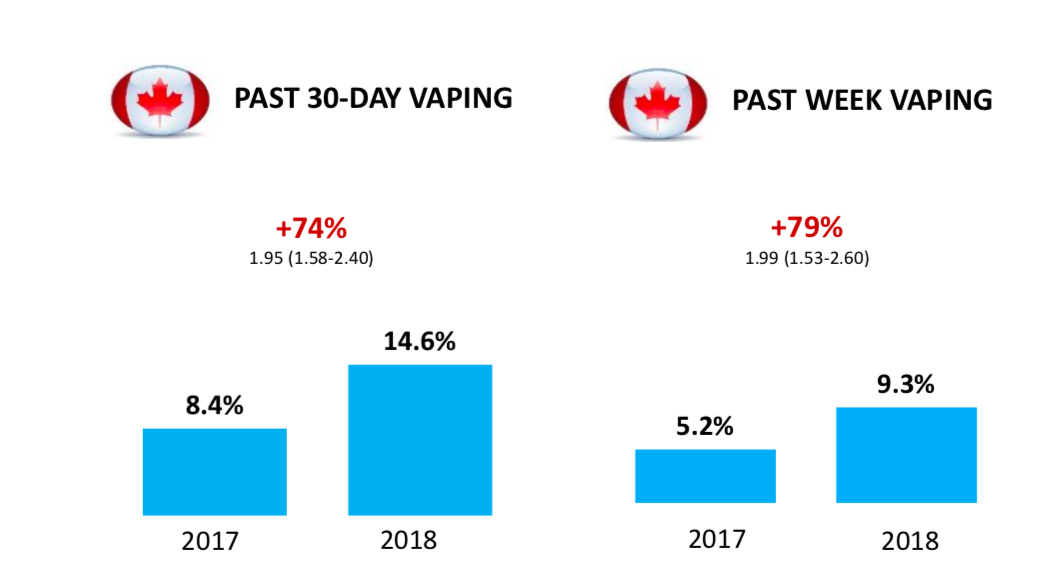
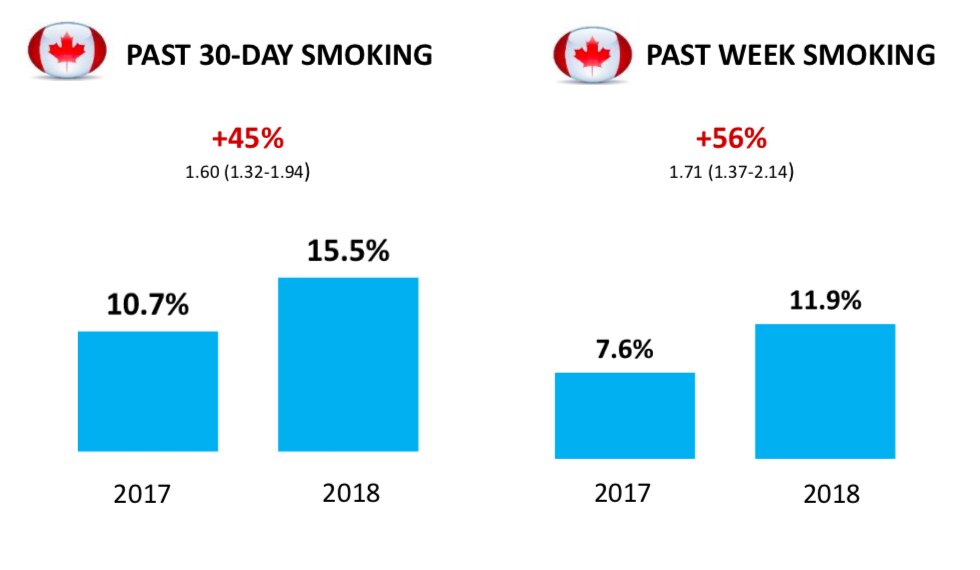
A recent paper published in the British Medical Journal contains alarming evidence that upswings in vaping by teenagers can see significant parallel rises smoking. The researchers looked at large samples of 16-19 year olds in the USA, Canada and England, and reported changes in vaping and smoking between the years 2017 and 2018.

They summarized their findings this way:

The prevalence of vaping in the past 30 days, in the past week, and on 15 days or more in the past month increased in Canada and the US between 2017 and 2018 (P<0.001 for all), including among non-smokers and experimental smokers, with no changes in England. Smoking prevalence increased in Canada (P<0.001 for all measures), with modest increases in England, and no changes in the US. The percentage of ever vapers who reported more frequent vaping increased in Canada and the US (P<0.01 for all), but not in England. The use of JUUL increased in all countries, particularly the US and Canada—for example, the proportion of current vapers in the US citing JUUL as their usual brand increased threefold between 2017 and 2018.

The Canadian data were particularly alarming. There has not been an increase recorded in teenage smoking in Canada in 30 years. The data on vaping and smoking on 15+ days a month saw a 71% increase from 2.1% to 3.6% for vaping, and a 54% increase in smoking from 4.8% to 7.4%. This was no mere rise in casual experimental vaping or smoking.

Screen Shot 2019-06-20 at 8.55.14 pm

Screen Shot 2019-06-20 at 8.56.14 pm

The four invoilable articles of faith that form the vaping advocacy creed are that

  • nicotine is all but benign
  • inhaling micro-particles of propylene glycol, nicotine, flavouring chemicals approved for ingestion but not inhalation, and metals an average of 200 times a day deep into the lungs (73,000 times a year) is all but inconsequential
  • ecigarettes are highly effective at getting smoker to quit and preventing relapse and
  • vaping by non-smokers (especially kids) will not be followed by any uptake of smoking by the previously nicotine naïve (often called the “gateway” hypothesis).

I’ve taken a skeptical look at several of these before (see the links above), as have at least 45 major health and medical agencies around the world whose policies urge precaution.

Ecig apostles will rush to point out that the US — also awash with large increases in vaping (a 46% increase in past month and a 66% increase in past week) — did not see any increase in teenage smoking, and that the increase in smoking in England was only “modest”. These differences are interesting and deserve greater analysis. But they cannot paper over what has happened in Canada nor provide any assurance that as ecigarette manufacturers salivate over the massive potential of the teenage market becoming addicted to nicotine and play their Piped Piper marketing tunes to ensure this, that the Canadian results won’t consolidate and appear elsewhere.

Gateway concerns  were strengthened with the publication of a meta-analysis of longitudinal studies showing that e-cigarettes can serve as a gateway to later cigarette smoking among some nicotine naïve youth and by the 2018 report of the National Academies of Sciences, Engineering, and Medicine. Public health consequences of e-cigarettes, which concluded that such studies provided “strong evidence of plausibility and specificity of a possible causal effect of e-cigarette use on smoking…” with the Committee “consider[ing] the overall body of evidence of a causal effect of e-cigarette use on risk of transition from never to ever smoking to be substantial” [p16-32].

Gateway hypothesis critics have relied on several arguments in their dismissals. I coauthored a critique of these in Nicotine & Tobacco Research in 2018. Here’s an edited version of what we wrote.

Are downward trends in adolescent smoking are incompatible with a gateway effect for e-cigarettes?

Several prominent harm reduction proponents have argued that the gateway hypothesis is incompatible with population trends in the USA and UK of declining adolescent smoking. Their argument here runs that vaping has been rising while smoking continues to fall, so vaping cannot be causing smoking to any significant degree among adolescents.

In both nations, declining trends of smoking among youth were apparent well before the introduction of e-cigarettes. Moreover, associations in population trends are known to be prone to the ecological fallacy; i.e. what is true at the population level may not be true at the individual level, especially when other population-level attributes are not considered (e.g. effective tobacco control policies).  Specifically, the ecological argument relies on an assumption that the population net impact of any putative gateway effect of e-cigarette use would be larger than the combined net impact of all other policies, programs and factors which are responsible for reducing adolescent smoking prevalence (e.g. tobacco tax and retail price, measures of the denormalisation of smoking, exposure of children to adult-targeted quit campaigns, retail display bans, health warnings and plain packaging). This is an extremely high bar that gateway critics demand that anyone suggesting gateway effects needs to jump over. The combined impact of such factors in preventing uptake could, thereby, easily mask considerable smoking uptake that might not have occurred in the absence of e-cigarettes.

With smoking prevalence at record lows in the US, England and Australia, only adequately powered longitudinal studies, which control for factors known to be associated with smoking uptake are vital to examining potential gateway effects. Nine such studies were included in the 2017 meta-analysis. Adjusting for demographic, psychosocial, and behavioral risk factors for cigarette smoking, the odds of subsequent cigarette smoking by non-smokers who had any experience of vaping more than tripled among e-cigarette users compared to those with no vaping experience.

Common liability rather than gateway?

One of the main criticisms of the gateway hypothesis lies in the difficulty in excluding other mechanisms for the observed relationship between vaping and later cigarette smoking. The most commonly proposed alternative explanation is based on the “common liability theory”, which emphasizes shared predisposing characteristics among multi-drug users. According to this hypothesis, a “propensity” for drug use predicts multi-drug use. Interestingly, however, several longitudinal studies have reported the strongest association between e-cigarette use and smoking initiation among youth with the lowest risk of smoking. Moreover, recent evidence using national data from the US shows that a third of youth who start with e-cigarettes have risk profiles that make them unlikely to start with cigarettes.

Rather than being mutually exclusive, the gateway and common liability hypotheses are likely to be complementary. Common factors will explain the use of drugs in general, and specific factors will explain why young people use specific drugs and in what contexts. This dynamic perception is in line with contemporary models of behavioral change being dependent on the balance between intention and ability. Intention implies individual factors including any propensity for drug use. However, such factors are contingent on environmental conditions, such as access and feasibility of drug use for intentions to be materialized.

Indeed, most tobacco control successes were the result of targeting those potentiating environmental factors rather than some innate propensity to use drugs. The salience of these environmental factors is also evident from societal trends of smoking propagation in response to tobacco industry marketing and obstruction of tobacco control policies, as well as declines in smoking in response to successful implementation of effective population-based policies.

The wide availability and intense marketing of e-cigarettes, and their putative low-risk appeal may coalesce to increasingly make e-cigarette delivered nicotine the likely first drug on a multi-drug cascade. But, rather than be alarmed, e-cigarettes proponents use this to argue against a specific temporal sequence needed to establish causality. For example, Etter argues that “The temporal sequence argument would not hold if the ordering of product use was explained solely by the ordering of opportunities to use the products, rather than by some inherent capacity of vaping to cause smoking”.  In reality, things are far more complicated, and relationships between risks (causes) and outcomes are complex, nonlinear and multi-directional. For example, obesity leads to joint stress, and joint problems also potentiate obesity through reduced movement. Which of these comes first and how they interact at different stages, ages, and contexts is dynamic rather than static relationship.  A recent study applying a prospective design and causal analytical framework found a bi-directional association between e-cigarette use and cigarette smoking among 11-18-year-olds in Great Britain, yet the association was stronger from ever e-cigarettes use to cigarettes initiation. So if e-cigarettes are a gateway into or away from other drugs/tobacco in different situations that does not constitute a basis to refute causality in both directions.

A recent NEJM review of the molecular basis of nicotine as a gateway drug by the founder the gateway hypothesis (Denise Kandel) and her husband (Eric Kandel, 2000 Nobel Prize winner in Medicine for neurophysiology) concluded that “nicotine acts as a gateway drug on the brain, and this effect is likely to occur whether the exposure is from smoking tobacco, passive tobacco smoke, or e-cigarettes”. Although the biological basis of nicotine’s gateway effect on the brain is likely to be consistent across different delivery means, the manifestation of nicotine dependence can vary according to different nicotine delivery methods (e.g. sensory cues in e-cigarettes can be different from those of traditional cigarettes).

A gateway out of smoking, but not into it?

E-cigarette proponents often assert that vaping is demonstrably a reverse gateway out of smoking for those who quit, while being scathing about suggestions that it could ever be a gateway into smoking  have been repeatedly used as debate enders. Any cessation researcher offering the equally trite “smokers who will quit, will quit” as a serious contribution to understanding the complexity of transitioning out of smoking, would be rightly pilloried for their primitive understanding of the complex processes that can culminate with permanent smoking cessation  Yet, with e-cigarettes, all that is apparently required to be said about anyone who smokes regularly is that that they had a propensity to do so. If this hard determinism was all that was needed to be invoked in understanding smoking uptake, how then do we explain the dramatic falls in uptake that have been seen in nations which have robust, comprehensive tobacco control programs? What eroded the “propensity” of all those who never took up smoking? Nicotine liability may well be a predisposing factor, but what of the known tractable reinforcing and enabling factors that tobacco control has so successfully identified and addressed over decades?

The implausibility of experimental vaping transitioning to smoking?

Another salient argument used by e-cigarette proponents is that studies showing a gateway effect do not differentiate adolescent experimental vaping from more regular use, so “any vaping” is treated the same when the association between vaping and later cigarette smoking is assessed. Etter argued that it is “hardly plausible that a simple puff or a few puffs on an e-cigarette can cause subsequent regular smoking”. But of course every regular smoker started with a “simple puff”, nearly always in adolescence. They then typically progress through more regular use to daily smoking. Birge et al recently reported that over two-thirds of smokers who tried as little as a single puff became, for a time, regular smokers.

Moreover, the assertion about the implausibility of experimental e-cigarette use leading to regular smoking in youth contrasts with an important body of evidence regarding the high susceptibility of children and adolescents to the psychotropic and addictive effects of nicotine. For example, Fidler et al and others have highlighted that children only require a very minimal exposure to develop an important and identified “sleeper effect”: a vulnerability to smoking after trying just a single cigarette, that can lie dormant for three years, or more: “From a neurobiological viewpoint, neural reward pathways might be changed as a consequence of a single exposure to nicotine, thus potentially increasing vulnerability to later smoking uptake”. Others have referred to an established body of evidence relating to youth nicotine exposure; “Importantly, several studies support that a single drug exposure can lead to changes in synaptic strength that are associated with learning and memory. The high susceptibility of children and youth to the “neurobiological insult” of nicotine was recently been highlighted in the US Surgeon General’s report on the potential risks of nicotine and electronic cigarettes to youth. Ultimately, these cellular changes could underlie the long-lasting effects of drugs”.

McNeill, who has been persistently critical of gateway effects  co-authored two heavily cited papers one of which noted that “The first symptoms of nicotine dependence can appear within days to weeks of the onset of occasional use, often before the onset of daily smoking”. Moreover, in a 30-month follow-up of the same subjects, it was noted that “Symptoms of tobacco dependence commonly develop rapidly after the onset of intermittent smoking, although individuals differ widely in this regard. There does not appear to be a minimum nicotine dose or duration of use as a prerequisite for symptoms to appear. The development of a single symptom strongly predicted continued use, supporting the theory that the loss of autonomy over tobacco use begins with the first symptom of dependence”. The clear contrast between the well-established understanding of cigarette smokers’ rapid onset of symptoms of nicotine dependence with efforts to trivialise concerns about initial infrequent use of e-cigarettes is therefore noteworthy.

The NASEM report  emphasizes that  because the e-cigarette phenomenon is relatively recent, “the majority of studies … lack sufficient duration of follow-up to study the naturalistic cigarette smoking progression sequence, which can involve a lengthy period between ever use and reaching daily smoking.”  Emerging longitudinal data should provide greater clarity on the extent to which “ever” smoking after e-cigarette uptake converts to daily smoking.

African music for beginners 5: Ghana highlife

Screen Shot 2019-06-23 at 3.33.01 pm


I’ve had a passion for contemporary African music since the early 1980s, when I bought my first LPs by South Africa’s (late) Hugh Masekela and Cameroon’s Manu Dibango, went to my first African gig (the Congolese superstar Sam Mangwana and the African Allstars, at London’s Dominion Theatre near Waterloo). In the years since I’ve collected 1000s of LPs, cassettes, CDs and MP3s.

Before traveling to any city, I look up where its African quarter is and try to get out there to see if there are any music shops and bars.  Music shops are very sadly becoming a thing of the past as people move to digital access. I spent many lunch hours listening to music at Stern’s African Record Centre in Whitfield St just behind Tottenham Court Rd in London when I was studying there between March 1984‑November 1985. They are now an on-line shop and also have a blog.

I subscribe to the monthly email from Alastair Johnston’s invaluable Musikifan record review page, buy lots of books on African music, and maintain an ever-expanding Spotify African page. While for some artists it can be very patchy, Spotify has a delightfully vast range of African music, including a lot of very obscure archival music, sometimes replete with scratchy sounds from the old LPs from where it has been digitised.

I have recently started a Youtube page with live African music concerts.

Over the next months, I’ll post country-by-country blogs with lots of recommendations for those starting out to explore the vast catalogue of African music. I’ll only be including those that I like, with links to the tracks on my Spotify page or to Youtube when they are not available on Spotify. These are just a taste that I hope might infect you in the way I was.

EARLIER SELECTIONS

1.Senegal selections here

2.Zimbabwe selections here

3.Mali selections here

4.Nigeria selections here

GHANA (Highlife)

Eric Agyemang

AB Crentsil

CK Mann

Adomako Nyamekye

African Connexion

Amakye Dede

Kuntum 13 Band

Bassa Bassa Soundz

George Darko

Sweet Talks

Pat Thomas

West African Highlife Band

ET Mensah

African music for beginners 4: Nigeria

fela-kuti-documentary-music-is-the-weapon

Fela Kuti

I’ve had a passion for contemporary African music since the early 1980s, when I bought my first LPs by South Africa’s (late) Hugh Masekela and Cameroon’s Manu Dibango, went to my first African gig (the Congolese superstar Sam Mangwana and the African Allstars, at London’s Dominion Theatre near Waterloo). In the years since I’ve collected 1000s of LPs, cassettes, CDs and MP3s.

Before traveling to any city, I look up where its African quarter is and try to get out there to see if there are any music shops and bars.  Music shops are very sadly becoming a thing of the past as people move to digital access. I spent many lunch hours listening to music at Stern’s African Record Centre in Whitfield St just behind Tottenham Court Rd in London when I was studying there between March 1984‑November 1985. They are now an on-line shop and also have a blog.

I subscribe to the monthly email from Alastair Johnston’s invaluable Musikifan record review page, buy lots of books on African music, and maintain an ever-expanding Spotify African page. While for some artists it can be very patchy, Spotify has a delightfully vast range of African music, including a lot of very obscure archival music, sometimes replete with scratchy sounds from the old LPs from where it has been digitised.

I have recently started a Youtube page with live African music concerts.

Over the next months, I’ll post country-by-country blogs with lots of recommendations for those starting out to explore the vast catalogue of African music. I’ll only be including those that I like, with links to the tracks on my Spotify page or to Youtube when they are not available on Spotify. These are just a taste that I hope might infect you in the way I was.

Senegal selections here  Zimbabwe selections here Mali selections here

Nigeria

Chief Ebenezer Obey

Femi Kuti

Fela Kuti

Seun Kuti & Egypt 80

King Sunny Adé

Lagbaja

Onyeka Onwenu

Tony Allen

African music for beginners 3: Mali


I’ve had a passion for contemporary African music since the early 1980s, when I bought my first LPs by South Africa’s (late) Hugh Masekela and Cameroon’s Manu Dibango, went to my first African gig (the Congolese superstar Sam Mangwana and the African Allstars, at London’s Dominion Theatre near Waterloo). In the years since I’ve collected 1000s of LPs, cassettes, CDs and MP3s.

Before traveling to any city, I look up where its African quarter is and try to get out there to see if there are any music shops and bars.  Music shops are very sadly becoming a thing of the past as people move to digital access. I spent many lunch hours listening to music at Stern’s African Record Centre in Whitfield St just behind Tottenham Court Rd in London when I was studying there between March 1984‑November 1985. They are now an on-line shop and also have a blog.

I subscribe to the monthly email from Alastair Johnston’s invaluable Musikifan record review page, buy lots of books on African music, and maintain an ever-expanding Spotify African page. While for some artists it can be very patchy, Spotify has a delightfully vast range of African music, including a lot of very obscure archival music, sometimes replete with scratchy sounds from the old LPs from where it has been digitised.

I have recently started a Youtube page with live African music concerts.

Over the next months, I’ll post country-by-country blogs with lots of recommendations for those starting out to explore the vast catalogue of African music. I’ll only be including those that I like, with links to the tracks on my Spotify page or to Youtube when they are not available on Spotify. These are just a taste that I hope might infect you in the way I was.

Senegal selections here

Zimbabwe selection here


Mali


Ali Farka Touré

Amadou et Mariam

Boubacar Traoré

Cheikh Tidane Seck with Hank Jones

Djelimady Tounkara

Fatimata Diawara

Habib Koité

Issa Bagayago

Kasse Mady

Mama Sissoko

Rail Band de Bamako

Rokia Traoré

Salif Keita

Tinariwen

Vieux Farka Touré

African music for beginners 2: Zimbabwe


Screen Shot 2019-06-06 at 11.23.20 am

I’ve had a passion for contemporary African music since the early 1980s, when I bought my first LPs by South Africa’s (late) Hugh Masekela and Cameroon’s Manu Dibango, went to my first African gig (the Congolese superstar Sam Mangwana and the African Allstars, at London’s Dominion Theatre near Waterloo). In the years since I’ve collected 1000s of LPs, cassettes, CDs and MP3s.

Before traveling to any city, I look up where its African quarter is and try to get out there to see if there are any music shops and bars.  Music shops are very sadly becoming a thing of the past as people move to digital access. I spent many lunch hours listening to music at Stern’s African Record Centre in Whitfield St just behind Tottenham Court Rd in London when I was studying there between March 1984‑November 1985. They are now an on-line shop and also have a blog.

I subscribe to the monthly email from Alastair Johnston’s invaluable Musikifan record review page, buy lots of books on African music, and maintain an ever-expanding Spotify African page. While for some artists it can be very patchy, Spotify has a delightfully vast range of African music, including a lot of very obscure archival music, sometimes replete with scratchy sounds from the old LPs from where it has been digitised.

I have recently started a Youtube page with live African music concerts.

Over the next months, I’ll post country-by-country blogs with lots of recommendations for those starting out to explore the vast catalogue of African music. I’ll only be including those that I like, with links to the tracks on my Spotify page or to Youtube when they are not available on Spotify. These are just a taste that I hope might infect you in the way I was.

See Senegal selections here

Zimbabwe

Bhundu Boys

Four Brothers

James Chimombe & the Ocean City Band

Jonah Sithole

Lovemore Majaivana

Machanic Manyeruke & the Puritans (gospel)

Oliver Mtukudzi

Real Sounds

Thomas Mapfumo & Blacks Unlimited


African music for beginners 1: Senegal


350px-Orchestra_Baobab

Orchestra Baobab

I’ve had a passion for contemporary African music since the early 1980s, when I bought my first LPs by South Africa’s (late) Hugh Masekela and Cameroon’s Manu Dibango, went to my first African gig (the Congolese superstar Sam Mangwana and the African Allstars, at London’s The Venue near Waterloo station on May 17, 1984). In the years since I’ve collected 1000s of LPs, cassettes, CDs and MP3s. In 1985-6 I ran a late night African music program on Adelaide’s 5MMM radio and more recently, I’ve played African selections three times on former ABC radio host Simon Marnie’s Soniv Journey.

Before traveling to any city, I look up the location of its  African quarter and try to get out there to see if there are any music shops and bars.  Music shops are very sadly becoming a thing of the past as people move to digital access. I spent many lunch hours listening to music at Stern’s African Record Centre in Whitfield St just behind Tottenham Court Rd in London when I was studying there between March 1984‑November 1985. They are now an on-line shop and also have a blog.

I subscribe to the monthly email from Alastair Johnston’s invaluable Musikifan record review page, buy lots of books on African music, and maintain an ever-expanding Spotify African page. While for some artists it can be very patchy,  Spotify has a delightfully vast range of African music, including a lot of very obscure archival music, sometimes replete with scratchy sounds from the old LPs from where it has been digitised.

I have recently started a Youtube page with live African music concerts.

Over the next months, I’ll post country-by-country blogs with lots of recommendations for those starting out to explore the vast and intimidating catalogue of African music. I’ll only be including examples of those that I like, with links to the tracks on my Spotify page. These are just a taste that I hope might infect you in the way I was.

Senegal

Africando (and Africando Allstars) – African salsa

Baaba Maal

Cheikh Lô

Dexter Johnson & Super Stars de Dakar (old time jazz)

Ismaël Lô

Mansour Seck

Orchestra Baobab

Thione Seck

Toure Kunda

Wasis Diop

Youssou N’Dour

Xalam

Highlights and lowlights of World No Tobacco Day, Australia 2019

Highlights

May 31 is World No Tobacco Day. Australia has much to celebrate, no better captured in two sets of killer facts.

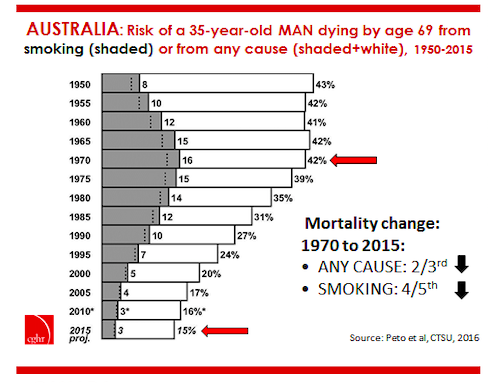
First, Sir Richard Peto’s Oxford University research group has produced estimates of  the changes in total and tobacco-caused mortality for a large number of countries across the 65 years 1950-2015.  Australia is one country which has seen huge falls (see figure below). In 1970, the risk of a 35 year old man dying by age 69 was 42%. 16% of those deaths would have been caused by smoking.

Forty five years later, the all-cause risk of early death had dropped by two thirds to 15%, while smoking-caused deaths had fallen by four fifths to just 3%. Australia began introducing the first baby steps in the suite of comprehensive tobacco control policies and campaigns in 1973 when the first timidly tepid warnings appeared on cigarette packs.

This is harm reduction writ very large indeed.

Screen Shot 2019-05-30 at 8.40.47 pm

Second, as more and more tobacco control policies were legislated and implemented in Australia, and campaign funding became serious, allowing mass-reach of don’t start and quit motivating messages into the whole population, the proportion of people who smoked continued falling, occasionally plateauing as political feet were sometimes removed from the accelerator, but resuming their downward spiral when tobacco control became bipartisan.

Australia has long been at or near the very front of the international pack in reducing smoking. Here are the latest available data for five nations often compared with Australia. The Australian data are from the 2017-18 ABS National Health Survey (see table 9 here)

  • Australia (2017-18 ages 18+): 15.1% (includes cigarette smokers plus all exclusive users of other combustible tobacco products)
  • USA: (2017 ages 18+) 16.7% (all combustible tobacco product users)
  • Canada (2017 ages 12+): 16.2% (cigarettes & Roll Your Own tobacco only)
  • New Zealand (2016 ages 15+) 15.7%. (Māori adults 35.3%) (cigarettes & RYO only)
  • UK (2017 ages 18+): 15.1% (cigarettes and RYO only)

In summary, of these five nations, only Australia and the USA include all combustible tobacco products in their data on “smoking” prevalence, while other nations only include cigarettes (factory made and hand-rolled). Their “smoking” prevalence figures thus underestimate the true prevalence of “smoking”. Australia and the UK have the same (lowest) smoking prevalence of these nations, although the UK data do not include combustibles other than cigarettes (for example pipes, cigars, shisha and hookah). It is therefore likely that today Australia has the lowest smoking prevalence of these nations in the vanguard of reducing ,smoking.

But wait, there’s more. This week, the Cancer Council Victoria released data on changes in smoking prevalence in Victoria, our second most populous state, between 2015-2018. The main take home findings are that  in that state we now have the lowest daily smoking prevalence ever recorded: 10.7% (down from 13.5% in 2015)  with falls in the most disadvantaged group down from 16.8% to 13%.

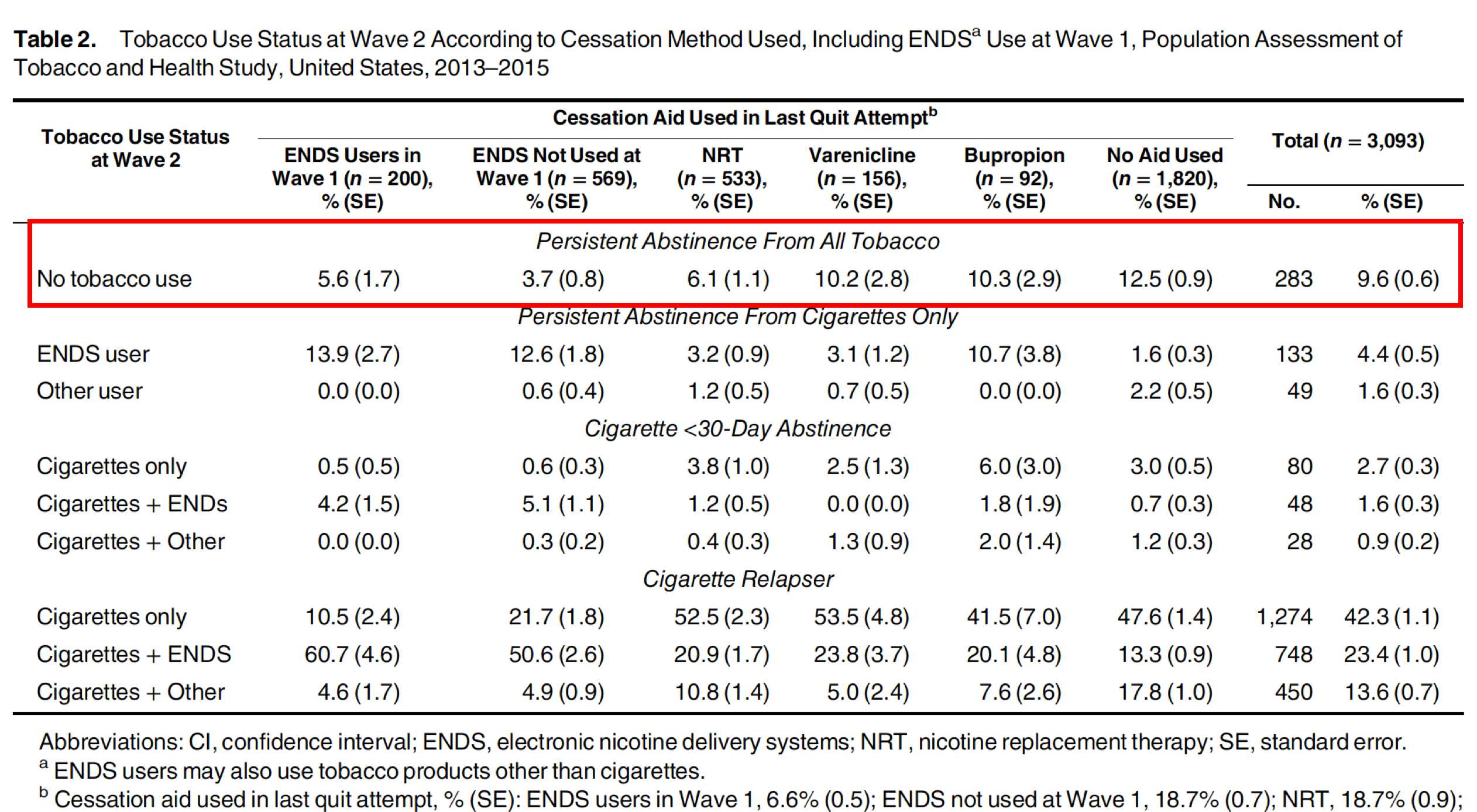
The same study found that less than 2% of smokers & 1% of ex-smokers vape daily. We know from large longitudinal cohort studies that sustained quitting from smoking among people who vape compares unfavourably with other ways of quitting (eg: see table below). The Victorian report concluded that “There was no evidence to suggest an increase in the use of e-cigarettes to aid cessation by Victorians who were attempting to quit across the study period”.

blog table

Tobacco control is widely regarded as the poster child of chronic disease control.  These data, on radical falls in both smoking and smoking caused deaths , show why.

Lowlights

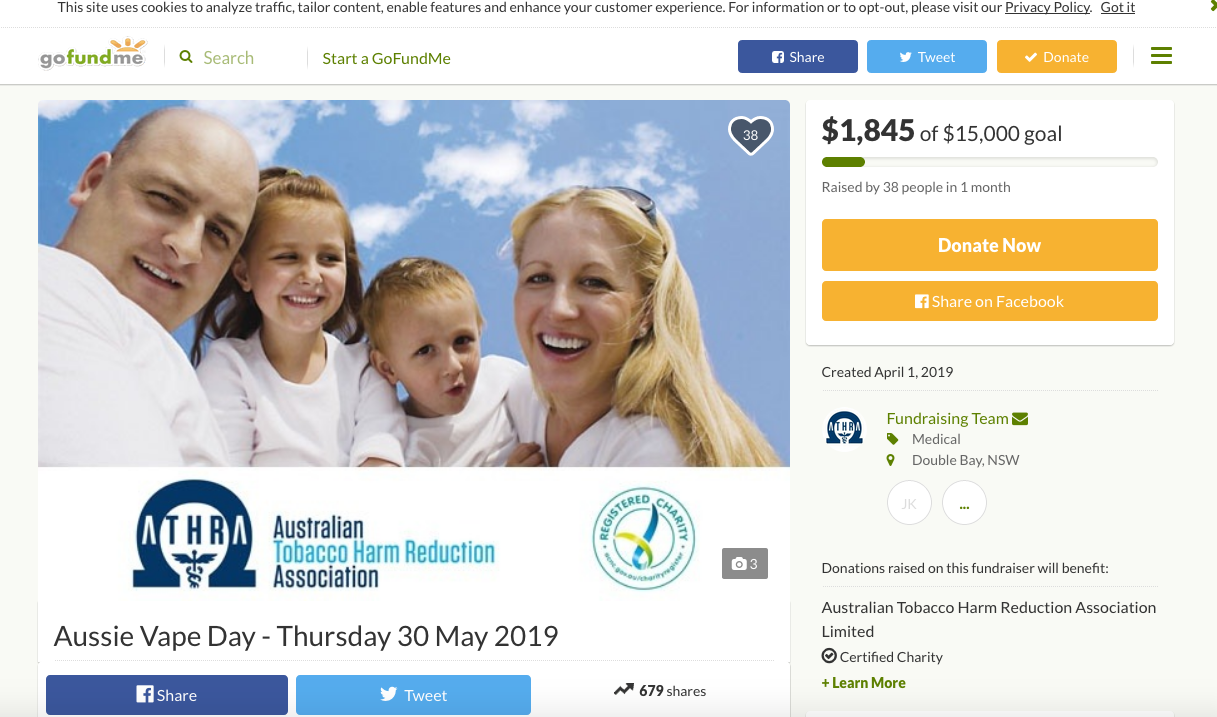
On the day before WNTD, a triumvirate of three e-cigarette advocacy groups launched “Aussie Vape Day” in a brazen attempt to gatecrash and rain on the parade of WNTD. On April Fools day, 2019 one of these groups, launched a Go Fund Me fundraiser, setting a target of $15,000 to pay for “a dedicated website, a launch event, professionally produced videos, testimonials, social media infographics and mainstream media promotion, a flyer for beginners on how to switch and a handout on the common questions people ask.”

ATHRA’s chairman Colin Mendelsohn, opened the donations with $500 and 30 days later, another $1345 was donated by just 37 others, with 679 sharing the Go Fund Me link, apparently with very little effect. Their $1845 fell  88% short of their modest target.

Screen Shot 2019-05-30 at 7.21.33 am

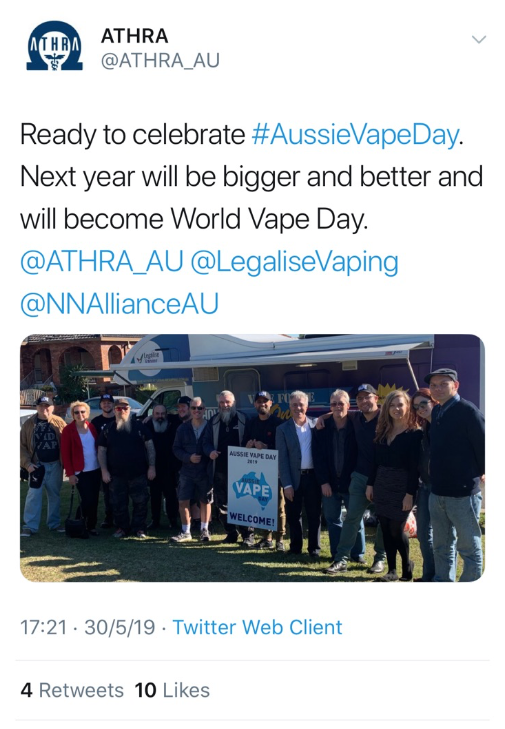
By 8pm at the end of the big day, the Twitter hashtag #AussieVapeDay had a whole 9 tweets, with collectively 4 comments, 16 retweets and 25 likes, not exactly the stuff of a national Twitter trend.

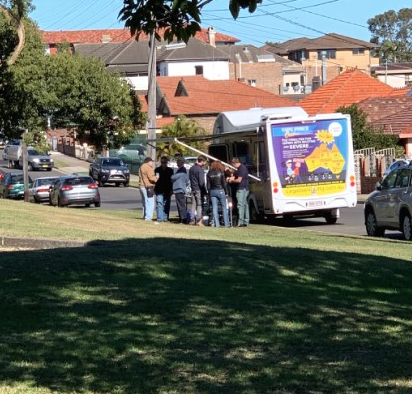
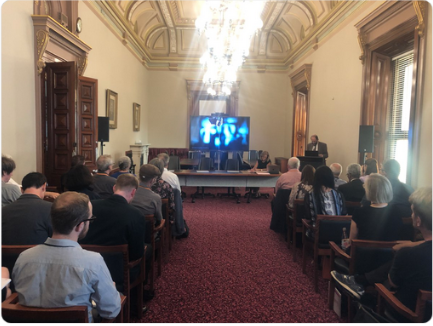
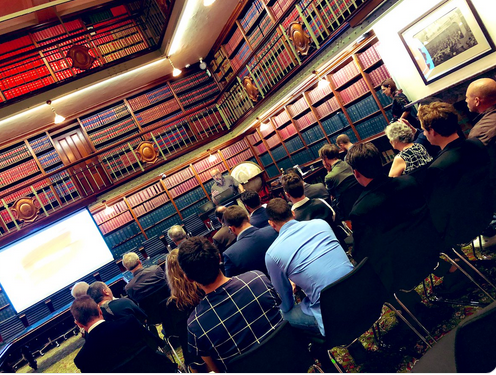
The launch event, held on a cold, windy Thursday in a Sydney suburban park looked like Groundhog Day of recent poorly attended ecig seminars held in rooms in the Victorian and NSW parliament buildings.  (see photos below).

Aussie Vape Day

Aussie Vape Day launch

(2019) VapeDay Money shot

Next year will be bigger … !!


Screen Shot 2019-03-07 at 8.56.32 pmScreen Shot 2019-03-07 at 5.16.53 pm

Melbourne and Sydney seminars, 2019

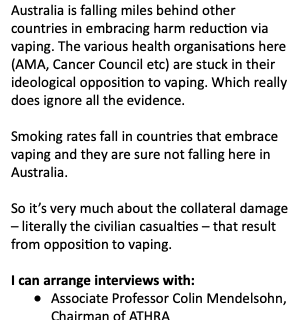
The health communications company, Palin Communications, issued a press release on the big day. A cover letter to recipients stated:

Screen Shot 2019-05-30 at 8.21.27 pm

Australian health and medical which have expressed scepticism and regulatory caution about ecigarettes are in lockstep with a very long list of global and international expert agencies (see here). And as for “Smoking rates fall in countries that embrace vaping and they are sure not falling here in Australia”, here was my response (the link was to the Victorian report above).

Screen Shot 2019-05-30 at 9.08.55 pm

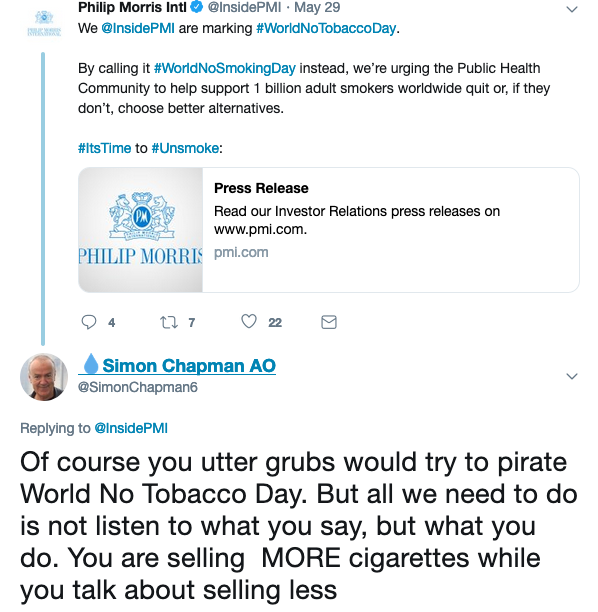
Philip Morris International

Some bright spark at PMI decided it would be just so apposite and witty to rename World No Tobacco Day as World No Smoking Day. I’ve written several long pieces on this blog here, here and here and elsewhere about awkward questions that we all need to ask about that company’s publicly stated ambition to move all its smokers over to its heat-not-burn product. Critically, while it’s been running its global “unsmoke” campaign, its cigarettes have continued to sell well, with sales of brands like Marlboro recently increasing.

Screen Shot 2019-05-30 at 9.24.20 pm