• Home
  • About/CV
  • Blog
  • Vaping Research Alerts
  • Blog archive list
  • My books
  • Memoirs
  • Music, bands, films
  • Contact

Simon Chapman AO

~ Public health, memoirs, music

Simon Chapman AO

Monthly Archives: August 2026

Lowering tobacco tax for dummies

26 Wednesday Aug 2026

Posted by Simon Chapman AO in Blog

≈ Leave a comment

Tags

cigarettes, illicit-trade, politics, smuggling, tobacco

One Nation is throwing election promises around like a drunken sailor. It says it will reduce tobacco excise by 75% to make legal, taxed cigarettes competitive with cheap illegal tobacco. Not to be outdone, two federal Liberals today made another hairy chested bid for an 80% tax decrease, pulling another magic number out of a hat.

Here’s why all these “reduce the tax” proposals are commercially illiterate brain farts, devoid of the most elementary arithmetical argument and coated with staggering ignorance about the global trade in illegal tobacco.

Nothing new in large scale illicit tobacco trade

Many commentators on illicit tobacco trade appear to have come down in the last shower. The level of tunnel-visioned parochialism in this debate is quite remarkable. There are few, if any nations which have insignificant illegal tobacco black markets. I explored this is a previous blog I titled If expensive cigarettes are driving the black market why do so many countries with much cheaper cigarettes have thriving black markets too?   

Illegal (untaxed) tobacco is a global phenomenon which has a long history. Over 30 years ago in 1994, tracking of European tobacco export and import data  found a 30.8% difference between the number of cigarettes officially exported and imported. The only plausible explanation for these massive quantities of missing cigarettes was smuggling, particularly of expensive premium brands moving from northern Europe into lower income eastern and southern European markets.

With tobacco tax being the largest component of tobacco retail price and price being the most important factor that determines sales volumes and profits, the tobacco industry has always been desperate to lobby governments not to raise taxes. But at the very same time as trying to alarm governments with claims that tax increases increase illicit trade and reduce government revenue, tobacco companies have played an active role in several markets in actually supplying cigarettes to the illegal duty-not-paid trade

After concerns about health, high prices have always been named by people who have quit smoking as their primary motivation. So the prospect of significant price falls at the swipe of a government tax reduction pen has long been seen as a life raft by Big Tobacco as  smoking rates have fallen to their lowest ever levels in many nations including Australia.

Crunching the numbers

Tobacco excise in Australia from September 1 this year will be $1.55274 per cigarette meaning the excise component on a pack of 20 will be $31.05. To this we have to add the cigarette manufacturers’ and retailers’ margins and then 10% GST to give us the final retail price. The photo below shows the prices smokers pay today in my local Woolworths.
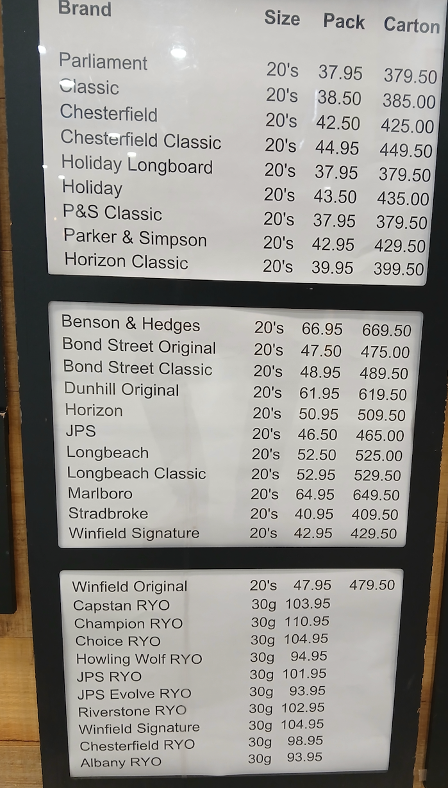
One Nation’s proposed excise reduction of 75% would see the tax on a pack of 20 fall from $31.05 to $7.76 at today’s rates. Using the Woolworths prices above and assuming both manufacturers and retailers kept both their margins constant (it would be highly unlikely that they would reduce their takes) and allowing for a lower GST amount payable, we would see the retail price fall to something like $13.00 for the cheapest brands selling now at $37.95, and to something like $40.00 for the most expensive, Marlboro, now selling at $64.95.

How much do illicits cost to buy now?

I have often heard reports that illegal packs, if bought by the carton, can cost as little as $7. $15 is a common price asked, but if you shop around you can buy for nearly $5 less, as the screenshot from a .au tobacco website offering free postage shows: a 10-pack carton price of $105 or $10.50 per pack.

So with illegal cigarettes selling now for $10.50, this means that the cheapest tax-reduced brands in Hanson’s plan at $13.00 would be nearly 25% more than they could get them from an illegal supplier perhaps 100 metres away if they bought at carton price. And this is before the certainty of any potential further illicit price reductions, as I’ll discuss below.

Note too that in the under $40 a pack budget range of five brands now on sale at Woolworths, there, is a maximum price difference of $2, a 6.3% difference. This is nothing remotely like the 25% difference under Hanson’s proposal. These five budget brands are manufactured by different tobacco companies which all possess years of exquisitely sensitive national sales data about the price points that see them lose customers to cheaper brands. A 40% price difference would be seen as commercial madness.

Ex federal police officer Rohan Pike is a regular commentator on illicit tobacco in Australia. He recently spoke with the ABC’s David Speers, who had very clearly informed himself about claims likely to be made by Pike.

David Speers: So do you have a particular number on where you think tax should be, or how far it should be lowered? One Nation, as I mentioned, is saying a 75% cut. We’ll see what the coalition lands on. What do you think?

Rohan Pike: I haven’t got any specific modelling myself. I would suggest it will take a significant cut. And let’s just even the market up.

David Speers: So get the price down to where the black market price is.

Rohan Pike: It’s never going to be that low because the criminals can then still undercut and lower their price even further. But people, consumers will pay a premium for the better quality product. They’ll pay a premium for the brands that they like. They’ll pay a premium to stay within the law. So Australia’s generally law abiding. People know that they’re breaking it. But most people, I think, with some education and a choice of two to one perhaps as opposed to the four, 5, 6 to one that it is at the moment might go back to the legal market.

Significantly,  Pike here acknowledges that criminals distributing smuggled stock will always be able to undercut the retail price arising from any reduction in tobacco price. So he knows that any rate drop he might name will always see the cost of reduced (or even legal totally untaxed cigarettes) still well below that of illegal untaxed cigarettes. But he still argues about a nebulous “significant cut” while admitting he’s got no modelling he could point to provide justification.

Cambodia—34c a pack cigarettes

The 2026 UN Office on Drugs and Crime report on Southeast Asia states that Cambodia is a long-time ‘transit’ nation involved in receiving shipments of tobacco not destined for consumption in such nations. The report explains “These products are often exported openly from their source countries but then smuggled into their destination countries, often via transit countries in the region, including the use of free zones”. 

It continues “Cambodia has been found to be a key country of origin and transit for illicitly traded cigarettes which are then on smuggled to Vietnam by land or sea, with Vietnam acting as both a market for consumption and transit point for onward international distribution … Recent law enforcement operations by the Cambodian government have detected very large factories producing high-quality counterfeits for the regional market, and perhaps beyond. The international brands allegedly produced are found in many of the illicit markets in the region.”

So how much might a smuggler pay who wanted to sell cigarettes smuggled from Cambodia to retailers in Australia? Below is a screenshot of a page detailing tobacco prices in Cambodia from a 2025 WHO report.
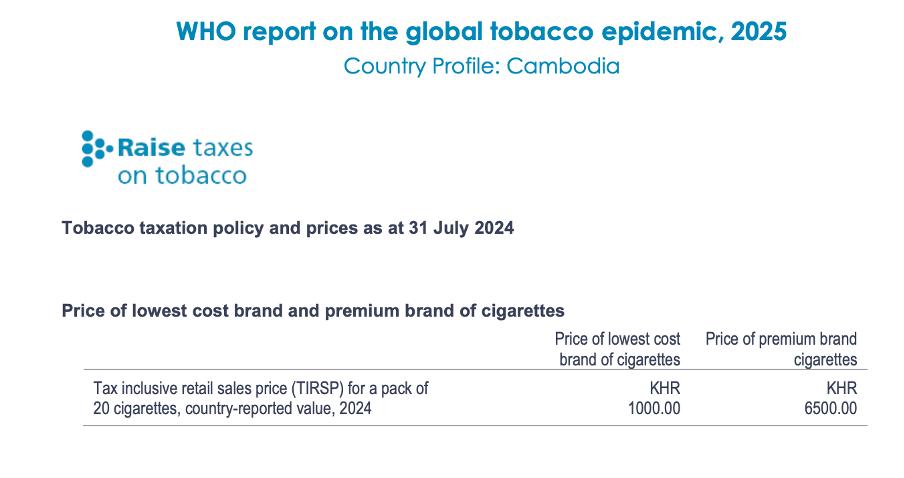
In 2024 the lowest price (1000 KHR or Cambodian riel) converts to just AUD 34c. This price includes local Cambodian tobacco tax, manufacturers’ costs and profit, and retailers’ margins. So if a cashed-up major smuggler were to buy these 34c cigarette packs in huge multiple container sized volumes from local manufacturers or importers, they would pay far less than even 34c.  Let’s say perhaps half that might be around the mark – say 17c.

Add freight costs from Cambodia or some other transit nation plus warehousing and local distribution costs in Australia plus any look-the-other-way bribery costs involved, and we might see the landed cost rise to say 30c. 

A 40-foot container with 70 cubic metres can ship 40 million cigarettes (2 million packs), which at $0.30 a pack would cost $600,000. The gross return if these sold in Australia for $10.50 (as now) would be $21 million, less the retailers’ margins, distribution and warehousing costs in Australia.

This would represent a gross profit of $20,400,000 – a 35-fold return on investment, on just one container. This galactic profit provides enormous wriggle room to criminal importers. If Australia was to go where no other nation has ever been and axe all tobacco tax, as one economist – again providing no modelling – suggested, the smugglers would eat this for breakfast.

Rohan Pike’s argument that if legal, tax-reduced cigarettes still cost more than illicits, many smokers would “pay a premium to stay within the law. So Australia’s generally law abiding. People know that they’re breaking it. But most people, I think, with some education and a choice of two to one perhaps as opposed to the four, 5, 6 to one that it is at the moment might go back to the legal market” bears little scrutiny.

Here we need only to look at the extent of the cash economy and undeclared sales common with barbers, hairdressers, nail bars, cafes and tradies. The Australian Taxation Office estimates the shadow or cash economy costs Australia approximately $16-$25 billion a year in unpaid tax revenue, with the broader economic impact estimated to be as large as 3% of GDP (exceeding $80 billion in 2025).

As The Castle’s Darryl Kerrigan might have said to Pike  “tell him he’s dreaming”.

Pike also painted a picture of illegal tobacco retailing that can have its tentacles everywhere if blatant high street illegal retailing were to become too risky with increasing shop closures.

Pike: “the criminals will pivot, they’ll go online, they’ll do home deliveries, the consumers are not going away.”

But three recent studies of those buying illegal cigarettes show that on-line  sales are very small. Here’s a screenshot of a talk given by James Martin in March 2026 describing the results of his interviews with some 4000 past-month nicotine consumers. Martin is a fervent “lower the tax” disciple too. He has not yet published his results, but as can be seen, online purchasing is very low.
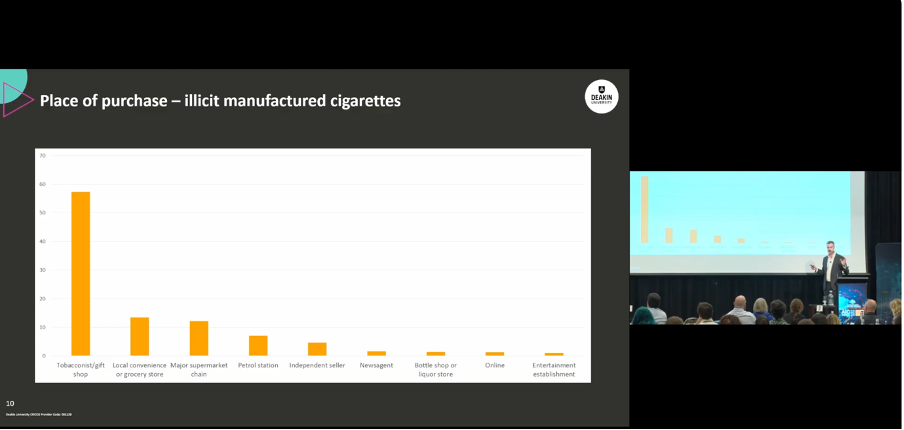
In the on-going Genvape study, only 9 of 232 interviewed who had bought illegal tobacco, bought it on-line. And in the latest AIHW national study, purchasing online was subsumed in a residual “other” category totalling only 2.9% of users.

So can we ask, where is Pike’s evidence about any major pivot by criminals to online or home delivery?

Enforcement

Between 1 July 2025 and 30 June 2026 at the Australian border, the Australian Border Force seized:

  • Over 2.2 billion cigarette sticks
  • Over 586.7 tonnes of loose-leaf tobacco
  • Over 13.2 million illicit vaping products – representing a 112% increase on vape seizures compared to the previous financial year.

Much has been made of the impossibility of Border Force inspection of anything but a small fraction of the 8.5-9.1 million shipping containers that enter Australian ports each year. Those pushing “lower the tax” agenda often make light of the successes above and make similar remarks about the futility of trying to close illegal retailers.

Retailing is the Achilles heel of illegal tobacco trade. Unlike hidden shipping containers, retailers need to be in plain sight to attract customers. So they are also in plain sight of  those responsible for their closures and prosecution.

All serious parties in this debate agree that enforcement is absolutely essential. Three state governments have closed 260 illegal tobacco shops for a total of 13,000 days in Queensland; NSW has closed 421 for 37,890 days since November 2025; and South Australia got out of the blocks first with 100 closures between June and November 2025.

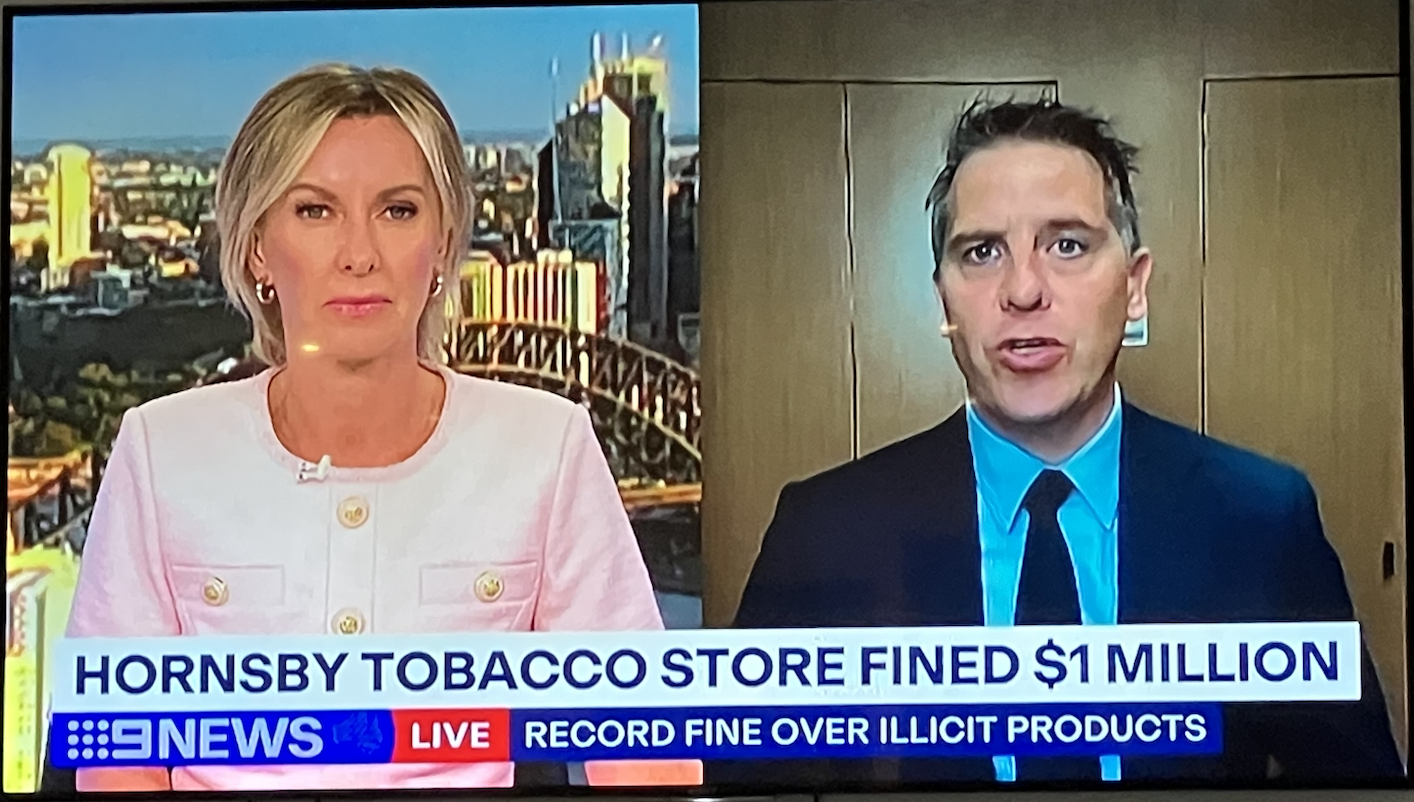
A Sydney closed shop which brazenly reopened was fined $1.18m and permanently closed. There are some 60 more reoffenders in the legal pipeline.

These penalties, which can also include gaol times, are radically changing the risks and costs of engaging in illicit trade in Australia. No country has zero illicit tobacco trade, but Australia is now taking the problem seriously.

Political posturing with unmodelled, elementary nonsense about lowering tax debases any pretence at sophisticated evidence-driven analysis of this problem.
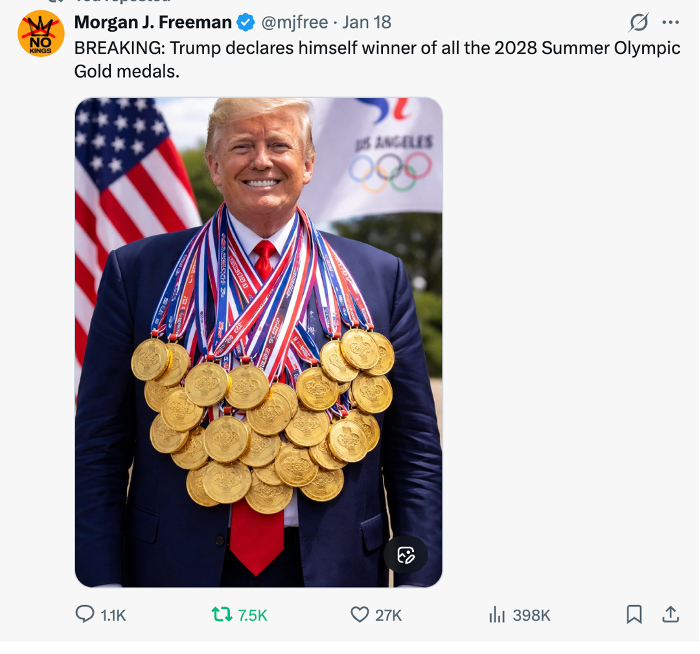

Demented, incontinent, fat, orange and balding: should there be limits on attacks on the vile Trump?

20 Thursday Aug 2026

Posted by Simon Chapman AO in Blog

≈ Leave a comment

Tags

disability, donald-trump, incontinence, trump, writing

With Trump’s peerless history of lies, convicted sexual assault, impeachments, war mongering, racism, mocking the disabled, galactic self-absorption and self-aggrandisement,  wrecking the American economy, shredding public health and environmental protections, separating refugee children from their families, enabling the Netanyahu genocide of Palestinians and you-name-it, he has given his billions of critics around the world an unending arsenal of material to hopefully hasten his exit from all our lives.

There’s been a growing conga line of essayists setting out the case for him being the worst ever American president and the most odious and dangerous man in the world. He deserves these and many more such epithets.

But there is also a lot of truly despicable cruel ridicule thrown at Trump.

Orange and balding

Like millions of people all around the world, Trump is considerably overweight and never appears in public without being caked in his fake tanning lotion, attracting names like the Mango Mussolini and the Tangerine Toddler. This has caused a tsunami of ridicule, that I admit to impulsively sharing during his first term. His fake tanning puts arc lights on his inexhaustible vanity, but in that he’s hardly Robinson Crusoe in a world of botox, cosmetic surgery, hair colouring and all the other ways people ameliorate their insecurities.

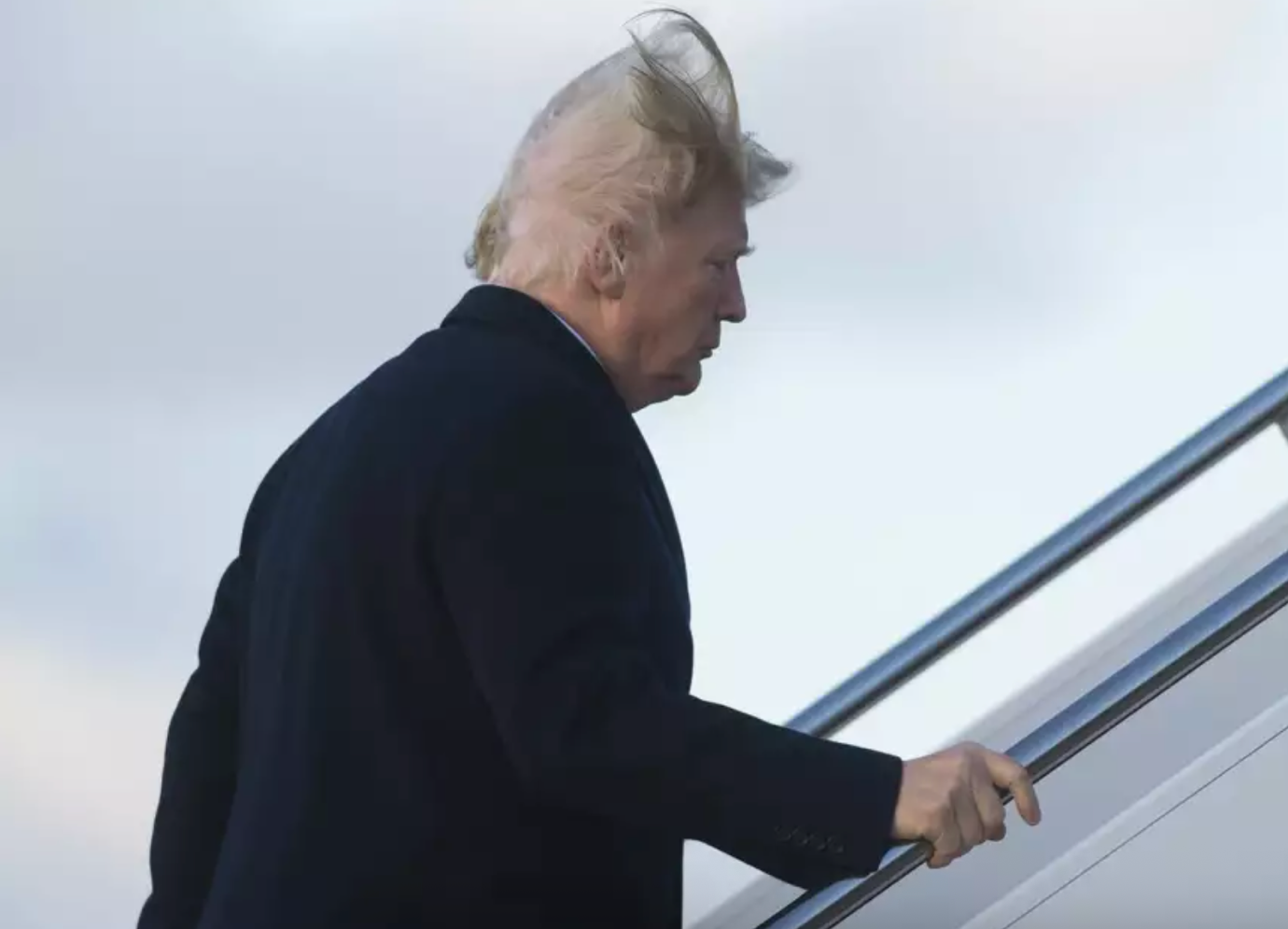
Trump’s unruly comb-over is often the butt of ridicule. Being entirely comfortable with my own follicular-challenged pate, I’ve little sympathy with elaborate and obvious efforts to disguise hair loss. So personally, I don’t supress laughter when I see Trump’s coiffure in a mess. He may well have done wonders for the hair loss industry, but for me it’s a case of fools and their money here. So I’ll happily laugh along.

Overweight

His weight is another matter. As I wrote about similar ridicule of the portly ex-Australian Prime Minister Scott Morrison when he was seen in swim trunks on the beach “Body shaming is often a toxic combination of fat shaming and unadulterated ageism … The message being sent to Morrison is a message that is also received by everyone with an older and less than perfect body: stay out of public sight. We find you repulsive. We shouldn’t have to look at you. You should understand how bad you look and keep your awful body covered up.

These messages can have serious repercussions. A large majority of the population don’t measure up to this standard with its neo-eugenic sub-texts: the old and anyone falling outside some ideal body type cover millions of Australians. The net impact of this sort of shaming across the population for feelings of low self-worth, esteem and acceptance manifests itself every day in dieting, anxiety and depression.”

Dementia?

Trump’s endless succession of bizarre word salad speeches and remarks is increasingly drawing comments that he is showing signs of dementia. This is of course of immense relevance and public importance, raising critical questions about his fitness to govern and giving someone like this codes to the nuclear Armageddon button. But so often, new instances of his incoherence are mocked unmercifully, something not inconsequential to public attitudes toward dementia.

If Trump were to ridicule someone with dementia (and on his form it surely can only be time) we’d all double down on this latest low watermark of contemptibility. Yet it’s apparently all good fun if we openly smirk about Trump’s incoherence and gaffes. Let’s document and republish these, but let’s always be mindful of the impact of implying that those with dementia should be swept out of sight.

Incontinence

The most recent of all these taunts is the “diaper Don” guffawing at the possibility that he’s now incontinent. So funny? But what sort of person snickers at an older person buying nappies in the supermarket or makes an older friend self-conscious about their urine smell?

Much of the merciless ridicule is heavily gendered. Anyone publicly laughing at the hair loss or obesity of a female political leader would be rightly wear misogynistic blowback: here we go again, judging female leaders on their weight, looks, dress, fashion sense etc.

Every time these cruel taunts are amplified across social media, millions — particularly among the aged — must privately wince and feel that Trump provides open licence for widespread unleashing of the cruellest jibes that many probably feel others may apply to them too.

Thirty percent of Australians over 15 have some urinary incontinence with 1 in 50 have faecal incontinence. Their self-esteem can be wretched.

446,500 Australians live with dementia. One of them is a very dear friend who at just 70 loses his way in nearly every conversation. Just like Trump. Laughing at this would be unspeakably disgusting.

If anyone laughed at our aging parents or grandparents as they struggle with all the challenges of aging, we’d feel contempt. But we do it openly about Trump.

So are we sometimes being drawn in to the very same despicable ways of talking about disability that appal us with him? In 2016 Michelle Obama famously said “when they go low, we go high” during her speech at the Democratic National Convention. But among all the richly deserved criticism, insults and ridicule Trump attracts are barbs about his appearance that can never pass ethical standards of criticism.

Let’s never hold back with daily excoriations of Trump’s mendacity, character failings and the danger he poses to the world.  This piece by Nate White is one of the best I’ve read. But let’s always be mindful of the collateral damage some forms of this can do to many vulnerable people.

Hairy tales from before the death of hitch hiking

15 Saturday Aug 2026

Posted by Simon Chapman AO in Blog

≈ Leave a comment

Tags

hitch-hiking, short-stories, Travel

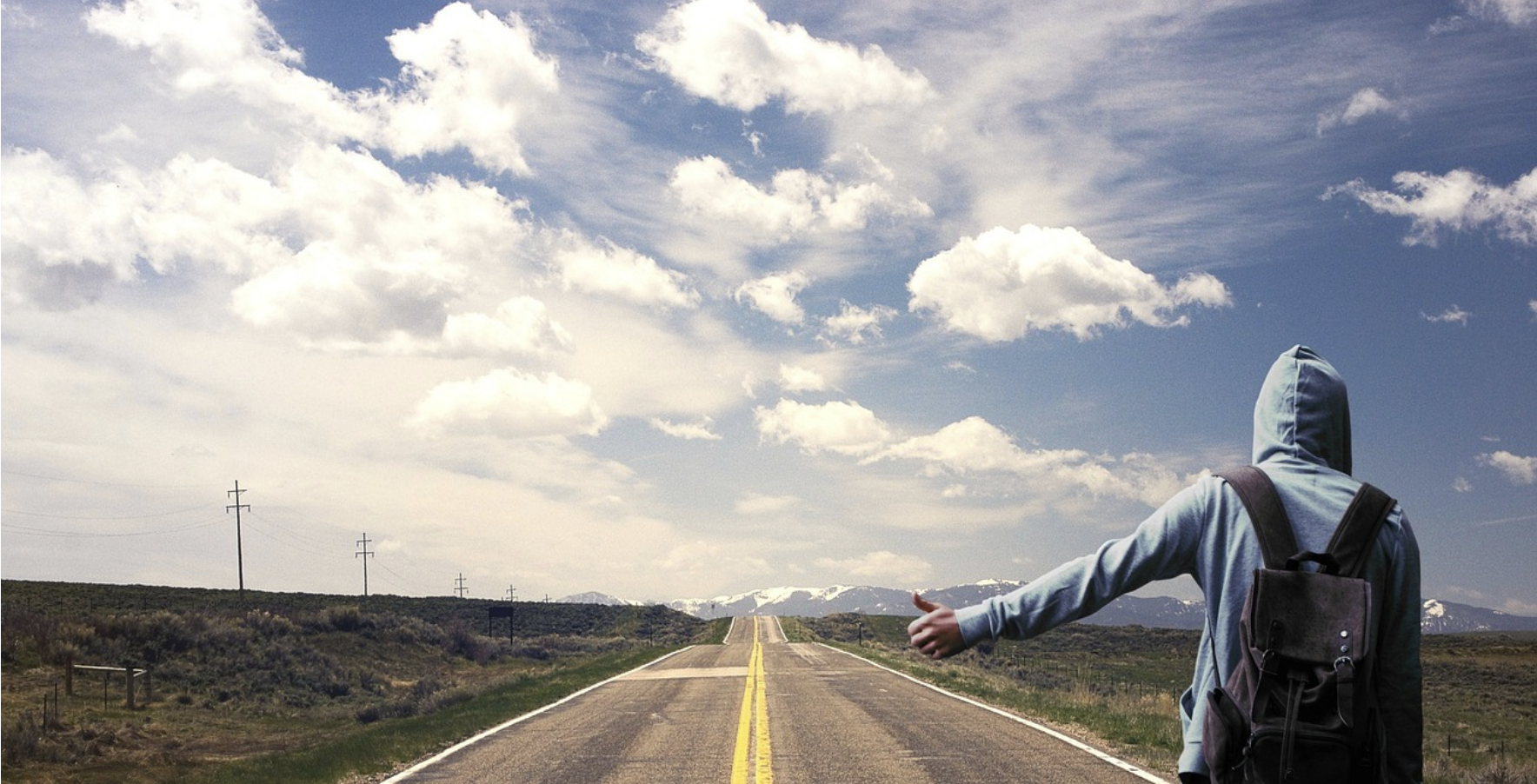
Photo credit: Alexas_Photos Pixabay

Next month it will be 34 years since the mass murderer Ivan Milat’s first victims’ bodies were found in Belanglo State Forest near Berima in NSW. Milat picked up all his known victims hitching between 1989-1992. He put an end to the innocent, trusting days when many of us regularly hitch hiked.

Before then, hitch hiking was a common sight on Australian roads and internationally. It’s over 60 years since  Bobbie and Laurie , Marvin Gaye and the Rolling Stones sang about it. Recently I saw it several times around Mullumbimby in northern NSW when up there for a music festival. How strange it was to see it again.

While strange or scary rides are always there with you, I look back on my hitching days with mostly fond memories, despite getting off to a shaky start.

When I moved to Sydney from Bathurst in late 1969, I hitched back to see my parents several times over the next couple of years before I bought a 90cc Honda to get me there. On one of my first trips home I was picked up near Lawson in the Blue Mountains by a man of my parents age, driving a Rolls Royce Silver Shadow.

As he drew over to the side of the road I couldn’t believe my luck. But my elation changed to panic when he immediately began berating me in a thick eastern European accent, triggered by an anti Vietnam war moratorium badge I wore on my army disposal store greatcoat. His new passenger with hair down to his shoulders, a pair of knee-high fireman’s leather boots also obtained from the army disposal store near Central Station and a Papua New Guinea woven string billum bag holding a few weekend clothes spelt human vermin.  This set him off into a barrage of aggressive abuse about how I knew nothing of communism and probably little else besides, that I epitomised everything that was wrong with the country. Trash like me were leeching off others. We needed to be taught a lesson, he said.

I suddenly became very worried and thought about how I could get out of the car. After some minutes, we came to a halt in a queue caused by roadworks ahead. I saw my opportunity to jump out while the car was surrounded by those in other cars who would have seen any effort he made to detain me.  The rest of the trip was uneventful, with the last ride dropping me right outside our house in Bathurst.  Coming back to Sydney, I got a ride all the way with a chatty middle-aged couple who bought me a sandwich at Katoomba.

Hitching in Europe

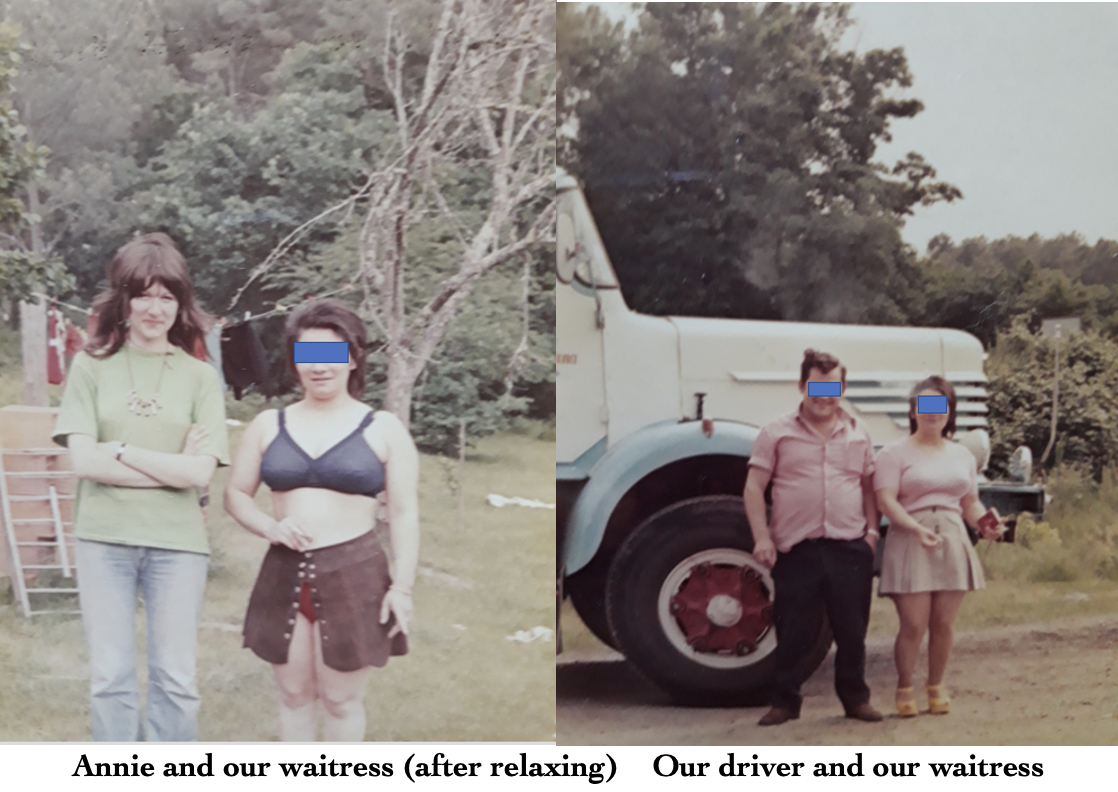
Moving to London in 1973 with my (then) wife Annie, we hitched south to Devon and back with great ease, inspiring an ambitious plan to hitch through France and Spain to get to Morocco. After a rough channel crossing on the hovercraft with dozens of vomiting Japanese, we got a lift at Dieppe in an empty orange truck returning to Seville in southern Spain. Near Bordeaux, our driver pulled into a dirt road leading to an unmarked diner where we ate simple, magical French country food. There was no menu. After serving us, the waitress re-entered the room having changed into a mini-skirt, a clinging top and platform shoes. She and our driver went off to get to know each other better in a small caravan in the yard while we waited in the cabin of the truck.

When he returned, his chatty demeanour changed completely. Now sullen, out came the photographs of his daughters in their first communion dresses. And then out came the rosary beads. Instead of taking us all the way to Seville as he’d promised, we were dropped at the St Jean de Luz border with Spain, our witness to his fornication presumably weighing heavily on his decison.

We made our way with lifts to Burgos, then onto Valladolid (pronounced ‘By-eye-doh-lees’). On its outskirts trying to get next to the fabled Salamanca, we waited half a day with much traffic passing but nothing stopping. Our optimism drained out of us until at last a small car pulled over. The driver, a handsome Spanish architect, welcomed us into the car in excellent English and we set off with him animatedly describing Salamanca, also his destination. About half an hour into our journey, we were pulled over by a police car with two very unfriendly cops. They got us all out of the car, searched our bags and interrogated him for ages.

After they waved us on, he told us about police intimidation of anyone remotely suspected as members of the militant group ETA (Euskadi Ta Askatasuna) which at the time following the 1970 Burgos trial of 16 Basque separatists, had escalated its campaign against police and state officials, demanding an independent, socialist Basque state.

He was clearly shaken by the experience and cautioned us about hitching further. At Salamanca we gave up and took a train to Madrid.

A bad end at Bad Ems

Our second hitching trip to Europe later the same year took us through Germany. We’d been far more successful, rapidly traversing from Heidelberg to Heiligenhafen on the Baltic sea. But this journey gave us a ride we would never forget.

We were on a feeder road onto a highway heading toward Koblenz in the Rhineland, on our way to Köln to see the famous cathedral when a car with two men in the front seat puled over. We settled into the back seat of the Opel and quickly established that the two spoke almost no English, although considerably more than our non-existent Turkish. So the lingua franca needed to be German. We’d both done it for a few years in high school.

“Wir fahren nach Koblenz, bitte” I chirped. They nodded. They understood. We were on the road to Koblenz. After a few minutes, an off-ramp showed a town called Bad Ems. They turned down it.

We looked at each other with a tinge of anxiety.

“Entschuldigen Sie. Wir müssen nach Koblenz gehen. Wir müssen dort den Zug fangen” It was kind of true. We did want to go to Koblenz but we would probably just hitch hike again onward to Köln. Trains cost money.

They said nothing but “ja, ja” and kept driving. The driver glanced at us a few times in his mirror.

We soon arrived at Bad Ems. It was a small town with lots of trees on the river Ems. ‘Picturesque’ was unavoidable. There were plenty of people walking about. It was a public holiday. They stopped the car next to a park on the riverbank and got out. They seemed relaxed and gestured to us that this was a lovely place, didn’t we agree?

They both walked over to a nearby public toilet near a kiosk and came back with a can of Coke for us to share. In the toilets, they had put gallons of oil in their hair and doused themselves in cheap cologne.

They made small talk about the park, where we were from and were we enjoying the Coke? After about five minutes, we started up again about the need to get the train at Koblenz.

While they were away we discussed whether to ask them to open the boot so we could get our bags out so we could leave these two and get another lift back up to the highway. We decided against it.

Other than ignoring us when we gently remonstrated about needing to go to Koblenz, they’d done nothing weird or alarming. Perhaps they had always planned to come off the highway to Bed Ems for some lunch? Perhaps they thought we might like a little detour to see this very pretty town? It seemed quite possible. So getting alarmed might seem offensive to them.

But the hair oil and cologne were something else. Or maybe not. Perhaps Turks, like anyone else, liked to freshen up after a drive or before lunch or when in new company?

The stocky one then said to Annie “Können wir einen Kuss haben?” (can we have a kiss?). It was not as if we had been chatting amiably for hours, or with any edge of flirtatiousness. The request seemed straight out of a predatory playbook that said “we fancy kissing this woman. We have your bags in the boot. We’;ve been hearing you saying repeatedly that you need to get the train to Koblenz. Well, here’s the deal. It’s up to you.”

So Annie explained, as nicely as she could, smiling away, that we were married and so of course, kissing was not appropriate with a married woman. She showed them her wedding ring.

They asked again, but without any real insistance. Just out of hope, We started up the Koblenz train refrain again, growing more concerned.

So we got back in the car and began to drive in the direction of the signs back to the highway. But then they turned right when they should have gone left. This time, we half shouted at them in unison “Wir müssen nach Koblenz gehen! Bitte! Bitte!”

They said nothing.They looked straight ahead and the driver started speeding up. We soon entered a forested area. We clenched our cold hands together, tighter than I can ever remember. We were terrified.

I said to Annie, let’s not do anything that’s going to get us killed. I reached for some imagined stereotype about swarthy Turks who would likely have knives and no respect for young western women moving around the country in the way we were. She should have been home in the kitchen.

It seemed obvious that they were after sex. We discussed Annie allowing them to do so, and how she might do nothing to anger them or make them anxious about the consequences if this was what was about to happen. She began silently crying. I felt utterly useless.

After driving into the forest for the longest 15 minutes of our lives, we turned off the deserted, sealed forest road and onto an unsealed narrow track. Within a minute, we were in the grounds of a brick factory. They stopped the car alongside a couple of others and tooted the horn.

In the upper floor windows of a building with about three floors, men began to appear. There was no sign of any brick-making work going on, so we quickly assumed that the building was some kind of dormitory for the employees, who began to come down stairs. Most were well dressed, perhaps getting ready to go somewhere on the public holiday.

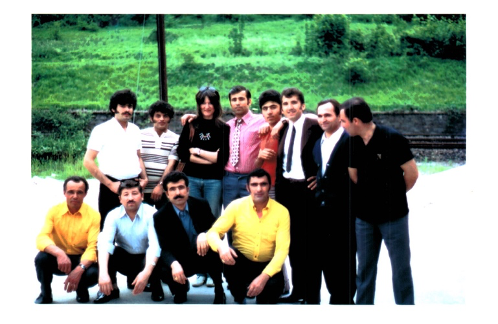
Soon there were about 15 of them ranging from teenagers to men in their 50s. They were all Turkish and talked among themselves, staring and smiling at us. Annie looked ghost-like. We held hands and tried to look friendly.

I stammered a few questions in German about which parts of Turkey were they from? I had no idea what to say to any of their answers, constantly thinking about how long it would be until our fates played out. Would we be killed or released? Would I be killed first, or both of us together afterwards? Would all of them rape Annie? Would any of the older men stop it happening? I kept thinking how incongruous it was that we would be violently killed on what was by now a brilliantly sunny, warm day by men who were relaxing on their day off.

Our stocky driver and an older man then beckoned to us to follow them into the building. We climbed the stairs to a dining area adjacent to where the men slept. So this was where it would happen.

They gestured for us to sit down. Black tea was poured into small glasses, in the Turkish style. Small plates of black olives, feta cheese and bread were put in front of us. I saw my hand trembling as I reached for an olive and spread some cheese on bread. My mouth was dry with fear, the food barely stimulating any saliva. I had to swallow hard to get it down.

They talked among themselves, occasionally urging us to eat up.

I decided to try and remind them of their families, hoping this might dull their appetite for what was to come. So I asked which of them had wives and children back in Turkey. Several of the older ones did. One produced a photo from his wallet. Then another, and then another did the same. This looked promising. So I asked if they would like me to take their photos and send the pictures to their families in Turkey. This was met with obvious enthusiasm.

We all then went back downstairs and got my Minolta SLR 101 out of my backpack in the car boot. I threaded a new roll of 36 shot film into the spool and wound it on. They all crowded about to watch this. The men then lined up one at a time. All, without exception, wanted their photo taken next to Annie, with some putting an arm gingerly around her shoulders. I asked one to write down each man’s name and address in Turkey to correspond to the order of the pictures I would take. (photo below)

When all this was over, we ceremoniously shook hands with them all, drank some water they brought from upstairs and I then plaintively reminded our driver than we had a train to catch in Koblenz.

He and an older man then gestured for us to get into the car. Everyone shook our hands again, warmly. We were driven all the way to Koblenz railway station, with Turkish music playing on cassette in the car.

These were the first Turks we’d ever met. We allowed some primordial racial fear to poison every second of our time with them. For their part, they had stopped to help strangers. They’d diverted to show us a beautiful historic town. They’d then taken us to their ‘home’, shared their simple food and tried to talk with two graceless people who just kept saying they wanted to leave.

We never posted their photographs, I’m ashamed to say.

#the Bad Ems story was first published in Oh no … not this story again. Work and travel tales. (free download here).

Blog Stats

  • 181,296 hits

Top Posts & Pages

  • Lowering tobacco tax for dummies
  • Why I’m not quitting Spotify because its owner has hugely invested in weaponry
  • Australian smoking and vaping rates fall yet again: new national data
  • About/CV
  • Vaping theology 27: “Vapes are 100% more effective than nicotine replacement therapy”: where do such comparisons come from and how do they conceal far more than they reveal?
  • Vaping theology: 6 There’s nicotine in potatoes and tomatoes, so should we restrict or ban them too?
  • Regrets … I’ve had a few. Paul Hogan and his Winfield role.
  • If expensive cigarettes are driving the Australian black market, why do so many countries with much cheaper cigarettes have thriving black markets too?
  • Lowering tobacco tax to make illegal tobacco sales “disappear overnight”: at last we have a proposed figure and it’s an absolute doozie
  • Why the “lower tobacco tax” emperor has no clothes

Blog archive

Comment Policy: No anonymous or pseudonymous posts will be published

Recent Posts

  • Lowering tobacco tax for dummies
  • Demented, incontinent, fat, orange and balding: should there be limits on attacks on the vile Trump?
  • Hairy tales from before the death of hitch hiking
  • Fact Check: How sensible are three proposed solutions to Australia’s illegal tobacco crisis?
  • Australian smoking and vaping rates fall yet again: new national data

Recent Comments

Brandon Steven's avatarBrandon Steven on Vaping theology 26: “If Austra…
mellow23e2e3b287's avatarmellow23e2e3b287 on Torture by omission: why pain…
howfarlongami's avatarhowfarlongami on Farcical half-pregnant Austral…
Simon Chapman AO's avatarSimon Chapman AO on Oil crisis sees emergence of n…
hdeastburn's avatarhdeastburn on Oil crisis sees emergence of n…

Archives

  • August 2026
  • July 2026
  • June 2026
  • May 2026
  • April 2026
  • March 2026
  • February 2026
  • January 2026
  • December 2025
  • August 2025
  • July 2025
  • June 2025
  • May 2025
  • March 2025
  • January 2025
  • November 2024
  • October 2024
  • September 2024
  • July 2024
  • May 2024
  • April 2024
  • March 2024
  • February 2024
  • January 2024
  • December 2023
  • November 2023
  • October 2023
  • September 2023
  • August 2023
  • July 2023
  • June 2023
  • May 2023
  • March 2023
  • February 2023
  • January 2023
  • December 2022
  • November 2022
  • October 2022
  • August 2022
  • June 2022
  • April 2022
  • March 2022
  • February 2022
  • January 2022
  • December 2021
  • October 2021
  • September 2021
  • August 2021
  • June 2021
  • May 2021
  • April 2021
  • March 2021
  • February 2021
  • January 2021
  • December 2020
  • November 2020
  • October 2020
  • September 2020
  • August 2020
  • July 2020
  • June 2020
  • May 2020
  • April 2020
  • March 2020
  • February 2020
  • January 2020
  • December 2019
  • November 2019
  • October 2019
  • September 2019
  • August 2019
  • July 2019
  • June 2019
  • May 2019
  • April 2019
  • March 2019
  • February 2019
  • January 2019
  • December 2018
  • November 2018
  • October 2018
  • September 2018
  • August 2018

Categories

  • Blog

Meta

  • Create account
  • Log in
  • Entries feed
  • Comments feed
  • WordPress.com

Blog at WordPress.com.

  • Subscribe Subscribed
    • Simon Chapman AO
    • Join 194 other subscribers
    • Already have a WordPress.com account? Log in now.
    • Simon Chapman AO
    • Subscribe Subscribed
    • Sign up
    • Log in
    • Report this content
    • View site in Reader
    • Manage subscriptions
    • Collapse this bar
Loading Comments...